BOOKS FOR PSYCHOLOGY CLASS
  • Books for Psychology Class
  • Blog
  • Contact/Submissions
  • Other Psychology Websites
  • For Students

iScore5 AP Psychology Review App

4/6/2025

0 Comments

 
Picture


​Get the App!
The iScore 5 AP Psych app is now available for $4.99 in the iTunes App Store for Apple devices or Google Play for Android devices.
 
iTunes  https://play.google.com/store/apps/details?id=com.iScore5.Psych&hl=en
Google Play https://apps.apple.com/us/app/iscore5-ap-psychology/id6739144070


App Description 
iScore 5 AP Psych is an app designed to help students achieve high scores on the AP examination. The app makes exam review entertaining and engaging for students. The creators have designed an app that functions as a game, helping students master all the CED vocabulary words for AP Psychology. The app, however, goes beyond merely learning basic vocabulary by challenging students to master multiple-choice questions in levels of increasing difficulty. The questions have been written by experienced AP Psychology teachers and college professors of psychology, all of whom are also AP exam readers.
 
The app's interactive interface is easy to navigate, and students can return to study mode at any point during the game to practice basic vocabulary. The app tracks a running score, enabling students to monitor their progress and gain a deeper understanding of the concepts they will need to know for the exam. Within each level, including the study mode, questions and practice items are organized by units, allowing for targeted study of specific areas in the AP curriculum.
 
The app is also an effective way for students to prepare for classroom unit exams, midterms, and finals. Because it is portable and easily accessible via phone or tablet, students are more likely to review more frequently. Even if students only have five or ten minutes to review at a time, this will result in an impressive increase in knowledge of psychology content due to the spacing effect.

 
Prepare for the AP Psychology Exam with iScore5
 
Study Level: All of the concepts from the updated CED are organized by AP Psychology unit and presented in a flashcard format. The study level is available for review at any level of the game.  

Play Level: Four levels of increasingly difficult multiple-choice questions.

​Level 1:  Vocabulary questions are organized by each of the AP Psychology units and presented in a multiple-choice format. Level 1 provides 20 terms at a time for each unit, so it is recommended that students play this level often, as the app generates a different set of terms each time the student plays.
 
Levels 2, 3, and 4:  These levels contain a set of multiple-choice questions in an AP format for each of the AP Psychology units in the CED. Each level increases in difficulty, ranging from level 2 (general understanding) to level 3 (intermediate) and level 4 (advanced). The correct answer to each question is explained, regardless of whether the student provided the correct response.
 
Practice Exam
Students are given the same amount of time they will have during the official AP Psychology exam (90 minutes) and are provided with their total score. After completing the practice test, they can review the questions they missed and see answer explanations. 

Reset: On the home screen, students can press the reset button to restart the game at any point, allowing them to play as often as they like.
 
The iScore5 AP Psych app provides students with a fun way to review for the exam.  Because all the questions are crafted by expert AP Psychology teachers and university psychology professors, the quality of the questions is very similar to what students will see on the AP exam.

​
 
Get the App!
The iScore 5 AP Psych app is now available for $4.99 in the iTunes App Store for Apple devices or Google Play for Android devices.
 
iTunes (iPhones and iPads) https://play.google.com/store/apps/details?id=com.iScore5.Psych&hl=en

Google Play (Android phones and Chromebooks) https://apps.apple.com/us/app/iscore5-ap-psychology/id6739144070
 
Other Apps Available from iScore5
The iScore5 company also offers review apps for other Advanced Placement topics, including AP United States Government and Politics, AP World History, and AP Human Geography. Visit the main iScore website for information about these other programs: http://www.iscore5.com.
 
Social Media
For more information about iScore5 AP Psych, visit the company website or follow them on Facebook and Instagram.
 
Website:
http://www.iscore5.com/apreg-psychology.html
 
Facebook:
https://www.facebook.com/iscore5/
 
Instagram:
https://www.instagram.com/iscore5/


Picture
0 Comments

The Essential Guide to Effect Sizes: Statistical Power, Meta-Analysis, and the Interpretation of Research Results

1/16/2025

0 Comments

 
The Essential Guide to Effect Sizes: Statistical Power, Meta-Analysis, and the Interpretation of Research Results
Author: Paul D. Ellis
ISBN-10: ‎ 0521142466
ISBN-13: ‎ 978-0521142465
 
APA Style Citation
Ellis, D. (2010). The essential guide to effect sizes: Statistical power, meta-analysis, and the interpretation of research results. Cambridge University Press.
 
Buy This Book
https://www.amazon.com/Essential-Guide-Effect-Sizes-Interpretation/dp/0521142466
​
Picture
effect_size_activity.pdf
File Size: 84 kb
File Type: pdf
Download File


​Book Description
What is an effect? Effects are everywhere—they result from treatments, decisions, accidents, inventions, elections, outbreaks, performances, etc. Researchers measure the size of effects, with statistical significance indicating the likelihood that results occurred by chance, and practical significance focusing on their meaning. Social sciences increasingly emphasize the need to report effect sizes alongside statistical significance to reduce bias and move beyond relying solely on p-values. This book explores three interconnected activities: interpreting effect sizes, analyzing statistical power, and conducting meta-analyses, which together form the foundation for robust research.

Part 1: Effect Size
Psychologists must address the “so what?” question by emphasizing the practical significance of their studies. A statistically significant result is unlikely due to chance, but practical significance reflects real-world impact. Researchers must communicate findings not only to peers but also to the public. Effect sizes, which measure the impact of treatments or the relationship between variables, are essential for interpreting study results, yet many researchers fail to report them. Effect sizes fall into two main categories: the d-family (differences between groups, such as Cohen’s d) and the r-family (measures of association, like correlation coefficients). Both are standardized metrics that can be calculated using tools like SPSS. When reporting effect sizes, researchers should specify the measure used, quantify precision with confidence intervals, and present results in clear, jargon-free language.
 
Even when effect sizes and confidence intervals are reported, they are often left uninterpreted, raising questions like “How big is big?” or “Is the effect meaningful?” Non-arbitrary reference points are essential for assessing practical significance, guided by the three C’s of interpretation: context, contribution to knowledge, and Cohen’s criteria. Small effects can be meaningful in the right context if they trigger larger consequences, alter probabilities of significant outcomes, accumulate into bigger impacts, or lead to technological breakthroughs or new insights. Interpreting contributions to knowledge requires more than comparing study results; researchers must also consider alternative explanations. Jacob Cohen’s 1988 criteria for small, medium, and large effect sizes offer a logical foundation and a starting point for resolving disputes about significance. While Cohen’s “t-shirt size” classifications are easy to understand and widely used, they remain controversial, with critics arguing against rigidly categorizing effects as small, medium, or large.
 
Part 2: Power Analysis
In any study, the null hypothesis assumes no effect (effect size = 0), while the alternative hypothesis assumes an effect (effect size ≠ 0). Statistical tests calculate the p-value, the probability of observing the result if the null hypothesis were true. A low p-value indicates statistical significance, allowing researchers to reject the null. Errors can occur: a Type 1 error (false positive) happens when researchers detect an effect that doesn’t exist, while a Type 2 error (false negative) occurs when they miss a real effect. Type 1 errors (α) and Type 2 errors (β) are inversely related; reducing one increases the other. Statistical power, the probability of detecting a true effect, depends on effect size, sample size, alpha significance criterion (α) level, and statistical power, with Cohen recommending a power level of 0.80. Underpowered studies risk missing meaningful effects, while overpowered studies may waste resources or highlight trivial findings. Power analysis, often done during study planning, helps determine the minimum sample size needed to detect anticipated effects. Researchers estimate effect sizes using prior studies, meta-analyses, pretests, or theory, aiming for conservative estimates to ensure adequate power. Tools like online calculators simplify these calculations, which are crucial for designing efficient and meaningful research.
 
Power analyses can be conducted for individual studies or groups of studies with a common theme or journal. In the 1960s, Jacob Cohen analyzed the statistical power of research published in the Journal of Abnormal and Social Psychology and found it lacking—a trend later confirmed across other fields. Published research is often underpowered, and the multiplicity problem arises when multiple statistical tests increase the likelihood of false positives. The family-wise error rate becomes relevant when multiple tests are run on the same data, as even low-powered studies can yield statistically significant results if enough tests are conducted. This can lead to practices like “fishing” for publishable results or HARKing (hypothesizing after results are known). To improve statistical power, researchers can focus on larger effects, increase sample sizes, use more sensitive measures, choose appropriate tests, or relax the alpha significance criterion.
 
Part 3: Meta-Analysis
Single studies rarely resolve inconsistencies in social science research, especially in the absence of large-scale randomized controlled trials. Progress often comes from combining results from many smaller studies. A qualitative approach, or narrative review, documents the story of a research theme, while the quantitative approach, meta-analysis, focuses on observed effects rather than others’ conclusions. Meta-analysis combines these effects into an average effect size to assess the overall direction and magnitude of real-world impacts. By statistically analyzing statistical analyses, meta-analysis systematically reviews research on a specific effect, weighting individual effect sizes by their precision to calculate a weighted mean effect size. This provides a more accurate estimate of the population effect size than any single study. Though designed to be objective, transparent, and disciplined, meta-analysis can still be undermined by biases, leading to precise but flawed conclusions. Each step in the process must be recorded, justified, and open to scrutiny, with the process generally broken into six key steps. See the classroom activity for details.
 
Large-scale randomized controlled trials are the gold standard for estimating effect sizes, but due to their cost and time requirements, research often starts with small-scale studies. When large trials follow a meta-analysis, comparisons can reveal inconsistencies, as meta-analyses may produce misleading conclusions. Bias in meta-analyses can arise from excluding relevant research, including bad studies, using inappropriate statistical models, or running underpowered analyses. The first three lead to inflated effect size estimates and increased Type I errors, while the fourth results in imprecise estimates and higher Type II errors. Excluding relevant research causes availability bias, and reporting bias occurs when only significant results are published. Studies with non-significant findings are often rejected, contributing to the "file drawer problem," which inflates mean estimates or increases Type I errors. P-values reflect sample size as much as effect size, meaning small samples can miss important effects. Non-significant results are inconclusive, indicating either no effect or insufficient power to detect one. Excluding non-English studies introduces bias. Discriminating studies based on quality also risks bias, scientific censorship, dismissal of valuable evidence, and overlooks differences in quality that can be controlled statistically.
 
Overall, this book provides information to help students evaluate psychological research. It explains the importance of effect sizes for understanding real-world significance and statistical power for designing studies that produce reliable results.
It includes a detailed discussion of meta-analysis, a method used to find broader patterns and trends in research while showing students how to recognize and avoid potential biases.
 
Other Related Resources

Author's Website- Check out FAQs


Author’s Website- Check out FAQshttps://effectsizefaq.com/about/
Psychological Concepts and Figures
Alternative hypothesis
Bias
Confidence intervals
Effect size
Generalize
HARKing
Meta-analysis
Null hypothesis
Qualitative
Quantitative
Replication
Sample size
Standard deviation
Statistical significance
Type I error
Type II error
Correlation coefficient
0 Comments

The Body Keeps the Score: Brain, Mind, and Body in the Healing of Trauma

11/11/2023

0 Comments

 
The Body Keeps the Score: Brain, Mind, and Body in the Healing of Trauma
Author: Bessel Van Der Kolk, M.D.
ISBN-10: 0143127748
ISBN-13: ‎978-0143127741
 
APA Style Citation
Van Der Kolk, B. (2014). The body keeps the score: Brain, mind, and body in the healing of trauma. Penguin Books.
 
Buy This Book
https://www.amazon.com/Body-Keeps-Score-Healing-Trauma/dp/0143127748
​
Picture
body_keeps_the_score_activity.pdf
File Size: 32 kb
File Type: pdf
Download File

Book Description
Traumatic events are disturbing experiences that create negative emotions and reaction. Trauma not only affects those directly exposed to it but also those around the individuals who have experienced trauma. Research reveals that trauma leads to physiological changes in the brain and body. This newfound knowledge offers potential avenues to prevent and perhaps reverse the damage caused by trauma. The Body Keeps the Score: Brain, Mind, and Body in the Healing of Trauma serves as a guide to understanding trauma and urges us to acknowledge its impact on lives and encourage the development of treatments and prevention strategies.
 
The text begins with a look back on the rediscovery of trauma. Many lessons have been learned about trauma, including from the return of Vietnam veterans, the American Psychiatric Association’s diagnosis of posttraumatic stress disorder, and the use of brain imaging tools. We have also learned from research on learned helplessness in dogs, research on stress hormones, and the pharmacological and neuroscience revolutions. Each advancement in various scientific fields teaches us more about how trauma impacts our lives.
 
The brain and body are impacted by trauma. The author summarizes the function of specific brain parts and provides appropriate analogies. For example, the limbic system acts as the cook withing the brain. The thalamus stirs the input into an autobiographical soup and then passes it on the amygdala and frontal lobes. During trauma the floodgates are open, which can lead to sensory overload. The amygdala is the brain’s smoke detector and identifies whether incoming information is important for survival. If threatened, it messages the hypothalamus to activate the stress hormone system in the autonomic nervous system to set off a whole-body response. The medial prefrontal cortex, in the frontal lobe, is the watchtower that offers a view from above and tries to warn when not to react to false alarms of stress. Bottom-up regulation can adjust the autonomic nervous system, through breath, movement, or touch. Top-down regulation, such as through mindfulness and yoga, can enhance the watchtower’s oversight of the body’s sensations. This knowledge is central to better understanding and treating traumatic stress. Being stuck in survival mode, energy is spent on unseen enemies with little room left for nurturing, care, imagination, planning, playing, or learning. New approaches to treatment need to engage the safety system of the brain before trying to promote new ways of thinking.  Many traumatized patients report not feeling whole areas of their body and a lack of self-awareness. The author walks through the explanation of why this is happening and the connection to the brain. The body keeps the score and mind-body communication is central to emotion regulation. 
 
The author goes on to explain the minds of children and trauma. He carefully reviews disorganized attachment, memories, and the flood of sensations. With further research, a better understanding began to unfold. As the DSM III was being revised, the author conducted even more research and presented the results to the work group responsible for suggesting revisions for the new addition.  Even though the work group voted to create a new trauma diagnosis, it was not added to the DSM III. The author feels as if an entire group of abused and neglected children were being ignored just as many of our veterans were before PTSD was introduced back in 1980.  Soon after, a large study of adverse childhood experiences, now known as the ACE study, revealed that traumatic life experiences during childhood and adolescence are far more common than expected. It also found that adverse experiences were interrelated, even though they were usually studied separately. High ACE scores correlated with higher workplace absenteeism, financial problems, high-risk activities, and greater chances of suffering from any of the 10 leading causes of death in the United States. Ongoing stress on the body keeps taking its toll. The surgeon general's report on smoking and health in 1964 started a legal and medical campaign that forever changed daily life and long-term health for millions. Yet, the findings from the ACE study have not had similar results. Those experiencing trauma are in the same circumstances and receiving the same treatments as they were decades ago. 
 
Developmental trauma is a hidden epidemic.  The author points out the need to correctly define what is going on and do more than develop new drugs or focus on finding the gene responsible. In 2001, the National Child Traumatic Stress Network was set up and has grown to be a collaborative network with hundreds of centers nationwide.  But 82% of the traumatized children seen in the Network do not meet the diagnostic criteria for PTSD.  Their behaviors often lead to diagnoses, such as Oppositional Defiant Disorder and ineffective treatments, such as medication, behavioral modification, or exposure therapy. A core work group began to draft a proposal for an appropriate diagnosis called developmental trauma disorder (DTD) for the DSM-5, but once again was met with resistance. Feedback received included “...no new diagnosis was required to fill a missing diagnostic niche.” Shortly after the APA rejected DTD for inclusion in the DSM, thousands of clinicians from around the country sent small contributions to the trauma center to conduct a field trial to further study DTD.  That support allowed for the interviewing of hundreds of kids, parents, foster parents, and mental health workers at five different Network sites with scientifically constructed interview tools.  
 
Traumatic memories are different. The marks left by traumatic experiences are organized not as cohesive, rational stories, but rather as fragmented sensory and emotional pieces encompassing images, sounds, and physical sensations. The author explores the history and scientific interest regarding trauma. He explains the origins of the talking cure, WWI soldiers and shell shock, Nazis, false memory syndrome, repressed memory, and remembering the trauma with all of the associated effects. Recovery from trauma includes dealing with hyperarousal, mindfulness, and building relationships. Learning how to breathe calmly and remaining in a state of relative relaxation, even while accessing painful memories is an essential tool for recovery. It would make an enormous difference if those working with children, especially teachers and parents were trained in emotional regulation techniques. Traumatized individuals need to enhance their executive functioning and self-regulation. There is no one treatment of choice for trauma. The author explores sensory motor therapy, parent-child interaction therapy, cognitive-behavioral therapy, flooding, virtual reality therapy, systematic desensitization, medication, EMDR, yoga, internal family systems therapy, psychomotor therapy, and neurofeedback.
 
Even though there have been great advances in understanding and treating trauma, it is still a public health issue. The author argues it is one of the greatest threats to our nation’s well-being. The most promising prospect for children who have experienced trauma, abuse, or neglect lies in receiving a quality education within schools where they are acknowledged and understood. In such schools, they can develop a sense of control over their lives and learn the important skills of self-regulation, self-awareness, and communication. Schools have a pivotal role in fostering resilience and offering secure connections that are essential for meaningful lives. Resiliency stems from knowing that what you do makes a difference. Activities like sports, music, dance, and theater not only foster a sense of agency and community but also immerse children in novel challenges and unfamiliar roles. Just like adults, children should grasp the satisfaction of pushing their abilities to the limit.
 
Many individuals who have experienced trauma have gained strength and learned to survive. They have entered loving relationships, gained employment, and become role models in their communities. Some of the greatest political and social advancements have grown from trauma. Trauma is a public health issue and the author urges us to respond by acknowledging its impact on lives and encouraging the development of treatments and prevention strategies.
 
Other Related Resources
Author’s Website
https://www.besselvanderkolk.com/resources/the-body-keeps-the-score
 
What is Trauma? The author of “The Body Keeps the Score” explains | Bessel van der Kolk | Big Think
https://www.youtube.com/watch?v=BJfmfkDQb14
 
Washington Post
https://www.washingtonpost.com/books/2023/08/02/body-keeps-score-grieving-brain-bessel-van-der-kolk-neuroscience-self-help/

​Psychological Concepts and Figures
John Bowlby
Charles Darwin
Paul Ekman
Sigmund Freud
Joseph LeDoux
Henry Murray
Ivan Pavlov
Jean Piaget
Martin Seligman
Richard Soloman
 
Adverse Childhood Experience (ACE)
Amygdala
Brain waves
Cognitive-behavioral therapy
Cortisol
Depersonalization
Desensitization
Diagnostic and Statistical Manual (DSM)
Diagnostic labels
Dissociative identity disorder (DID)
Endorphins
Epigenetics
Eye movement desensitization and reprocessing (EDMR)
Flooding
Learned helplessness
Medical model
Mindfulness
Mirror neurons
Neurofeedback
Neuroplasticity
Pharmacology
Posttraumatic stress disorder (PTSD)
Prozac
Reciprocity
Repressed memory
Resilience
Self-awareness
Thematic apperception test (TAT)
Trauma
Virtual-reality therapy
Yoga
0 Comments

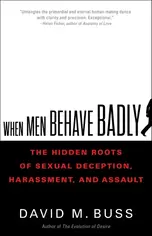
When Men Behave Badly: David Buss

4/10/2023

0 Comments

 
​When Men Behave Badly: The Hidden Roots of Sexual Deception, Harassment, and Assault
Author: David M. Buss
ISBN: 978-0-316-41935-2
 
APA Style Citation
Buss, D.M. (2021). When men behave badly: The hidden roots of sexual deception, harassment, and assault. Little Brown, Spark, New York, N.Y.
 
Buy This Book
https://www.amazon.com/When-Men-Behave-Badly-Harassment/dp/0316419354
 
Picture
when_men_behave_badly_activity_3.pdf
File Size: 78 kb
File Type: pdf
Download File

​Book Description
David Buss, a well-known evolutionary psychologist, tackles the challenging subject of conflict between the genders based on natural inclination and desires for reproductive success. Men generally need to know women for a shorter period of time before they are ready to have a physically intimate relationship. Women would generally prefer to wait to get to know the person better before taking a relationship to the physical level. Buss contends that this delay is because women want to be certain that their potential child has a father who can provide for potential offspring. Buss explains these behaviors as a cost-analysis system. A woman must invest time to carry a child to their birth and provide nourishment after birth. A man, however, can never be entirely certain that a child is his (without genetic testing). To improve the chances of passing his genes to the next generation, he may want to create many possibilities to pass his genes along; this is how Buss explains that men tend to have more intimate partners than women. These different approaches create conflict between the sexes and often need clarification about what people want in a relationship. Buss is careful not to excuse any behavior but rather explain, based on an evolutionary lens, why these conflicts may occur. 
 
Buss warns that men with what he deems the “Dark Triad” characteristics may take these behaviors to a dangerous and sometimes violent level. The Dark Triad personality characteristics include narcissism, Machiavellianism, and psychopathy. Narcissists care only about themselves and their wishes and will go to great lengths to satisfy their own desires. Machiavellianism is marked by the desire to exploit and manipulate others. Psychopathology involves a lack of empathy and indifference to the suffering of others. These traits exacerbate differences between sexes. Men with these characteristics are often smooth and are often portrayed as “the bad boy.” While women may initially be drawn to confident and poised individuals, this can quickly go downhill. These characteristics often lead to flattery, deception and exploitation of their partners. The Dark Triad characteristics are more likely than other personality characteristics to lead to violence in relationships. Buss explains that these behaviors still exist because it is a way to draw in a partner and then keep them by manipulation and exploitation. Once again, Buss is careful not to condone these behaviors but rather explain why they exist and have persisted.
 
Cross-cultural research demonstrates that men prefer more sexual partners (desired average 1.87 over the next month) than women (.078 over the next month). Biological sex was more important than sexual orientation in the results of this study. While most assume that people of similar levels of attractiveness are likely to wind up with one another, Buss finds that men tend to overestimate their attractiveness. This misperception can lead to disappointment when things do not work out as they expect in the dating market. Research in attraction has long demonstrated that individuals of similar physical attractiveness often partner with one another. When men are unrealistic about their own levels of attractiveness, they are often disappointed by their potential mates, and they are then more likely to treat relationships as a casual and perhaps not exclusive relationship. Women generally try to mate with the top 20% of males, which allows these males to have multiple relationships because of the number of options for relationships. This also leaves many men without any mating partners. Much of what is discussed in introductory psychology courses regarding evolutionary psychology dates back to Charles Darwin and the mating of finches. David Buss is one of the most well-known evolutionary psychologists of the modern era and presents much evidence that evolutionary factors regarding mating are very much present today.
 
Other Related Resources
Podcast: The Michael Shermer Show: Interview with David Buss
https://podcasts.apple.com/us/podcast/181-david-buss-when-men-behave-badly-the-hidden-roots/id1352860989?i=1000521802892
 
 
Psychological Figures and Concepts
Dan Ariely
David Buss
Charles Darwin
 
Post-traumatic stress disorder
 
0 Comments

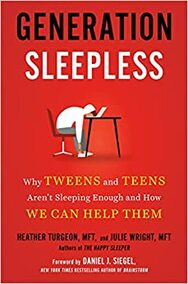
Generation Sleepless: Why Tweens and Teens Aren’t Sleeping Enough and How We Can Help Them

11/8/2022

0 Comments

 
Generation Sleepless: Why Tweens and Teens Aren’t Sleeping Enough and How We Can Help Them
Author: Heath Turgeon and Julie Wright
ISBN-10:‎ 0593192133
ISBN-13:‎ 978-0593192139
 
APA Style Citation
Turgeon, H. & Wright, J. (2022). Generation sleepless: Why tweens and teens aren’t sleeping enough and how we can help them. Penguin Random House LLC.
 
Buy This Book
https://www.amazon.com/Generation-Sleepless-Tweens-Sleeping-Enough/dp/0593192133
​
Picture
generation_sleepless_activity.pdf
File Size: 107 kb
File Type: pdf
Download File

​Book Description
What if you could easily enhance your focus, remember more, make stronger decisions, control your emotions and interact better with others, and get sick less often? All it takes is sleep! The benefits of sleep are endless. The father of sleep medicine, William Dement, once described sleep as life’s mood music. If you get good sleep, your background music is positive, and the world is seen through an optimistic lens. However, when sleep deprived, your background music becomes negative, and the world becomes dark and gloomy. We know that sleep is important for babies and children, but what about teenagers? The answer is, yes! Sleep is necessary for the important reconstructive processes of pruning and myelin formation. We have all heard the stereotype that teens are lazy and unmotivated. However, teens’ sleep clock starts to change in middle school. They generally can’t fall asleep until 11 p.m., and want to sleep until at least 8 a.m. Contrary to negative stereotypes, it has nothing to do with laziness. In addition, they have been accused of spending too much time on screens and are struggling with mental health issues. Yet, these symptoms are also associated with a lack of sleep. The first part of Generation Sleepless: Why Tweens and Teens Aren’t Sleeping Enough and How We Can Help Them focuses on the science of the teenage brain and sleep. Teens today are the most sleep-deprived we have ever seen. By some estimates, only five percent of teens get the necessary sleep on school nights.
 
The book’s second part provides the tools to improve teens’ sleep. Teenagers can start to regain their sleep loss by simply adding 30 minutes a night, totaling 2.5 hours by the end of the school week. The book provides lots of helpful hints to becoming a sleep-forward family. One of the greatest sleep predictors of adolescent sleep is the family’s sleep habits. Adolescents with parent-set, earlier bedtimes have the best indicators of positive mental health.
 
Teens simply do not get enough sleep! It might be due to the perfect storm of their shifting biology, technology, academic pressure, early high school start times, and the myth that sleep is a luxury rather than a necessity. Teens need 9-10 hours of sleep, not the current average of 6.5 hours of sleep they are typically getting on a school night. When teens sleep for only 6 hours, they are missing a quarter of their night’s sleep and half their REM sleep. The problem is often that we don’t see the issues associated with sleep loss. Instead, we see anxiety, depression, ADHD, apathy and underperformance, and drug use. Many teens and parents don’t recognize sleep loss as a problem. Sleep deprivation is a real problem and the signs include: waking up more than once a week, sleeping two hours or more on weekends, falling asleep quickly during passive events or morning hours, having low energy, being irritable, having a lack of interest, drinking caffeine or vaping, and late-afternoon or evening naps. A study found almost 10% of seniors in the U.S., say they have fallen asleep behind the wheel.
 
Middle childhood (6-10 years) is the ideal time for good sleep. But by middle school, many have lost their healthy sleep habits, and by age 15 most are sleep deprived. The child’s brain is known for its growth period, but the adolescent brain is going through an equally important stage of growth. During adolescence, the brain is beginning a new wave of brain reorganization. The prefrontal cortex is becoming stronger and efficient. Thanks to pruning, the unused neural connections are dying off and others are strengthening. While pruning is in process, myelin encases the pathways and increases speed. The authors use the analogy of how a town with small roads over time lays down major highways connecting places that are frequented. The flashy, billion-dollar upgrade happens largely while asleep. Brain cells in the frontal lobe are connecting to the limbic system during sleep. Many scientists believe that sleep deprivation during adolescence may permanently alter brain development and behavior. When you are not getting enough sleep it raises the risk of mental health issues, increases stress levels, decreases memory storage, and hampers learning and academic success. With less sleep, there are more risky behaviors. The higher powers of reasoning and impulse control are compromised. Teens, especially 15 to 16-year-olds, feel dopamine more intensely, leading to thrill-seeking and addictive behaviors. When you are getting enough sleep, neurotransmitters are released to increase positive emotion and focus, hormones strengthen and repair muscles, and the immune system works properly. Proper sleep leads to a healthy metabolism, positive eating behaviors, and weight management. Sleep is necessary to encode information from short-term memory to long-term memory.
 
Sleep is controlled by the circadian rhythm or the “master clock” that keeps time and creates the 24-hour cycle. Kids have a natural cycle of falling asleep by 8 p.m. and waking by 6 a.m. But the teenager has a “sleep phase delay” of two hours or more. It is hard for many teens to fall asleep before 11 p.m. Sleep is also controlled by the homeostatic sleep drive that increases the pressure to sleep, the longer you are awake. As adenosine, the by-product of burning energy, levels increase, you are more likely to sleep. The circadian rhythm works to give you a burst of energy late afternoon to help counteract the homeostatic sleep drive and keep you away into the evening. This is why you feel drowsy mid-afternoon and then get a second wind. Not only is the teen circadian rhythm delayed, but the sleep pressure builds more slowly across the day and the teen’s second wind happens around 9 p.m. The teen’s biology is working against the schedule created for them.
 
Teens are faced with several additional factors that contribute to their sleep problems. Teens suffer from a social jet lag, where their brain’s clock and the outside world are not aligned. When students sleep on different schedules during the school week and break, it is equivalent to flying cross-country twice a week. They face similar side effects of feeling hungry, tired, and out of sorts. Some additional symptoms include: daytime fatigue, weight gain, concentration issues, digestive problems, moodiness, negative thoughts, chronic health conditions, insomnia, and family conflict. In 2011, the smartphone gained popularity, and now over 95% of teens have smartphones or access to them. While many studies are finding a negative correlation between digital media and well-being, the fine print is also showing that screen time is connected to sleep loss. Sleep debt is a consequence of too much technology and the two share the same symptoms. The light from the screen tricks the body into keeping you awake. Technology also creates flow and keeps teens engrossed where they lose track of time. Smartphones have become the new teddy bear. Around 90% of teens have at least one device in their sleep environment. A final piece to the puzzle is early school start times and academic overload. Currently, over half of the public schools in the U.S. start during the 7 a.m. hour. When teens wake up at 5 a.m. to get ready for school, it is equivalent to an adult waking up at 3 a.m. Research has shown that when schools shift to later start times, students continued to go to bed at the same time, but had more time to sleep in the morning. There is resistance to changing school start times, but the benefits have been proven.
 
So, what can you do? While it may feel like there is no possibility for change, there is! The authors use the second part of the book to help teenagers and families create a plan of action. At home, teens can choose to limit time on homework, rethink commitments, understand sleeps benefits, and remember the power of a FOND family. The acronym stands for family rituals, open play, nature, and downtime. Parents set the example for their children. The authors go further by providing examples of how to take a sleep-forward approach as a family. They talk about how to use family meetings to set up an environment and schedule for success. They also provide the five habits of happy sleepers. Individuals can create a sleep bubble with the five habits that spell SLEEP. First, Set your sleep times. Regularity is important. Second, Lay out your three routines. Select two routines before sleep, and one after sleep to provide a cushion around your sleep bubble. Third, Extract your sleep stealers. Identify what is stealing your sleep and remove them, while also paying attention to environmental cues that enhance sleep. Fourth, Eliminate light and make your bedroom a cave. A wind-down time of decreased light an hour before bed can be especially helpful. Fifth, Practice a sleep-friendly daytime. What happens during the day impacts your night. Pay attention to early sunlight, exercise, daytime foods, caffeine, alcohol, bedtime snacks, and smart napping. This advice sounds amazing and you want teens to implement it right away, but it is important to recognize the need for teen motivation and independence. Instead invite teens to learn, brainstorm, and problem-solve around their own sleep issues. Point out the value of good sleep to students and let them decide to make the changes on their own. The authors provide a more clear and effective communication method called ALP. Attune- pause, listen, and lead with empathy. Limit-set- set and hold reasonable limits on a consistent basis. Problem-solve- help teens come up with their own solutions. Sleep is easy to dismiss because we are unconscious when it happens. However, it is a very important process for teens. Give the five habits, all five, a try for two weeks to create a sleep bubble that promotes natural sleeping powers.
 
Other Related Resources
Authors’- Press
https://www.thehappysleeper.com/press
 
Authors’ Website- Happy Sleeper
https://www.thehappysleeper.com/
 
Division of Sleep Medicine at Harvard Medical School- Resources section
https://sleep.hms.harvard.edu/resources
 
Psychological Concepts and Figures
William Dement
Ivan Pavlov
 
Adenosine
Adolescence
Amygdala
Circadian rhythm
Cognitive-behavioral therapy
Creativity
Delayed gratification- Marshmallow experiment
EEG
Evolutionary perspective
Excitatory vs. inhibitory
Flow
Frontal lobes
Glial cells
Habits
Homeostatic sleep drive
Hormones- Leptin, Ghrelin
Immune system
Learned helplessness
Light therapy
LTP
Melatonin
Memory
Mental health
Myelin sheath
Negative reinforcement
Neurotransmitters- Serotonin, Dopamine
NREM
Paleo-sleep
Plasticity
Prefrontal cortex
Pruning
Puberty
Punishment
Rebound sleep
REM
Reticular activating system
Sensitive period
Sleep bubble
Sleep debt
Sleep deprivation
Sleep disorders
Sleep spindles
Social jet lag
Suprachiasmatic nuclei
Unconditional positive regard

0 Comments

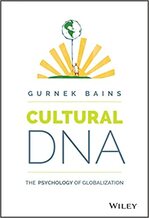
Cultural DNA: The Psychology of Globalization

10/13/2022

0 Comments

 
Cultural DNA: The Psychology of Globalization
Author: Gurnek Bains
ISBN-10: ‎ 9781118928912
ISBN-13: ‎ 978-1118928912
 
APA Style Citation
Gains, G. (2015). Cultural DNA: The psychology of globalization.
 
Buy This Book
https://www.amazon.com/Cultural-DNA-Globalization-Gurnek-Bains/dp/1118928911
​
Picture
cultural_dna_activity.pdf
File Size: 49 kb
File Type: pdf
Download File

Book Description
How can humanity be alike and different at the same time? Humans express similar fears, challenges, desires, and motivations. However, if we oversimplify with stereotypes or assume that everyone is the same, these assumptions can become problematic. Humans do have different behaviors and preferences, and seeing the individual for who they are is helpful. But exaggerating these differences is also problematic. Author, Gurnek Baines, explores the cultural DNA of eight regions around the world, including North America, Sub-Saharan Africa, Middle East, India, China, Europe, Latin America, and Australia. He explains cultural DNA as “the deeply grained aspects of culture that are replicated over generations rather than biological differences.” While he acknowledges biological factors, he points out the environmental challenges that each culture faced historically. He uses primary data, secondary sources of information, and explanatory research as his evidence. While the discussion of culture can be a sensitive topic, his exploration of the main regions has the reader analyzing culture on a deeper level. He hopes to foster empathy and respect and have readers question their implicit bias.
 
Each chapter of the book explores a particular region more in-depth. Baines describes the founders and their effects. In his “looking ahead” section of each chapter he summarizes the gifts each culture offers the world and some attributes to be addressed so the gifts do not hold them back in a changing world.
 
America- The Change-Makers
Gifts
  • Culture of change-makers, embrace the new
  • Positivity and optimism, tolerance of plurality, preparedness to take risks, functionality
 
Sub-Sahara Africa: Under Nature’s Shadow
Gifts
  • Energy, daily joy, laughter, intellectual flexibility, creativity, live in the moment
  • Human relationships are valued, interdependence
  • Desire to control the environment, used to nature being extreme and unpredictable
 
India: Beyond this World
Gifts
  • Preference for thinking, talking, and perceiving, as well as looking within
  • Diversity and nonviolence
  • Business strengths in IT, pharmaceutical research, finance
 
Middle East: Ambivalence and Uncertainty in the Modern Age
Gifts
  • Intellectualism, openness to learning, respect for knowledge
  • Commercial instinct and skills
 
China: The Seekers of Harmony
Gifts
  • A striving for balance and harmony
  • Introverted
 
Europe: The Equal Society
Gifts
  • Deep sense of equality, tolerance of individuality, rigorous and systematic approach to thinking
  • Environmental mastery and resulting dynamic creativity
 
Latin America: The Ever-Changing Melting Pot
Gifts
  • Challenging power and rebellion; movement to more open, balanced, and transparent systems
  • Resourcefulness, flexibility, creativity, collaboration
 
Australia: Mateship in a Far-Off Land
Gifts
  • Practical-mindedness, pulling together, incredible resilience in difficult conditions
 
Other Related Resources
Gurnek Bains- CEO and Founder of Global Future
https://ourglobalfuture.com/about-us/

People Matters-Big Interview with Gurnke Bains
https://www.peoplematters.in/article/strategic-hr/big-interview-gurnke-bains-11601
 
Psychological Concepts and Figures
Charles Darwin
Sigmund Freud
Carl Jung
Abraham Maslow
Walter Mischel
 
0 Comments

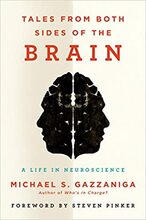
Tales From Both Sides of the Brain: A Life in Neuroscience

9/24/2022

0 Comments

 
Tales From Both Sides of the Brain: A Life in Neuroscience
Author: Michael S. Gazzaniga
ISBN-10: ‎0062228803
ISBN-13: 978-0062228802
 
APA Style Citation
Gazzaniga, M.S. (2015). Tales from both sides of the brain: A life in neuroscience. HarperCollins.
 
Buy This Book
https://www.amazon.com/Tales-Both-Sides-Brain-Neuroscience/dp/0062228803
​
Picture
tales_from_both_sides_activity.pdf
File Size: 61 kb
File Type: pdf
Download File

Book Description
Michael Gazzaniga stated, “Science results from a profoundly social process.” Tales From Both Sides of the Brain: A Life in Neuroscience is an autobiography about his research, but also the friendships, opportunities, and professional moves Dr. Gazzaniga made as he changed how we think of the brain. He shares his story of how scientists are a blend of both scientific and personal life experiences. The book focuses on six split-brain patients that helped change much of what is known in cognitive neuroscience. As he quickly points out, while much of scientific work is routine, the discoveries are still exciting! His story is one with a beginning and middle, but no end.
 
Gazzaniga’s early days started at Caltech, under Dr. Roger Sperry. While Gazzaniga was the novice, Sperry was the pro in split-brain research. Most of Sperry’s work was done with cats, but he was a great surgeon and fiercely competitive. Under Sperry’s guidance, Gazzaniga moved from studying animals to human patients in 1962. Their first human patient was William (Bill) Jenkins. They had to figure out the basics of how to test someone with a split brain. The left half of the body sends MOST information about touch to the right hemisphere. However, the mere presence or absence of being touched goes to both hemispheres. They used the visual system because it was simple and highly lateralized. The two had their differences, but when Sperry won the Nobel Prize in 1981, Gazzaniga wrote an appreciation article for him published in Science magazine.
 
Research shows that the left brain specializes in speech and language processes, while the right brain specializes in visual tasks. However, many split-brain patients used external self-cueing to help unify some of their disconnected information. Most eventually gained control of their ipsilateral (same-side) arm. It was this dual control of both the contralateral (opposite-side) and ipsilateral (same-side) that made it hard to evaluate the specialization of the left and right brains. Gazzaniga had no idea how rich split-brain research would become until more cases were added to the pool, and these newer cases were complicating. Like an old married couple…subtle cueing between the two is going on all the time. Similarly, half of the brain is living next to the other half and the ability of split-brain patients to look as if they were integrated develops over time. The two mental systems were being forced to share the same resources, and somehow, they worked it out.  This made it hard to do the research.
 
Gazzaniga’s professional career involved many moves. Wanting his own lab, he moved to the University of California, Santa Barbara. He was both a teacher and researcher, and quickly moved up to department chair. It was here that he began his closest lifelong friendship with David Premack. During this time, he also led his first interdisciplinary forum. Dr. Gazzaniga wanted to be associated with a medical center to see a wider range of neurological patients and with a little east coast fever, he moved to New York. There he set up a weekly lunch with Leon Festinger for the next 20 years. It was his friendships with Premack and Festinger that helped him continually reassess his and Sperry’s claim that there were two minds in one brain. Once again, Gazzaniga was on the move. This time to Dartmouth. His graduate student was Joseph LeDoux and they created a mobile lab to go to the patients. It was a time of new patients, discoveries, and insights. It was discovered that the left brain was an interpreter. When the left brain had no clue what was going on, it would try to explain it away. Gazzaniga moved again to Cornell University Medical College and convinced LeDoux to join him. Together they continued to complete critical experiments to understand the brain. It was in New York that Gazzaniga met up with George Miller. While he found him and his office intimidating, they quickly became friends and together launched cognitive neuroscience, the study of how the brain creates the mind. An important part of Gazzaniga’s academic life was holding special meetings in special places. He led an annual, weeklong conference. When he moved back to Dartmouth, he brought with the Cognitive Neuroscience Institute and created the Journal of Cognitive Neuroscience. But the west coast was calling and Gazzaniga moved to the University of California, Davis. His patients traveled to him and he did a PBS special hosted by Alan Alda. Dr. Gazzaniga continued his training of the next generation by holding an annual conference, and publishing their work in one large reference book. He also helped with efforts to build a database for brain imaging experiments done around the world. He requested researchers submit data in order to be published in the Journal of Cognitive Neuroscience. It ended up not working out, but was a great step for more public communication.
 
While science has always been important to Gazzaniga, he is also interested in many other issues. Early on as a graduate student, he hosted a political debate on campus that garnered much attention. He credits this first experience to his ability to organize future scientific meetings and help translate complicated topics for public communication. Over the next several decades, Gazzaniga and his second wife, Charlotte, hosted somewhere around 300 dinner parties. These social gatherings played a significant role in the field of cognitive neuroscience. He also talked his friend, the political commentator, into interviewing his friends (e.g., B.F. Skinner, Premack, Festinger) on his show Firing Line. He became interested in public affairs and wrote on the problem of crime prevention. Gazzaniga also served on the President’s Council of Bioethics and worked to help answer the embryo question- when human life begins? Pursuing diverse issues has always been important to him.
 
Gazzaniga’s story is one of science, people, and experiences. He concludes with reminding the reader the story has not ended. While some of the easy, low-hanging fruit, has been picked in neuroscience, there are still more answers to find.
 
Other Related Resources
Author's Website- University of California, Santa Barbara
https://people.psych.ucsb.edu/gazzaniga/michael/
Lessons Learned from a Life in Science
https://www.psychologicalscience.org/observer/lessons-learned-from-a-life-in-science

Psychological Figures and Concepts
Paul Broca
Noam Chomsky
Leon Festinger
Clever Hans
David Hubel
Daniel Kahneman
Karl Lashley
Joseph LeDoux
Kurt Lewin
Margaret Mead
George Miller
Daniel Pinker
David Premack
Stanley Schachter
B.F. Skinner
Roger Sperry
Endel Tulving
Robert Zajonc
 
Attention
Basic research
Bioethics
Blindsight
Brain plasticity
Cognitive dissonance
Cognitive neuroscience
Confabulation
Contralateral vs. ipsilateral control
Corpus callosum
EEG
Embryo
Episodic memory
fMRI
Global aphasia
IRB
Korsakoff’s syndrome
Lateral ventricles
MRI
Parallel processes
Semantic memory
Split-brain research
Synesthesia
Syntax
Theory of mind
Top-down vs. bottom-up processing
WAIS
0 Comments

Brain Bytes

11/13/2021

0 Comments

 
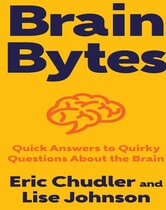
Brain Bytes: Quick Answers to Quirky Questions About the Brain
Author:  Eric Chudler and Lise Johnson
ISBN-13:
9780393711448

APA Style Citation
Chudler, E. H., & Johnson, L. A. (2017). Brain bytes: Quick answers to quirky questions    
about the brain. W.W. Norton & Company.
 
Buy This Book
https://www.amazon.com/Brain-Bytes-Answers-Quirky-Questions/dp/0393711447​
Picture
activity_brain_bytes.pdf
File Size: 86 kb
File Type: pdf
Download File

Book Description
 
If you cover neuroscience in your psychology course, you know it is a fascinating topic about which students have many questions. In Brain Bytes, Quick Answers to Quirky Questions, neuroscientists Eric Chudler, Ph.D., the Executive Director of the Center for Sensorimotor Neural Engineering at the University of Washington, and Lise Johnson Ph.D. who is a  scientist in the Department of Neurological Surgery at the University of Washington teamed up to provide you with some of the answers.  Chudler has an amazing website (see other related resources) called Neuroscience for Kids, which is a treasure of information, activities, and resources for students of all levels interested in learning more about the brain that is updated regularly.
The book provides answers to questions commonly asked by introductory psychology students and is organized into twelve key categories. The authors encourage students to keep asking questions and to verify the responses presented with other sources. The book also includes several key appendices that provide even more information. The twelve categories are listed below, along with a sample of the research questions that are presented for each topic area.
 
Ancient Neuroscience
  • Did people always believe that the brain was important?
  • Did people really believe that the bumps on a person’s head would say something about a person’s intelligence and personality?
 What’s Under the Hood?
  • How did  parts of the brain get their strange names?
  • How are the two halves of the brain connected?
  • Do we get more neurons after we are born?
  • Does the brain really use electricity to send messages?
 People
  • What is the difference between a neuroscientist and a neurologist?
  • Who was H.M.?
  • Who was Tan?
 Intelligence
  • Are there foods that make people smarter?
  • Does listening to music make you smarter?
  • Does watching television, playing video games, or surfing the Internet kill brain cells?
 Memory
  • Is memory like a tape recorder, flash drive, or hard drive?
  • Can memories be erased?
  • What was so special about Albert Einstein’s brain?
 Sleep
  • Why do we sleep?
  • Why do we dream?
  • Can you learn while you’re asleep?
  • What is lucid dreaming?
Sensation and Perception
  • Would I feel anything if my brain was touched?
  • Do all people experience pain?
  • What is phantom limb pain?
  • What is synesthesia?
  • What causes color blindness?
  • Why can’t I tickle myself?
 Drugs, Venoms, and Addiction
  • Does alcohol kill brain cells?
  • How does coffee wake me up?
  • Is marijuana addictive?
  • Is ecstasy dangerous?
  • What animals have venom that attacks the nervous system?
 Popular Culture
  • How do you become a brain researcher?
  • Does the brain work like a computer?
  • Why do songs get stuck in my head?
 Technology
  • Can a computer be used to control my brain?
  • Are brain transplants possible?
  • What is a cochlear implant?
  • What is brain stimulation?
 Medicine
  • What is schizophrenia?
  • What is prion disease?
  • Can marijuana be used to treat epilepsy?
  • What is face-blindness?
  • What is the most common mental health issue?
  • What is electroshock therapy, and why is it used?
 Brain Health
  • What can I do to keep my brain healthy?
  • What happens to the brain as it ages?
  • Why do my eyes hurt when I walk outside after being inside a movie theatre?
  
For even more information about brain facts and neuroscience trivia, consider subscribing to the authors monthly Neuroscience for Kids Newsletter. This monthly email will keep you updated on the latest information on the website and in the field of neuroscience.  The newsletter includes the latest updates to the website, a neuroscience website of the month, neuroscience in the news, information on contests and research programs, media alerts, and a section titled “Treasure Trove of Brain Trivia.”
  
Other Related Resources
 
Neuroscience for Kids Website
https://faculty.washington.edu/chudler/neurok.html
 
Brain Bytes Eric Chudler and Lise Johnson Talks at Google
https://www.youtube.com/watch?v=HdI0Qv0g3cU
  
Psychological Figures and Concepts
Paul Broca
Walter Freeman
Phineas Gage
Galen
Franz Joseph Gall
Patient H.M.
Oliver Sacks
William Beecher Scoville
Tan
Karl Wernicke
 
Addiction
Amnesia
Aphasia
Brain imaging
Brain regions
Catatonia
Chronic traumatic encephalopathy
Color vision
Dissociative identity disorder
Face blindness
Hallucinations
Hearing loss
Hypnosis
Hormones
Lucid dreaming
Medications 
Memory
Mental illness
Neurons, neurotransmitters, and neural transmission
Neurological diseases
Neurologist
Neuroscientist
Neurotoxins
Neurotransmitters
Pain
Perception
Psychoactive drugs
Rorschach test
Sleep
Split-brain
Stroke
Traumatic brain injury
Venom
 
 
0 Comments

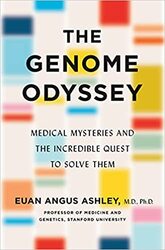
The Genome Odyssey: Medical Mysteries and the Incredible Quest to Solve Them

9/26/2021

0 Comments

 
The Genome Odyssey: Medical Mysteries and the Incredible Quest to Solve Them
Author: Eaun Angus Ashley, M.D., Ph.D.
ISBN-10: ‎1250234999
ISBN-13:‎ 978-1250234995
 
APA Style Citation
Ashley, E.A. (2021). The genome odyssey: Medical mysteries and the incredible quest to solve them. New York, NY: Celadon Books.
 
Buy This Book
https://www.amazon.com/Genome-Odyssey-Medical-Mysteries-Incredible/dp/1250234999
​
Picture
genome_activity.pdf
File Size: 70 kb
File Type: pdf
Download File

Book Description
The Genome Odyssey provides a summary of the human genome from the first genomes in the Human Genome Project to current work and research. The author, Euan Ashley, is a practicing cardiologist and the founding director of the Center for Inherited Cardiovascular Disease at Stanford University. In his book, he explains the early genomes with a short description of the timeline and price of genome sequencing (determining the DNA sequence of an organism’s genome at a single time). He goes on to share patient stories with unique diseases and his own patients within the cardiac field. Finally, he lays out the future of genomics. What exactly is your genome? Ashley states, “Your genome is three billion letter pairs, six billion data points, two meters of molecule compacted into twenty-three pairs of chromosomes that, if laid end to end with the DNA from the thirty trillion cells in your body, could stretch to the moon and back thousands of times: part of the literal embodiment of what it means to be human.” The genome is a tool to learn about disease, solve medical mysteries, and provide hope, protection and prevention for those with diseases.
 
First, the author explains the early genomes. He provides a little history on when and how much it cost for some of the first genomes to be sequenced. The Human Genome Project was a ten-year project that provided a genome in the early 2000s, costing multibillions, with multiple country contributors to identify the DNA from ten people. It was intended to have ten volunteers provide 10% each to the full genome to help protect confidentiality and prevent the press from discovering the donor. The approximate twenty thousand genes that account for the proteins that make up 2% of the genome were mapped out. The other 98% of the genome was commonly referred to as “junk DNA” because its function was unclear. It is now understood that this noncoding part of the genome is important in determining whether genes are turned on or off. And half of our genes have pseudogenes in this part of the genome and can regulate the function of other genes. A real human’s genome is diploid, meaning there are two copies of everything. The reference genome was monoploid, with just one copy of every human gene. The single copy genome would be the standard to which all other genomes would be compared to in the following years. Everything did not go as planned, instead the human reference genome comes from the DNA of only two people. It was also found that the reference genome actually contained a mutation, a DNA letter associated with disease. The 1000 Genomes Project, started in 2008, helped provide data to create three new human reference sequences, tuned to three major ethnicities.
 
The first genome sequence after the project cost around $100 million. In 2009, the author’s journey started by helping a Stanford colleague Steve Quake (patient zero) figure out his own genome and cardiac results (the author’s specialty). His genome cost a mere $40,000. In the eight years after the Human Genome Project, if the price of sequencing the genome could be compared to a Ferrari, then the $350,000 car dropped to forty cents.  Steve invented the technology used to sequence the genome and became the first patient to walk into the doctor’s office with his genome. To help read Steve’s genome, the author put together a dream team. This team would list the variants, look at rare variants and diseases, look for common variants for common diseases, look at variants affecting drug responses, and be mindful of ethical considerations. Steve needed to provide informed consent and a genetic counselor was brought on the team. If you test for everything, you might find a lot of results you were not expecting and someone had to help navigate that process. This had never been done before. Steve was a researcher and patient, which made the process even more complex. Fortunately, the team did not find a rare heart disease in Steve’s heart or any genetic variants. However, they did find significant risk for a heart attack. While the price of sequencing the genome was dropping, what about the time to complete it? It took up to a year for one machine to sequence a human genome while running full-time. But if one was to map just the gene sequences and ignore the other 98 percent, then it would take less time and cost even less. In 2010, John West had sequenced his whole family after suffering a pulmonary embolism. It was the first nuclear family to have their genome sequenced and there was an unexplained medical mystery. Soon after the author started a company to move sequencing from academia into industry. The partnership between these fields continues to increase, but also remains far apart. They utilized genetic counselors to analyze and prioritize the genetic variants and explain the results to patients. The price for sequencing your genome was now under $1000.
 
The author goes on to compare genomic medicine to disease detective work. Traditional methods have included observing, examining, documenting, and analyzing. But now doctors can add another tool of reading one’s genome. Bill Gahl (from Waukesha, WI) became the real Gregory House from the Fox TV series House. He leads the National Institute of Health’s Undiagnosed Diseases Program, which officially opened in 2015. In three years, they found a diagnosis for 35% of cases and defined 31 new syndromes. Ashley shares some of the program’s patients and their rare stories. He also shares the case studies of some of his own cardiac patients. Mosaicism, the term for having more than one genome, happens when copied DNA accumulates mutations.  Some people have visual indicators of mosaicism, such as skin with different pigmentations or different eye colors. There is also chimerism, a situation where a person has cells with genomes from completely different people. This happens during pregnancy, patients with organ transplants, or fraternal twins who share a placenta. Genome-wide mapping and using family trees for patients have also helped the disease detective work.
 
Finally, the author looks to the future.  He describes how superhumans can help provide answers to help the typical genome. Genomes from the fittest athletes and those with rare abilities have helped find new treatments for those with heart, lung, blood, and muscle diseases. Also, the growth of biobanks and the value of these large databases is hopeful to better understand the genome. There are over sixty groups around the world that aim to enroll at least 100,000 people in their biobanks. As Ashley stated, “What all these studies have shown is that the larger the study, the greater power for discovery, and the greater our confidence in those discoveries.” Participants can enroll and give consent digitally through an app. Ashley also discusses advances in treatment, such as genetic therapy and improvements to drugs. Genetic therapy has been around since the 1970s, but the first human studies were performed in the 1990s. Many were problematic and the approach was criticized for moving too fast. The scientific community was tasked to go back to the laboratory and learn more. To be effective, the genetic therapy has to get to the cells that matter. Delivery is the biggest challenge. In the last few years there has been success with delivery and genetic therapy. A bacterial defense system called CRISPR has helped researchers target parts of the genome and repair them. In 2017, CRISPR was used to correct a mutation causative of hypertrophic cardiomyopathy in human embryos. A heated debate quickly arose about whether to intervene on human embryos. Then in 2018, a researcher announced the birth of the world’s first gene-edited babies. There is now universal agreement that there needs to be more research on the safety of gene editing before it is considered ethical to use on embryos. We are in the golden age of genetic therapy. Doctors can order a genome, health insurance companies are starting to list genomes as a covered benefit, and some systems are using genome sequencing as preventative care. The future also relies on real-time monitoring of our health. Smart watches can be set to assess your specific genetic risks and look for early detection of those diseases. We can also go beyond sequencing human genes and turn to pathogens as well. Genomics played a huge role in fighting the 2020 SARS-CoV-2 (coronavirus). It also jumpstarted the genomic age of vaccines.
 
Genome sequencing is getting cheaper and faster, while the data for comparison is becoming more robust. Genomes are often used for rare diseases, but they are also becoming more useful for everyday care. We need to urgently do more research with diverse populations so it can calculate the best scores. But prediction will become more powerful as we sequence more genomes. The question for you will be, do you want to have your genome sequenced?
 
Other Related Resources
Author's Website- The Ashley Lab
https://ashleylab.stanford.edu/

Health Matters The Genome Odyssey YouTube
https://www.youtube.com/watch?v=RcdqVqYx8_c

Commonwealth Club YouTube
https://www.youtube.com/watch?v=xZx0Kq5ipxo

Human Genome Project
https://www.genome.gov/human-genome-project

What is CRISPR? New Scientist
https://www.newscientist.com/definition/what-is-crispr/
​
Psychological Concepts and Figures
Antagonist vs. agonist
Anterograde amnesia
Biobank
Bioengineering
Chromosomes
Confidentiality
Congenital insensitivity to pain
Correlations
DNA
Dominant vs. recessive
Embryo
Epigenetics
Ethics
Genes
Genetic counselors
Genome 
Hippocampus
Human Genome Project (HGP)
Immune system
Informed consent
MRI
Mutations
Nature vs. nurture
Nucleus
Opioids
Pharmacogenomics
Pituitary gland
Placebo
Pseudogenes
Random assignment
Stem cells
0 Comments

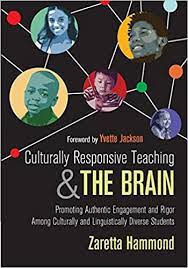
Cultural Responsive Teaching and the Brain

9/2/2021

0 Comments

 
​Culturally Responsive Teaching and the Brain
Author: Zaretta Hammond
ISBN: 978-1-4833-0801-2
 
APA Style Citation
Hammond, Z. (2015). Culturally responsive teaching and the brain. Thousand Oaks, CA: Corwin.
 
Buy this Book
https://www.amazon.com/Culturally-Responsive-Teaching-Brain-Linguistically/dp/1483308014
 
Picture
activity_culturally_responsive_teaching_.pdf
File Size: 76 kb
File Type: pdf
Download File

​Book Description
Zaretta Hammond attended a progressive public school in San Francisco, CA rather than the school in the projects where she lived because her mother used Zaretta’s grandparents’ address knowing that the way to a better life was through a good education.  When Hammond was in 5th grade, a court order mandated that San Fransisco schools desegregate and her school became instantly more diverse.  Hammond recognized that the children coming from schools near where she lived had trouble keeping up with the material not because they were not bright but because they came from schools with vastly different expectations and instruction. By the time these students were in middle school the differences in level of education were pronounced. Hammond recognized this not as an achievement gap but an opportunity gap, one that still exists today in neighborhoods with socioeconomic challenges and often in communities of color. 
 
Culturally Responsive Teaching and the Brain combines neuroscience with the practicality of how the brain and body can impact academic performance.  Hammond has created a comprehensive explanation of how instructors can move dependent learners to independent learners by being intentional and reflective about their own classroom organization, their interactions with students, and with an understanding of the biological mechanisms that impact motivation and learning. Hammond describes the book as, “a pedological approach firmly rooted in learning theory and cognitive science”(p.15). Hammond asks educators to acknowledge that many students face unearned disadvantages because of their race, gender, class or language, and she sets out to eliminate these disadvantages in an educational setting. Schools are an extension of culture but when a school environment identifies one particular culture or set of beliefs as “correct” or bases rules and celebrations off of one culture, many others feel excluded and start to believe that school is not for them. 
 
Structures and traditions may be exclusive by giving some students religious holidays off of school and not recognizing others, or organizing school or class events around traditions/celebrations that only some students participate in. In addition, less obvious but powerful forces such as implicit bias may reinforce a system in which there is a belief that some students are more capable of academic success than others because of their gender, ethnicity or the color or their skin. Hammond points out that by third grade many culturally and linguistically diverse students are one or more years behind in reading, which she identifies as intellectual apartheid. With proper scaffolding however, Hammond lays out a path in which all students can find academic success. Often, when students are successful in school students, teachers, and parents attribute the success to personal characteristics of the student and do not take into consideration that the organization of the school had also contributed to the students’ success. The same can be true for those for whom the system does not work. We are quick to make a personal attribution about the students’ lack of effort or ability when the structure of the school or implicit biases may be playing a role in the students’ day-to-day educational experience. We need to start looking at situational factors that may also limit students’ progress.
 
Hammond describes the role of the brain in learning and pays particular attention to the limbic system, which is often considered the emotional center of the brain. When a person is feeling threatened or stereotyped their limbic system is active, which Hammond labels as “amygdala hijack”. When this occurs students are unable to focus on what is happening in the lesson because of many factors such as stereotype threat, microaggressions, or other factors that make a student feel like they are singled out and they cannot live up to their full potential.  Learning involves the development of new neural pathways and if those cannot be practiced shortly after learning something they will be lost. Students who are under a perceived or real threat cannot transfer short-term to long-term memories and gradually fall further and further behind. Often those that feel most threatened are non-English speakers and students of color who consciously or unconsciously detect threats to their safety which impedes learning. 
 
In the second half of the book, Hammond explains how teachers can check their own bias to create more inclusive classrooms in which all students feel welcomed and that they can succeed.  She provides scaffolds that can move dependent learning to more independent critical thinkers. Hammond proposes that culturally responsive teaching is not a set of instructional strategies but rather a mindset in which one must be conscious of their actions, words, body language and consider the subtle and not so subtle messages they may be giving to students. She proposes the method of description, interpretation, and evaluation in which educators consider their own cultural and ethnic experiences and deeply consider how this impacts their world view and how it may influence their behaviors and thoughts. This is a book for all educators who want to create a safe place in which all students can learn and reach their potential. 
 
Other Related Resources
Zaretta Hammond’s Blog: Culturally Responsive Teaching and the Brain
https://crtandthebrain.com/about/
 
Zaretta Hammond: Lecture on Culturally Responsive Teaching
https://www.youtube.com/watch?v=O2kzbH7ZWGg
 
Collaborative Classroom:  A  Conversation about Instructional Equity
https://www.collaborativeclassroom.org/blog/a-conversation-about-instructional-equity-with-zaretta-hammond/
 
Teaching for Justice (formerly Teaching Tolerance) 
https://www.learningforjustice.org/author/zaretta-hammond
 
Turn and Talk ASCD: Interview with Zaretta Hammond
https://www.ascd.org/el/articles/zaretta-hammond-on-coaching-and-culturally-responsive-teaching
 
Social Emotional Learning and School Safety Podcast
https://selcenter.wested.org/resource/start-with-responsive/#
 
Edutopia: How to get started with Culturally Responsive Teaching
https://www.edutopia.org/article/getting-started-culturally-responsive-teaching
 
Psychological Concepts and Figures
Amygdala
Brainstem
Cerebellum
Collectivism
Cultural archetypes
Dopamine
Fluid intelligence
Implicit bias
Individualism
Information processing
Just-world phenomenon
Long-term memory
Microaggressions
Mindset
Neocortex
Neural pruning
Oxytocin
Reticular activating system
Schema
Short-term memory
Surface culture


0 Comments

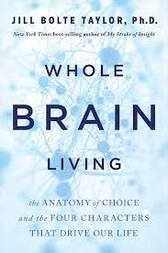
Whole Brain Living: The Anatomy of Choice and the Four Characters That Drive our Life

8/10/2021

1 Comment

 
Whole Brain Living: The Anatomy of Choice and the Four Characters That Drive our Life
Author: Jill Bolte Taylor, Ph.D.
ISBN: 978-1-4019-6198-5
E-book ISBN: 978-1-4019-6199-2
 
APA Style Citation
Taylor, J.B. (2021). Whole brain living: The anatomy of choice and the four characters that drive our life. Carlsbad, CA: Hay House, Inc.
 
Buy This Book
https://www.amazon.com/Whole-Brain-Living-Anatomy-Characters/dp/1401961983
​
Picture
whole_brain_living_activity.pdf
File Size: 117 kb
File Type: pdf
Download File

Book Description
In 2008, Dr. Taylor who is a Harvard-trained neuroanatomist delivered one of the first TED Talks and quickly her and TED talks became famous. Her first book, My Stroke of Insight, shared her personal experience of a stroke shutting down her brain over four hours. Because of her background as a neuroscientist, she knew what was happening as her stroke occurred. She suffered damage to her left parietal lobe and her brain was silent for five weeks, but then she began her eight-year recovery. During this time, she came to recognize the power of turning on and off her emotional circuitry by choice. She explains, humans are feeling creatures who think rather than thinking creatures who feel. The left hemisphere is commonly identified as being linear and a sequential processor, while the right hemisphere is a parallel processor. The left brain provides our individuality, while the right brain connects us with the collective whole and consciousness of the universe. Dr. Taylor offers the 4-character framework that identifies a left and right-thinking brain and a left and right emotional brain. By utilizing all 4 characters, she proposes whole-brain living as a way to bring about peace. It is important to note that the left and right brains do not function in isolation. In the 70s and 80s, our society went overboard with split-brain studies and right/left brain comparisons, with schools establishing curricula based on these differences. But modern technology has confirmed that both hemispheres are actively participating at all times.
 
Character 1- Left Thinking
This character perceives and processes information according to these attributes: serial processor, verbal, thinks in language, linear, past/future based, analytical, detail-orientated, finds differences, judgmental, punctual, individual, concise, fixed, focus is on me, busy, conscious, structure/order. This character is not always the friendliest or the best self; it often wants to control and conquer the day. While character 1 is effective in leadership, it is also highly critical of its own performance and comparing itself to others. Rules are to be followed and order is necessary.
 
Character 4- Right Thinking
This character perceives and processes information according to these attributes: parallel processor, nonverbal, thinks in pictures, experiential, present moment-based, kinesthetic/body, wholistic big picture, finds similarities, compassionate, lost in the flow of time, collective, flexible/resilient, open to possibilities, focus is on WE, available, unconscious, fluid/flow. This character is the authentic self and the energy within which we exist. It is the part of our brain that is a spiritual being having a physical experience. Studies have found that while meditating or praying, the left-brain centers become silent. Choosing to bring your mind to the present moment and embody a deep sense of gratitude can bring you in touch with your character 4. By learning to set our intention, we can choose to change the way that energy flows. Multiple details can be juggled at the same time, without being paralyzed by fear or a feeling of being overwhelmed. There is no judgement, simply the wonder of life. Children are often more comfortable with their character 4 than adults.
 
Each moment, information is entering your emotional brain. You are being asked “Am I safe?”  and your amygdalae have to make an automatic threat assessment based on how something feels. The left brain uses the wisdom of your past and sounds the internal alarm if there is a threat. The right brain stays in the moment and does not compare to the past. There are two different emotional responses done simultaneously by each side of your brain. Fear is often triggered by the present moment right brain, while anxiety can also be triggered by an experience or trauma from the past. Both emotional characters can throw a fit at any time because our emotional systems never mature. Cell bodies of our emotional brains are present at birth, while the cell bodies of our thinking characters have moved to the cortex when we were born but then take years to interconnect and fully develop.
 
Character 2- Left Emotion
This character perceives and processes information according to these attributes: constricted, rigid, cautious, fear-based, stern, loves conditionally, doubts, bullies, righteous, manipulates, tried-and-true, independent, selfish, critical, superior/inferior, right/wrong, good/bad. This character often is key to one’s physical and mental well-being. Character 2 needs to filter out immediate danger and help us focus our attention. By focusing on the external world, we end up being suspicious and dissatisfied. Some of our deepest emotions exist in Character 2. If you are feeling unappreciated, undervalued, unwanted, or unworthy, your character 2 is activated. While many of these traits are negative, the core of this behavior is due to pain and fear. When you see someone acting like a bully, seeking revenge, being belligerent, using sarcastic humor, or purposely trying to provoke you, then their character 2 is on public display.
 
Character 3- Right Emotion
This character perceives and processes information according to these attributes: expansive, open, risk-taking, fearless, friendly, loves unconditionally, trusts, supports, grateful, goes with the flow, creative, collective, sharing, kind, equality, and contextual. This character sees everything as interconnected and evaluates the bigger picture. To activate this character, feel a deep sense of gratitude, do something fun and be messy. Joy is the underlying feeling. Kids embrace this character while playing on the playground.
 
Dr. Taylor proposes you can learn to know which character is engaged and make conscious choices about who and how we want to be.  The 4 characters become familiar with one another and create healthy relationships among themselves. She created an acronym to help remember the steps of the B.R.A.I.N. huddle for the 4 characters. B is for breathe (pause button), R is for recognize (which is running in the present moment), A is for appreciate (listen to all 4), I is for Inquire (invite all 4 and strategize), N is for navigate (all 4 bring their best game). There are benefits to having a B.R.A.I.N, huddle, which include pushing the pause button, encouraging all 4 characters to voice their opinion, and knowing that a decision was based on the support of all 4 characters. With more experience you can see how the 4 characters play out in the lives of those around you, you can use it as a tool for quick and precise communication, and personal reflection can lead to positive change. With practice when we run a circuit by choice, it becomes stronger. The B.R.A.I.N, huddle can also be beneficial for resetting a connection with others during conflict or rescuing yourself in a challenging moment.
 
To help understand each of the 4 characters, Dr. Taylor uses analogies and modern topics in society. She explains what each character would title this book, what they might say after reading this book, and provides a message to each of your characters. She also relates each character at work and each character at the beach. The examples are easy to follow and there are personal reflection questions after each character description. Each character is connected to the body in how they would manage an illness, fitness, diet, and dieting. All are described as to how they relate to medical professionals and how they age. Then, each character is characterized for their connection with others. Each character is discussed for their role in romantic relationships, partner patterns, and when a relationship goes bad. Dr. Taylor takes the reader through the 4 character’s role in addiction and recovery. She describes her own addiction to tobacco and draws connections between the power of the B.R.A.I.N. huddle, hero’s journey, and 12 step programs. Finally, she looks at the influence of technology over the last 100 years. She explores the 4 characters for the GI generation, Silent generation, Baby boomers, Generation X, Millennials, Generation Z, and Alpha generation.
 
While you may have a dominant character, each of our 4 characters show up in different situations. You are not bound to your past. Everyone has the power to train their brain to easily shift between the characters and build new neural connections. She truly believes that if you are open to the 4 characters, you will have the power to influence your life in a positive way. She goes on to offer several suggestions on how to practice whole-brain living. Dr. Taylor has done her best to make sure readers do not fall deaf to the message that we all are perfect, whole, and beautiful beings. She believes there are two beautiful hemispheres that process information in their own unique way, but by bringing them together into whole-brain living there is a road map to both a deep inner peace and peace in the world. Her first TED talk was about her, but now her message is about you. According to Dr. Taylor, “You have the power to choose, moment to moment, who and how you want to be in the world… The more time you spend choosing to run the deep inner peace circuitry of your right hemisphere, the more peace you will project into the world and the more peaceful our planet will be. And I still think that’s an idea worth spreading.”
 
Other Related Resources
TED Talk- My Stroke of insight/Jill Bolte Taylor
https://www.youtube.com/watch?v=UyyjU8fzEYU

My Stroke of Insight Website
http://www.mystrokeofinsight.com/

Whole Brain Living with Dr. Jill Bolte Taylor/ The You-est YOU Podcast
https://www.youtube.com/watch?v=_LisJ6vFwEk

Neuro Movement Revolution Podcast: Whole Brain Living with Jill Bolte Taylor
https://www.youtube.com/watch?v=9aExhhx12pY

The Secret to Using Your Whole Brain with Dr. Jill Bolte Taylor & Jim Kwik
https://www.youtube.com/watch?v=RwwC0Vi3FrU

Learn the Anatomy of Choice and the Four Characters That Drive Our LIfe/ Dr Jill Bolte Taylor
https://www.youtube.com/watch?v=nhOeaxfdPg4

Good Life Project- Dr. Jill Bolte Taylor/ Whole Brain Living
https://www.goodlifeproject.com/podcast/dr-jill-bolte-taylor-whole-brain-living/

Psychological Concepts and Figures
Carl Jung
Michael Gazzaniga
Roger Sperry
 
Addiction
Amygdala
Archetypes
Attachment
Brain stem
Collective unconscious
Corpus callosum
Egocentric
Fast-track pain fibers
Hemisphere
Hippocampus
Intelligence
Limbic system
Motor cortex 
Multiple personality disorder
Myer-Briggs type indicator 
Nature v. nurture
Neuroanatomy
Neurogenesis 
Neuroplasticity
Parietal lobe
Personality 
Post-traumatic stress disorder
Schizophrenia
Scientific method 
Slow-track pain fibers
Split-brain surgery
Stroke
 
1 Comment

The Immortal life of Henrietta Lacks

1/14/2021

 
​The Immortal Life of Henrietta Lacks
Author:  Rebecca Skloot
ISBN:  978-1-4000-5218-9
 
APA Style Citation
Skloot, R. (2010).  The immortal life of Henrietta Lacks. New York, NY: Random House.
 
Buy This Book
https://www.amazon.com/Immortal-Life-Henrietta-Lacks/dp/1400052181
 
Picture
henrietta_lacks_activity.pptx
File Size: 1804 kb
File Type: pptx
Download File

Book Description
      Henrietta Lacks was a woman from Baltimore, MD, who died of cervical cancer at age 31.  It is unlikely that you have heard of Henrietta but perhaps more likely that you have heard of her cells, which have been replicated for the past 70 years.  The cells were taken without her knowledge by doctors at John Hopkins Medical Center and become known as HeLa cells (a combination of letters from her first and last name).  HeLa cells are the first cells to be successfully replicated by Dr. George Gey's lab at John Hopkins University.  These cells were in high demand for conducting research on curing all types of ailme
nts.  These were the first cells to be mass distributed, and Gey sent these cells to any researcher interested in working with live cells. HeLa cells were essential in creating a polio vaccine in 1954.  More recently, HeLa cells have been used in research on HIV, cancer, and gene mapping, as well as countless other research studies.  Over 11,000 patents are related to research completed using HeLa cells.
        While Henrietta's cells have gone on to do much good in the field of science, she never gave consent or even knew that these cells were removed from her cervix.  She went to the free clinic at John Hopkins University, which was founded with the intent of serving community members who could not afford to pay for medical treatment.  Many of those who sought treatment, including Henrietta, were African-American, and many in the community were already suspicius about the research done at John Hopkins University.  There were rumors that researchers would steal African-Americans off the street in the dead of night to conduct research much like that done at the Tuskegee Institute.  

       Henrietta's family never knew that her cells had been replicated until they were contacted years later. HeLa cells were dividing so quickly that they were invading other cells samples.  In order to identify if there were HeLa cells in a cell culture, researchers tried to gather blood samples from Henrietta's children and grandchildren. In addition to being skeptical about John Hopkins University's intentions, the family was irate that their mother's cells had been replicated without their knowledge or permission. Henrietta's family was living in near poverty, and while they were pleased about all the benefits that emerged from HeLa cells research, they were upset about the lack of transparency from John Hopkins.  They were also upset that people were profiting off of their mother's cells, but they had never seen a dime of profit.  
         At the time that Henrietta's cells were taken, it was not necessary to get consent or permission to take cell samples. While Gey originally gave the cells away for free, major companies that distributed HeLa cell samples had been selling cells for about $250 per vial since that time. 
          The moral and monetary issue around taking and selling people's cells is still somewhat unclear.  While laws have changed, and today consent forms are the norm, there is still a question of what researchers can do with biopsied cells that often remain for years refrigerated in labs or hospitals. In 1976, John Moore was diagnosed with a unique type of leukemia in his spleen. Moore signed a consent form that the hospital could dispose of any tissue by cremation.  He kept seeing his doctor for follow up treatments but later refused to sign over all rights to his bone marrow, blood, and semen to the University of California. His doctor had filed for a patent on Moore's cells without telling him in order to research this unique type of leukemia. The doctor had made agreements with biotech companies that would be worth $3.5 million. Moore tried to sue to override the patent and gain control over his biological information, but the Supreme Court of California decided ultimately once the tissue left the body with or without consent, any claim by the owner vanishes. In another case from the 1970s, a man with hepatitis B was able to sell his blood serum for $10 per milliliter, and drug companies bought this as quickly as he could produce the product. Many researchers believe that asking for permission and granting owners the rights of any part of their body will hold up the scientific progress as people will hold onto their cells waiting for the highest potential buyer. Also, as in the case of HeLa, the cells are used in so many places and mixed with other cell cultures that it would be quite the challenge to determine what cells contributed and in what percentage to the solution of a research problem cure for a disease. On the other hand, patients' rights advocates argue that people should have the right to determine what happens to their cells even after they leave their body.
           Henrietta's family and author Rebecca Skloot intend to make sure that Henrietta Lacks will not be forgotten and that her legacy will live on while her cells continue to help researchers find many solutions or vaccines to diseases.
 
Other Related Resources
Author's website
http://rebeccaskloot.com
Henrietta Lacks Foundation
http://henriettalacksfoundation.org
Movie Trailer for the HBO film 
https://www.youtube.com/watch?v=X-jxEX1XQpY
John Hopkins Medicine:  The legacy of Henrietta Lacks
https://www.hopkinsmedicine.org/henriettalacks/
Nature:  Henrietta Lacks:  Science must right a historical wrong
https://www.nature.com/articles/d41586-020-02494-z
Smithsonian Magazine: Cracking the Code of the Human Genome
https://www.smithsonianmag.com/science-nature/henrietta-lacks-immortal-cells-6421299/
NPR Author Interview: Henrietta Lacks a donor's immortal legacy
https://www.npr.org/2010/02/02/123232331/henrietta-lacks-a-donors-immortal-legacy
New Scientist:  We must learn from the story of Henrietta lacks
https://www.newscientist.com/article/2250449-genetic-privacy-we-must-learn-from-the-story-of-henrietta-lacks/
 

Psychological Concepts and Figures
Dementia
DNA
Epilepsy
Genotype
HeLa cells
Human genome project
Phenotype
Pneumoencephalography
Stem cells
X-rays


Prognosis: A Memoir of My Brain

12/5/2020

0 Comments

 
Prognosis: A Memoir of My Brain
Author: Sarah Vallance
ISBN-10: 0525534105
ISBN-13: 978-0525534105
 
APA Style Citation
Vallance, S. (2019). Prognosis: A memoir of my brain. Little A.
 
Buy This Book
https://www.amazon.com/Prognosis-Memoir-Brain-Sarah-Vallance-ebook/dp/B07MDBSVNK/ref=tmm_kin_swatch_0?_encoding=UTF8&qid=&sr
Picture
prognosis_activity.pdf
File Size: 33 kb
File Type: pdf
Download File

​Book Description
Note: This book offers a perspective on traumatic brain injuries. The text mentions profanity, sexual activity, and suicidal thoughts. Please make sure to read before making a recommendation to students.
 
Prognosis: A Memoir of My Brain is a story told by Sarah Vallance of her recovery after falling from a horse, causing a severe traumatic brain injury (TBI).  Her story takes you on a journey through her struggles with memory, employment, relationships, and survival. Sarah told her story so she could remember and record it, while acknowledging far too many individuals with TBIs cannot tell their story. 
 
At the age of 31 Sarah was living in Australia and believed she was invincible. While riding a horse, she was thrown to the ground and hit her head on a rock. After regaining consciousness, she was confused and had a headache but could walk. The left side of her head hurt, but there was no visible mark. She thought she was fine and headed home. The next day she found her reading lamp in the refrigerator, her groceries in the sink, and her toaster in the freezer.
 
Sarah held an important government position, and upon returning to work, her boss noticed her left eye had turned inward slightly and didn't seem to move. He encouraged her to make a doctor's appointment and get a brain scan. She learned that she has a mild TBI, which can be used interchangeably with concussion, and they ran psychometric tests. The tests revealed her IQ was 80 (at age 11, she had an IQ of 127). The doctors sent her on her way and told her to avoid another blow to the head. Immediately she was saddened because she realized she would not be able to finish her PhD. She chose not to return to work. Eventually, she received a disability pension, but it was not much. Luckily, she had savings to help cover the next few months of bills.
 
Life as she once knew it changed for Sarah. Sleep became impossible, and she experienced vivid dreams. She was consumed with grief making her insomnia worse. She also turned to painkillers to help with the pain. Her ability to think was taken from her, and making choices confused her. Her biggest fear was appearing stupid in front of others. Her emotions centered around anger and depression. Rage robbed her of her self-respect. She would not see a specialist for the next nine years. Instead, she turned to drinking. She broke up with her boyfriend, and her challenging relationship with her mother only worsened. 
 
Two months after the accident, she recognized her memory was terrible. She struggled with timing and chronology. She wanted to continue with her PhD but was having problems concentrating. Her thesis was about the influence of culture on administrative practice in Singapore, Thailand, and the Philippines. She poured over the books in her study and devoted the entire day to interpreting a single paragraph. Before the accident, she would read a book a day, now she settled for a page. Each sentence contained words she did not recognize or understand. Thinking caused her pain, but she continued to work and record the meaning of every word she didn't know into an empty notebook. She had forgotten how to type, and using a computer took forever. She would often write sentences with words that she didn't plan to use. Sarah's brain damage occurred in the language zone where the left parietal lobe met the temporal lobe. She struggled to understand written English for a couple of years after the accident. Each day she copied from her books and conducted what she believed to be important research. This was the reason she locked herself away from the world and stopped seeing her friends. But really, she could not let them see the person she had become. Sarah met someone in the park who was doing a thesis on head injuries and told her about how the brain repairs itself after trauma. After her chance meeting, this was her hope for her brain.
 
The next large chunk of time still remains a mystery for Sarah. While working on her PhD, she decided to travel, however, does not remember much. She remembers her job-hunting experience. She often used two expressions to trick people into thinking she was okay. First, she gave a long serious look or second, a look of mild curiosity.  She had lost the art of conversation. Around 10-12 months after her injury, she accepted the job of policy director with a nonprofit organization in aged care. She was doing well until she was asked to give a presentation and take questions in front of a live audience. She was nervous, spoke too fast, and fumbled for answers. Later she approached her boss with a proposal: I will write the presentations, and you can give them. She learned to adapt and keep her brain injury a secret.
 
Sarah's personality and cognition changed. She found it hard to think, concentrate, and remember. Her charm disappeared along with her humor. Her impulse control vanished, and she had an unexpected side effect of craving sex. She explored her sexuality and drank heavily. Then she met Laura, an extrovert that made conversation easy. After ten weeks, they moved in together. Sarah loved her dogs, as they offered her unconditional positive regard. While Laura liked dogs, she believed they should be outside. These differences festered under the surface. Laura helped push Sarah to finish her PhD. She helped her break the material into small chunks, supported her, and brought her food. It was at Laura's suggestion that Sarah applied for a fellowship to live and study in the United States for a year. The distraction of a new city helped Sarah to forget about her depression and rage. She spent her days wandering the streets and exploring neighborhoods, but struggled to come up with a topic for her research and did not get along with her mentor. She met a friend that suggested that she transfer and finish her coursework under a friendlier mentor. She made the transfer, and at Harvard, she completed her case study for her dissertation.
 
Back in Australia, it had been four years since her accident, and she was starting to feel normal. On paper, no one would suspect that she had a damaged brain. In 1999, she became the HR manager at one of the largest papers in Australia.  In 2000, she earned her PhD. In just five years, she achieved what she once thought was impossible. However, her temper started to become a roadblock. Because she could not control her anger, her relationship with Laura deteriorated. Sarah started to have affairs. In hopes of saving their relationship, she took a new job and moved with Laura to Melbourne. Within a few months, they separated, and Sarah had to put down one another of her beloved dogs.
 
In 2004, Sarah moved to Singapore. She was not ashamed about her sexuality but fiercely guarded the truth about her brain injury. Stigma exists around those with head injuries, such as being viewed as intellectually challenged, violent, unpredictable, and untrustworthy. This time of Sarah's life was marked by loneliness, travel, problems with her mother, and learning that she lost the ability to play violin. Years after her accident, she was still discovering new brain problems. Sarah met Giulia, who was 15 years younger.  Quickly they fall in love, and Sarah shared her secret about her brain disorder. In 2008, Sarah took a job with a big Tobacco Company and moved to Hong Kong. Nine months later, Giulia moved there as well. Life began to resemble normalcy for Sarah. 
 
In 2010, Sarah recognized problems with her memory. She was concerned she had Alzheimer's disease or CTE. She struggled with words and could not spell anymore. Her writing had become awkward. She went to the doctor and had another MRI done. There was no evidence for Alzheimer's disease, but there was significant atrophy around the motor cortex and some atrophy around the posterior parietal region and parieto-occipital cortex. She was told to cut back on alcohol, exercise four times a week, read, write, keep working, and take up a foreign language. She was also advised to keep a positive outlook. Sarah was consumed with her symptoms. She was told that for many smart people, it is hard for others to notice a decline. Frustrated with Sarah's moods and preoccupation with her symptoms, Giulia left her. Sarah retreated from life and stayed at home with her dogs and cats. 
 
In 2013, at the age of 50, Sarah was researching euthanasia and considering ending her life. Soon after, she traveled to Sydney to see her neurologist and have more tests done. The MRI revealed that the brain changes were very slow and only in the area where she had her accident. It did not appear she had dementia, but the doctor wanted to run tests again in four years. Writing saved her brain after her accident, now she needed to get back to writing. Nothing stopped her depression, like helping an animal in need. She rescued a stray dog and named him Scout. Having a puppy helped her think about her life ten years into the future. She wanted to move back to Australia and reconcile her relationship with her mother. However, her mother's health and cognitive abilities were deteriorating, and it was taking a toll on Sarah.  She started to see a psychiatrist who offered her some hope. 
 
Sarah was lonely, so she tried online dating, but it didn't work. Finally, she met Louis, who happened to be a psycho-geriatrician specializing in dementia. Sarah told her the truth, and they fell quickly in love. Louis helped convince her that she did not have dementia. TBIs are complicated, and every TBI is different. Every brain is different. She pointed out Sarah wasted seven years worrying about something that didn't happened. She also helped Sarah navigate the relationship with her mother. In 2017, Louis and Sarah married in New York City. They live in Sydney and lead a simple life. On Sarah's wall is a quote by Norman Cousins: The tragedy of life is not death, but what we let die inside us while we live. Sarah decided to skip her next brain scan and live her life without fear. 
 
Other Related Resources
Author's Website
https://sarahvallance.com/
 
BBC Outlook
https://www.bbc.co.uk/programmes/w3csyfcx
 
Psychological Concepts and Figures
ADHD
Aggression
Alcohol
Alzheimer's disease
Antidepressants
Autobiographical memory
Chronic traumatic encephalopathy (CTE)
Compensation
Concussion
Dementia
Depression
Dysphasia
Electroencephalogram (EEG)
Glasgow Coma Scale
Grammar
Impulse control
Insomnia
Introvert
IQ
Morphine
MRI
Musical alexia
Pain
Parietal lobe
Pica
Plasticity
Psychiatrist
Psychometric tests
Retrograde amnesia
Serial memory
Sexuality
Spectroscopy
Suicide
Syntax
Traumatic brain injury (TBI)
Unconditional positive regard
Visuospatial skills
0 Comments

Facts and Fictions in Mental Health

10/22/2020

0 Comments

 
Facts and Fictions in Mental Health
Authors: Hal Arkowitz and Scott Lilienfeld
ISBN-13: 978-1118311295
ISBN-10: 1118311299
 
APA Style Citation
Arkowitz, H., & Lilienfeld, S. O. (2017). Facts and fictions in mental health. Chichester, West Sussex, UK: Wiley Blackwell.

Buy This Book 
Picture
​Book Description
Facts and Fictions in Mental Health is comprised of a series of chapters organized by section categories that each focus on a specific myth related to mental illness, treatment, or mental health. Each chapter addresses the myth, provides examples from clinical practice, pop culture, or events in the news, followed by evidence from recent scientific inquiry on the topic. The source for most of the chapters is “Facts and Fictions” articles previously published in Scientific American Mind, although six additional entries were created for this book.
 
Each of the first seven sections corresponds roughly to a diagnostic category: Anxiety-Related Disorders, Mood Disorders, Child and Adolescent Disorders, Addictions, Personality Disorders, and Shattered Selves:  Schizophrenia and Dissociative Identity Disorder.  The remaining three sections address Popular Myths About the Brain and Behavior, Psychotherapy and Other Approaches to Change, and Other Myths. Each section opens with an engaging introduction to the broader category within psychology, followed by bite-sized chapters of three to five pages that briefly address the myth and provide the scientific evidence which dispels the myth.  Each chapter also ends with several sources for additional information on that topic.
 
The book provides an excellent tool for teachers of psychology because it addresses head-on many of the incorrect beliefs held by students surrounding issues related to mental illness. The book also addresses some of students’ most frequent questions about mental illness and treatment. There are also chapters related to other popular myths about human behavior and mental processes.
  • What are the causes and most effective treatment methods for hoarding?
  • Is mindfulness good medicine for anxiety and depression?
  • Are bipolar disorders linked to creativity?
  • Four myths about suicide, including the myth that talking about suicide increases suicidal tendencies.
  • Is electroconvulsive treatment effective?
  • Is there an autism epidemic?
  • Do all Tourette’s patients swear?
  • Are all psychopaths psychotic?
  • Is schizophrenia the same or similar to dissociative identity disorder?
  • Are people with dissociative identity disorder faking?
  • How violent are people with mental illness?
  • Are individuals either left- or right-brained?
  • Is hypnosis a distinct state of consciousness?
  • Are all psychotherapies equally effective?
  • Why do some people resist changing when they know that doing so would improve their lives?
  • What stereotypes exist in the media regarding therapy?
  • Are most disorders we see in Western and European countries the same as those in the rest of the world?
  • Does the presence of a full mood trigger strange behaviors?
  • Is eyewitness testimony accurate?
  • Is the insanity defense frequently used in criminal trials?
 
The book concludes with an interesting postscript that addresses some of the reasons behind the persistence of these myths. For example, the availability heuristic, which is a problem-solving shortcut in which we base decisions base on what is most likely to be fresh in our minds.  Arkowitz and Lilienfeld discuss how the availability heuristic contributes to the myth that divorce is almost always harmful to children.  Because it is more likely that we will hear about times when children struggle during a divorce than when they are resilient or when the change has lead to am improvement for the entire family.  The availability heuristic creates the impression children struggle after divorce because this is what they expect as the likely outcome. The research indicates that although divorce is difficult for children, long-term negative consequences are not inevitable. Another logic error post hoc causes individuals to make causal conclusions about events that might happen close in time. This has led many to believe that Autism is caused by vaccinations despite evidence from numerous, large empirical studies that have shown this link to be false. Many myths, according to the authors, persist because they are partially accurate, leading to the error of the grain-of-truth hypothesis. For example, the fact that because animals can provide temporary relief from emotional pain does not mean that animal-assisted therapy can treat the primary symptoms of serious conditions such as schizophrenia and anorexia nervosa. Finally, the authors address the problem of how information is presented and by whom can also create or perpetuate myths.  The authors discuss the problem of self-help books in chapter 39, “3,500 self-help books appear every year, but few are based on research or subjected to scientific scrutiny.”  There are also numerous psychology websites that contain misleading and inaccurate information about mental health, and mainstream media outlets can create misconceptions due to inaccurate or misleading interpretations of scientific findings. The authors also point out that individuals frequently do not read articles and rely on headlines alone for information on research studies that might be quite complex.  As a result, this can lead to misinformation about the findings of the study. For example, the headline, “Fear of Fluoride in Drinking Water,” in an article that emphasized the safety of fluoride in water spread misinformation unintentionally.
 
Facts and Fictions in Mental Health is a great tool for providing students with opportunities to dispel misconceptions and build critical thinking skills. The short chapters can be used for enrichment during units on clinical psychology, as well as cognitive psychology topics related to problem-solving and cognitive biases.
 
 
Other Related Resources
 
National Alliance on Mental Illness - NAMI
https://nami.org/Home
The NAMI organization provides numerous resources for building understanding and reducing the stigma associated with mental illness.  The website contains educational materials, information for requesting guest speakers, and advocacy opportunities. The site also has a series of effective videos that can be used to supplement instruction.
 
Time to Change – UK
https://www.time-to-change.org.uk/
Time to Change is an organization devoted to reducing stigma related to mental illness in the UK, and their website provides a variety of inspirational stories and educational materials for use in the classroom and the workplace.
 
Avoid Misleading Terminology
Fifty psychological and psychiatric terms to avoid: a list of inaccurate, misleading, misused, ambiguous, and logically confused words and phrases
https://www.frontiersin.org/articles/10.3389/fpsyg.2015.01100/full
This link is to an interesting article by author Lilienfeld and others that list and explain misleading terminology used in psychology that causes misinformation and confusion.
This article can be used as a source for a discussion related to the critical evaluation of scientific claims.  For each misleading term or phrase, the article explains why it poses a problem, provides examples of its misuse, and, if possible, provides a preferable term. Examples include a gene for, brain region “X” lights up, hard-wired, lie-detector test, truth-serum, and neural signature. Interestingly – the article addresses the problems with terminology frequently used in psychology class such as operational definition, objective personality test, and reliable and valid. The article also includes terms that are frequently misused or that are misleading overall.
 
Confusing Pairs
50 Differences That Make a Difference: A Compendium of Frequently Confused Term Pairs in Psychology
https://www.frontiersin.org/articles/10.3389/feduc.2017.00037/full
This link is to an interesting article by author Lilienfeld and others that list and explain confusing pairs of terms in psychology. 
 
Psychological Concepts and Figures
Agoraphobia
Alzheimer’s disease
Animal-assisted therapy
Anxiety and anxiety disorders
Availability heuristic
Behavioral therapy
Bipolar disorder
Client-centered therapy
Cognitive-behavioral therapy
Depression
Diagnostic and Statistical Manual of Mental Disorders (DSM-5)
Dissociative disorders
Electroconvulsive therapy
Feeding and eating disorders
Hoarding disorder
Insanity defense
Mindfulness
Mood disorders
Neurodevelopmental disorders
Obsessive-compulsive and related disorders
Personality disorders
Post hoc error
Psychotropic medications
Schizophrenia
Short-term psychodynamic therapy
Substance use and abuse disorders
Trauma- and stressor related disorders
 
0 Comments

The Joy of Movement

5/28/2020

0 Comments

 
The Joy of Movement
Author: Kelly McGonigal
ISBN-10: 0525534105
ISBN-13: 978-0525534105
 
APA Style Citation
McGonigal. (2019). The joy of movement. San Francisco, CA: Avery.
 
Buy This Book
https://www.amazon.com/Joy-Movement-exercise-happiness-connection-ebook/dp/B07Q4LY2CV
​
Picture
joy_of_movement_activity.pdf
File Size: 36 kb
File Type: pdf
Download File

​Book Description
If there was a pill to replace exercise and it provided the same benefits without the challenging work, would you take it? Ethicists have posed questions similar to this, and the book The Joy of Movement tries to help the reader understand why movement matters. The author, Kelly McGonigal, uses a blend of quotes, research studies, and storytelling to encourage readers to rethink the purpose of movement. Exercise offers many benefits, such as happiness, satisfaction, purpose, gratitude, love, hope, and connection. But the key focus of the book is on how physical activity contributes to joy.
 
How does the runner’s high connect to joy?
An extended period of physical activity may lead to a runner’s high, a feeling of euphoria and reduced pain. Some have even likened it to a spiritual experience or love. From an evolutionary perspective, humans have survived because physical activity was pleasurable. The reward of a runner’s high kept individuals hunting and gathering, and willing to cooperate and share. Natural selection has favored traits that allowed humans to run. Researchers have explored the positive correlation of elevated levels of endocannabinoids related to the runner’s high. The key to achieving a runner’s high is movement that consists of continuous and moderate intensity. Perhaps it should be known as the persistence high because doing something moderately difficult for twenty minutes gives the same feeling. The biology of the runner’s high also primes people to connect. Individuals report more positive interactions with their family and friends after exercise. In addition, a sort of cooperation high provides a reward for sharing and cooperating. The runner’s high and the helper’s high provide a powerful combination. One example is GoodGym, an organization in the UK, where you can “get fit by doing good.” Runners combine exercise while volunteering to help their community, such as running to a foodbank and then volunteering to distribute food packages to vulnerable people.
 
What about getting hooked on exercise?
One study found for regular exercisers who missed even a single workout, they experienced anxiety and irritability. Within three days, they also experienced symptoms of depression, and within one week, they had problems sleeping and severe mood changes.  A popular analogy for exercise is addiction. When humans have a sensation in a context that is highly enjoyable, that sensation gets encoded in memory as pleasant. Individuals who exercise regularly have reported enjoying the smell of the pool or yoga mat, the sound of weights dropping, or their favorite running shirt. This is similar to how addicts have learned to enjoy the sight or smell of locations associated with getting a high. Thanks to operant conditioning and receiving positive reinforcement, the exercise behavior continues in the future. But the analogy to addiction is limited because most people who exercise do not experience the distress or dysfunction of addiction or substance abuse. Also, a big difference between the effects of exercise and the effects of drugs, such as cocaine, is timing. It takes longer to get hooked on exercise; for humans up to six weeks. Furthermore, exercise produces fewer extreme spikes in the feel-good chemicals and stimulates the reward system rather than overwhelming it. Perhaps the closest drug exercise could be compared to would be an antidepressant. And a better parallel for physical activity and the reward system might be continuous deep brain stimulation, rather than an addiction.
 
What about the human brain and genetics in relation to enjoying physical activity?
Researchers selectively bred mice to become super-runners that ran faster, farther, and more often. However, their anatomy wasn’t different than the average mice, instead, it was their brains. The super-runners had larger midbrains, including the reward system. Through natural selection, all humans are genetic super-runners. But why do some people like to exercise, while others do not? The tendency to be active has a heritability rate of 50%, but how much physical activity is enjoyed has a lower rate of 12-37%. Behavior geneticists have been exploring other connections of exercise and genetics. There appears to be a genetic predisposition to experience the mental health benefits of physical activity. Individuals with certain genetic variations are more sensitive to the benefits of regular exercise. There is a reduced risk of depression and suicidal thinking if individuals exercise at least 20 minutes per day. Exercise has also been found effective in treating anxiety disorders.
 
What is the key to collective joy?
The key to collective joy might be synchrony. Studies found students who danced in unison, felt more bonded. Music and physical exercise were important, but it was the synchrony that was essential and created a sense of group unity. Researchers also measured the ability of dancers to tolerate pain. Even calm, small, and synchronized gestures helped with pain tolerance and social bonding. When we move together, we build social ties and cooperation. It has been found that virtual reality can give the same rush as real synchrony. New apps allow individuals to exercise together and sync their rhythms. There is even a drone that will “run” with you to keep you company.
 
Think about the power of synchronized groups. As individuals in the armed services march in unison, they become strongly connected. This synchronous movement not only builds friendship networks, but has also been used to defend territory. Hearing synchronized steps, increases the perception of the group being stronger and bigger. Cancer walk/run events also provide a powerful example of group movement leading to a special bond. As individuals walk for 24 hours, they build community and feel like they are part of something bigger. Another example is communities recovering from natural disasters. When members dance to Zumba classes or go out to dance clubs, they connect and build their resilience.
 
What power does music have on physical movement and happiness?
The body has a natural instinct to move when it hears music. Even newborns can detect a beat. Adding a soundtrack to movement can shave seconds off performance times. Psychologists have helped create playlists for Olympic, national, and collegiate athletes. Even the ordinary exerciser feels more excitement when listening to music while working out. The most powerful songs have a strong beat, energetic feel, and tempo of 120-140 beats per minute. During moderate exercise, music reduces perceived effort and makes the work feel easier and more enjoyable. During higher intensities of excercise, music changes perception and adds a positive meaning to discomfort. The power of music is almost magical. It can help us activate mirror neurons for empathy, access memories, and build muscle memories for joy. So, get your groove on!
 
How does overcoming obstacles relate to movement and joy?
Obstacle courses, such as Tough Mudder, have individuals run through tear gas tunnels, glide down slides set on fire, cross though a maze of electrified wire, etc. The course focuses on common phobias and provokes just enough fear to push the participants to continue without causing them to quit. As individuals feel helpless, just a little control and the story of finishing motivates people to push forward. DPI gyms, specializing in training people with physical challenges, have a Wall of Greatness. Once someone completes a challenging goal, they can sign the wall and provide words of wisdom. Often their challenge is videotaped, and their friends and family are invited to celebrate when their name is added to the wall. It is important to have witnesses to your triumphs! Overcoming obstacles gives people hope. But hope needs a clear goal, a path to achieve the goal, and trust that one can follow that path. Empathy brings pleasure, but also a sense of what is possible for ourselves. Individuals can even catch hope by watching others move, thanks to mirror neurons. When depressed, watch others exercise, and it can evoke positive feelings. 
 
What about nature and exercise?
Green exercise, physical activity in a natural environment, has a positive effect on one’s mood. Within five minutes of moving outside, individuals report a shift in mood and outlook. Unlike a runner’s high, you don’t have to wait for it. The green exercise high kicks in quickly. When at rest, the brain slips into a default mode where it replays the past and reflects on the future. The default mode often has a negative bias, and those with anxiety or depression are often stuck here. How does one quiet the default mode? One answer is meditation, but green exercise does the same thing with a lot less effort. In one study, after taking a scenic hike, as opposed to a walk on a busy road, participants reported less anxiety and negative self-focused thinking. In another study, after walking for 15 minutes in a nature preserve, people feel better equipped to handle life’s challenges. Globally, people who feel a strong connection to nature report greater life satisfaction, purpose, and happiness. The effect is stronger than the benefits of good health, and equal to being happily married or living with a partner. Furthermore, living in a neighborhood with green space, parks, and community gardens is linked to greater life satisfaction and less psychological distress. GreenGym is an organization where volunteers engage in conservation based on green exercise. Each season they do different tasks that lead to optimism and feeling useful.
 
What about endurance and the joy of movement?
In order for an activity to be considered ultra-endurance, it must last six hours. But how can pushing one’s body for hours be joyful? Most endurance athletes don’t overwhelm themselves by thinking ahead, instead they take it one step at a time and lean on their positive emotions, music, loved ones, or dedicate their effort to others. When you exercise your body produces myokines. They have been labeled as “hope molecules,” and with every step you contract over 200 myokine-releasing muscles. Have you ever noticed how most long-distance events take place outdoors? Perhaps this is a way for suffering to coexist with the joy created by the scenery. No one does it by themselves. Ultra-runners use a coach to help run at night or keep them eating. When asked to provide pictures, many chose a picture of themselves with other runners, not pictures of their shoes or medals. We need others, and endurance exercising is no different.
 
Physical activity can bring people together and bring out our best.  It is through movement that we can experience joy. Kelly McGonigal recommends, “Move. Any kind, any amount, and any way that makes you happy.” So, if there was a pill to replace exercise, would you take it? Has your opinion changed about the power of movement?
 
Other Related Resources
Book website
http://kellymcgonigal.com/move
 
Author contact information
Follow on Twitter: http://twitter.com/kellymcgonigal
Instagram: http://instagram.com/kellymariemcgonigal
Facebook: http://www.facebook.com/kellymcgonigalauthor
Find me at: www.kellymcgonigal.com
Sign up for my email newsletter at: http://eepurl.com/glQxAP
 
151: Joy of Movement with Kelly McGonigal – Pivot Podcast with Jenny Blake
https://www.youtube.com/watch?v=1M6MYJur0aQ
 
How exercise can fight loneliness and depression
https://www.youtube.com/watch?v=F38WS6xdn_Y
 
Book- Born to Run: A Hidden Tribe, Superathletes, and the Greatest Race the World Has Never Seen
https://www.amazon.com/Born-Run-Hidden-Superathletes-Greatest/dp/0307279189
 
Psychological Concepts and Figures
Charles Darwin
 
Addiction
Adrenaline
Amygdala
Antidepressants
Anxiety
Attachments
Attentional capture
Behavioral genetics
Biological predisposition
Brain imaging
Collective effervescence
Collective joy
Conditioned response
Continuous deep brain stimulation
Cortisol awakening response
Culturally universal
Depression
Dopamine
Empathy
Endorphins
Evolutionary
Fear circuit
Genome
Green exercise
Habit formation
Happiness
Helper’s high
Heritability
Hope
Hormones
Instincts
Learned helplessness
Meta-analysis
Mindfulness
Mirror neurons
Motor cortex
Muscle memories
Myokines (proteins)
Natural selection
Neurobiology
Opioid system
Optimism
Parkinson’s disease
Pleasure gloss
Prefrontal lobe
Priming
Proprioception
Prosocial
Proximity
Resilience
Rubber hand illusion
Runner’s high
Selective breeding
Self-fulfilling prophecy
Sleep study
Stress
Sympathetic response
Synchrony
Temperament
Transcranial magnetic stimulation
 
0 Comments

Talk Like Ted:  The 9 Public-Speaking Secrets of the World's Top Minds

2/2/2020

2 Comments

 
​Author:  Carmine Gallo
ISBN: 978-1-250-04112-8
APA Style Citation
Gallo, Carmine (2014). Talk Like TED:  The 9 Public-Speaking Secrets of the World’s Top Minds.  New York: St. Martin’s Press.
Buy This Book
​​www.amazon.com/Talk-Like-TED-Public-Speaking-Secrets/dp/1250041120
Picture
ted_open_your_class.pdf
File Size: 3733 kb
File Type: pdf
Download File

Book Description
The TED Conference, which stands for Technology, Entertainment, and Design, has been around since 1984 but did not become well known until they began posting videos of their trademark 19-minute presentations online for free.  Author Carmine Gallo is a communications expert and the author of the bestselling book, The Presentation Secrets of Steve Jobs.  Gallo examined over 500 TED presentations and added insights from research on persuasion and communication to generate a list of the critical aspects of highly engaging presentations. Talk Like TED offers nine key public-speaking tips utilized in some of the most well-known presentations.  The tips for giving great talks are organized into three broad categories:  Emotional (they touch the heart), Novel (they teach something new), and Memorable (they present ideas in a unique manner).  As teachers, we frequently deliver content to students in a presentation form, and this book can provide a variety of tools to use to increase student engagement and learning.  Each chapter describes a method used in the most successful TED talks including specific examples and insight from the speakers. One of the best aspects of this book was stopping periodically to watch the amazing TED talks discussed in the book!
 
EMOTIONAL
The first third of the book is devoted to the three tips in the category related to emotional factors that “touch the heart.”  In chapter one, “Unleash the Master Within,” the author discusses the importance of choosing topics to discuss in which you have personal passion and interest.  According to the author, “the first step to inspiring others is to make sure you are inspired yourself.”  An excellent example of a TED talk that exemplifies passion was given by University of Waterloo Economics professor Larry Smith titled, “Why You Will Fail to Have a Great Career.”  Smith discusses that although college students are told to pursue their passion most will not because “You’re afraid to pursue your passion.  You’re afraid to look ridiculous.  You’re afraid to try.  You’re afraid you may fail.”
https://www.ted.com/talks/larry_smith_why_you_will_fail_to_have_a_great_career
 
Neuroanatomist Jill Bolte Taylor gave one of the most watched TED talks of all time (about 20 million views).  The talk illustrates how having a strong emotional connection with the material leads to increased audience engagement.  Bolte Taylor’s talk is compelling because it involves a personal connection and exceptional storytelling.  TEDster Dr. Jill Bolte Taylor offers advice for teachers and other presenters, and that is to tell a story and demonstrate your passion for the topic. According to Bolte Taylor, “When I was at Harvard, I was the one winning the awards.  I wasn't winning the awards because my science was better than anyone else’s.  I was winning because I could tell a story that was interesting and fascinating and it was mine, down to the detail.”
http://www.ted.com/talks/jill_bolte_taylor_s_powerful_stroke_of_insight 
 
 
Chapter two discusses how to “Master the Art of Storytelling” by illustrating how effective speakers utilize narratives to make an emotional connection with the audience.  For example, TED speaker Brene Brown famously begins her topic by defending qualitative research she conducts with the statement that “Stories are data with a soul.”  Effective storytelling engages each listener individually and allows them to become emotionally attached and to the ideas being presented.  Some of the most effective TED storytellers are discussed in this chapter including Brian Stevenson’s talk, “We Need to Talk About an Injustice” which led to the longest standing ovation in TED history (see earlier Books for Psychology Class post on his book Just Mercy).  The 1,000 attendees at Stevenson’s talk collectively donated $1 million dollars to his nonprofit, the Equal Justice Institute.  Stevenson raised $55,000 for every minute he spoke that day.  This TED talk was given without the aid of a PowerPoint, visuals, or props of any kind – a testament to the power of story. 
https://www.ted.com/talks/bryan_stevenson_we_need_to_talk_about_an_injustice
 
Another tip for an effective persuasive presentation according to the author, is to utilize Aristotle’s three components of effective persuasion ethos, logos, and pathos in the most effective ratio. Ethos refers to the credibility and credentials of the speaker, logos is the use of logic and data to make effective arguments, and pathos is the ability to appeal to the emotions of the audience.  When the author of the book analyzed the content of Brian Stevenson’s TED talk, he found it was 10 percent ethos, 25 percent logos, and 65 percent pathos or emotional appeal. Despite being 65 percent of pathos Stevenson’s talk has been rated as one of the most persuasive of all time. One of the ways the book recommends inserting pathos or emotional appeal is by including extreme moments. Dan Ariely, a psychologist and behavioral economist at Duke, introduces his talk on how research shows that people are predictably irrational with a dramatic personal story of his recovery from an injury that left him burned over 70 percent of his body.  Ariely’s talk is an excellent addition to the research unit for illustrating the need to test beliefs that are held intuitively through careful research methods. 
https://www.ted.com/talks/dan_ariely_on_our_buggy_moral_code/transcript?language=en#t-102037
 
In chapter three, the author describes how effective TED presenters can use body language and verbal delivery to engage with the audience in a manner that feels authentic and conversational instead of an impersonal lecture to a large group.  The four elements of verbal delivery addressed in this section are rate, volume, pitch, and the effective use of pauses for emphasis.  One of the examples of effective nonverbal communications is a 2012 TED talk by a former Army general and U.S. secretary of state Colin Powell on the importance of providing children with structure early in life.  His speech is broken down to illustrate how particular gestures corresponded with the words he used during his speech. 
 
Another amazing TED talk that powerfully uses gestures to strengthen an argument was given by Ernesto Sirolli titled, “Want to help someone?  Shut up and listen!” is also broken down to highlight the expert use of gestures.  Sirolli’s talk discusses how his failure to listen led to failure for his NGO project designed to help increase food production in rural Zambia.  The project involved teaching people living in southern Zambia to grow Italian tomatoes and other vegetables.  Because the local population was uninterested, the NGO paid them to grow the vegetables.  Sirolli and his team were surprised that agriculture was not being used in this fertile region with excellent weather and soil.  According to Sirolli, instead of asking the people living there why they did not grow crops, they said, "Thank God we're here." Just in the nick of time to save the Zambian people from starvation." The result was that everything grew extremely well and we were telling the Zambians, "Look how easy agriculture is." When the tomatoes were nice and ripe and red, overnight, some 200 hippos came out from the river, and they ate everything. It was then that Sirolli asked the Zambians, “My God, the hippos!" and the Zambians said, "Yes, that's why we have no agriculture here." When Sirolli asked, “Why didn't you tell us?" the Zambians replied, "You never asked."
https://www.ted.com/talks/ernesto_sirolli_want_to_help_someone_shut_up_and_listen
 
NOVEL
The second section of the book explains three aspects that contribute to an effective presentation because it is new and unique.  Kevin Allocca, who studies YouTube trends, stated this perfectly when he pointed out that in an era when two days’ worth of video is uploaded every two minutes, it is only the truly unique and original ideas that capture the attention of the online audience. 
 
The topic of chapter four, “Teach Me Something New,” describes how the best TED talks find a way to introduce new ideas or perspectives.  The author suggests that the titles of some of the most frequently viewed TED talks promise to teach something new such as “Schools Kill Creativity” (Sir Ken Robinson), “How Great Leaders Inspire Action” (Simon Sinek), “The Surprising Science of Happiness” (Dan Gilbert), “The Power of Introverts” (Susan Cain), “8 Secrets of Success” (Richard St. John), and “How to Live Before You Die” (Steve Jobs).  Martha Burns, a professor at Northwestern, teaches how to use neuroscience to be a better educator and highlights the biology behind the “buzz” we experience when learning something in her powerful TEDx talk.  One of the best examples of teaching something novel is Hans Rosling's talk that makes statistics and correlations exciting and meaningful.  Rosling, an expert on global health, animates correlational data regarding health and wealth in a powerful demonstration.  You can view his entire talk at ted.com or view the abbreviated version titled:  200 countries, 200 years, 4minutes.  https://www.youtube.com/watch?v=jbkSRLYSojo
 
Novel presentations, according to chapter five, “Deliver Jaw-Dropping Moments,” in which presenters capture the attention and imagination of their audiences by using dramatic demonstrations or surprises.  Some of the most dramatic moments or “hooks” at TED talks have included Bill Gates releasing mosquitos and Dr. Jill Bolte Taylor who opens her talk by holding a human brain that is still attached to the spinal cord.  “Wow” moments can also come from a single shocking statistic.
  • “This country is very different today than it was 40 years ago. In 1972 there were 300,000 people in jails and prisons. Today there are 2.3 million.  The United States now has the highest rate of incarceration in the world.”
Bryan Stevenson
 
  • “Why are we ignoring the oceans?  If you compare NASA’s annual budget to explore the heavens, that one-year budget would fund NOAA’s budget to explore the world's oceans for 1,600 years.” 
Robert Ballard
 
  • “One in a hundred regular people is a psychopath.  So there are 1,500 people in this room. Fifteen of you are psychopaths.”
Jon Ronson
 
Successful TED talks also hook new viewers by creating memorable headlines, which turn into sound bites that are often spread across social media.  TED even has a Twitter handle devoted to the catchy, memorable quotes that are likely to generate public attention (@TEDQuote). 
 
  • “There’s zero correlation between being the best talker and having the best ideas.”
Susan Cain
 
  • “Don’t fake it till you make it.  Fake it till you become it.”
Amy Cuddy
 
  • “Numbers are the musical notes with which the symphony of the universe is written.”
Adam Spencer
 
Chapter six highlights how the ability to “Lighten Up” by using appropriate and genuine humor can increase audience engagement.  The book provides numerous tips for adding humor to presentations, including quotes, short video clips, and anecdotes.
 
MEMORABLE
The final third of the book is dedicated to various ways to make your ideas and your presentation memorable.  Chapter seven, “Stick to the 18-Minute Rule,” explains why all TED talks are limited to 18 minutes.  This key rule was established because it allows enough time for thoughtful analysis, yet short it is enough to maintain audience engagement.  Research shows that information is remembered better if it is organized into related chunks, this has led TED to recommend that presentations be centered around three main areas or points that support one large overarching idea.  This concept can be applied to classroom presentations as well by limiting direct instruction to shorter chunks broken up with time for reflection and formative practice.  The 18-minute rule forces researchers to create a focused message that maintains attention levels, and that does not create what researchers call “cognitive backlog” or the problem in which too much information prevents the successful transfer of ideas.  There are also numerous other TED rules of three such as the Three A’s of Awesome:  Attitude, Awareness, and Authenticity which were shared by award-winning blogger and author of the Book of Awesome, Neil Pasricha in a TEDx talk.  https://www.ted.com/talks/neil_pasricha_the_3_a_s_of_awesome 
Kevin Allocca, a YouTube trends manager studies why some videos go viral, and others do not.  According to Allocca, 48 hours of video are uploaded to YouTube every minute, yet only a few will have millions of views.  In Allocca’s TED talk, he explains the three factors that contribute to the success of a video:  tastemakers, communities of participation, and unexpectedness.  Of course, there is also the three-minute TED talk titled “TED in 3 Minutes,” which has been given by individuals such as Arianna Huffington and New York Times tech columnist David Pogue.  The original three-minute talk was given by Terry Moore who showed the audience a better way to tie their shoes, which has been viewed more than 1.5 million times.  The rule of three suggests
  1. Creating a Twitter-friendly headline
  2. Support the headline with three key messages
  3. Reinforce the three messages with stories, statistics, and examples
 
Chapter eight describes how effective speakers can “Paint a Mental Picture with Multisensory Experiences” and engage as many of the senses of audience members as possible.   For example, the best TED talks use memorable images, not excessive text on slides.  One of the major tips is for creating better more effective PowerPoint presentations by avoiding too much text and instead relying more on memorable images and other visuals.  One of the worst ways to present is PowerPoint karaoke in which the speaker reads text aloud off of the screen. The chapter includes several examples of successful TED talks that show the words being used by the presenter alongside a description of the images being displayed to audience members.  A powerful example of how words are delivered alongside dramatic images is Lisa Kristine’s TED talk about the hardships of indigenous peoples and the reality of the 27 million individuals living in modern-day slavery. https://www.ted.com/talks/lisa_kristine_glimpses_of_modern_day_slavery
 
The final tip for making your presentation memorable, “Stay in Your Lane,” is outlined in chapter nine. Staying in your lane means that your presentations need to be authentic and honest and speak from the heart.  One of the tips offered for “staying in your lane” is to practice by giving your presentation to a friend or family member first because when you have a close relationship with someone, you are more likely to show who you are. 
 
Talk Like TED is an excellent guide full of practical ideas for making your presentations, activities, and demos more engaging and effective.  The book is also an opportunity to learn about some amazing TED talks you may not have heard of before.  TED talks can be shown in class, assigned as homework to facilitate class discussions or offered as opportunities for students who want to expand their understanding of a particular area of psychology.  Another interesting way to use TED talks is to execute the demos or activities presented by a particular TED talk in class, and then after hooking students on the content, let your students know how to access the entire TED talk. Because many TED presenters are also authors, TED talks can be used to stimulate interest for students to read books related to their favorite TED talks or pursue research projects in areas related to what they watched. 
 
Other Related Resources
 
Author’s Website
Carmine Gallo’s website offers articles, videos, and links to other books.
http://gallocommunications.com/books/talk-like-ted-2/
 
The Top 20 TED Talks of All Time
http://www.ted.com/playlists/171/the_most_popular_talks_of_all?gclid=CjwKEAjwtNbABRCsqO7J0_uJxWYSJAAiVo5LuME8Z7o2-Ki6OahJAA2Liq3mJcpOAdNcrtYR4zRz0RoCKgPw_wcB
 
How to Sound Smart in Your TED Talk
Comedian Will Stephen’s take on how to give a TED talk and impress your audience.
https://www.youtube.com/watch?v=8S0FDjFBj8o
 
 
Psychological Figures and Concepts
Dan Ariely
Aristotle
Paul Bloom
Jill Bolte-Taylor
Lera Boroditsky
Susan Cain
James Flynn
Daniel Gilbert
Malcolm Gladwell
Sydney Jensen
George Miller
Daniel Pink
Hans Rosling
 
10,000 Hour Rule
Altruism
Amygdala
Analogies
Dopamine
Dual-Coding Theory
Flashbulb Memory
Flynn Effect
Genius
Hippocampus
Imagery
Introversion
Linguistic Determinism
Linguistic Relativity
Magic Number 7 Plus or Minus 2
Multitasking
Neuroplasticity
Nonverbal Communication
Persuasion
Positive Emotion
Self-Esteem
Statistics 
2 Comments

Deviate:  The Creative Power of Transforming your perception

11/20/2019

0 Comments

 
Deviate:  The Science of Seeing Differently
Author:  Beau Lotto
ISBN:  978-1-474-60033-7
 
APA Style Citation
Lotto, B (2017).  Deviate:  The science of seeing differently.  London:  Weidenfeld & Nicolson, Orion Publishing Group Ltd.
 
Buy this Book 
https://www.amazon.com/Deviate-Science-Differently-Beau-Lotto/dp/1478909161
​
Picture
open_your_class_with_this_tomorrow-_deviate.pdf
File Size: 43 kb
File Type: pdf
Download File

​Book Description
We often think of perception as the sum of our sensory inputs, but Beau Lotto turns that on its head and suggests that what you view as reality is, in fact, based in large part on prior expectations of what you see, hear, touch taste and smell.  In Deviate, Lotto sets out to help us understand how our brain processes new information and makes meaning of it.  Lotto’s research into neuroscience allows him to utilize his 25 years of research experience, much comes from the Lab of Misfits, which he founded at the Science Museum of London to explore, “how we see and why we see what we do.”  Lotto indicates that the word Deviate has many negative connotation, but in fact, he proposes that nothing new ever occurs without active doubt.  Lotto purports that deviance is a positive way of looking at the world through a different perspective, which can lead to a broader understanding of reality.  
 
Lotto points to the famous dress incident that was an internet sensation a few years back.  While some were convinced that the dress was blue and black, others were convinced that it was white and gold.  Everyone saw the same dress, but came away with different perceptions.  More recently, the “Laurel/Yanny” phenomenon caused the same uproar, but for auditory rather than visual perception.  We often believe that our truth is the same as others.  As Plato illustrates in the Allegory of the Cave, we may never know the truth unless we can perceive something from all perspectives, which is impossible because of our prior experiences with the world.  Our reality is highly subjective; Lotto makes the analogy to driving in a mobile home and taking in information through our senses by looking out the windows.  We can move the mobile home to get a better view, but we will never experience the whole of something without stepping outside of the mobile home.  
 
Similarly, our experiences no matter how extensive, will never give us a full view of the world so, in order to make sense of our daily experiences, we must rely not just on our senses, but also on our prior knowledge. Without this mechanism, our world would be chaos because our mind could not keep up with the onslaught of incoming information. If you are reading subtitles as you watch a movie, and run across the word f*%@ing, you have a pretty good idea that something vulgar has been said, even though most of the word is made up of symbols.  Letters only take on meaning based on our prior learning and use of combining letters into words and words into meaningful units.  


Russians perceive red with greater discrimination than English speakers because the word choices in the Russian language are more nuanced in this area.  Similarly, many English speakers cannot roll a Spanish r and do not hear the difference because they have not encountered these sounds before.  We now know that Western societies differ in their eye movements from those from Eastern societies.  Asians extract visual information more holistically, while Westerners view objects more analytically.  Lotto argues that, “context is everything” and indicates that we must learn not what to see but rather how to look in order to gain a more complete understanding of the world in which we live.  Our prior experiences can also change our internal biological mechanisms. This was demonstrated by a famous study conducted by Rosenzweig in which rats were placed into either an enriched or deprived environment for ten weeks.  At the conclusion of the study, those in an enriched environment had a thicker cerebral cortex, while those in the deprived environment had a thinner cerebral cortex with fewer neural connections.  These types of life experiences have unfortunately been found in humans from Romanian orphanages and cases of severe neglect often with similar results.  In some cases, when removed from these environments, the children caught up to normal developmental landmarks but their memory, inhibition, and visualization still lacked behind others.  
 
Our brains allow us to imagine the world and its possibilities as we experience it like no one else. We can create new perceptions by creating stories as children often do.  These can seem realistic and add to our future interpretations of the world.  We sometimes misperceive the world, perhaps imagining motion where none exists, such as in the phi phenomenon or the autokinetic effect.  Because of our cognitive biases, Lotto argues that we do not have access to reality but we can use this lack of reality to unleash creativity and see the world in new and different ways that will continue to allow for new inventions and thinking unbounded by expectations.  Travel opens our minds to new realities, and if one cannot travel, they can travel in their mind, which can achieve similar results.  Lotto uses the example of the backward brain bicycle (see resources) to demonstrate how we can learn to change our brain with continual practice.  We can look for reasons that do not support our existing schemas but rather, challenge what we think we know.  We can question others and ask why we should believe what we think we know instead of giving into the confirmation bias.  Lotto refers to this as courageous intervention.  This courageous intervention is what Lotto means when he encourages us to Deviate.
 
 
Psychological Figures and Concepts 
Charles Darwin
Rene Descartes
John Gottman
Carl Jung
Plato
 
Additive color mixing
Auditory cortex
Autokinetic effect
Cerebral cortex
Cerebral hemispheres
Cognitive maps        
Cognitive rehearsal
Cognitive scientists
Confirmation bias
Conformity
Conscientiousness
Creativity
Delusion
Dopamine
Empiricism
Epigenetics
Evolution
fMRI
Grey matter
Habituation
Illusion
Mindfulness
Neurons
Neurogenetics
Neural networks
Neuroscience
Random sampling
Rubber hand illusion
Perceptual neuroscience
Phenotype
Phi phenomenon
Priming
Sensory receptors
Tabula rsa
Thalamus
Trial and eror
Visual cliff
Visual cortex
Wavelengths
 
Other Related Resources:
Talks at Google:  Beau Lotto “Deviate”
https://www.youtube.com/watch?v=hQUgGg9XzbQ
 
Lab of Misfits
https://www.labofmisfits.com/our-team
 
Deviate:  The Science of Seeing Things Differently
https://www.youtube.com/watch?v=qZc0oWjA3Ho
 
Big Think
https://bigthink.com/u/beau-lotto
 
The Washington Post:  Why our Grasp of Reality is Fragile
https://www.washingtonpost.com
 
Apple Podcasts:  The Science of Seeing Differently
https://podcasts.apple.com/us/podcast/ep-38-beau-lotto-deviate-the-science-of-seeing-differently/id1011637188?i=1000385502985
 
Quartz:  A neuroscientist explains why we can’t see the world objectively
https://qz.com/973116/a-neuroscientist-explains-why-we-evolved-to-be-curious/
 
Backward Brain Bicycle
https://www.youtube.com/watch?v=MFzDaBzBlL0


0 Comments

Patient H.M.

10/5/2018

0 Comments

 
​Patient H.M.:  A Story of Memory, Madness, and Family Secrets
Author:  Luke Dittrich
ISBN:  978-0-8129-8252-7
 
APA Style Citation
Dittrich, L. (2017).  Patient H.M.:  A Story of Memory, Madness, and Family Secrets
Penguin, Random House, New York, N.Y.
 
Buy the Book
https://www.amazon.com/Patient-H-M-Memory-Madness-Secrets/dp/0812982525
Picture
activitypatient_hm_.pdf
File Size: 57 kb
File Type: pdf
Download File

keyactivity_patient_hm_.pdf
File Size: 65 kb
File Type: pdf
Download File

Book Description
Luke Dittrich spent sixyears conducting impeccable research on perhaps the most famous patient in the history of neuroscience, Henry Gustav Molaison.  During his life,he was knownasH.M.;,Henryis often citedas the original case study to help neuroscientists understand the role of the hippocampus in encoding short-term to long-term memories.  Henry had dealt with increasingly alarmingand dangerous seizures since he was hit by a bicycle at age eight.  Nearly 20 years later, Dr. William Beecher Scoville, a dashing, daring surgeon burrowed deep into Henry`s temporal lobe and into the hippocampus in an effort toease the occurrence of the seizures. Dittrich had a motivating force driving his long-term research on this project, Dr. Scoville was his grandfather.
 
While Henry Molaison is the central figure of the book, the story is set against a backdrop of the debate about the proper way toconduct a lobotomy, treatment of the mentally ill in the 1950s and the very real possibility that Dr. Scoville carried out a lobotomy on his own wife who suffered a psychotic break and was sent to the Instituteof the Living in Hartford,Connecticut.  Dittrich describes heating and cooling treatments, which were an essential component of treating psychosis prior tothe availability of antipsychotic medication.
Dittrich remembers his grandmother as quiet and reserved but never knew about her history with mental illness prior tohis research for the book.  Dittrich describes some of his grandfather`s risky surgical practices such as scheduling lobotomies on Saturdays or after hours even after most of the medical community had rejected their use.  He compares his grandfather to the even more reckless Walter Freeman who wanted to allow psychologists rather than only neurosurgeonsto conduct lobotomies.  Freeman used the barbaric “ice pick” lobotomy while Scoville used specially designed instruments to limit the depth and breadth of the damage to the cerebrum.  Freeman operated on patients as young as 7 and as old as 72.  Both men conducted thevast majority of lobotomies on women, most of whom were psychotic, but some with depressive disorders or even others who were simply considered to be “rebellious.”
 
For 20 years Henry lived with his seizures,andwhile this eventually prevented him from working, he was able to attend high school and had many recollections of his childhood. He recalled a girl in junior high whomhe had a crush on (she did not remember him), he recalled details about his parents and the homes in which they lived when he was a child,but had virtually no personal memories after his surgery.  Because of the notoriety of H.M. (as he was knownin the research during his life), many individuals wanted to work with Henry to make their mark on the history of neuroscience.  While Scoville conducted the surgery, he did not play a large role in Henry`s treatment or care post-surgery.  Brenda Milner, a young female psychologist in a time when there were very few in the field, completed the psychological testing on Henry.  While she tested him for many years, he never recognized her from one visit to the next.  Henry met her for a series of tests both at McGill University where she worked and in his hometown.  Henry`s episodic and semantic memories were essentially destroyed,butMilner found that he improved on the procedural task of outlining a star in the mirror.  Henry claimed to have never seen the task before,,but improved on the task each time it was presented.  He acknowledged that he found it quite easy, he could not identify whyhis performance was so quick.  Milner concluded that procedural memories are heldin a location of the brain (cerebellum) distinct from those areas that held episodic and semantic memories.  Thismay help to explain why other amnesiac patients like Clive Wearing have retained the procedural skills such as playing the organ they held before the hippocampal damage such as playing the organ.  
 
When Henry`s parents passed away, adistant cousin became Henry`s guardian but gave the authority of all medicaland research decisions to Susan Corkinof MIT.  Susan Corkin by coincidence was a friend of Scoville`s daughter (Dittrich`s mother) who was a neurologist and oversaw who had contact with Henry.  She strictly regulated who came into contact with Henry and rejected most requests to work with himwithout giving them serious consideration.  Some believe she was fiercely protective in order tosave H.M.`s anonymity, others like Dittrich believe that she did this out of self-interest in order tohave sole access to the most famous patient in neurological history. Even with his family connection, Corkin refused to let Dittrich meet H.M. or even share his location.  She eventually sent a detailed list of restrictions written up by MIT lawyers regarding what Dittrich could and could not do, which he rejected, but eventually,he found out who H.M. was on his own.  
 
After Henry`s death, the world was allowed to know his real name and Corkin realized she needed help if she were to continue to study Henry`s brain after his death.  She employed the help of Jacopo Annese of the Brain Observatory in San Diego, California.  He carried Henry`s brain from Boston back to his lab where it was encased in silicone and live-streamedin 2010 as it was cutinto 2,401 slices.  These slices could be studied in detail to better understand the extent of the damage to Henry`s brain.  Annese found that the hippocampus had not been entirely destroyedas previously believed.  After over a year with the brain, Annese wanted to continue the investigation with Henry`s brain and intended to publish papers based on his findings.  He was sued by MITfor the return of the brain which Corkin wanted to reside permanently at the Martinos Center for Biomedical Imaging at Massachusetts General Hospital.  After a prolonged fight, the brain was returnedto Massachusetts.  
 
The contributions of Henry Molaison to science are significant in part because of the trauma he suffered as a child.  However so are the nameless others who underwent leucotomies, lobotomies, insulin shock treatment, extreme heat or cold or other experimental procedures in which the results and impacts were unknown.  
 
Other Related Resources
Interview with Author Luke Dittrich
https://www.youtube.com/watch?v=_7akPs8ptg4
 
H.M. Brain Slicing with Dr. Ramachandran and Roger Bingham
https://www.youtube.com/watch?v=OKzOQ1uezYc
 
PBS: Interview with Susan Corkin about H.M.
http://www.pbs.org/wgbh/nova/body/corkin-hm-memory.html
 
Luke Dittrich interview with Susan Corkin
https://medium.com/@lukedittrich/questions-answers-about-patient-h-m-ae4ddd33ed9c
 
Famous Amnesia Patient`s Brain Cut into 2,401 pieces
https://www.livescience.com/42898-patient-hm-postmortem-brain.html
 
BRAIN:  A Journal of Neurology
Brenda Milner Biographyon her 100thbirthday:  a lifetime of “good ideas”[JF1] 
https://www.psych.ualberta.ca/GCPWS/Milner/Biography/Milner_bio1.html
 
Canadian Broadcasting Corporation :  Brenda Milner turns 100
https://www.cbc.ca/news/canada/montreal/trailblazing-montreal-neuroscientist-brenda-milner-turns-100-1.4743054
 
Brenda Milner: Neuroscientist (video)
https://www.youtube.com/watch?v=JliczINA__Y&t=426s
 
The Society of Neurological Surgeons:  Profile of William Beecher Scoville
https://www.societyns.org/society/bio.aspx?MemberID=7664
 
Wired:  The Untold Story about Neuroscience`s Most Famous Brain
https://www.wired.com/2016/08/untold-story-neurosciences-famous-brain/
https://academic.oup.com/brain/article-abstract/141/8/2527/5050904?redirectedFrom=fulltext
 
https://bigpictureeducation.com/brain-case-study-patient-hm
 
https://www.npr.org/2016/08/14/489997276/how-patient-h-m-and-his-lobotomy-contributed-to-understanding-memories
 
http://www.pbs.org/wgbh/nova/body/corkin-hm-memory.html
 
https://www.nytimes.com/2016/08/07/magazine/the-brain-that-couldnt-remember.html
 ​
Psychological Figures and Concepts
Jacopo Annese
Gotlieb Burckhardt
Susan Corkin
Walter Freeman
Sigmund Freud
Phineas Gage
Karl Lashley
Anton Mesmer
Brenda Milner
Egaz Moniz
Wilder Penfield
Hermann Rorschach
William Scoville
James Watts
David Wechsler
 
Antipsychotic medication
Amygdala
Anterograde Amnesia
Arachnoid Mater
Auditory Cortex
Broca`s Area
Cerebrum
Cerebellum
Cerebral Cortex
Cerebrospinal Fluid
Corpus Callosum
Electroencephaologram(EEG)
Endocrinology
Epilepsy
Free Association
Frontal Lobes
Homunculus
Hypothalamus
Informed Consent
Insulin Shock Treatment
Leucotomy
Limbic System
Lobotomy
Localization of Function
Meninges
Motor Cortex
MRI
Neuroanatomist
Neurologist
Olfactory Cortex
Phrenology
Psychoanalysis
Psychosurgery
Repressed Memories
Retrograde Amnesia
Short-term Memory
Temporal Lobe
Thorazine
Unconsciousness


0 Comments

The Neuroscientist Who Lost Her Mind: My Tale of Madness and Recovery

7/31/2018

0 Comments

 
The Neuroscientist Who Lost Her Mind: My Tale of Madness and Recovery
​Authors:  Barbara K. Lipska and Elaine McArdle
ISBN-10: 1328787303
ISBN-13: 978-1328787309

APA Style Citation
Lipska, B. K. & McArdle, E. (2018).  The Neuroscientist Who Lost Her Mind: My Tale of Madness and Recovery. New York, NY: Houghton Mifflin Harcourt Publishing Company.
 
Buy This Book
https://www.amazon.com/Neuroscientist-Who-Lost-Her-Mind/dp/1328787303
Picture
neuroscientist_activity.pdf
File Size: 242 kb
File Type: pdf
Download File

neuroscientist_activity_key.pdf
File Size: 178 kb
File Type: pdf
Download File

​Book Description
Dr. Barbara Lipska dedicated her life to neuroscience and ended up raging a personal battle with her own brain. As a neuroscientist her specialty was schizophrenia, but soon she experienced the very symptoms she studied. The Neuroscientist Who Lost Her Mind: My Tale of Madness and Recovery follows her personal story of overcoming melanoma that metastasized to the brain. She reminds us that mental illness is a brain disease and provides a blend of brain awareness and personal anecdotes to educate the reader. According to Dr. Thomas R. Insel, former National Institute of Mental Health (NIMH) director, when speaking of Lipska, “You have done something so important for people with serious mental illness who do not have an observable lesion. Not only have you reminded us all that mental illnesses are brain illnesses, you have reminded us to be hopeful. People recover.” It is her expertise, desire to help reduce stigma, and optimism that leaves a lasting mark on the reader.
 
Throughout the book, Dr. Lipska divulges personal stories to build together the timeline of her amazing strength and battle with various cancers.  She began her journey in communist Poland in the 1980s where she worked on clinical trials for drugs to treat schizophrenia. Her first marriage quickly fell apart after she learned her husband had melanoma that ended up metastasizing to the brain, the very disorder she later faced. She found comfort in another man, Mirek and went on to marry him and raise her two children from her first marriage. In 1989, she was offered employment at the National Institute of Health in Maryland. Her research quickly took off and, in 1993, she published findings for the Lipska model. Then, in 2009, she was diagnosed with breast cancer and had a mastectomy on her left breast. Again in 2011, she received the unimaginable news and learned that she had the deadliest form of skin cancer, melanoma. She went on to beat cancer for a second time. In 2013, she was named Director of the Human Brain Collection Core at the NIMH. Life seemed to be taking a turn for the better, and she started to train for a half Ironman.
 
In January 2015, her story changed once again for the worse. She was working on her computer when her right hand vanished from her lower right visual field. She did not want to admit that something was wrong, but she was well-versed in the symptoms of cancer. An MRI confirmed she had three tumors and that one was bleeding and appeared to be melanoma. She was going to battle this cancer with the “kitchen sink”, including surgery, radiation, and immunotherapy. She was given steroids to prevent swelling and needed brain surgery to remove the bleeding tumor from her occipital lobe. Fortunately, the raisin-sized tumor was in a non-life-threatening location. Next, she decided to use stereotactic radiosurgery (SRS) to focus high doses of radiation onto individual tumors. Within one month of the brain surgery she was skiing, and within two months, training for a triathlon again. The family vacationed in Hawaii and spirits were high. After she returned, she received the news that she had been accepted into an immunotherapy clinical trial. Immunotherapy uses the body’s own defenses to fight the disease and has been touted as one of the most encouraging cancer treatments in decades.  Over 12 weeks, Dr. Lipska received four injections, consisting of a combination of two monoclonal antibody drugs that boosted the immune system. The drugs teach the dysfunctional T cells to recognize, attack, and kill off the cancerous cells.  She was not supposed to have any active tumors to complete the trial because the consequences were unknown. However, she learned from a second opinion that she had three new tumors.  Dr. Lipska decided to keep the news a secret and she proceeded with the trial. After the second injection, her body took a turn for the worse. She had an autoimmune reaction and suffered lymphedema from her previous mastectomy. When her lymph nodes were removed, her lymphatic system was blocked and her lymph fluid could not properly drain. This fluid buildup led to swelling in Dr. Lipska’s arm. It was at this time that her personality started to change. She became aggressive, acting like a 2-year-old having a tantrum, but did not have insight into her own behavior. She lashed out at her family, a physical therapist, and termite inspection man. She was angry, paranoid, impatient, and lacked empathy. Her frontal lobe was changing, but everyone wrote it off as stress. In June 2015, a variety of odd behaviors started to occur. She went for a run in her neighborhood with hair dye dripping everywhere and missing her prosthetic breast. She lost her car and, after finding it, damaged it as she frantically tried to escape the parking structure. After her final injection, she got sick on pizza and believed she had been poisoned by plastic hidden in the pizza. Upon her family’s advice she returned to the doctor for her first MRI since joining the immunotherapy trial. She learned that she had new tumors and the immunotherapy did not work. There was a total of 18 tumors, the largest in her frontal and parietal lobe.  She also had significant swelling and inflammation of brain tissue. Once again, she was given high amounts of steroids. This time her therapy included CyberKnife Robotic Radiosurgery, which used a robotic arm to shoot high-dose radiation into the tumors.
 
Dr. Lipska continued to battle her symptoms for the next two months.  She was argumentative and lost her ability to plan. She became obsessed with food and gained ten pounds. She was told to get her affairs in order, and her family began a rotation of visits. As her symptoms continued to advance, she forgot her husband’s birthday and how to do simple math, but her writing and creativity remained strong.  Dr. Lipska continued to work out, but did not understand the physical strain on her body. One specific incident included a seven-mile hike where she found chanterelle mushrooms that she wanted her husband to gather for breakfast.  After her 2.5 hour walk, she was exhausted and became overwhelmed. Her brain entered survival mode, and she blew up at her husband and family. Soon after this incident, her family noticed her short-term memory was disappearing. In addition, she would lose her balance and not be able to judge distance. One afternoon after demanding to walk home, she got lost and had her first incident of incontinence. When attending the grand opening of a local supermarket, she experienced a sensory overload from the music that sent her into panic mode. She was living a strange irony of the symptoms she once studied. 
 
Her mind finally started to return. She described it like crawling out of a black hole. Dr. Lipska wanted to keep fighting, but the two new drugs that showed promise for her genetic variation were not approved by the FDA and were not covered by insurance. The drug company gave her the drugs for “compassionate use” and she began both types. Her body exploded in a rash, but eventually she had promising results. In July 2015, she had a scan that showed the tumors shrank considerably or disappeared.  There was no way to know exactly which treatment worked, but she was grateful (even though the scientist in her was annoyed). She continued to have brain scans every six weeks. Small tumors have appeared and were treated with CyberKnife.
 
Dr. Lipska has tried to put all the pieces together and figure out how to move forward. Her family doesn’t talk much about those two summer months. She was scared about how her mind failed and has since regularly tested herself to see if her symptoms are returning. She publicly shared her story through The New York Times for the first time and received a positive response. But her story took another twist in August 2016. At the site of her biggest tumor she experienced brain tissue necrosis. This is a delayed and sometimes fatal effect of radiation, where the surrounding tissue of the brain tumor does not heal after the radiation.  Dr. Lipska noticed a blind spot at the top of her visual field in her left eye. She was diagnosed with irreversible optic neuropathy- total blindness in her left eye due to the radiation she received. Lipska refused to give up, retrained her body to deal with the blindness, and even trained for a family triathlon. Two weeks before the race she experienced a leg twitch. She was having seizures due to necrotic tissue in her right motor cortex.  Despite her complications she continued to compete in the triathlon, taking the swimming leg of the race. When she passed the timing piece to her husband, he said, “Life is a team sport! And remember, my love, we’ll conquer this beast!”
 
The prognosis for Dr. Lipska is good, but she is cautious. She is worried it could all happen again with old age. But she knows it is through the support of her family that she got through her journey to madness and back.
 
Other Related Resources
Barbara K. Lipska Webpage
https://www.barbaralipska.com/bio/
 
The New York Times Article written by Dr. Lipska
https://www.nytimes.com/2016/03/13/opinion/sunday/the-neuroscientist-who-lost-her-mind.html
Possible questions include:
  1. What symptoms did Dr. Lipska experience that mimic mental illness?
  2. What role did her family play in her story with melanoma?
  3. How does this story fight the stigma of mental illness?
  4. How is this story a testament to optimism?
 
NPR Interview with Dr. Lipska
https://www.npr.org/sections/health-shots/2018/03/31/598236622/the-neuroscientist-who-lost-her-mind-returns-from-madness
 
Megyn Kelly TODAY interview with Dr. Lipska
https://www.today.com/video/meet-the-neuroscientist-who-lost-her-mind-then-got-it-back-again-1209150019548
 
2018 Gaithersburg Book Festival in Maryland book talk with Dr. Lipska
https://www.c-span.org/video/?445042-12/the-neuroscientist-lost-mind
 
WGBH News interview with Dr. Lipska
https://www.youtube.com/watch?v=abWumGocVoU
 
WBUR- Radio Boston interview with Dr. Lipska
http://www.wbur.org/radioboston/2018/04/23/neuroscientist-new-book
 
Psychology Today posts from authors
https://www.psychologytoday.com/us/experts/barbara-k-lipska-phd-elaine-mcardle
 
The Guardian Article
https://www.theguardian.com/lifeandstyle/2018/mar/30/i-was-a-caricature-of-my-worst-traits-how-brain-cancer-can-affect-the-mind
 
Wall Street Journal article written by James (son-in-law) about the family triathlon
https://www.wsj.com/articles/a-triathlon-is-easy-next-to-soviets-and-polio-1495492959
 
Dr. Jill Bolte Taylor- Harvard trained brain scientist who suffers from a stroke and then writes about it
http://mystrokeofinsight.com/
http://drjilltaylor.com/book.html
https://www.amazon.com/My-Stroke-Insight-Scientists-Personal/dp/0452295548
https://www.ted.com/talks/jill_bolte_taylor_s_powerful_stroke_of_insight
https://www.npr.org/templates/story/story.php?storyId=104154403
 
Psychological Figures and Concepts 
Phineas Gage
 
Adrenal glands
Anosognosia- lack of insight
Antipsychotic drugs in the 1950s
Blood-brain-barrier (BBB)
Brain
Brain bank
Cerebellum
Confidentiality
Consciousness
Creativity
CT scan
Dementia
DSM-5
Dyspraxia
Empathy
Frontal cortex
Frontal lobotomy
Frontotemporal dementia (FTD)
Gray vs. white matter
Hippocampus
Id vs. superego
Immunotherapy
Language
Lipska model- neonatal hippocampal lesion model of schizophrenia
Lobes- frontal, parietal, temporal, occipital
Localization
Mental illness statistics
MRI
Nature vs. nurture
Neuroscientist
Paranoia
PET scan
Pituitary glands
Prefrontal cortex
Psychosis
Schizophrenagenic mother myth
Schizophrenia
Sensory overload
Short vs. long-term memory
Spatial memory
Stigma of mental illness
Thyroid glands
Visual field

0 Comments

Who's in Charge?

5/9/2018

0 Comments

 
​Who’s In Charge:  Free Will and the Science of the Brain
Author:  Michael S. Gazzaniga
ISBN:  978-06-190610-7
 
APA Style Citation
Gazzaniga, M.S. (2011).  Who`s In Charge:  Free Will and the Science of the Brain, Harper Collins, New York, New York.
 
Buy This Book
https://www.amazon.com/Whos-Charge-Free-Science-Brain/dp/0061906107
 
Picture
activitywhosincharge.docx
File Size: 160 kb
File Type: docx
Download File

Book Description
The fast-paced book Intelligence, from the All That Matters series, is an excellent resource relating to teaching intelligence and testing units as well as a review of research and statistics in psychology. The book begins with a study the history of intelligence testing and includes sections on how modern intelligence tests work, why studying intelligence is important, the nature and nurture of intelligence, methods for increasing IQ, individual differences in intelligence, and a discussion of the controversies surrounding intelligence research.  Author Stuart Ritchie makes a strong case for the importance of intelligence research and presents the facts supported by research that intelligence tests indicate intelligence has a high rate of heritability, is generally stable throughout an individual’s life, and is correlated to numerous other lifestyle factors such as health, wealth, and educational and career success. Ritchie also discusses how IQ tests are connected to socio-economic status.
 
Additionally, the book provides a great opportunity to use the intelligence unit to practice analyzing research and critically examine data sets through the use of graphs and charts. Despite the controversy about the value of intelligence testing, the book makes a compelling research-based case for the usefulness of IQ testing.  For example, IQ scores are shown to be related to a variety of important variables including income, life expectancy, and educational performance. The author, Stuart Ritchie, directly confronts the major criticisms of IQ testing and highlights the benefits that can be gained by examining the research on human intelligence.
 
Throughout the book, the author provides interesting sections that highlight topics related to intelligence theory which are difficult for students to understand such as the concept of heritability.
 
What Heritability Does NOT Tell Us about intelligence.
  1. Heritability does not indicate that 50% of an individual’s intelligence is the result of genetics.  Heritability is group figure that describes variance in a specific population of individuals.
  2. Heritability does not indicate anything about average intelligence.  Intelligence may be 5- percent heritable in a group where the average IQ could be 85, 100, 118, 150, or any other number.
  3. The term “heritable” does not mean the same thing as hereditary.  A hereditary trait is anything passed from parent to child, but heritability is about genetic variation of a particular trait. To understand this, it is essential to understand that traits can be influenced by environmental factors.
  4. Heritability does not only apply to intelligence. Most human traits that vary between individuals (e.g., height, personality, political attitude, resistance to disease) is heritable (genes explain at least some of the variation).
The book has an excellent section on the Flynn Effect.  Evidence shows that better access to education and improved nutrition and health care are helpful in raising intelligence and that in many parts of the world access to these benefits has greatly increased over the last 100 years.  As a result, intelligence test scores have been increasing by around 3 points per decade since IQ testing began.  The average score on an intelligence test is 100, but researchers began to see that individuals who were born later typically earned average scores above 100 – in other words, they were scoring higher than the norm of the prior generation.  As a result, intelligence tests must be periodically re-normed with the score of 100 set to match up to an average of a sample of individuals for the current generation.  Flynn and other IQ researchers argue that improvements in education and nutrition are only a part of the picture when it comes to explaining generational increases in IQ scores.  The argument is that the way the average human thinks has undergone a dramatic shift over the last 100 years moving away from focusing on real-world applications of concrete concepts toward a more abstract and scientific way of thinking.  According to Flynn, “we all now wear scientific spectacles.”
 
The final part of the book is titled100 ideas is a wealth of resources about intelligence research including: fifteen recommended books about intelligence, five websites for the latest on intelligence research, five commonly used intelligence tests, twenty intelligence researchers working today and their areas of interest, ten review papers you should read, five (perhaps) surprising things that correlate with higher intelligence, five historical intelligence researchers not featured in the chapter on history, five anti-IQ books, ten common myths (debunked in the book) about intelligence, five fictional characters known for high intelligence, five fictional characters known for low intelligence, and ten ‘big questions’ for future intelligence research. 
 
Other Related Resources
 
TED Talk by James Flynn - Why our IQ levels are higher than our grandparents'
James Flynn’s 2013 TED talk discussing how the changes in how individuals think and reason that have occurred over the last 100 years explains the Flynn Effect.
https://www.ted.com/talks/james_flynn_why_our_iq_levels_are_higher_than_our_grandparents
 
Battle of the Brains
BBC Horizon’s documentary in which seven individuals who are all very successful in their respective fields are tested in a variety of ways to measure intelligence.  The documentary covers many of the main concepts and theories discussed in the curriculum for psychology units related to testing and individual’s differences. http://www.bbc.co.uk/sn/tvradio/programmes/horizon/broadband/tx/intelligence/highlights/
 
Current Intelligence Research Websites (from the 100 ideas section of the book)
International Society for Intelligence Research website
http://www.isironline.org/
 
Duke psychologist Jonathan Wai’s blog, Finding the Next Einstein:  discussing research findings and ideas that touch upon multiple issues surrounding the identification and development of talent and explores how these issues might be relevant to what's going on in the world.
https://www.psychologytoday.com/blog/finding-the-next-einstein
 
Temple University psychologist Joel Schneider’s blog:  Assessing Psyche on psychological assessment and psychometrics.
https://assessingpsyche.wordpress.com/
 
Kevin McGrew’s blog, IQ’s Corner Intelligent Insights on Intelligence Theories and Tests.  Educational psychologist Dr. Kevin McGrew is Director of the Institute for Applied Psychometrics 
http://www.iqscorner.com/
 
Psychological Figures and Concepts
Alfred Binet
Thomas J. Bouchard
Raymond Cattell
James Flynn
Hans J. Eysenck
Francis Galton
Howard Gardner
Stephen Pinker
Theodore Simon
Charles Spearman
William Stern
Robert Sternberg
Louis L. Thurstone
David Wechsler
Robert Yerkes
Bell (normal) curve
Binet Simon Test
Cattell Culture Fair Intelligence Test
Correlation
Crystalized intelligence
Emotional intelligence
Eugenics
Factor analysis
Fluid intelligence
Flynn effect
fMRI
g-factor
Genetics of intelligence
Heritability
IQ
Learning disability (e.g. dyslexia, dyscalculia, specific language impairment)
Mental age
Multiple intelligence theory
Nature and nurture of intelligence
Power test
Processing speed
Race and sex differences in intelligence
Raven’s Progressive Matrices
Regression
Reliability
Speed test
Standardized test
Triarchic theory of intelligence
Twin studies
Validity
Wechsler Intelligence Scales
Woodcock-Johnson Tests of Cognitive Ability
0 Comments
<<Previous

    Categories

    All
    Biological Psychology
    Cognition/Learning
    Consciousness
    Development
    Disorders/Treatment
    Educational Psychology
    Health Psychology
    Motivation/Emotion
    Positive Psychology
    Research And Statistics
    Sensation/Perception
    Social Psychology/Personality
    Testing And Individual Differences

    Authors

    Laura Brandt, Nancy Fenton, and Jessica Flitter are AP Psychology instructors. Nancy Fenton teaches at  Adlai E. Stevenson High School in Lincolnshire, Illinois, Laura Brandt teaches at Libertyville High School in Libertyville Illinois and Jessica Flitter teachers at West Bend East High School in West Bend, Wisconsin.
    If you are interested in reviewing a book for the blog or have comments or questions, please e-mail us at either [email protected] or [email protected] or [email protected].

    RSS Feed

    Archives

    September 2025
    August 2025
    July 2025
    June 2025
    April 2025
    March 2025
    February 2025
    January 2025
    December 2024
    July 2024
    April 2024
    March 2024
    December 2023
    November 2023
    October 2023
    August 2023
    July 2023
    June 2023
    May 2023
    April 2023
    March 2023
    February 2023
    January 2023
    December 2022
    November 2022
    October 2022
    September 2022
    August 2022
    July 2022
    June 2022
    May 2022
    April 2022
    March 2022
    February 2022
    January 2022
    December 2021
    November 2021
    October 2021
    September 2021
    August 2021
    July 2021
    May 2021
    April 2021
    March 2021
    February 2021
    January 2021
    December 2020
    November 2020
    October 2020
    September 2020
    August 2020
    July 2020
    June 2020
    May 2020
    April 2020
    March 2020
    February 2020
    January 2020
    December 2019
    November 2019
    October 2019
    September 2019
    August 2019
    July 2019
    June 2019
    May 2019
    April 2019
    March 2019
    February 2019
    January 2019
    December 2018
    November 2018
    October 2018
    September 2018
    August 2018
    July 2018
    June 2018
    May 2018
    April 2018
    March 2018
    February 2018
    January 2018
    December 2017
    November 2017
    October 2017
    September 2017
    August 2017
    July 2017
    June 2017
    May 2017
    April 2017
    March 2017
    February 2017
    December 2016
    November 2016
    October 2016
    September 2016
    August 2016
    July 2016
    June 2016
    May 2016
    April 2016
    March 2016
    February 2016
    January 2016
    December 2015
    November 2015
    October 2015
    September 2015
    August 2015
    July 2015
    June 2015
    May 2015
    April 2015
    March 2015
    February 2015
    January 2015
    December 2014
    November 2014
    October 2014
    September 2014
    August 2014
    July 2014
    May 2014
    April 2014
    February 2014
    January 2014

Proudly powered by Weebly