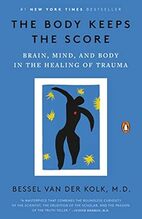
The Body Keeps the Score: Brain, Mind, and Body in the Healing of Trauma
Author: Bessel Van Der Kolk, M.D.
ISBN-10: 0143127748
ISBN-13: 978-0143127741
APA Style Citation
Van Der Kolk, B. (2014). The body keeps the score: Brain, mind, and body in the healing of trauma. Penguin Books.
Buy This Book
https://www.amazon.com/Body-Keeps-Score-Healing-Trauma/dp/0143127748
Author: Bessel Van Der Kolk, M.D.
ISBN-10: 0143127748
ISBN-13: 978-0143127741
APA Style Citation
Van Der Kolk, B. (2014). The body keeps the score: Brain, mind, and body in the healing of trauma. Penguin Books.
Buy This Book
https://www.amazon.com/Body-Keeps-Score-Healing-Trauma/dp/0143127748

| body_keeps_the_score_activity.pdf |
Book Description
Traumatic events are disturbing experiences that create negative emotions and reaction. Trauma not only affects those directly exposed to it but also those around the individuals who have experienced trauma. Research reveals that trauma leads to physiological changes in the brain and body. This newfound knowledge offers potential avenues to prevent and perhaps reverse the damage caused by trauma. The Body Keeps the Score: Brain, Mind, and Body in the Healing of Trauma serves as a guide to understanding trauma and urges us to acknowledge its impact on lives and encourage the development of treatments and prevention strategies.
The text begins with a look back on the rediscovery of trauma. Many lessons have been learned about trauma, including from the return of Vietnam veterans, the American Psychiatric Association’s diagnosis of posttraumatic stress disorder, and the use of brain imaging tools. We have also learned from research on learned helplessness in dogs, research on stress hormones, and the pharmacological and neuroscience revolutions. Each advancement in various scientific fields teaches us more about how trauma impacts our lives.
The brain and body are impacted by trauma. The author summarizes the function of specific brain parts and provides appropriate analogies. For example, the limbic system acts as the cook withing the brain. The thalamus stirs the input into an autobiographical soup and then passes it on the amygdala and frontal lobes. During trauma the floodgates are open, which can lead to sensory overload. The amygdala is the brain’s smoke detector and identifies whether incoming information is important for survival. If threatened, it messages the hypothalamus to activate the stress hormone system in the autonomic nervous system to set off a whole-body response. The medial prefrontal cortex, in the frontal lobe, is the watchtower that offers a view from above and tries to warn when not to react to false alarms of stress. Bottom-up regulation can adjust the autonomic nervous system, through breath, movement, or touch. Top-down regulation, such as through mindfulness and yoga, can enhance the watchtower’s oversight of the body’s sensations. This knowledge is central to better understanding and treating traumatic stress. Being stuck in survival mode, energy is spent on unseen enemies with little room left for nurturing, care, imagination, planning, playing, or learning. New approaches to treatment need to engage the safety system of the brain before trying to promote new ways of thinking. Many traumatized patients report not feeling whole areas of their body and a lack of self-awareness. The author walks through the explanation of why this is happening and the connection to the brain. The body keeps the score and mind-body communication is central to emotion regulation.
The author goes on to explain the minds of children and trauma. He carefully reviews disorganized attachment, memories, and the flood of sensations. With further research, a better understanding began to unfold. As the DSM III was being revised, the author conducted even more research and presented the results to the work group responsible for suggesting revisions for the new addition. Even though the work group voted to create a new trauma diagnosis, it was not added to the DSM III. The author feels as if an entire group of abused and neglected children were being ignored just as many of our veterans were before PTSD was introduced back in 1980. Soon after, a large study of adverse childhood experiences, now known as the ACE study, revealed that traumatic life experiences during childhood and adolescence are far more common than expected. It also found that adverse experiences were interrelated, even though they were usually studied separately. High ACE scores correlated with higher workplace absenteeism, financial problems, high-risk activities, and greater chances of suffering from any of the 10 leading causes of death in the United States. Ongoing stress on the body keeps taking its toll. The surgeon general's report on smoking and health in 1964 started a legal and medical campaign that forever changed daily life and long-term health for millions. Yet, the findings from the ACE study have not had similar results. Those experiencing trauma are in the same circumstances and receiving the same treatments as they were decades ago.
Developmental trauma is a hidden epidemic. The author points out the need to correctly define what is going on and do more than develop new drugs or focus on finding the gene responsible. In 2001, the National Child Traumatic Stress Network was set up and has grown to be a collaborative network with hundreds of centers nationwide. But 82% of the traumatized children seen in the Network do not meet the diagnostic criteria for PTSD. Their behaviors often lead to diagnoses, such as Oppositional Defiant Disorder and ineffective treatments, such as medication, behavioral modification, or exposure therapy. A core work group began to draft a proposal for an appropriate diagnosis called developmental trauma disorder (DTD) for the DSM-5, but once again was met with resistance. Feedback received included “...no new diagnosis was required to fill a missing diagnostic niche.” Shortly after the APA rejected DTD for inclusion in the DSM, thousands of clinicians from around the country sent small contributions to the trauma center to conduct a field trial to further study DTD. That support allowed for the interviewing of hundreds of kids, parents, foster parents, and mental health workers at five different Network sites with scientifically constructed interview tools.
Traumatic memories are different. The marks left by traumatic experiences are organized not as cohesive, rational stories, but rather as fragmented sensory and emotional pieces encompassing images, sounds, and physical sensations. The author explores the history and scientific interest regarding trauma. He explains the origins of the talking cure, WWI soldiers and shell shock, Nazis, false memory syndrome, repressed memory, and remembering the trauma with all of the associated effects. Recovery from trauma includes dealing with hyperarousal, mindfulness, and building relationships. Learning how to breathe calmly and remaining in a state of relative relaxation, even while accessing painful memories is an essential tool for recovery. It would make an enormous difference if those working with children, especially teachers and parents were trained in emotional regulation techniques. Traumatized individuals need to enhance their executive functioning and self-regulation. There is no one treatment of choice for trauma. The author explores sensory motor therapy, parent-child interaction therapy, cognitive-behavioral therapy, flooding, virtual reality therapy, systematic desensitization, medication, EMDR, yoga, internal family systems therapy, psychomotor therapy, and neurofeedback.
Even though there have been great advances in understanding and treating trauma, it is still a public health issue. The author argues it is one of the greatest threats to our nation’s well-being. The most promising prospect for children who have experienced trauma, abuse, or neglect lies in receiving a quality education within schools where they are acknowledged and understood. In such schools, they can develop a sense of control over their lives and learn the important skills of self-regulation, self-awareness, and communication. Schools have a pivotal role in fostering resilience and offering secure connections that are essential for meaningful lives. Resiliency stems from knowing that what you do makes a difference. Activities like sports, music, dance, and theater not only foster a sense of agency and community but also immerse children in novel challenges and unfamiliar roles. Just like adults, children should grasp the satisfaction of pushing their abilities to the limit.
Many individuals who have experienced trauma have gained strength and learned to survive. They have entered loving relationships, gained employment, and become role models in their communities. Some of the greatest political and social advancements have grown from trauma. Trauma is a public health issue and the author urges us to respond by acknowledging its impact on lives and encouraging the development of treatments and prevention strategies.
Other Related Resources
Author’s Website
https://www.besselvanderkolk.com/resources/the-body-keeps-the-score
What is Trauma? The author of “The Body Keeps the Score” explains | Bessel van der Kolk | Big Think
https://www.youtube.com/watch?v=BJfmfkDQb14
Washington Post
https://www.washingtonpost.com/books/2023/08/02/body-keeps-score-grieving-brain-bessel-van-der-kolk-neuroscience-self-help/
Psychological Concepts and Figures
John Bowlby
Charles Darwin
Paul Ekman
Sigmund Freud
Joseph LeDoux
Henry Murray
Ivan Pavlov
Jean Piaget
Martin Seligman
Richard Soloman
Adverse Childhood Experience (ACE)
Amygdala
Brain waves
Cognitive-behavioral therapy
Cortisol
Depersonalization
Desensitization
Diagnostic and Statistical Manual (DSM)
Diagnostic labels
Dissociative identity disorder (DID)
Endorphins
Epigenetics
Eye movement desensitization and reprocessing (EDMR)
Flooding
Learned helplessness
Medical model
Mindfulness
Mirror neurons
Neurofeedback
Neuroplasticity
Pharmacology
Posttraumatic stress disorder (PTSD)
Prozac
Reciprocity
Repressed memory
Resilience
Self-awareness
Thematic apperception test (TAT)
Trauma
Virtual-reality therapy
Yoga
Traumatic events are disturbing experiences that create negative emotions and reaction. Trauma not only affects those directly exposed to it but also those around the individuals who have experienced trauma. Research reveals that trauma leads to physiological changes in the brain and body. This newfound knowledge offers potential avenues to prevent and perhaps reverse the damage caused by trauma. The Body Keeps the Score: Brain, Mind, and Body in the Healing of Trauma serves as a guide to understanding trauma and urges us to acknowledge its impact on lives and encourage the development of treatments and prevention strategies.
The text begins with a look back on the rediscovery of trauma. Many lessons have been learned about trauma, including from the return of Vietnam veterans, the American Psychiatric Association’s diagnosis of posttraumatic stress disorder, and the use of brain imaging tools. We have also learned from research on learned helplessness in dogs, research on stress hormones, and the pharmacological and neuroscience revolutions. Each advancement in various scientific fields teaches us more about how trauma impacts our lives.
The brain and body are impacted by trauma. The author summarizes the function of specific brain parts and provides appropriate analogies. For example, the limbic system acts as the cook withing the brain. The thalamus stirs the input into an autobiographical soup and then passes it on the amygdala and frontal lobes. During trauma the floodgates are open, which can lead to sensory overload. The amygdala is the brain’s smoke detector and identifies whether incoming information is important for survival. If threatened, it messages the hypothalamus to activate the stress hormone system in the autonomic nervous system to set off a whole-body response. The medial prefrontal cortex, in the frontal lobe, is the watchtower that offers a view from above and tries to warn when not to react to false alarms of stress. Bottom-up regulation can adjust the autonomic nervous system, through breath, movement, or touch. Top-down regulation, such as through mindfulness and yoga, can enhance the watchtower’s oversight of the body’s sensations. This knowledge is central to better understanding and treating traumatic stress. Being stuck in survival mode, energy is spent on unseen enemies with little room left for nurturing, care, imagination, planning, playing, or learning. New approaches to treatment need to engage the safety system of the brain before trying to promote new ways of thinking. Many traumatized patients report not feeling whole areas of their body and a lack of self-awareness. The author walks through the explanation of why this is happening and the connection to the brain. The body keeps the score and mind-body communication is central to emotion regulation.
The author goes on to explain the minds of children and trauma. He carefully reviews disorganized attachment, memories, and the flood of sensations. With further research, a better understanding began to unfold. As the DSM III was being revised, the author conducted even more research and presented the results to the work group responsible for suggesting revisions for the new addition. Even though the work group voted to create a new trauma diagnosis, it was not added to the DSM III. The author feels as if an entire group of abused and neglected children were being ignored just as many of our veterans were before PTSD was introduced back in 1980. Soon after, a large study of adverse childhood experiences, now known as the ACE study, revealed that traumatic life experiences during childhood and adolescence are far more common than expected. It also found that adverse experiences were interrelated, even though they were usually studied separately. High ACE scores correlated with higher workplace absenteeism, financial problems, high-risk activities, and greater chances of suffering from any of the 10 leading causes of death in the United States. Ongoing stress on the body keeps taking its toll. The surgeon general's report on smoking and health in 1964 started a legal and medical campaign that forever changed daily life and long-term health for millions. Yet, the findings from the ACE study have not had similar results. Those experiencing trauma are in the same circumstances and receiving the same treatments as they were decades ago.
Developmental trauma is a hidden epidemic. The author points out the need to correctly define what is going on and do more than develop new drugs or focus on finding the gene responsible. In 2001, the National Child Traumatic Stress Network was set up and has grown to be a collaborative network with hundreds of centers nationwide. But 82% of the traumatized children seen in the Network do not meet the diagnostic criteria for PTSD. Their behaviors often lead to diagnoses, such as Oppositional Defiant Disorder and ineffective treatments, such as medication, behavioral modification, or exposure therapy. A core work group began to draft a proposal for an appropriate diagnosis called developmental trauma disorder (DTD) for the DSM-5, but once again was met with resistance. Feedback received included “...no new diagnosis was required to fill a missing diagnostic niche.” Shortly after the APA rejected DTD for inclusion in the DSM, thousands of clinicians from around the country sent small contributions to the trauma center to conduct a field trial to further study DTD. That support allowed for the interviewing of hundreds of kids, parents, foster parents, and mental health workers at five different Network sites with scientifically constructed interview tools.
Traumatic memories are different. The marks left by traumatic experiences are organized not as cohesive, rational stories, but rather as fragmented sensory and emotional pieces encompassing images, sounds, and physical sensations. The author explores the history and scientific interest regarding trauma. He explains the origins of the talking cure, WWI soldiers and shell shock, Nazis, false memory syndrome, repressed memory, and remembering the trauma with all of the associated effects. Recovery from trauma includes dealing with hyperarousal, mindfulness, and building relationships. Learning how to breathe calmly and remaining in a state of relative relaxation, even while accessing painful memories is an essential tool for recovery. It would make an enormous difference if those working with children, especially teachers and parents were trained in emotional regulation techniques. Traumatized individuals need to enhance their executive functioning and self-regulation. There is no one treatment of choice for trauma. The author explores sensory motor therapy, parent-child interaction therapy, cognitive-behavioral therapy, flooding, virtual reality therapy, systematic desensitization, medication, EMDR, yoga, internal family systems therapy, psychomotor therapy, and neurofeedback.
Even though there have been great advances in understanding and treating trauma, it is still a public health issue. The author argues it is one of the greatest threats to our nation’s well-being. The most promising prospect for children who have experienced trauma, abuse, or neglect lies in receiving a quality education within schools where they are acknowledged and understood. In such schools, they can develop a sense of control over their lives and learn the important skills of self-regulation, self-awareness, and communication. Schools have a pivotal role in fostering resilience and offering secure connections that are essential for meaningful lives. Resiliency stems from knowing that what you do makes a difference. Activities like sports, music, dance, and theater not only foster a sense of agency and community but also immerse children in novel challenges and unfamiliar roles. Just like adults, children should grasp the satisfaction of pushing their abilities to the limit.
Many individuals who have experienced trauma have gained strength and learned to survive. They have entered loving relationships, gained employment, and become role models in their communities. Some of the greatest political and social advancements have grown from trauma. Trauma is a public health issue and the author urges us to respond by acknowledging its impact on lives and encouraging the development of treatments and prevention strategies.
Other Related Resources
Author’s Website
https://www.besselvanderkolk.com/resources/the-body-keeps-the-score
What is Trauma? The author of “The Body Keeps the Score” explains | Bessel van der Kolk | Big Think
https://www.youtube.com/watch?v=BJfmfkDQb14
Washington Post
https://www.washingtonpost.com/books/2023/08/02/body-keeps-score-grieving-brain-bessel-van-der-kolk-neuroscience-self-help/
Psychological Concepts and Figures
John Bowlby
Charles Darwin
Paul Ekman
Sigmund Freud
Joseph LeDoux
Henry Murray
Ivan Pavlov
Jean Piaget
Martin Seligman
Richard Soloman
Adverse Childhood Experience (ACE)
Amygdala
Brain waves
Cognitive-behavioral therapy
Cortisol
Depersonalization
Desensitization
Diagnostic and Statistical Manual (DSM)
Diagnostic labels
Dissociative identity disorder (DID)
Endorphins
Epigenetics
Eye movement desensitization and reprocessing (EDMR)
Flooding
Learned helplessness
Medical model
Mindfulness
Mirror neurons
Neurofeedback
Neuroplasticity
Pharmacology
Posttraumatic stress disorder (PTSD)
Prozac
Reciprocity
Repressed memory
Resilience
Self-awareness
Thematic apperception test (TAT)
Trauma
Virtual-reality therapy
Yoga
 RSS Feed