BOOKS FOR PSYCHOLOGY CLASS
  • Books for Psychology Class
  • Blog
  • Contact/Submissions
  • Other Psychology Websites
  • For Students

iScore5 AP Psychology Review App

4/6/2025

0 Comments

 
Picture


​Get the App!
The iScore 5 AP Psych app is now available for $4.99 in the iTunes App Store for Apple devices or Google Play for Android devices.
 
iTunes  https://play.google.com/store/apps/details?id=com.iScore5.Psych&hl=en
Google Play https://apps.apple.com/us/app/iscore5-ap-psychology/id6739144070


App Description 
iScore 5 AP Psych is an app designed to help students achieve high scores on the AP examination. The app makes exam review entertaining and engaging for students. The creators have designed an app that functions as a game, helping students master all the CED vocabulary words for AP Psychology. The app, however, goes beyond merely learning basic vocabulary by challenging students to master multiple-choice questions in levels of increasing difficulty. The questions have been written by experienced AP Psychology teachers and college professors of psychology, all of whom are also AP exam readers.
 
The app's interactive interface is easy to navigate, and students can return to study mode at any point during the game to practice basic vocabulary. The app tracks a running score, enabling students to monitor their progress and gain a deeper understanding of the concepts they will need to know for the exam. Within each level, including the study mode, questions and practice items are organized by units, allowing for targeted study of specific areas in the AP curriculum.
 
The app is also an effective way for students to prepare for classroom unit exams, midterms, and finals. Because it is portable and easily accessible via phone or tablet, students are more likely to review more frequently. Even if students only have five or ten minutes to review at a time, this will result in an impressive increase in knowledge of psychology content due to the spacing effect.

 
Prepare for the AP Psychology Exam with iScore5
 
Study Level: All of the concepts from the updated CED are organized by AP Psychology unit and presented in a flashcard format. The study level is available for review at any level of the game.  

Play Level: Four levels of increasingly difficult multiple-choice questions.

​Level 1:  Vocabulary questions are organized by each of the AP Psychology units and presented in a multiple-choice format. Level 1 provides 20 terms at a time for each unit, so it is recommended that students play this level often, as the app generates a different set of terms each time the student plays.
 
Levels 2, 3, and 4:  These levels contain a set of multiple-choice questions in an AP format for each of the AP Psychology units in the CED. Each level increases in difficulty, ranging from level 2 (general understanding) to level 3 (intermediate) and level 4 (advanced). The correct answer to each question is explained, regardless of whether the student provided the correct response.
 
Practice Exam
Students are given the same amount of time they will have during the official AP Psychology exam (90 minutes) and are provided with their total score. After completing the practice test, they can review the questions they missed and see answer explanations. 

Reset: On the home screen, students can press the reset button to restart the game at any point, allowing them to play as often as they like.
 
The iScore5 AP Psych app provides students with a fun way to review for the exam.  Because all the questions are crafted by expert AP Psychology teachers and university psychology professors, the quality of the questions is very similar to what students will see on the AP exam.

​
 
Get the App!
The iScore 5 AP Psych app is now available for $4.99 in the iTunes App Store for Apple devices or Google Play for Android devices.
 
iTunes (iPhones and iPads) https://play.google.com/store/apps/details?id=com.iScore5.Psych&hl=en

Google Play (Android phones and Chromebooks) https://apps.apple.com/us/app/iscore5-ap-psychology/id6739144070
 
Other Apps Available from iScore5
The iScore5 company also offers review apps for other Advanced Placement topics, including AP United States Government and Politics, AP World History, and AP Human Geography. Visit the main iScore website for information about these other programs: http://www.iscore5.com.
 
Social Media
For more information about iScore5 AP Psych, visit the company website or follow them on Facebook and Instagram.
 
Website:
http://www.iscore5.com/apreg-psychology.html
 
Facebook:
https://www.facebook.com/iscore5/
 
Instagram:
https://www.instagram.com/iscore5/


Picture
0 Comments

Brain Hacks: Life-Changing Strategies to Improve Executive Functioning

12/18/2022

2 Comments

 
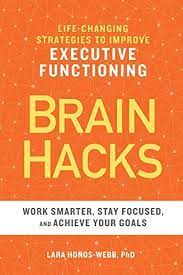
Brain Hacks:  Life-Changing Strategies to Improve Executive Functioning
​Author: Lara Honos-Webb, PhD

ISBN number: 13. 978–1641521604
 
APA Style Citation
Honos-Webb. (2018). Life-changing Strategies to Improve Executive Functioning. Althea Press.
 
Buy This Book
BRAIN HACKS: Life-Changing Strategies to Improve Executive Functioning: Honos-Webb PhD, Lara: 9781641521604: Amazon.com: Books
Picture
brain_hacks_activity.pdf
File Size: 155 kb
File Type: pdf
Download File

Book Description
According to the APA dictionary, executive function refers to a wide range of high-level cognitive processes (planning, decision-making, problem-solving, action sequencing, task assignment and organization, effortful and persistent goal pursuit, inhibition of competing impulses, flexibility in goal selection, and goal-conflict resolution. These skills often involve language, judgment, abstraction, concept formation, logic, and reasoning). They are related to neural networks in the frontal lobes and especially the prefrontal cortex.
 
Although there is no definitive set of executive functions (researchers define them differently), in Brain Hacks, the author focuses on five specific areas of executive functioning: focus and attention, planning and organization, cognitive flexibility, emotional regulation, and impulse control. Each of the areas is interconnected, and increasing one ability will improve the others. The author is a practicing clinical psychologist who shares her ideas for improving executive functioning across multiple areas. The text begins with short yes/no questionnaires for each of the five executive functioning areas.
 
Sample Questions from the Organization and Planning Executive Function Assessment
  • Do you have multiple calendars or apps to manage your time, yet use them infrequently?
  • Do you miss out on opportunities because you forget to follow up or track important contacts you have made?
  • Do friends, teachers, or family members complain that your space is sloppy?
 
By counting the number of yes responses, students will have a general idea of which of these areas of executive functioning are the most likely sources of challenges or problems. The areas with lower numbers of yes responses are areas of greater strength.    
 
The book provides specific exercises and methods to improve each area of executive functioning, which can be incorporated into classroom activities and projects. Improving in these areas of functioning, according to author Lara Honos-Webb increases personal, academic, and professional success. Improving executive functioning also can lead to increased work-life balance, reduced stress, and improved relationships. The exercises emphasize how small, continual efforts over time create meaningful growth. 
 
Each chapter emphasizes a separate area of executive functioning, provides a summary and background information, including psychological and biological influences, and ends with a bulleted list of key takeaways. There is also a series of exercises, tips, and special “brain hacks” to improve executive functioning. Brain hacks are tips for using the mind’s innate abilities to learn and improve to the greatest advantage. The book is designed as a tool to be used continually instead of being read once as inspiration and is laid out efficiently to find ways to increase functioning in everyday life mindfully. In the psychology classroom, the “brain hacks” and exercises can become engaging classroom activities and projects that allow students to apply what they learn in a personal manner. These activities can be spread across various units in a psychology course, including motivation and emotion, stress and health, neuroscience, memory, clinical, and developmental to increase student engagement and build metacognitive skills.

Other Related Resources
Author’s Website- Lara Honos-Webb, Ph.D., author, and licensed clinical psychologist in private practice   

A short video on executive functioning (3 min, 21 sec) Stephanie Carlson, PhD

WebMD Executive functioning and executive functioning disorder 
​

Weill Institutes for Neuroscience Memory and Aging Center University of California, San Francisco 
Psychological Figures and Concepts
Cognitive flexibility
Emotional regulation
Executive functioning
Exposure therapy
Fixed mindset
Focus and attention
Growth mindset
Impulse control
Metacognition
Motivation
Multitasking
Neuroplasticity
Planning and organization
Prefrontal cortex
Resilience
Working memory
2 Comments

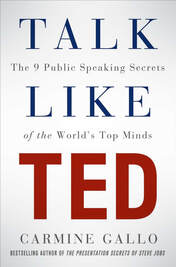
Talk Like Ted:  The 9 Public-Speaking Secrets of the World's Top Minds

2/2/2020

2 Comments

 
​Author:  Carmine Gallo
ISBN: 978-1-250-04112-8
APA Style Citation
Gallo, Carmine (2014). Talk Like TED:  The 9 Public-Speaking Secrets of the World’s Top Minds.  New York: St. Martin’s Press.
Buy This Book
​​www.amazon.com/Talk-Like-TED-Public-Speaking-Secrets/dp/1250041120
Picture
ted_open_your_class.pdf
File Size: 3733 kb
File Type: pdf
Download File

Book Description
The TED Conference, which stands for Technology, Entertainment, and Design, has been around since 1984 but did not become well known until they began posting videos of their trademark 19-minute presentations online for free.  Author Carmine Gallo is a communications expert and the author of the bestselling book, The Presentation Secrets of Steve Jobs.  Gallo examined over 500 TED presentations and added insights from research on persuasion and communication to generate a list of the critical aspects of highly engaging presentations. Talk Like TED offers nine key public-speaking tips utilized in some of the most well-known presentations.  The tips for giving great talks are organized into three broad categories:  Emotional (they touch the heart), Novel (they teach something new), and Memorable (they present ideas in a unique manner).  As teachers, we frequently deliver content to students in a presentation form, and this book can provide a variety of tools to use to increase student engagement and learning.  Each chapter describes a method used in the most successful TED talks including specific examples and insight from the speakers. One of the best aspects of this book was stopping periodically to watch the amazing TED talks discussed in the book!
 
EMOTIONAL
The first third of the book is devoted to the three tips in the category related to emotional factors that “touch the heart.”  In chapter one, “Unleash the Master Within,” the author discusses the importance of choosing topics to discuss in which you have personal passion and interest.  According to the author, “the first step to inspiring others is to make sure you are inspired yourself.”  An excellent example of a TED talk that exemplifies passion was given by University of Waterloo Economics professor Larry Smith titled, “Why You Will Fail to Have a Great Career.”  Smith discusses that although college students are told to pursue their passion most will not because “You’re afraid to pursue your passion.  You’re afraid to look ridiculous.  You’re afraid to try.  You’re afraid you may fail.”
https://www.ted.com/talks/larry_smith_why_you_will_fail_to_have_a_great_career
 
Neuroanatomist Jill Bolte Taylor gave one of the most watched TED talks of all time (about 20 million views).  The talk illustrates how having a strong emotional connection with the material leads to increased audience engagement.  Bolte Taylor’s talk is compelling because it involves a personal connection and exceptional storytelling.  TEDster Dr. Jill Bolte Taylor offers advice for teachers and other presenters, and that is to tell a story and demonstrate your passion for the topic. According to Bolte Taylor, “When I was at Harvard, I was the one winning the awards.  I wasn't winning the awards because my science was better than anyone else’s.  I was winning because I could tell a story that was interesting and fascinating and it was mine, down to the detail.”
http://www.ted.com/talks/jill_bolte_taylor_s_powerful_stroke_of_insight 
 
 
Chapter two discusses how to “Master the Art of Storytelling” by illustrating how effective speakers utilize narratives to make an emotional connection with the audience.  For example, TED speaker Brene Brown famously begins her topic by defending qualitative research she conducts with the statement that “Stories are data with a soul.”  Effective storytelling engages each listener individually and allows them to become emotionally attached and to the ideas being presented.  Some of the most effective TED storytellers are discussed in this chapter including Brian Stevenson’s talk, “We Need to Talk About an Injustice” which led to the longest standing ovation in TED history (see earlier Books for Psychology Class post on his book Just Mercy).  The 1,000 attendees at Stevenson’s talk collectively donated $1 million dollars to his nonprofit, the Equal Justice Institute.  Stevenson raised $55,000 for every minute he spoke that day.  This TED talk was given without the aid of a PowerPoint, visuals, or props of any kind – a testament to the power of story. 
https://www.ted.com/talks/bryan_stevenson_we_need_to_talk_about_an_injustice
 
Another tip for an effective persuasive presentation according to the author, is to utilize Aristotle’s three components of effective persuasion ethos, logos, and pathos in the most effective ratio. Ethos refers to the credibility and credentials of the speaker, logos is the use of logic and data to make effective arguments, and pathos is the ability to appeal to the emotions of the audience.  When the author of the book analyzed the content of Brian Stevenson’s TED talk, he found it was 10 percent ethos, 25 percent logos, and 65 percent pathos or emotional appeal. Despite being 65 percent of pathos Stevenson’s talk has been rated as one of the most persuasive of all time. One of the ways the book recommends inserting pathos or emotional appeal is by including extreme moments. Dan Ariely, a psychologist and behavioral economist at Duke, introduces his talk on how research shows that people are predictably irrational with a dramatic personal story of his recovery from an injury that left him burned over 70 percent of his body.  Ariely’s talk is an excellent addition to the research unit for illustrating the need to test beliefs that are held intuitively through careful research methods. 
https://www.ted.com/talks/dan_ariely_on_our_buggy_moral_code/transcript?language=en#t-102037
 
In chapter three, the author describes how effective TED presenters can use body language and verbal delivery to engage with the audience in a manner that feels authentic and conversational instead of an impersonal lecture to a large group.  The four elements of verbal delivery addressed in this section are rate, volume, pitch, and the effective use of pauses for emphasis.  One of the examples of effective nonverbal communications is a 2012 TED talk by a former Army general and U.S. secretary of state Colin Powell on the importance of providing children with structure early in life.  His speech is broken down to illustrate how particular gestures corresponded with the words he used during his speech. 
 
Another amazing TED talk that powerfully uses gestures to strengthen an argument was given by Ernesto Sirolli titled, “Want to help someone?  Shut up and listen!” is also broken down to highlight the expert use of gestures.  Sirolli’s talk discusses how his failure to listen led to failure for his NGO project designed to help increase food production in rural Zambia.  The project involved teaching people living in southern Zambia to grow Italian tomatoes and other vegetables.  Because the local population was uninterested, the NGO paid them to grow the vegetables.  Sirolli and his team were surprised that agriculture was not being used in this fertile region with excellent weather and soil.  According to Sirolli, instead of asking the people living there why they did not grow crops, they said, "Thank God we're here." Just in the nick of time to save the Zambian people from starvation." The result was that everything grew extremely well and we were telling the Zambians, "Look how easy agriculture is." When the tomatoes were nice and ripe and red, overnight, some 200 hippos came out from the river, and they ate everything. It was then that Sirolli asked the Zambians, “My God, the hippos!" and the Zambians said, "Yes, that's why we have no agriculture here." When Sirolli asked, “Why didn't you tell us?" the Zambians replied, "You never asked."
https://www.ted.com/talks/ernesto_sirolli_want_to_help_someone_shut_up_and_listen
 
NOVEL
The second section of the book explains three aspects that contribute to an effective presentation because it is new and unique.  Kevin Allocca, who studies YouTube trends, stated this perfectly when he pointed out that in an era when two days’ worth of video is uploaded every two minutes, it is only the truly unique and original ideas that capture the attention of the online audience. 
 
The topic of chapter four, “Teach Me Something New,” describes how the best TED talks find a way to introduce new ideas or perspectives.  The author suggests that the titles of some of the most frequently viewed TED talks promise to teach something new such as “Schools Kill Creativity” (Sir Ken Robinson), “How Great Leaders Inspire Action” (Simon Sinek), “The Surprising Science of Happiness” (Dan Gilbert), “The Power of Introverts” (Susan Cain), “8 Secrets of Success” (Richard St. John), and “How to Live Before You Die” (Steve Jobs).  Martha Burns, a professor at Northwestern, teaches how to use neuroscience to be a better educator and highlights the biology behind the “buzz” we experience when learning something in her powerful TEDx talk.  One of the best examples of teaching something novel is Hans Rosling's talk that makes statistics and correlations exciting and meaningful.  Rosling, an expert on global health, animates correlational data regarding health and wealth in a powerful demonstration.  You can view his entire talk at ted.com or view the abbreviated version titled:  200 countries, 200 years, 4minutes.  https://www.youtube.com/watch?v=jbkSRLYSojo
 
Novel presentations, according to chapter five, “Deliver Jaw-Dropping Moments,” in which presenters capture the attention and imagination of their audiences by using dramatic demonstrations or surprises.  Some of the most dramatic moments or “hooks” at TED talks have included Bill Gates releasing mosquitos and Dr. Jill Bolte Taylor who opens her talk by holding a human brain that is still attached to the spinal cord.  “Wow” moments can also come from a single shocking statistic.
  • “This country is very different today than it was 40 years ago. In 1972 there were 300,000 people in jails and prisons. Today there are 2.3 million.  The United States now has the highest rate of incarceration in the world.”
Bryan Stevenson
 
  • “Why are we ignoring the oceans?  If you compare NASA’s annual budget to explore the heavens, that one-year budget would fund NOAA’s budget to explore the world's oceans for 1,600 years.” 
Robert Ballard
 
  • “One in a hundred regular people is a psychopath.  So there are 1,500 people in this room. Fifteen of you are psychopaths.”
Jon Ronson
 
Successful TED talks also hook new viewers by creating memorable headlines, which turn into sound bites that are often spread across social media.  TED even has a Twitter handle devoted to the catchy, memorable quotes that are likely to generate public attention (@TEDQuote). 
 
  • “There’s zero correlation between being the best talker and having the best ideas.”
Susan Cain
 
  • “Don’t fake it till you make it.  Fake it till you become it.”
Amy Cuddy
 
  • “Numbers are the musical notes with which the symphony of the universe is written.”
Adam Spencer
 
Chapter six highlights how the ability to “Lighten Up” by using appropriate and genuine humor can increase audience engagement.  The book provides numerous tips for adding humor to presentations, including quotes, short video clips, and anecdotes.
 
MEMORABLE
The final third of the book is dedicated to various ways to make your ideas and your presentation memorable.  Chapter seven, “Stick to the 18-Minute Rule,” explains why all TED talks are limited to 18 minutes.  This key rule was established because it allows enough time for thoughtful analysis, yet short it is enough to maintain audience engagement.  Research shows that information is remembered better if it is organized into related chunks, this has led TED to recommend that presentations be centered around three main areas or points that support one large overarching idea.  This concept can be applied to classroom presentations as well by limiting direct instruction to shorter chunks broken up with time for reflection and formative practice.  The 18-minute rule forces researchers to create a focused message that maintains attention levels, and that does not create what researchers call “cognitive backlog” or the problem in which too much information prevents the successful transfer of ideas.  There are also numerous other TED rules of three such as the Three A’s of Awesome:  Attitude, Awareness, and Authenticity which were shared by award-winning blogger and author of the Book of Awesome, Neil Pasricha in a TEDx talk.  https://www.ted.com/talks/neil_pasricha_the_3_a_s_of_awesome 
Kevin Allocca, a YouTube trends manager studies why some videos go viral, and others do not.  According to Allocca, 48 hours of video are uploaded to YouTube every minute, yet only a few will have millions of views.  In Allocca’s TED talk, he explains the three factors that contribute to the success of a video:  tastemakers, communities of participation, and unexpectedness.  Of course, there is also the three-minute TED talk titled “TED in 3 Minutes,” which has been given by individuals such as Arianna Huffington and New York Times tech columnist David Pogue.  The original three-minute talk was given by Terry Moore who showed the audience a better way to tie their shoes, which has been viewed more than 1.5 million times.  The rule of three suggests
  1. Creating a Twitter-friendly headline
  2. Support the headline with three key messages
  3. Reinforce the three messages with stories, statistics, and examples
 
Chapter eight describes how effective speakers can “Paint a Mental Picture with Multisensory Experiences” and engage as many of the senses of audience members as possible.   For example, the best TED talks use memorable images, not excessive text on slides.  One of the major tips is for creating better more effective PowerPoint presentations by avoiding too much text and instead relying more on memorable images and other visuals.  One of the worst ways to present is PowerPoint karaoke in which the speaker reads text aloud off of the screen. The chapter includes several examples of successful TED talks that show the words being used by the presenter alongside a description of the images being displayed to audience members.  A powerful example of how words are delivered alongside dramatic images is Lisa Kristine’s TED talk about the hardships of indigenous peoples and the reality of the 27 million individuals living in modern-day slavery. https://www.ted.com/talks/lisa_kristine_glimpses_of_modern_day_slavery
 
The final tip for making your presentation memorable, “Stay in Your Lane,” is outlined in chapter nine. Staying in your lane means that your presentations need to be authentic and honest and speak from the heart.  One of the tips offered for “staying in your lane” is to practice by giving your presentation to a friend or family member first because when you have a close relationship with someone, you are more likely to show who you are. 
 
Talk Like TED is an excellent guide full of practical ideas for making your presentations, activities, and demos more engaging and effective.  The book is also an opportunity to learn about some amazing TED talks you may not have heard of before.  TED talks can be shown in class, assigned as homework to facilitate class discussions or offered as opportunities for students who want to expand their understanding of a particular area of psychology.  Another interesting way to use TED talks is to execute the demos or activities presented by a particular TED talk in class, and then after hooking students on the content, let your students know how to access the entire TED talk. Because many TED presenters are also authors, TED talks can be used to stimulate interest for students to read books related to their favorite TED talks or pursue research projects in areas related to what they watched. 
 
Other Related Resources
 
Author’s Website
Carmine Gallo’s website offers articles, videos, and links to other books.
http://gallocommunications.com/books/talk-like-ted-2/
 
The Top 20 TED Talks of All Time
http://www.ted.com/playlists/171/the_most_popular_talks_of_all?gclid=CjwKEAjwtNbABRCsqO7J0_uJxWYSJAAiVo5LuME8Z7o2-Ki6OahJAA2Liq3mJcpOAdNcrtYR4zRz0RoCKgPw_wcB
 
How to Sound Smart in Your TED Talk
Comedian Will Stephen’s take on how to give a TED talk and impress your audience.
https://www.youtube.com/watch?v=8S0FDjFBj8o
 
 
Psychological Figures and Concepts
Dan Ariely
Aristotle
Paul Bloom
Jill Bolte-Taylor
Lera Boroditsky
Susan Cain
James Flynn
Daniel Gilbert
Malcolm Gladwell
Sydney Jensen
George Miller
Daniel Pink
Hans Rosling
 
10,000 Hour Rule
Altruism
Amygdala
Analogies
Dopamine
Dual-Coding Theory
Flashbulb Memory
Flynn Effect
Genius
Hippocampus
Imagery
Introversion
Linguistic Determinism
Linguistic Relativity
Magic Number 7 Plus or Minus 2
Multitasking
Neuroplasticity
Nonverbal Communication
Persuasion
Positive Emotion
Self-Esteem
Statistics 
2 Comments

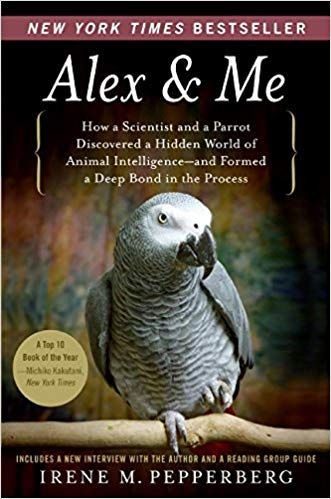
Alex & Me: How a Scientist and a Parrot Discovered a Hidden World of Animal Intelligence--and Formed a Deep Bond in the Process

12/15/2018

0 Comments

 
Alex & Me: How a Scientist and a Parrot Discovered a Hidden World of Animal Intelligence--and Formed a Deep Bond in the Process
Author:  Irene Pepperberg
ISBN-10: 0061673986
ISBN-13: 978-0061673986

APA Style Citation
Pepperberg, I. (2009).  Alex & Me: How a scientists and a parrot discovered a hidden world of animal intelligence—and formed a deep bond in the process. New York, NY: Harper Perennial.
 
Buy This Book
https://www.amazon.com/Alex-Me-Scientist-Discovered-Intelligence/dp/006167398
Picture
alex_and_me_activity.pdf
File Size: 317 kb
File Type: pdf
Download File

​Book Description
Do birds have language or is the story of Alex & Me for the birds? The studies of Dr. Irene Pepperberg revolutionized the way we think of bird brains. She worked with an African Grey parrot named Alex for over three decades as she tested his verbal, mathematical, and cognitive abilities. The book starts with the public acknowledgement of his death in 2007. For example, Diane Sawyer did a 2.5 minutes segment on ABC’s Good Morning America. She commented “And now I have a kind of obituary and I want to inform the next of kin about a death in the family. And, yes, the next of kin would be all of us.” A website was setup for condolences and many cards were received. One card came from Penny Patterson and friends, owner of the famous Koko gorilla who used sign language to communicate with humans. “Koko sends a message with the color of healing. Please know you are all in our thoughts and prayers- Alex’s passing is a great loss to all.” Below Penny’s words was an orange squiggle, done by Koko himself. Then the story rewinds back to Dr. Pepperberg as a child receiving her first bird as a present and winds through the trials and tribulations of her career as she explores animal thinking.
 
Dr. Pepperberg’s love for birds started as a young child. She grew up as an only child with a distant mother and didn’t really fit in with her peers. With a surprise gift of a parakeet for her fourth birthday and exposure to Dr. Doolittle, her journey working with birds started. Rather than taking the traditional route of studying biology, she fell in love with the periodic table of elements and followed the path of chemistry. At 16 years-old she headed off to MIT to study chemistry, but birds remained an important part of her life. After getting married and losing her home to a fire, Pepperberg was exposed to PBS’s NOVA television series, which was devoted to science and nature. Her passion for animals was reignited and she cast chemistry aside.  Quickly, she became engrossed in bird behavior, child cognition, and language. At this time scientists believed animals were robotic automations who mindlessly responded to stimuli in their environment. However, new science was changing this view and Dr. Pepperberg wanted to be involved in this revolution.
 
In 1977, Pepperberg and her husband moved to Indiana where she spent seven years at Purdue University. Shortly after arriving she selected her first African Grey parrot from a Chicago pet store. It did not start well because Alex was uneasy and scared of his new environment, but within a few days they became more familiar with each other. He came out of his cage and would perch on her arm. Dr. Pepperberg called him Alex, which was short for Project ALEX: Avian Language Experiment. Soon after she switched it to Avian Learning Experiment and planned to develop parrot-human communication using labels, as was being done with apes.  She gave Alex objects, such as paper and pieces of wood, to explore his preferences. She also used a modified form of training based on social context. Two trainers would take turns asking each other about an object’s label, with Alex observing. At the time operant conditioning was the preferred method of training. Dr. Pepperberg applied for a National Institute of Mental Health grant with the desire to replicate in a Grey parrot the linguistic and cognitive skills that has been previously achieved with chimps. The NIMH proposal was approved but no money was available to fund it. Dr. Pepperberg refused to give up.
 
Alex progressed quickly, within a year he had 80% accuracy in labeling seven objects and was beginning to learn his colors. He could also identify 3-corner pieces and 4-corner pieces of wood. Dr. Pepperberg tried to have her studies published in both American and British journals, but there was no significant interest. At this time the field of animal thinking was being questioned.  These attacks on the field only caused Dr. Pepperberg to continue her rigorous training in testing her Grey parrots. She came from the hard sciences and wanted to have scientific proof of her theories. She insisted on repetitive trials before she could say with statistical confidence that Alex had cognitive ability.  Empirical results with animal studies were necessary to avoid a “Clever Hans” situation, where researcher bias influenced the results. Check out the book review "The Horse That Won’t Go Away: Clever Hans, Facilitated Communication, and the Need for Clear Thinking.” (https://booksforpsychologyclass.weebly.com/blog/the-horse-that-wont-go-away-clever-hans-facilitated-communication-and-the-need-for-clear-thinking).
 
Dr. Pepperberg was able to live off meager National Science Foundation grants. By 1981, Alex started to get public attention and continued to advance at an astounding rate. He could understand the concept of color and shape as categories that contained labels. He learned to use “I’m sorry” in an upsetting moment. Alex continued to advance and soon he combined parts of words to make a new word. For example, he called an apple a “bannerry;” banana + cherry = banerry.  He also became bored easily. When asked about the color of an object, he would sometimes give every color he knew, skipping only the correct color. While his sense of humor was not science, it was telling. Something was going on in his little bird brain. He knew what he was saying, and his comprehension was equal to chimpanzees and dolphins. His next challenge was to determine if objects were the same or different. It took months to train him, but he was correct 75% of the time when asked about the same “shape” or “color.” When novel objects were presented, such as a color he could not label, he was correct 85% of the time. He had outwitted chimps, by not only identifying if two objects were similar or not, but by verbalizing how they were the same or different in color, shape, or material.
 
In 1991, Dr. Pepperberg’s position at Northwestern came to a close, and her marriage fell apart. She was not taken seriously as a female scientist, and she struggled to gain employment. Alex got a fungal infection in his chest cavity and lungs. He was very sick and had to have surgery. It took over a year for him to recover and the whole ordeal was quite taxing physically and emotionally on Dr. Pepperberg. Finally, she decided to take a position in Tucson, Arizona and moved with Alex alone to the southwest.
 
In Arizona, Pepperberg continued her work with Grey parrots. She expanded her studies with two more Greys- Alo and Kyaaro (Kyo) and created a culture balanced with playfulness and careful scientific study. In 1991, she established the Alex Foundation to raise money to support and spread the word of her work. Alex participated in a study on recognizing and understanding Arabic numbers.  His vocalizations sounded like English, but did they have similar acoustic properties?  Sonograms proved that his vocalizations looked identical to human speech.  In 1995, Alo was sent to live with a friend, and Dr. Pepperberg got a new 7.5-week-old Grey parrot, which she named Griffin. Greys are territorial, and Alex did not take well to the new parrot. Alex was the boss of the lab and filled with entitlement.  His perch always had to be higher, and he needed attention first or he would not work for the day. Dr. Pepperberg would often take Alex home, but in 1998 he saw western screech owls building a nest outside her window and wanted to leave. She pulled the drapes, still he cried “Wanna go back…wanna go back.” This was a perfect example to demonstrate that Alex had mastered the concept of object permanence.
 
As Alex gained public exposure, he stirred jealousy amongst Dr. Pepperberg’s colleagues. This combined with other circumstance no longer made Tucson a good fit. When Pepperberg was asked to give a lecture on Alex at MIT’s Media Lab, she accepted a position and left Alex behind in Arizona for one year. It was here that her creative side was allowed to blossom. She worked on an electronic bird sitter, a smart nest that tracked Greys in Africa, and a system that enriched parrot’s vocab and worked with autistic children. It was at MIT that she got Wart, a 1-year-old Grey. In 2000, she taped another episode of Scientific American Frontiers, called Pet Tech, with Alan Alda.  Alex was also being trained to sound out phonemes with colored plastic refrigerator letters. During one interview he would answer her questions, but then demanded a nut. Suddenly he said, “Want a nut…nnn…uh…tuh.” He leaped beyond the expected results of his training and was able to demand a nut while using phonemes. Dr. Pepperberg received a five-year renewable contract as a research scientist at Media Lab and she left her tenured job in Arizona. Only three months later, in mid-2001, she and 30 others were let go. Without a lab, her parrots had to move in with friends for the next five months. Alex and Griffin became subdued at this time.
 
Dr. Pepperberg ended up receiving a position at Brandeis University in Boston. It was challenging at first, but she enlisted Alex as Griffin’s trainer and soon her work was back on track. By 2003, Alex knew numbers 1-6. He had a concept of zero and soon after was learning addition. Over the next six months, his addition accuracy was 85%, and he was on par with small children and chimpanzees. When presented with a green Arabic numeral 5 next to three blue wooden blocks and asked which color is bigger, he replied “green” showcasing his ability to judge the question according to number. Chimps cannot do this without extensive training. He was also tested on the Muller-Lyer illusion, and he fell for the optical illusion in a similar way as humans. In 2005, Dr. Pepperberg moved on to Harvard.
 
On September 5, 2007, Alex bid Dr. Pepperberg goodnight with, “You be good, I love you.” Pepperberg answered, “I love you, too.” Alex followed with, “You’ll be in tomorrow?” Dr. Pepperberg responded, “Yes, I’ll be in tomorrow.” This was their usual evening exchange. The next morning Dr. Pepperberg received the alarming email that he had passed away in the evening, 20 years before his expected life expectancy. Dr. Pepperberg believes the greatest lesson Alex taught her was patience. But the greatest lesson to be learned was that animal minds are more like human minds than was once believed.  Any animal limitation thrown at Alex, he was able to accomplish. If only his life did not come to an abrupt halt, he may have accomplished so much more.
 
Other Related Resources
Alex Foundation
https://alexfoundation.org/
 
How Irene Pepperberg Revolutionized Our Understanding of Bird Intelligence
https://www.audubon.org/news/how-irene-pepperberg-revolutionized-our-understanding-bird-intelligence
 
NY Times- Alex’s Death
https://www.nytimes.com/2007/09/10/science/10cnd-parrot.html
 
NY Times- “Brainy Parrot Dies, Emotive to the End”
https://www.nytimes.com/2007/09/11/science/11parrot.html?mtrref=www.google.com&gwh=418229D220C538443336F917ABCAFDE5&gwt=pay
 
NPR- Alex’s Death
https://www.npr.org/templates/story/story.php?storyId=14293868
 
NY Times- “Alex the Parrot”
https://www.nytimes.com/2007/09/12/opinion/12wed4.html?mtrref=www.google.com&gwh=B20EDBF8BC268546B6755365A542F53F&gwt=pay&assetType=opinion
 
NY Times- “Alex Wanted a Cracker, but Did He Want One?”
https://www.nytimes.com/2007/09/16/weekinreview/16john.html
 
Economist- “Alex the African Grey”
https://www.economist.com/obituary/2007/09/20/alex-the-african-Grey
 
Alex the Parrots’ Final Experiment
https://www.aaas.org/alex-parrots-final-experiment
 
Alex the Parrot
https://www.youtube.com/watch?v=vXoTaZotdHg
 
Psychological Figures and Concepts 
Aristotle
Nim Chimpsky
Noam Chompsky
Charles Darwin
Allen and Beatrice Gardner
Jane Goodall
Clever Hans
Koko
Konrad Lorenz
Jean Piaget
David Premack
Washoe
 
Animal cognition
Animal subjects
Assimilate
Autism
Babbling
Behaviorism
Biology
Birds
Chimps
Cortex
Empathy
Innate
Language
Mirror tests
Muller-Lyer illusion
Object permanence
Operant conditioning
Optical illusions
Phonemes
Psychotic
Second-language acquisition
Statistical sample
Visual perception
0 Comments

Intelligence:  All that Matters

6/21/2018

1 Comment

 
Intelligence: All That Matters
Author:  Stuart Ritchie
ISBN: 9781444791877
 
APA Style Citation
Ritchie, S. (2016). Intelligence:  All That Matters. London: Hodder and Stoughton.
 
Buy This Book
https://www.amazon.com/Intelligence-That-Matters-Stuart-Ritchie/dp/1444791877
​
Picture
intelligence_activity.pdf
File Size: 992 kb
File Type: pdf
Download File

key_intelligence_activity.pdf
File Size: 1005 kb
File Type: pdf
Download File

Book Description
The fast-paced book Intelligence, from the All That Matters series, is an excellent resource relating to teaching intelligence and testing units as well as a review of research and statistics in psychology. The book begins with a study the history of intelligence testing and includes sections on how modern intelligence tests work, why studying intelligence is important, the nature and nurture of intelligence, methods for increasing IQ, individual differences in intelligence, and a discussion of the controversies surrounding intelligence research.  Author Stuart Ritchie makes a strong case for the importance of intelligence research and presents the facts supported by research that intelligence tests indicate intelligence has a high rate of heritability, is generally stable throughout an individual’s life, and is correlated to numerous other lifestyle factors such as health, wealth, and educational and career success. Ritchie also discusses how IQ tests are connected to socio-economic status.
 
Additionally, the book provides a great opportunity to use the intelligence unit to practice analyzing research and critically examine data sets through the use of graphs and charts. Despite the controversy about the value of intelligence testing, the book makes a compelling research-based case for the usefulness of IQ testing.  For example, IQ scores are shown to be related to a variety of important variables including income, life expectancy, and educational performance. The author, Stuart Ritchie, directly confronts the major criticisms of IQ testing and highlights the benefits that can be gained by examining the research on human intelligence.
 
Throughout the book, the author provides interesting sections that highlight topics related to intelligence theory which are difficult for students to understand such as the concept of heritability.
 
What Heritability Does NOT Tell Us about intelligence.
  1. Heritability does not indicate that 50% of an individual’s intelligence is the result of genetics.  Heritability is group figure that describes variance in a specific population of individuals.
  2. Heritability does not indicate anything about average intelligence.  Intelligence may be 5- percent heritable in a group where the average IQ could be 85, 100, 118, 150, or any other number.
  3. The term “heritable” does not mean the same thing as hereditary.  A hereditary trait is anything passed from parent to child, but heritability is about genetic variation of a particular trait. To understand this, it is essential to understand that traits can be influenced by environmental factors.
  4. Heritability does not only apply to intelligence. Most human traits that vary between individuals (e.g., height, personality, political attitude, resistance to disease) is heritable (genes explain at least some of the variation).
The book has an excellent section on the Flynn Effect.  Evidence shows that better access to education and improved nutrition and health care are helpful in raising intelligence and that in many parts of the world access to these benefits has greatly increased over the last 100 years.  As a result, intelligence test scores have been increasing by around 3 points per decade since IQ testing began.  The average score on an intelligence test is 100, but researchers began to see that individuals who were born later typically earned average scores above 100 – in other words, they were scoring higher than the norm of the prior generation.  As a result, intelligence tests must be periodically re-normed with the score of 100 set to match up to an average of a sample of individuals for the current generation.  Flynn and other IQ researchers argue that improvements in education and nutrition are only a part of the picture when it comes to explaining generational increases in IQ scores.  The argument is that the way the average human thinks has undergone a dramatic shift over the last 100 years moving away from focusing on real-world applications of concrete concepts toward a more abstract and scientific way of thinking.  According to Flynn, “we all now wear scientific spectacles.”
 
The final part of the book is titled100 ideas is a wealth of resources about intelligence research including: fifteen recommended books about intelligence, five websites for the latest on intelligence research, five commonly used intelligence tests, twenty intelligence researchers working today and their areas of interest, ten review papers you should read, five (perhaps) surprising things that correlate with higher intelligence, five historical intelligence researchers not featured in the chapter on history, five anti-IQ books, ten common myths (debunked in the book) about intelligence, five fictional characters known for high intelligence, five fictional characters known for low intelligence, and ten ‘big questions’ for future intelligence research. 
 
Other Related Resources
 
TED Talk by James Flynn - Why our IQ levels are higher than our grandparents'
James Flynn’s 2013 TED talk discussing how the changes in how individuals think and reason that have occurred over the last 100 years explains the Flynn Effect.
https://www.ted.com/talks/james_flynn_why_our_iq_levels_are_higher_than_our_grandparents
 
Battle of the Brains
BBC Horizon’s documentary in which seven individuals who are all very successful in their respective fields are tested in a variety of ways to measure intelligence.  The documentary covers many of the main concepts and theories discussed in the curriculum for psychology units related to testing and individual’s differences. http://www.bbc.co.uk/sn/tvradio/programmes/horizon/broadband/tx/intelligence/highlights/
 
Current Intelligence Research Websites (from the 100 ideas section of the book)
International Society for Intelligence Research website
http://www.isironline.org/
 
Duke psychologist Jonathan Wai’s blog, Finding the Next Einstein:  discussing research findings and ideas that touch upon multiple issues surrounding the identification and development of talent and explores how these issues might be relevant to what's going on in the world.
https://www.psychologytoday.com/blog/finding-the-next-einstein
 
Temple University psychologist Joel Schneider’s blog:  Assessing Psyche on psychological assessment and psychometrics.
https://assessingpsyche.wordpress.com/
 
Kevin McGrew’s blog, IQ’s Corner Intelligent Insights on Intelligence Theories and Tests.  Educational psychologist Dr. Kevin McGrew is Director of the Institute for Applied Psychometrics 
http://www.iqscorner.com/
 
Psychological Figures and Concepts
Alfred Binet
Thomas J. Bouchard
Raymond Cattell
James Flynn
Hans J. Eysenck
Francis Galton
Howard Gardner
Stephen Pinker
Theodore Simon
Charles Spearman
William Stern
Robert Sternberg
Louis L. Thurstone
David Wechsler
Robert Yerkes
 
Bell (normal) curve
Binet Simon Test
Cattell Culture Fair Intelligence Test
Correlation
Crystalized intelligence
Emotional intelligence
Eugenics
Factor analysis
Fluid intelligence
Flynn effect
fMRI
g-factor
Genetics of intelligence
Heritability
IQ
Learning disability (e.g. dyslexia, dyscalculia, specific language impairment)
Mental age
Multiple intelligence theory
Nature and nurture of intelligence
Power test
Processing speed
Race and sex differences in intelligence
Raven’s Progressive Matrices
Regression
Reliability
Speed test
Standardized test
Triarchic theory of intelligence
Twin studies
Validity
Wechsler Intelligence Scales
Woodcock-Johnson Tests of Cognitive Ability
​
1 Comment

Research Methods and Statistics

9/2/2017

0 Comments

 
​Jessica Flitter
West Bend East High School, West Bend, WI
[email protected]

Research Methods and Statistics
Author: Ian Walker
ISBN:  978-0-230-24988-2
 
APA Style Citation
Walker, I. (2010). Research Methods and Statistics. Palgrave Macmillan.

​Buy This Book
https://www.amazon.com/Research-Statistics-Palgrave-Insights-Psychology/dp/023024988
Picture
research_stats_activity.docx.pdf
File Size: 13 kb
File Type: pdf
Download File

​Book Description
Do you struggle to teach research and statistics? Are you fearful of too much technical jargon and lack of student interest? For many high school teachers, the research chapter proves difficult. Decisions must be made on what to cover, what to leave out, how much depth to provide, etc. Author Ian Walker provides a summary of important material pertaining to research methods and statistics to support your research chapter. His language makes an introduction to research accessible, and the organization and examples make for easy reference.  To understand the significance of the topic at hand, Walker uses an analogy with research and building a house. A builder is interested in the final product of the house, but he will not complete the house if he does not know how to use the hammer.  Research and statistics are psychology’s necessary tools. Knowledge of research techniques provides students with a good set of tools to help promote the understanding of human behavior- the goal of all psychology students. 
 
The first section of the text focuses on research methods.  The author points out the importance of the choices made when conducting research.  Walker reviews major research methods and concepts such as population vs. sample, validity vs. reliability, observation studies, correlations, and the experimental method to name a few.  He notes how the experimental method has a large amount of specialized vocabulary and goes further to provide simple definitions and examples to support one’s understanding of these methods.  There is also a focus on clearly differentiating quantitative and qualitative methods.  Finally, he addresses research ethics, which is an important topic for introductory students to understand before embarking on any data collection of their own.     
 
The second section focuses on statistics.  Descriptive statistics are stripped down and explained for the layperson. The author acknowledges the confusion surrounding statistics and tries to build understanding through clear definitions and examples of basic terminology. Tables and graphs used to display data are differentiated based on the type of research they display, such as bar graphs, histograms, and line graphs.  Walker pays particular attention to clarifying the null hypothesis and reinforces this with examples throughout the text. After descriptive statistics, inferential statistics are examined. Walker describes p-value in a way that statisticians may take issue with but that allows for clear understanding for readers or those new to statistics?  Less commonly discussed topics in class are also addressed, such as type 1 and 2 errors, chi-square tests, levels of measurement (nominal, ordinal, interval, and ratio), one vs. two-tailed hypotheses, parametric vs. non-parametric tests, and the powerful Student’s t-test vs. the less powerful Mann-Whitney U test. While this may sound like a lot of new vocabulary beyond your students’ understanding, the book helps provide a big picture when explaining more simplistic terms or answering student questions.  In addition, Walker takes special care when explaining correlations. He uses the analogy that correlations are like being handed a chainsaw. They are useful tools when used properly, but users must be careful. First, correlation must not imply causation! Next, he addresses how only straight lines are visible when conducting correlations. Also, if a correlation is interesting a larger sample should be tested, the p-value should be looked at, and the finding should be sensible.  Not every set of numbers should be studied just because they have been collected. The final topic addressed is qualitative data, which is used to explore new ideas but which may eventually be developed into correlational or experimental research. The author discusses how to code data when reading transcripts of interviews to find themes.
 
The final section focuses on reports that comprise the final write up for a research study and the author’s concluding thoughts.  The main sections of the research report are summarized, and an example is provided in each section. The author also offers a few short warnings about statistics, such as floor and ceiling effects, regression to the mean, and the use of outright lies.  He points out that research and statistics are everywhere in our lives. The understanding of these tools is essential to practice in the field of psychology.  I encourage you rather than fearing the chapter, become familiarized with the terminology and start looking at all of the potential studies that can answer questions in the world around you.
 
 
Other Related Resources
 
Insight Book Series
Research Methods and Statistics is part of a large series of specialty books related to psychology published by Palgrave and available through Macmillan publishing.  There are specific books related to a variety of topics in psychology including developmental psychology, social psychology, forensic psychology, psychology and the media, issues and debates in psychology, gender, adolescence and adulthood, biological rhythms and sleep, intelligence and learning, health, sport, schizophrenia, phobias, obsessive-compulsive disorder and more.
https://he.palgrave.com/series/palgrave-insights-in-psychology-series/14688/
 
Author Ian Walker’s Websites
The author of Research Methods and Statistics, Ian Walker, is a professor of psychology at the University of Bath in Great Britain who studies the roles of identity, social norms, and habit in environmental behaviors - particularly travel behaviors - and in road safety settings.  The websites provide information about the author's background, research, and teaching.
http://drianwalker.com/work.html
http://staff.bath.ac.uk/pssiw/
 
 
Guess the Correlation
Guess the Correlation is a website that provides a series of scatterplots about which you can estimate the strength of the correlation.  Students can play individually or against an opponent.
http://guessthecorrelation.com/
 
Psychological Figures and Concepts
Alpha level
Alternative hypothesis
Bar graph
Categorical question
Categorical variable
Ceiling effect
Central tendency
Chi-square
Coefficient of determination
Confounding variable
Continuous variable
Control group
Correlation
Correlation coefficient
Counterbalance
Criterion validity
Debrief
Degrees of freedom
Experimental method
Experimenter effect
Extraneous variable
Fatigue effect
Field experiment
Floor effect
Histogram
Hypothesis
Independent samples design
Informed consent
Internal reliability
Interrater reliability
Interval
IV, DV
Lab experiment
Levels of measurement
Likert Scales
Line graphs
Mann-Whitney U test
Matched-pairs design
Mean
Measures of dispersion
Median
Mode
Naturalistic experiment
Negative correlation
Nominal
Non-parametric test
Normal distribution
Null hypothesis
Observational study
One-tailed hypothesis
Operationalize
Opportunity sampling
Order effect
Ordinal
Parametric test
Pearson’s product-moment correlation coefficient
Pie chart
Placebo effect
Population
Positive correlation
Practice effect
P-value
Qualitative research
Quantitative research
Quasi-experiment
Random sample
Range
Ratio
Regression to the mean
Repeated measures design
Repeated-measures t-test
Replication
Sampling error or bias
Scatterplot
Skewed distribution
Standard deviation
Standard error of the mean
Stratified sample
Third variable problem or lurking variable
Two-tailed hypothesis
Type 1 Error
Type 2 Error
Validity
Variance
Wilcoxon matched-pairs signed-ranks test
 
0 Comments

Psych Experiments

6/7/2017

0 Comments

 
​Psych Experiments:  From Pavlov's Dogs to Rorscharch's Inkblots, Put Psychology's Most Fascinating Theories to the Test
Author:  Michael A. Britt
ISBN: 10:  1-4405-9707-3
 
APA Style Citation
Britt, Michael (2017). Psych Experiments.  Avon, MA: Adams Media.
Picture
eyewitness_memory_virtual_reality.pdf
File Size: 1131 kb
File Type: pdf
Download File

a_vr_mystery_questions_for_videos.pdf
File Size: 44 kb
File Type: pdf
Download File

will_the_real_elmo_please_stand_up.docx
File Size: 1243 kb
File Type: docx
Download File

Book Description
Psych Experiments, the much-anticipated book by psychologist Michael Britt, known to psychology teachers everywhere as the host of the Psych Files podcast is an excellent source for experiments that can be used in the classroom or as student projects.  The Psych Files is best known to students and teachers for the animated videos designed to help students memorize the parts of the brain. The book contains 50 different experiments that are all based on psychological research. The experiments range from classic studies to more current research.  The book opens with general advice for conducting psychological research including information about replication, ethics, participant rights, and statistics.  Each of the 50 studies includes background information, related psychological concepts, a summary of how the original research was conducted, and step-by-step instructions for replicating either the original research design or a modified version.  Before replicating any of the studies listed in the book students should review the ethical guidelines in the early chapters.
 
One of the experiments Britt discusses is the famous examination of the misinformation effect by Elizabeth F. Loftus and John C. Palmer (1974).  After describing the original study and discussing the significance of the results for illustrating the fallibility of memory students can use Britt’s outline for exactly how to replicate this research in the classroom. The book includes step-by-step instructions. The author recommends having a sensitivity to students who may not wish to participate possibly as a result of personal experiences with car accidents.  An additional activity related to the Loftus and Palmer research on memory can be found in the “Open Your Class with this” activity posted with this book review.  This activity is designed to demonstrate the fallibility of memory using virtual reality technology.  An excellent way to close out this lesson/research experiment would be to show Elizabeth Loftus’s TED talk titled “How Reliable is Your Memory.”
https://www.youtube.com/watch?v=oLYY77LPr3U. 
 
Many of the experiments created by Michael Britt for this book would work well as class demonstrations or student-directed research projects for science fair competitions.  Students can view the examples of direct replications and unique variations of classic psychology experiments to help them develop ideas for their own original research.  Some of the ideas in the book that are easily adapted for classroom use are:
 
Cognition (Memory, Thinking, and Problem Solving)
How You Are Manipulated Into Paying More Money Than You Wanted:  I Bet You Expected to Pay Thousands For This! - Anchoring Bias
Based on research by Dan Ariely, George Loewenstein, and Drazen Prelec (2003)
 
Mental Sets Can Limit You Into One Way of Thinking:  How to Get Unstuck – Mental Set
Based on research by Abraham S. Luchins (1946)
 
Why Do You Remember Certain Things:  That’s Deep, Man – Levels of Processing
Based on research by Fergus I. M. Craik and Endel Tulving
 
Learning/Conditioning
When Trying Really Hard Makes No Difference:  I Give Up! – Learned Helplessness
Based on research by Martin Seligman and Steven Maier (1967)
Replication/extension research by Steven Maier and Martin Seligman (2016)
 
Motivation and Emotion
Noticing a Face in the Crowd:  I Never Forget a Face – Identifying Emotions
Based on research by Paul Ekman and Wallace V. Friesen (1971)
Replication/extension research by Christine Hansen and Ranald D. Hansen (1988)
 
Treatment
How to Think More Positively About Life:  Sing Your Problems Away – Cognitive Therapy/Cognitive Defusion
Based on research by Andreas Larsson, Nic Hooper, Lisa A. Osborne, Paul Bennett, and Louise McHuch (2015)
 
How Psychiatric Labels Affect How We Se People:  Sticks and Stones May Not Break My Bones, but Labels May Incarcerate Me – Labeling and Mental Illness
Based on research by David L. Rosenhan (1974)
Replication/extension research by Darcy Haag Granello and Todd A. Gibbs (2016)
 
Social Psychology
How Roles Can Affect Us at a Deep Level:  Are You the Role You Play?- Social Roles
Based on research by Craig W. Haney, W. Curtis Banks, and Philip G. Zimbardo (1973)
Replication/extension research by Stephen Reicher and Alexander Haslam (2006)

How Anonymity Can Make Us Mean: “That is the Stupidest Thing You Ever Said!”
– Deindividuation
Based on research by Philip Zimbardo (1969)
 
The Power of Conformity:  How Much Would You Pay for That Cornflake? – Conformity
Based on research by Solomon Asch (1952)
 
When Trying to Look Good Looks Bad:  My What Big Words You Have! – Influence
Based on research by Daniel Oppenheimer (2006)
 
Where Discrimination Begins: Those People are All the Same! – Prejudice and Discrimination
Based on research by Muzafer Sherif (1954)
Replication/extension research by Henri Tajfel (1970)
 
Michael Britt’s book, Psych Experiments contains many more that could be used by student both inside and outside of class, and that can serve as inspiration for additional student-directed research.
 
Other Related Resources

Author’s Website
http://www.thepsychfiles.com/
Michael Britt’s website includes psychology resources for review and years of excellent podcasts organized by unit. Some of the most popular podcasts include:
  • Episode 274: Be the First to Act – or the Second – Both Are Great
  • Episode 243:  Did Your Therapy Really Work?
  • Episode 224: If Freud Worked Tech Support (Defense Mechanisms)
  • Episode 195:  How to Memorize Piaget’s Stages of Cognitive Development
  • Episode 72 (video): Memorize the Parts of the Brain
  • Episode 68: Mnemonic Device for Erikson’s Eight Stages of Development
 
Elizabeth Loftus TED Talk “How Reliable is Your Memory?”
https://www.ted.com/talks/elizabeth_loftus_the_fiction_of_memory
 
Psychological Figures and Concepts
Dan Ariely
Solomon Asch
Robert Cialdini
Fergus Craik
John Darley
Hermann Ebbinghaus
Paul Ekman
Leon Festinger
Carol Gilligan
Harry Harlow
Daniel Kahneman
Lawrence Kohlberg
Elizabeth Loftus
Konrad Lorenz
A.S. Luchins
Stanley Milgram
George Miller
Ivan Pavlov
Jean Piaget
Hermann Rorschach
D.L. Rosenhan
Martin Seligman
Muzafer Sherif
B.F. Skinner
Richard Wiseman
Philip Zimbardo
 
Anchoring Heuristic
Attachment
Attraction
Change Blindness
Classical Conditioning
Cognitive Development
Cognitive Dissonance
Cognitive Therapy
Conformity
Creativity
Decision Making
Deindividuation
Discrimination
Dopamine
Emotion
Encoding
Eyewitness Memory
Facial Expressions and Emotion
Forgetting
Framing Effect
Frontal Lobe
Functional Fixedness
Human Factors Psychology
Intelligence
Labeling and Mental Illness
Loci Method
Mental Set
Moral Development
Obedience to Authority
Operant Conditioning
Perception
Personal Fable
Persuasion
Prejudice
Rorschach Inkblot
Social Psychology
0 Comments

The Psychopath Whisperer

9/16/2016

0 Comments

 
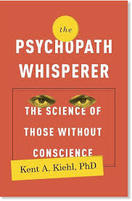
​The Psychopath Whisperer: The Science of Those Without Conscience 
Author:  Kent A. Kiehl PhD
ISBN: 13: 9780770435868
 
APA Style Citation
Kiehl, Kent (2014). The Psychopath Whisperer: The Science of Those Without Conscience.
New York: Broadway Books.
Picture
ingrid_reading.pdf
File Size: 49 kb
File Type: pdf
Download File

qs_ingrid_antisocial.pdf
File Size: 54 kb
File Type: pdf
Download File

key_qs_ingrid_antisocial.pdf
File Size: 53 kb
File Type: pdf
Download File

Book Description
Author Dr. Kent Kiehl is a neuroscientist whose research involves utilizing brain imaging and clinical interviews to study mental illness especially criminal psychopathology.  His research has involved taking mobile fMRI machines into prisons to study the brains of inmates he has determined were psychopaths based on clinical interviews and the Hare Psychopathy Test.  Kiehl is currently a Professor of Psychology, Neuroscience, and Law at the University of New Mexico.  He has compiled brain scans from over 3,000 offenders at eight different prisons.  Dr. Kiehl is the protégé of the world famous expert in psychopaths and creator of the influential psychopath checklist, Dr. Robert Hare. The book opens with Dr. Kiehl’s first encounter with a psychopath during his graduate work at a Canadian prison.  The book traces Kiehl’s career and depicts how a variety of academic experiences led him to become an expert in this field.  His early work using EEGs to examine the brain waves of killer whales, experience with fMRI machines, and clinical work under the leading expert in psychopathy all contributed to this interesting research area.  His research eventually led him to conduct fMRI research on prisoners and has resulted in the discovery of important physiological differences in the brains of psychopaths.  His work provides insight into the symptoms, diagnosis, and treatment of psychopathy. 
 
The author gives a thorough explanation of a question that comes up in nearly every introductory or abnormal psychology course, “What is the difference between a psychopath, a sociopath, and an individual with antisocial personality disorder?” The term psychopath was first used by the German psychiatrist J.L.A. Koch (1841-1908) to describe individuals who exhibited these traits throughout their entire life history and across most areas of their lives.  Koch narrowed the term to differentiate these individuals from others who were merely criminals.  Koch’s use of the term psychopath was based on biological causes.  This purely biological explanation for psychopathology soon was criticized by the growing influence of Behaviorism.  If individuals were blank slates at birth, then the traits described by Koch would have environmental causes.  The term sociopathy was first used in the 1930’s and was created to describe individuals with the same traits as psychopaths but whose cause was social and not physiological.  The simple answer then is that psychopaths are created by “nature” and sociopaths are created by “nurture.”  For the author, the terms sociopathy and psychopathy are very different.  Sociopathy would involve a very wide range of individuals who behave in antisocial ways as a result of negative environmental influences whereas psychopathy is a concept based on genetics and biology with measurable brain differences. 

Today, psychopathy is diagnosed based on the 20 items of the Hare Psychopathy Checklist-Revised, the clinical rating tool considered the gold standard for the assessment of psychopathy.  The Hare Psychopathy Checklist-Revised is given by a trained clinician who conducts a semi-structured interview lasting approximately two hours and collects extensive additional files on the individual.  The additional files often include police reports, assessments completed by other mental health workers, family history, employment history, educational records, childhood history, and criminal history.  Based on this information the individual is given a score for each of the 10 traits that describe the affective, impulsive, and antisocial symptoms of psychopathy.  Each item receives a score ranging from 0-2.  A score of 0 indicates that the trait is not present in the individual, a score of 1 indicates the trait describes the individual in some areas of their life, and a score of 2 indicates that the trait is present in all aspects of the individual's life.  The 20 traits on the Hare Psychopathy Checklist- Revised are described in detail in the book and are listed below:
  1. Glibness (insincerity or thoughtless) and Superficial Charm
  2. Grandiose Sense of Self-Worth
  3. Need for Stimulation
  4. Pathological Lying
  5. Conning/Manipulation
  6. Lack of Remorse or Guilt
  7. Shallow Affect
  8. Callous/Lack of Empathy
  9. Parasitic Lifestyle
  10. Poor Behavioral Controls
  11. Promiscuous Sexual Behavior
  12. Early Behavioral Problems
  13. Lack of Realistic, Long-Term Goals
  14. Impulsivity
  15. Irresponsibility
  16. Failure to Accept Responsibility for Own Actions
  17. Many Short-Term Marital Relationships
  18. Juvenile Delinquency
  19. Revocation of Conditional Release (Repeated failure to learn from punishments)
  20. Criminal Versatility
The author doubts that the average clinician can diagnose psychopaths accurately because they have difficulty reliably detecting the affective criteria such as lack of empathy, guilt, and remorse.  One common mistake that leads to overrating on the affective criteria is an excessive focus on the index crime (the one specific bad thing that the individual did which often leads to arrest).  For an individual to be diagnosed as a psychopath, these traits must be expressed across multiple areas of their lives and have existed for most of their life as evidenced by events from childhood.  One trick that the author suggests is to evaluate the individual on the psychopath checklist without using any information related to the index offense.  An actual psychopath would receive a high rating on traits even if the index offense were not included.  Also, according to the author, non-experts are often prone to giving excessively high scores across all areas if an individual has committed an extremely horrific crime, which may or may not be warranted.  The best way to prevent misdiagnosis is to have clinicians who work with individuals in forensic settings to undergo specialized training. 
 
In a fascinating chapter, the author examines the historical records to evaluate two infamous individuals according to the Psychopath Checklist-Revised.  The two individuals were both nineteenth-century presidential assassins:  John Wilkes Booth, who assassinated President Abraham Lincoln and Charles Guiteau, who assassinated President Garfield. The author draws upon the historical record and provides the reader with insight into how the criteria are measured and assessed.  Based on the author’s assessment of the historical record Charles Guiteau scores in the 99th percentile of psychopathy by scoring a 37.5/40 on the Psychopath Checklist-Revised.  John Wilkes Booth, on the other hand, earned an 8.4/40 on the checklist which although is two times the score of the average American male is below average for a criminal and not high enough for a diagnosis of psychopathy.
 
The text also discusses how psychopathy relates to the diagnosis of antisocial personality disorder found in the DSM-5.  The DSM does not include psychopathy as a specific diagnosis but does include antisocial personality disorder.  According to Dr. Kiehl, the DSM antisocial personality disorder criteria will result in getting a clinician about halfway to a diagnosis of psychopathy according to the Psychopathy Checklist-Revised.  If an individual meets the criteria for antisocial personality disorder, then they likely have a very difficult personality.  The author advises that clinicians working in forensic settings not even bother with the antisocial personality criteria but instead begin immediately by using the Psychopath Checklist-Revised instead of the DSM.  Kiehl also provides insight into the DSM diagnosis of conduct disorder, which he believes is flawed because it is based entirely on observable criteria without reference to emotional, interpersonal, or affective characteristics associated with psychopathy.  Since nearly 80% of individuals who are given a conduct disorder diagnosis outgrow the antisocial behaviors, the author argues that it is of little utility because it does not predict which children are likely to develop psychopathy or lifelong personality problems.  Clinicians in secure juvenile facilities do not even bother conducting assessments for conduct disorder since nearly all of the children would meet the criteria.
 
The Psychopath Whisperer offers an amazing level of insight into the diagnosis of psychopathy but also makes a large number of connections to various units across the psychology curriculum.  As a result, the book is an excellent resource to add high-interest material to units including the biological bases of behavior, sensation and perception, abnormal and treatment, motivation, and emotion, personality, testing and individual differences, learning, and cognition.
 
Other Related Resources

Author’s Websites
http://kentkiehl.com/
The author’s site includes links to articles related to neuroscience, law, and psychopathy as well as videos and other resources. The website also has information about Dr. Kiehl’s research.
 
http://www.psychopathwhisperer.com/
This website includes author Kent Kiehl’s blog and other resources that are specifically related to the book.
 
http://www.mrn.org/people/kent-a-kiehl/principal-investigators/
The Mind Research Network’s website that includes resources, research articles, and information about Kiehl’s project.
 
Wired Interview with Kent Kiehl, Ph.D. about the Psychopath Whisperer
http://www.wired.com/2014/04/psychopath-brains-kiehl/
What It’s Like to Spend 20 Years Listening to Psychopaths for Science: An interview with the author about his research and the stories behind the book.
 
NPR Story:  Inside A Psychopath's Brain: The Sentencing Debate
http://www.npr.org/templates/story/story.php?storyId=128116806
 
Psychological Figures and Concepts
Paul Broca
Sigmund Freud
Phineas Gage
Michael Gazzaniga
Robert Hare
Patient HM
John Nash
Peter Salovey
Adderall
ADHD
Affect
Amnesia
Amygdala
Anterior and Posterior Cingulate Cortex
Antisocial Personality Disorder
Atkins v. Virginia (2002)
Behaviorist Theory
Bipolar Disorder
Borderline Personality Disorder
Callous and Unemotional (CU) Trait
Child Psychopathy Scale
Cognitive Behavioral Therapy
Conduct Disorder
Corpus Callosum
Death Penalty
Delusion
Depression
Diagnostic and Statistical Manual Of Mental Disorders (DSM) III, IV-TR, 5
EEG (Electroencephalogram)
Ego
Emotional Intelligence
Empathy
Factor Analysis
Frontal Lobe
Functional Magnetic Resonance Imaging (fMRI)
Hallucination (auditory, command, visual)
Hippocampus
IQ
Juvenile Justice System
Limbic System
Magnetic Resonance Imaging (MRI)
Minnesota Multiphasic Personality Inventory (MMPI)
National Institute of Mental Health (NIMH)
National Institute on Drug Abuse (NIDA)
National Institutes of Health (NIH)
Obsessive-Compulsive Disorder
Oppositional Defiant Disorder
Orbital Frontal Cortex
Posttraumatic Stress Disorder
Prefrontal Cortex
Psychopathic Trait
Psychopathy Checklist-Revised (PCL-R)
Recidivism
Schizophrenia
Self-Fulfilling Prophecy
Self-Report Inventory
Sleep-Wake Disorder
Sociopath
Substance Abuse
Youth Psychopathy Checklist


0 Comments

Rosemary:  the hidden Kennedy Daughter

1/24/2016

0 Comments

 
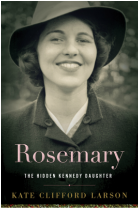
​Rosemary:  The Hidden Kennedy Daughter
Author:  Kate Clifford Larson
IBSN:  978-0-547-25025-0
 
APA Style Citation
Larson, K.C. (2015).  Rosemary:  The Hidden Kennedy Daughter.  New York, New York; Houghton Mifflin Harcourt Publishing Co.
Picture
​

5activity_rosemarykennedy.pptx
File Size: 1096 kb
File Type: pptx
Download File

Book Description
Kate Larson recounts the life of Rosemary Kennedy, the least known member of one of America’s most well-known families.  The Kennedy family attempted to find help for their daughter Rosemary in an era when individuals with intellectual disabilities had few options for educational placement and treatment.  During this time, individuals with intellectual disabilities were often treated as social pariahs rather than being placed in facilities that offered educational and therapeutic programming.  This was true for even for the wealthiest of Americans like the Kennedys. Few options were available for Rosemary’s education even with access to the best educational outlets and tutors in the world.
                                           
Rosemary Kennedy was the third child of Joseph and Rose Kennedy Kennedy and the first girl born after Joseph Jr. and future president John F. Kennedy.  Her mother, Rose Kennedy had planned a home birth for Rosemary as she had done with her two sons.  When the time came, Dr. Good who was scheduled to deliver the baby was busy taking care of those afflicted by the Spanish flu which had devastated the Boston area at the time.  The nurse attending to Rose was not allowed to deliver the baby despite her training in the most up-to-date medial techniques.  Rose attempted to wait for the doctor to arrive, but the baby continued to come and the nurse held the baby in the birth canal for two hours until the doctor arrived which may in part be responsible for the challenges Rosemary would later face.
 
Initially, Rosemary seemed to be a healthy baby, she cried less than her two older brothers but otherwise seemed to develop normally.  In addition to her mother, young Rosemary was attended to by nurses and other household staff who served the Kennedy family.  Joseph Kennedy Sr. was often away building fortune and fame for the family, first in the stock market and later in Hollywood and the political arena.  Rosemary’s father had become one of the wealthiest men in America, he had overcome the challenges of discrimination posed by his Irish and Catholic heritage.  Rose Kennedy also came from a well-known family, her father “Honey Fitz” had served as the mayor of Boston and she was used to socializing in political circles.  These two fast paced, hard driving individuals expected much from their children and did not accept failure.
 
Eventually, the Kennedy’s had six more children (nine in all).   By the age of three, it was evident that Rosemary was not progressing as quickly as her siblings.  As her younger siblings surpassed her intellectual and physical abilities, it became obvious that something was wrong with Rosemary, although the extent of her disability was not yet known.  Rose noticed that Rosemary had trouble holding her spoon and feeding herself.  Additionally, she crawled, stood, and took her first steps later than her older brothers and her younger siblings began to overtake her in their abilities.
 
Rose and Joseph Kennedy expected excellence from their children, in education, sports, manners, and appearance.  Rose kept precise medical records for each child and constantly chided her children about their weight.  Even in kindergarten, Rosemary was labeled as “deficient” and had to repeat both kindergarten and first grade.  Rose attempted to supplement Rosemary’s education herself.  When Rosemary was six or seven, she took the Otis Intelligence test which indicated that her mental age was lower than other children her age.  Rosemary often wrote in mirror writing (backward and upside down) and even when she grew older her writing never progressed beyond that of a third or fourth-grade level.  She often misspelled words, left words out. and wrote on a severe angle. 
 
At the time, there was rarely a distinction made between those who were mentally ill and those were cognitively disabled.  The words, “idiot”, “imbecile” or “moron” were frequently used to describe individuals with a low IQ.  Christian beliefs to which the Kennedy family strongly adhered often blamed parents for their children’s deficits.  Rosemary frequently moved between schools when she did not make progress or when the school decided that she was not the right “fit” for their services.  Rose and Joseph Kennedy often did not describe Rosemary’s true ability level prior to her arrival and the instructors and head masters found that they had more to deal with than they initially anticipated.  Rosemary did receive the benefit of one-on-one tutoring and the patience of some of the instructors allowed Rosemary to make some progress.  She especially loved her time in London at the Assumption House in the English countryside with nuns who employed the new Montessori techniques. Rosemary seemed to do better when academic work was broken up with arts and crafts and other hands-on activities.  At the time, her father was the ambassador to Great Britain and appearances such as Rosemary’s introduction to the King were highly regulated affairs so not to embarrass the Kennedy family.  Rosemary stayed on at the Assumption House after the departure of her family from London, but eventually had to come back to the United States because of the bombings of England during the WWII.
 
Medications and supplements were used, as were special diets and exercise but little seemed to help.  By her late teens, it was apparent that Rosemary’s condition was not improving and perhaps even regressing, she became more and more belligerent and often angry.  It is unclear if this was the result of so much change in her life, her siblings passing her up and living independent lives, or of a change in her condition. Regardless, this made dealing with Rosemary a considerable challenge.  By 1941, Rosemary’s behavior was cause for concern.  Despite her sister’s Kathleen’s (Kick) recommendation against the lobotomy procedure which she had investigated for her parents, (conducted by Doctors Freeman and Watts), Joseph Kennedy ordered a lobotomy for his daughter hoping that it would cure her of her “illness” or, at least, calm her increasingly frequent outbursts.
 
During the surgery, Watts drilled “burr holes” into Rosemary’s skull as she was strapped to a gurney.  She would have felt the leucotome, which was a specially designed tool for the use of lobotomies.  Rosemary was asked to sing, count, and tell stories during the surgery to distract her but also to guide Watt’s work to make sure that her senses were intact.  During the last of four cuts, she became incoherent which prompted Freeman and Watts to end the surgery.  It was immediately evident that the surgery had gone badly.  Rosemary would need years of physical and occupational therapy to regain speech and movement. Rosemary was twenty-three at the time of the surgery.
 
Nearly all of those who received lobotomies were women (82%). The lobotomy was used as a treatment for illnesses such as schizophrenia, obsessive-compulsive disorder, bipolar disorder, and depression, but was also prescribed for other individuals who exhibited heightened sexual interest, habitual criminal behavior, or violence. Rose Kennedy did not initially know the surgery had taken place on her daughter (although there are conflicting reports regarding just what she knew) and she did not see her daughter for another twenty years. Many attributed this lack of contact to the embarrassment that Rosemary was not living up to the expectations of a Kennedy, others have said that seeing Rosemary in this state would have simply been too painful for her mother.  Throughout the remainder of her life, Rosemary would have daily support and therapy from the nuns who looked out for her.  She would eventually regain the partial use of her arm, but had to be dressed and fed each day. She was able to swim and slowly regained her ability to walk and speak a few basic words.  Freeman went on to report good results from the lobotomies despite many cases like Rosemary’s in which people basically lived in a vegetative state after the surgery, he went on to perform over 3,000 even after Watts refused to continue as his partner because of the many complication the surgery caused.
 
Rosemary was eventually moved to Jefferson, Wisconsin to live at Saint Coletta School where she had her own cottage and was cared for by the nuns who ran the school. While her story is tragic, the Kennedy’s faced many other family tragedies.  The death of her eldest brother Joe Jr. during WWII, the death of Kick (Rosemary’s older sister) in a place crash in Europe, the assassinations of her brothers Jack and Bobby (both of which Rosemary found out about by watching television) shook the family.  Eunice Shriver (Rosemary’s younger sister) seemed to be the most touched by Rosemary’s situation and began the Special Olympics with her husband Sargent Shriver in Chicago. This event is now an annual event in 200 countries around the world (with 4 million athletes participating).  As president, John F. Kennedy founded the Committee on Mental Retardation and the National Institute of Child Health and Human Development.  He delivered a special message on mental illness and mental retardation in the months before his assassination.  Camp Shriver was created as a summer camp for the intellectually disabled.  Anthony Shriver (Eunice’s son) began Best Buddies which provides employment and leadership opportunities for the intellectually disabled and his brother took over the running of the Special Olympics in 2003.  Rosemary’s younger brother Senator Teddy Kennedy sponsored the American with Disabilities Act and the Handicapped Children Act in Congress
 
Later in Rosemary’s life, her sister Eunice became responsible for overseeing her care and visited her often.  When her mother came to visit, Rosemary became agitated although it is unclear if she blamed Rose for the years of neglect or the surgery itself.  Joseph Kennedy never saw his daughter again and became incapacitated by a stroke later in life.  He provided financially for his daughter and wrote frequent letters to inquire about her well-being, but he was otherwise absent from her life. 
 
Despite Rosemary’s long absence from the Kennedy family record, she may well have done more to influence the work of the Kennedy family and help them understand and promote research and opportunities for the cognitively and physically disabled than any other member of the family.  Rosemary was a “big personality” as those around her at all points of her life indicate.  Her legacy will live on the help others who face similar challenges.  Rosemary Kennedy died in 2005 at the age of 86 in Wisconsin.
 
Other Related Resources
The Tragic Life of JFK’s Sister
http://www.todayifoundout.com/index.php/2015/01/little-known-tragic-life-jfks-sister-rosemary-kennedy/
 
L.A. Times:  Rosemary’s diaries:  Her life before the lobotomy
Brief 1995 article discussing the teenage diaries of Rosemary Kennedy
http://articles.latimes.com/1995-08-06/news/mn-31942_1_rose-kennedy
 
The Daily Mail:  Before and After Pictures of Rosemary Kennedy
http://www.dailymail.co.uk/news/article-3246802/How-Rosemary-Kennedy-went-vibrant-young-beauty-smiling-brother-John-F-Kennedy-feeble-spinster-misdiagnosed-forced-undergo-lobotomy-seen-touching-photos-Ted-nephew-JFK-Jr-niece-Maria-Shriver.html
 
Rosemary Kennedy’s inconvenient illness
http://www.newsmax.com/RonaldKessler/Rosemary-Kennedy/2008/06/17/id/324146/
 
Information on Cognitive Deficits
http://www.disabled-world.com/disability/types/cognitive/
 
Eunice Kennedy Shriver:  The Special Olympics
http://www.eunicekennedyshriver.org/
 
History of the Special Olympics
http://www.sode.org/about/history-of-special-olympics/
 
Psychological Figures and Concepts
Walter Freeman
Egaz Moniz
Intellectual Disability
Intelligence Testing
Labeling
Prefrontal Lobotomy
Schizophrenia
Stigma

0 Comments

    Categories

    All
    Biological Psychology
    Cognition/Learning
    Consciousness
    Development
    Disorders/Treatment
    Educational Psychology
    Health Psychology
    Motivation/Emotion
    Positive Psychology
    Research And Statistics
    Sensation/Perception
    Social Psychology/Personality
    Testing And Individual Differences

    Authors

    Laura Brandt, Nancy Fenton, and Jessica Flitter are AP Psychology instructors. Nancy Fenton teaches at  Adlai E. Stevenson High School in Lincolnshire, Illinois, Laura Brandt teaches at Libertyville High School in Libertyville Illinois and Jessica Flitter teachers at West Bend East High School in West Bend, Wisconsin.
    If you are interested in reviewing a book for the blog or have comments or questions, please e-mail us at either [email protected] or [email protected] or [email protected].

    RSS Feed

    Archives

    September 2025
    August 2025
    July 2025
    June 2025
    April 2025
    March 2025
    February 2025
    January 2025
    December 2024
    July 2024
    April 2024
    March 2024
    December 2023
    November 2023
    October 2023
    August 2023
    July 2023
    June 2023
    May 2023
    April 2023
    March 2023
    February 2023
    January 2023
    December 2022
    November 2022
    October 2022
    September 2022
    August 2022
    July 2022
    June 2022
    May 2022
    April 2022
    March 2022
    February 2022
    January 2022
    December 2021
    November 2021
    October 2021
    September 2021
    August 2021
    July 2021
    May 2021
    April 2021
    March 2021
    February 2021
    January 2021
    December 2020
    November 2020
    October 2020
    September 2020
    August 2020
    July 2020
    June 2020
    May 2020
    April 2020
    March 2020
    February 2020
    January 2020
    December 2019
    November 2019
    October 2019
    September 2019
    August 2019
    July 2019
    June 2019
    May 2019
    April 2019
    March 2019
    February 2019
    January 2019
    December 2018
    November 2018
    October 2018
    September 2018
    August 2018
    July 2018
    June 2018
    May 2018
    April 2018
    March 2018
    February 2018
    January 2018
    December 2017
    November 2017
    October 2017
    September 2017
    August 2017
    July 2017
    June 2017
    May 2017
    April 2017
    March 2017
    February 2017
    December 2016
    November 2016
    October 2016
    September 2016
    August 2016
    July 2016
    June 2016
    May 2016
    April 2016
    March 2016
    February 2016
    January 2016
    December 2015
    November 2015
    October 2015
    September 2015
    August 2015
    July 2015
    June 2015
    May 2015
    April 2015
    March 2015
    February 2015
    January 2015
    December 2014
    November 2014
    October 2014
    September 2014
    August 2014
    July 2014
    May 2014
    April 2014
    February 2014
    January 2014

Proudly powered by Weebly