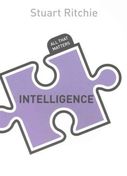
Intelligence: All That Matters
Author: Stuart Ritchie
ISBN: 9781444791877
APA Style Citation
Ritchie, S. (2016). Intelligence: All That Matters. London: Hodder and Stoughton.
Buy This Book
https://www.amazon.com/Intelligence-That-Matters-Stuart-Ritchie/dp/1444791877
Author: Stuart Ritchie
ISBN: 9781444791877
APA Style Citation
Ritchie, S. (2016). Intelligence: All That Matters. London: Hodder and Stoughton.
Buy This Book
https://www.amazon.com/Intelligence-That-Matters-Stuart-Ritchie/dp/1444791877

| intelligence_activity.pdf |
| key_intelligence_activity.pdf |
Book Description
The fast-paced book Intelligence, from the All That Matters series, is an excellent resource relating to teaching intelligence and testing units as well as a review of research and statistics in psychology. The book begins with a study the history of intelligence testing and includes sections on how modern intelligence tests work, why studying intelligence is important, the nature and nurture of intelligence, methods for increasing IQ, individual differences in intelligence, and a discussion of the controversies surrounding intelligence research. Author Stuart Ritchie makes a strong case for the importance of intelligence research and presents the facts supported by research that intelligence tests indicate intelligence has a high rate of heritability, is generally stable throughout an individual’s life, and is correlated to numerous other lifestyle factors such as health, wealth, and educational and career success. Ritchie also discusses how IQ tests are connected to socio-economic status.
Additionally, the book provides a great opportunity to use the intelligence unit to practice analyzing research and critically examine data sets through the use of graphs and charts. Despite the controversy about the value of intelligence testing, the book makes a compelling research-based case for the usefulness of IQ testing. For example, IQ scores are shown to be related to a variety of important variables including income, life expectancy, and educational performance. The author, Stuart Ritchie, directly confronts the major criticisms of IQ testing and highlights the benefits that can be gained by examining the research on human intelligence.
Throughout the book, the author provides interesting sections that highlight topics related to intelligence theory which are difficult for students to understand such as the concept of heritability.
What Heritability Does NOT Tell Us about intelligence.
The final part of the book is titled100 ideas is a wealth of resources about intelligence research including: fifteen recommended books about intelligence, five websites for the latest on intelligence research, five commonly used intelligence tests, twenty intelligence researchers working today and their areas of interest, ten review papers you should read, five (perhaps) surprising things that correlate with higher intelligence, five historical intelligence researchers not featured in the chapter on history, five anti-IQ books, ten common myths (debunked in the book) about intelligence, five fictional characters known for high intelligence, five fictional characters known for low intelligence, and ten ‘big questions’ for future intelligence research.
Other Related Resources
TED Talk by James Flynn - Why our IQ levels are higher than our grandparents'
James Flynn’s 2013 TED talk discussing how the changes in how individuals think and reason that have occurred over the last 100 years explains the Flynn Effect.
https://www.ted.com/talks/james_flynn_why_our_iq_levels_are_higher_than_our_grandparents
Battle of the Brains
BBC Horizon’s documentary in which seven individuals who are all very successful in their respective fields are tested in a variety of ways to measure intelligence. The documentary covers many of the main concepts and theories discussed in the curriculum for psychology units related to testing and individual’s differences. http://www.bbc.co.uk/sn/tvradio/programmes/horizon/broadband/tx/intelligence/highlights/
Current Intelligence Research Websites (from the 100 ideas section of the book)
International Society for Intelligence Research website
http://www.isironline.org/
Duke psychologist Jonathan Wai’s blog, Finding the Next Einstein: discussing research findings and ideas that touch upon multiple issues surrounding the identification and development of talent and explores how these issues might be relevant to what's going on in the world.
https://www.psychologytoday.com/blog/finding-the-next-einstein
Temple University psychologist Joel Schneider’s blog: Assessing Psyche on psychological assessment and psychometrics.
https://assessingpsyche.wordpress.com/
Kevin McGrew’s blog, IQ’s Corner Intelligent Insights on Intelligence Theories and Tests. Educational psychologist Dr. Kevin McGrew is Director of the Institute for Applied Psychometrics
http://www.iqscorner.com/
Psychological Figures and Concepts
Alfred Binet
Thomas J. Bouchard
Raymond Cattell
James Flynn
Hans J. Eysenck
Francis Galton
Howard Gardner
Stephen Pinker
Theodore Simon
Charles Spearman
William Stern
Robert Sternberg
Louis L. Thurstone
David Wechsler
Robert Yerkes
Bell (normal) curve
Binet Simon Test
Cattell Culture Fair Intelligence Test
Correlation
Crystalized intelligence
Emotional intelligence
Eugenics
Factor analysis
Fluid intelligence
Flynn effect
fMRI
g-factor
Genetics of intelligence
Heritability
IQ
Learning disability (e.g. dyslexia, dyscalculia, specific language impairment)
Mental age
Multiple intelligence theory
Nature and nurture of intelligence
Power test
Processing speed
Race and sex differences in intelligence
Raven’s Progressive Matrices
Regression
Reliability
Speed test
Standardized test
Triarchic theory of intelligence
Twin studies
Validity
Wechsler Intelligence Scales
Woodcock-Johnson Tests of Cognitive Ability
The fast-paced book Intelligence, from the All That Matters series, is an excellent resource relating to teaching intelligence and testing units as well as a review of research and statistics in psychology. The book begins with a study the history of intelligence testing and includes sections on how modern intelligence tests work, why studying intelligence is important, the nature and nurture of intelligence, methods for increasing IQ, individual differences in intelligence, and a discussion of the controversies surrounding intelligence research. Author Stuart Ritchie makes a strong case for the importance of intelligence research and presents the facts supported by research that intelligence tests indicate intelligence has a high rate of heritability, is generally stable throughout an individual’s life, and is correlated to numerous other lifestyle factors such as health, wealth, and educational and career success. Ritchie also discusses how IQ tests are connected to socio-economic status.
Additionally, the book provides a great opportunity to use the intelligence unit to practice analyzing research and critically examine data sets through the use of graphs and charts. Despite the controversy about the value of intelligence testing, the book makes a compelling research-based case for the usefulness of IQ testing. For example, IQ scores are shown to be related to a variety of important variables including income, life expectancy, and educational performance. The author, Stuart Ritchie, directly confronts the major criticisms of IQ testing and highlights the benefits that can be gained by examining the research on human intelligence.
Throughout the book, the author provides interesting sections that highlight topics related to intelligence theory which are difficult for students to understand such as the concept of heritability.
What Heritability Does NOT Tell Us about intelligence.
- Heritability does not indicate that 50% of an individual’s intelligence is the result of genetics. Heritability is group figure that describes variance in a specific population of individuals.
- Heritability does not indicate anything about average intelligence. Intelligence may be 5- percent heritable in a group where the average IQ could be 85, 100, 118, 150, or any other number.
- The term “heritable” does not mean the same thing as hereditary. A hereditary trait is anything passed from parent to child, but heritability is about genetic variation of a particular trait. To understand this, it is essential to understand that traits can be influenced by environmental factors.
- Heritability does not only apply to intelligence. Most human traits that vary between individuals (e.g., height, personality, political attitude, resistance to disease) is heritable (genes explain at least some of the variation).
The final part of the book is titled100 ideas is a wealth of resources about intelligence research including: fifteen recommended books about intelligence, five websites for the latest on intelligence research, five commonly used intelligence tests, twenty intelligence researchers working today and their areas of interest, ten review papers you should read, five (perhaps) surprising things that correlate with higher intelligence, five historical intelligence researchers not featured in the chapter on history, five anti-IQ books, ten common myths (debunked in the book) about intelligence, five fictional characters known for high intelligence, five fictional characters known for low intelligence, and ten ‘big questions’ for future intelligence research.
Other Related Resources
TED Talk by James Flynn - Why our IQ levels are higher than our grandparents'
James Flynn’s 2013 TED talk discussing how the changes in how individuals think and reason that have occurred over the last 100 years explains the Flynn Effect.
https://www.ted.com/talks/james_flynn_why_our_iq_levels_are_higher_than_our_grandparents
Battle of the Brains
BBC Horizon’s documentary in which seven individuals who are all very successful in their respective fields are tested in a variety of ways to measure intelligence. The documentary covers many of the main concepts and theories discussed in the curriculum for psychology units related to testing and individual’s differences. http://www.bbc.co.uk/sn/tvradio/programmes/horizon/broadband/tx/intelligence/highlights/
Current Intelligence Research Websites (from the 100 ideas section of the book)
International Society for Intelligence Research website
http://www.isironline.org/
Duke psychologist Jonathan Wai’s blog, Finding the Next Einstein: discussing research findings and ideas that touch upon multiple issues surrounding the identification and development of talent and explores how these issues might be relevant to what's going on in the world.
https://www.psychologytoday.com/blog/finding-the-next-einstein
Temple University psychologist Joel Schneider’s blog: Assessing Psyche on psychological assessment and psychometrics.
https://assessingpsyche.wordpress.com/
Kevin McGrew’s blog, IQ’s Corner Intelligent Insights on Intelligence Theories and Tests. Educational psychologist Dr. Kevin McGrew is Director of the Institute for Applied Psychometrics
http://www.iqscorner.com/
Psychological Figures and Concepts
Alfred Binet
Thomas J. Bouchard
Raymond Cattell
James Flynn
Hans J. Eysenck
Francis Galton
Howard Gardner
Stephen Pinker
Theodore Simon
Charles Spearman
William Stern
Robert Sternberg
Louis L. Thurstone
David Wechsler
Robert Yerkes
Bell (normal) curve
Binet Simon Test
Cattell Culture Fair Intelligence Test
Correlation
Crystalized intelligence
Emotional intelligence
Eugenics
Factor analysis
Fluid intelligence
Flynn effect
fMRI
g-factor
Genetics of intelligence
Heritability
IQ
Learning disability (e.g. dyslexia, dyscalculia, specific language impairment)
Mental age
Multiple intelligence theory
Nature and nurture of intelligence
Power test
Processing speed
Race and sex differences in intelligence
Raven’s Progressive Matrices
Regression
Reliability
Speed test
Standardized test
Triarchic theory of intelligence
Twin studies
Validity
Wechsler Intelligence Scales
Woodcock-Johnson Tests of Cognitive Ability
 RSS Feed