The Invisible Gorilla: And Others Ways Our Intuitions Deceive Us
Author(s): Christopher Chabis and Daniel Simons
ISBN: 978-0307-459-664
APA Style Citation
Chabis and Simons (2010). The Invisible Gorilla: And Others Ways Our Intuitions Deceive Us. New York: Crown.
Author(s): Christopher Chabis and Daniel Simons
ISBN: 978-0307-459-664
APA Style Citation
Chabis and Simons (2010). The Invisible Gorilla: And Others Ways Our Intuitions Deceive Us. New York: Crown.
 |  |

| multitasking_activity.pdf |
| multitasking_activity_questions_lincoln_.pdf |
| key_multitasking_activity_questions_lincoln.pdf |
Book Description
The authors of The Invisible Gorilla created the now infamous selective attention task in which observers are asked to keep track of how many times a basketball team passes a ball between the members. While observers are focused on watching and counting, a gorilla walks into scene, bangs on his chest and walks out. Due to the phenomenon of inattentional blindness, many people miss the gorilla because they selectively attending to the basketball passes and they cannot effectively focus on both at the same time. When the tasks are over, most people are confident about the number of passes that occurred, without realizing they have entirely missed the gorilla. The Invisible Gorilla investigates everyday illusions that lead to incorrect conclusions or decisions.
Attention: People generally cannot split attention effectively. The more tasks in which a person is engaged, the worse they perform on each task. Dichotic listening studies in which an individual is asked to monitor two different conversations simultaneously, and recall details about each one illustrates the difficulties of divided attention. The participant can focus on one conversation or the other but performs poorly at recalling details from both conversations. More recent research has found no benefit to driving with a hands-free device because even though one is not holding the phone attention is still divided between talking and driving, and one of the tasks will inevitably experience a reduction in performance. TSA agents often miss illegal items because their attention is excessively divided as they attempt to search simultaneously for a wide array of objects because they cannot attend to all of the possibilities perhaps they would be better served to focus on a few very dangerous items rather than 3 ounces of shampoo.
Memory: Think of a memory you have about a significant event in your life. You may be recalling when you first saw your spouse on your wedding day or when you received your diploma on your graduation day. These flashbulb memories are vivid and clear but are likely not as accurate as we may believe. Hilary Clinton claimed to recall landing in Bosnia under direct fire, but video footage of that trip showed a small child greeting her with flowers upon her arrival which was anything but dangerous. More recently, news anchor Brain Williams had a similar false recollection of being in a helicopter which took on enemy fire once again the memory was proved incorrect by others accounts. While these memories likely seemed to be quite real to Clinton and Williams and they were not purposely (likely) lying, what they believed had occurred was quite different from what had occurred. In a now well-known case of mistaken identity, Ronald Cotton was found guilty and sent to prison based solely on the testimony of his accuser who was certain that she was identifying the person who raped her. DNA evidence would later exonerate Cotton, much to the initial confusion of his accuser who was certain that she had identified the proper individual the first time. Gary Wells a professor at Iowa State University, who warns people about those who confidently report out their experiences, works with police departments to let them know the dangers and fallibility of eyewitness testimony to reduce the likelihood that the wrong person is accused of a crime.
Confidence: Regardless of how confident one is about a decision or recollection, confidence does not make one’s memories or decisions any more accurate that those that are made with some hesitation. Doctors often make recommendations to patients about medication or surgery based on their experience in the field which at first makes good sense as the patient often has little knowledge themselves of medical case studies. Doctors, however, will see maladies which they have not seen previously or have seen only in a few instances. Regardless of their relatively low level of knowledge with these cases, doctors will likely still make a recommendation to the patient with a high degree of confidence when they should qualify a recommendation by telling the patient that this is the first or one of the only cases of this sort they have seen. Clearly, this can be dangerous because patients are making decisions that may involve life or death based on their physician’s recommendation.
When chess players who competed on a national circuit were asked about their current rankings, most believed that they had been ranked too low. Chess rankings are based on the results of all of the games an individual has played, so, in reality, the competitors are ranked accurately. A follow-up study one year later was conducted to determine if the ranking of these individuals had increased as the players believed they should. In almost every case the rankings remained virtually the same and the confidence that the chess players had in their improved ranking was not warranted. We tend to do this to protect our self-esteem; the self-serving bias occurs when we take credit for our success and blame others for our failures. When something goes well, it is likely that we will attribute this to our outstanding skill, but when something goes wrong, we are likely to attribute it to a mistake. When asked a question about their competency, 75% of American men claimed they were more competent than the average person while 57% of American women claimed the same. This tendency toward self-serving bias is not uniquely American, 70% of Canadians claimed to be more competent than average.
Knowledge: We tend to overestimate what we know. Those who speak first often become leaders not because they are correct more often than others but simply because they have spoken up first. A dominant personality is more likely to come off to others as confident, and others will follow. This leads the individual to believe that people are following them because they are right.
It is possible to become more accurate in estimations of our abilities. As people become more competent in a particular area, they become more accurate estimators of their abilities. If someone was a highly ranked tennis player, they should be aware of what they do well and what they are still working on when playing a match. They should be able to fairly accurately estimate their level of play, but this ability would not transfer to how they would perform in a game of badminton even though the individual often believes this to be true.
Cause: Correlation does not prove causation; random acts often do not seem random. If one flips a coin and receives heads ten times running, they might be inclined to believe that the next toss will be tails. Each event is completely separate from the next, so each coin toss essentially has a 50% chance of winding up heads. In the gambler’s fallacy, if red comes up on a roulette wheel seven times in a row, gamblers are more likely to place their next wagers on black thinking that it must be “due”, but like a coin toss, each spin of the roulette wheel is completely separate from the prior spin and the past results have no bearing on the current spin of the wheel.
Knowing about these illusions may be the first step to overcoming the dangers in decision-making they present. Be wary of your intuitions, mental systems work well, but the complexity of modern society exceeds the capacity of one’s intuition. Watch for gorillas in your midst and be more cautious about your memories, confidence that you know more about a topic than you do, or jumping to causal explanations for correlational events. Mindful reflection and decision-making may lead to a more accurate view of the world around you and result in better outcomes.
Other Related Resources
Book website: Outstanding website including videos on change blindness and selective attention as well as Ted talks and less well known tests of selective attention
http://www.theinvisiblegorilla.com/videos.html
The Invisible Gorilla Video
https://www.youtube.com/watch?v=UtKt8YF7dgQ
Continuity problems in movies which most people miss
http://www.moviemistakes.com/best/continuity
The Moonwalking Bear
https://www.youtube.com/watch?v=Ahg6qcgoay4
But Did You See the Gorilla? The Problem with Inattentional Blindness: Smithsonian Magazine
http://www.smithsonianmag.com/ist/?next=/science-nature/but-did-you-see-the-gorilla-the-problem-with-inattentional-blindness-17339778/
Bet You Didn’t Notice (NPR podcast)
http://www.npr.org/templates/story/story.php?storyId=126977945
Ted Talk: Seeing the world as it Isn’t (Daniel Simons)
https://www.youtube.com/watch?v=9Il_D3Xt9W0
Disillusionment: American Scientist
http://www.americanscientist.org/bookshelf/pub/disillusionment
Picking Cotton
https://www.youtube.com/watch?v=-2oDRfj0vME
Brain Games: National Geographic: Are you a good multitasker?
https://www.youtube.com/watch?v=PkBa5oHXgsE
Hilary Clinton error in recalling landing in Bosnia
https://www.youtube.com/watch?v=8BfNqhV5hg4
Brian Williams error recalling being “under fire”
http://www.slate.com/articles/news_and_politics/television/2015/02/brian_william_s_false_memories_of_rpg_fire_in_iraq_will_nbc_hold_its_anchor.html
Article on the Invisible Gorilla
http://www.wsj.com/articles/SB10001424127887323514404578651980718947350
Video on the Invisible Gorilla
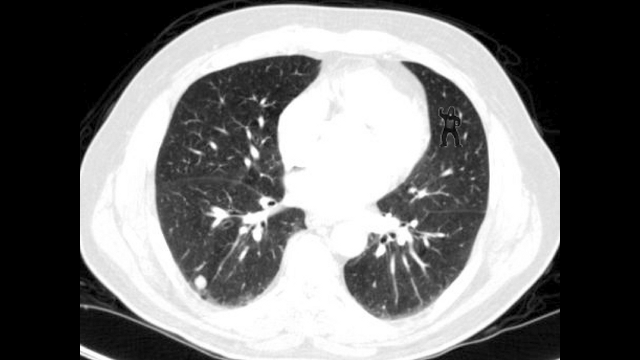
Video clip of gorilla CT scan
https://www.youtube.com/watch?v=kBbRNy60RAM
Psychological Figures and Concepts
Elizabeth Loftus
Herbert Simon
Gary Wells
Causation
Confirmation Bias
Correlation
Eyewitness Memory
Flashbulb Memory
Gambler’s Fallacy
Hindsight Bias
Human Genome Project
Inattentional Blindness
Multitasking
Overconfidence
Selective Attention
Self-Serving Bias
Sensory Memory
Signal Detection Theory
The authors of The Invisible Gorilla created the now infamous selective attention task in which observers are asked to keep track of how many times a basketball team passes a ball between the members. While observers are focused on watching and counting, a gorilla walks into scene, bangs on his chest and walks out. Due to the phenomenon of inattentional blindness, many people miss the gorilla because they selectively attending to the basketball passes and they cannot effectively focus on both at the same time. When the tasks are over, most people are confident about the number of passes that occurred, without realizing they have entirely missed the gorilla. The Invisible Gorilla investigates everyday illusions that lead to incorrect conclusions or decisions.
Attention: People generally cannot split attention effectively. The more tasks in which a person is engaged, the worse they perform on each task. Dichotic listening studies in which an individual is asked to monitor two different conversations simultaneously, and recall details about each one illustrates the difficulties of divided attention. The participant can focus on one conversation or the other but performs poorly at recalling details from both conversations. More recent research has found no benefit to driving with a hands-free device because even though one is not holding the phone attention is still divided between talking and driving, and one of the tasks will inevitably experience a reduction in performance. TSA agents often miss illegal items because their attention is excessively divided as they attempt to search simultaneously for a wide array of objects because they cannot attend to all of the possibilities perhaps they would be better served to focus on a few very dangerous items rather than 3 ounces of shampoo.
Memory: Think of a memory you have about a significant event in your life. You may be recalling when you first saw your spouse on your wedding day or when you received your diploma on your graduation day. These flashbulb memories are vivid and clear but are likely not as accurate as we may believe. Hilary Clinton claimed to recall landing in Bosnia under direct fire, but video footage of that trip showed a small child greeting her with flowers upon her arrival which was anything but dangerous. More recently, news anchor Brain Williams had a similar false recollection of being in a helicopter which took on enemy fire once again the memory was proved incorrect by others accounts. While these memories likely seemed to be quite real to Clinton and Williams and they were not purposely (likely) lying, what they believed had occurred was quite different from what had occurred. In a now well-known case of mistaken identity, Ronald Cotton was found guilty and sent to prison based solely on the testimony of his accuser who was certain that she was identifying the person who raped her. DNA evidence would later exonerate Cotton, much to the initial confusion of his accuser who was certain that she had identified the proper individual the first time. Gary Wells a professor at Iowa State University, who warns people about those who confidently report out their experiences, works with police departments to let them know the dangers and fallibility of eyewitness testimony to reduce the likelihood that the wrong person is accused of a crime.
Confidence: Regardless of how confident one is about a decision or recollection, confidence does not make one’s memories or decisions any more accurate that those that are made with some hesitation. Doctors often make recommendations to patients about medication or surgery based on their experience in the field which at first makes good sense as the patient often has little knowledge themselves of medical case studies. Doctors, however, will see maladies which they have not seen previously or have seen only in a few instances. Regardless of their relatively low level of knowledge with these cases, doctors will likely still make a recommendation to the patient with a high degree of confidence when they should qualify a recommendation by telling the patient that this is the first or one of the only cases of this sort they have seen. Clearly, this can be dangerous because patients are making decisions that may involve life or death based on their physician’s recommendation.
When chess players who competed on a national circuit were asked about their current rankings, most believed that they had been ranked too low. Chess rankings are based on the results of all of the games an individual has played, so, in reality, the competitors are ranked accurately. A follow-up study one year later was conducted to determine if the ranking of these individuals had increased as the players believed they should. In almost every case the rankings remained virtually the same and the confidence that the chess players had in their improved ranking was not warranted. We tend to do this to protect our self-esteem; the self-serving bias occurs when we take credit for our success and blame others for our failures. When something goes well, it is likely that we will attribute this to our outstanding skill, but when something goes wrong, we are likely to attribute it to a mistake. When asked a question about their competency, 75% of American men claimed they were more competent than the average person while 57% of American women claimed the same. This tendency toward self-serving bias is not uniquely American, 70% of Canadians claimed to be more competent than average.
Knowledge: We tend to overestimate what we know. Those who speak first often become leaders not because they are correct more often than others but simply because they have spoken up first. A dominant personality is more likely to come off to others as confident, and others will follow. This leads the individual to believe that people are following them because they are right.
It is possible to become more accurate in estimations of our abilities. As people become more competent in a particular area, they become more accurate estimators of their abilities. If someone was a highly ranked tennis player, they should be aware of what they do well and what they are still working on when playing a match. They should be able to fairly accurately estimate their level of play, but this ability would not transfer to how they would perform in a game of badminton even though the individual often believes this to be true.
Cause: Correlation does not prove causation; random acts often do not seem random. If one flips a coin and receives heads ten times running, they might be inclined to believe that the next toss will be tails. Each event is completely separate from the next, so each coin toss essentially has a 50% chance of winding up heads. In the gambler’s fallacy, if red comes up on a roulette wheel seven times in a row, gamblers are more likely to place their next wagers on black thinking that it must be “due”, but like a coin toss, each spin of the roulette wheel is completely separate from the prior spin and the past results have no bearing on the current spin of the wheel.
Knowing about these illusions may be the first step to overcoming the dangers in decision-making they present. Be wary of your intuitions, mental systems work well, but the complexity of modern society exceeds the capacity of one’s intuition. Watch for gorillas in your midst and be more cautious about your memories, confidence that you know more about a topic than you do, or jumping to causal explanations for correlational events. Mindful reflection and decision-making may lead to a more accurate view of the world around you and result in better outcomes.
Other Related Resources
Book website: Outstanding website including videos on change blindness and selective attention as well as Ted talks and less well known tests of selective attention
http://www.theinvisiblegorilla.com/videos.html
The Invisible Gorilla Video
https://www.youtube.com/watch?v=UtKt8YF7dgQ
Continuity problems in movies which most people miss
http://www.moviemistakes.com/best/continuity
The Moonwalking Bear
https://www.youtube.com/watch?v=Ahg6qcgoay4
But Did You See the Gorilla? The Problem with Inattentional Blindness: Smithsonian Magazine
http://www.smithsonianmag.com/ist/?next=/science-nature/but-did-you-see-the-gorilla-the-problem-with-inattentional-blindness-17339778/
Bet You Didn’t Notice (NPR podcast)
http://www.npr.org/templates/story/story.php?storyId=126977945
Ted Talk: Seeing the world as it Isn’t (Daniel Simons)
https://www.youtube.com/watch?v=9Il_D3Xt9W0
Disillusionment: American Scientist
http://www.americanscientist.org/bookshelf/pub/disillusionment
Picking Cotton
https://www.youtube.com/watch?v=-2oDRfj0vME
Brain Games: National Geographic: Are you a good multitasker?
https://www.youtube.com/watch?v=PkBa5oHXgsE
Hilary Clinton error in recalling landing in Bosnia
https://www.youtube.com/watch?v=8BfNqhV5hg4
Brian Williams error recalling being “under fire”
http://www.slate.com/articles/news_and_politics/television/2015/02/brian_william_s_false_memories_of_rpg_fire_in_iraq_will_nbc_hold_its_anchor.html
Article on the Invisible Gorilla
http://www.wsj.com/articles/SB10001424127887323514404578651980718947350
Video on the Invisible Gorilla
Video clip of gorilla CT scan
https://www.youtube.com/watch?v=kBbRNy60RAM
Psychological Figures and Concepts
Elizabeth Loftus
Herbert Simon
Gary Wells
Causation
Confirmation Bias
Correlation
Eyewitness Memory
Flashbulb Memory
Gambler’s Fallacy
Hindsight Bias
Human Genome Project
Inattentional Blindness
Multitasking
Overconfidence
Selective Attention
Self-Serving Bias
Sensory Memory
Signal Detection Theory

 RSS Feed