BOOKS FOR PSYCHOLOGY CLASS
  • Books for Psychology Class
  • Blog
  • Contact/Submissions
  • Other Psychology Websites
  • For Students

The Courage to be Disliked: The Japanese Phenomenon That Shows You How to Change Your Life and Achieve Real Happiness

9/19/2025

0 Comments

 
The Courage to be Disliked: The Japanese Phenomenon That Shows You How to Change Your Life and Achieve Real Happiness
Author: Ichiro Kishimi and Fumitake Koga
ISBN-10: ‎9781501197291
ISBN-13: 978-1501197291
 
APA Style Citation
Kishimi, I. & Koga, F. (2017). The courage to be disliked: The Japanese phenomenon that shows you how to change your life and achieve real happiness. Atria Books.
 
Buy This Book
https://www.amazon.com/Courage-Be-Disliked-Phenomenon-Happiness-ebook/dp/B078MDSV8T?ref_=ast_author_mpb
​
Picture
courage_to_be_disliked_activity.pdf
File Size: 155 kb
File Type: pdf
Download File

Book Description
The Courage to Be Disliked is a unique philosophical dialogue between a young student and a philosopher, unfolding over five nights. Centered on Adlerian psychology, the book explores themes of happiness, freedom, and self-worth through thoughtful conversation and reflection. Adler and Freud were close in age and worked together as equals, unlike Jung, who regarded Freud as a father figure. Though psychology is often most associated with Freud and Jung, Adler is widely recognized as one of the three major figures in the field. He broke away to develop his own theory focused on individual purpose and social connection. Like Socrates, Adler left behind few written works, preferring direct, personal dialogue over writing. This conversational style is reflected in the book’s structure, offering readers an engaging and accessible path into Adler’s psychological philosophy.
 
In the first night of discussion between the philosopher and the student, the philosopher introduces key concepts of Adlerian psychology, emphasizing that trauma is not the cause of our unhappiness or failures. Instead of focusing on past experiences and deterministic cause-and-effect reasoning (etiology), Adlerian psychology centers on teleology—the purpose or goals individuals set for themselves. According to this view, people are not driven by their past but by the goals they choose, and emotions like anger are tools used to achieve those goals. Happiness and unhappiness are choices, and personality—or "lifestyle"—is something one consciously selects, typically around age ten. Changing this lifestyle requires great courage, as life is determined in the present moment, not by past events, which Adlerians argue do not truly exist.
 
In the second night of discussion, the philosopher explains that all problems are fundamentally interpersonal relationship problems. People often believe that achieving a specific goal will make life better, but even when wishes are fulfilled, their inner struggles often remain. Many seek to avoid getting hurt in relationships, but pain is an unavoidable part of human connection, and loneliness can exist even in the presence of others. Adlerian psychology emphasizes that feelings of inferiority are universal, but it's how we respond—through striving and growth—that matters. Inferiority and superiority complexes are unhealthy responses rooted in external validation and comparison, whereas a healthy pursuit of superiority means moving forward based on one's ideal self, not in competition with others. True freedom and happiness come when we abandon competition, embrace our uniqueness, and see others as comrades rather than rivals. Anger, often used as a tool for control, should be recognized as part of a power struggle to be stepped away from. Adlerian psychology encourages two life goals: self-reliance and living in harmony with others, achieved by courageously facing life’s tasks—work, friendship, and love. Avoiding these through blame or distraction creates a “life-lie.”
 
In the third night of discussion, the philosopher introduces the Adlerian principle of "separating tasks," urging the student to discard the need for recognition and stop intervening in others’ responsibilities. Many people seek approval because of a reward-and-punishment upbringing, but true freedom comes from not living to meet others' expectations—just as others are not obligated to meet yours. This doesn’t mean acting selfishly or disregarding others, but rather understanding boundaries: knowing what is and isn't your task. Before acting, one should ask, "Whose task is this?" and then avoid intruding. For example, a counselor can offer help, but whether the client changes is not their task. This mindset transforms interpersonal relationships by relieving the burden of needing to be liked or approved of. Living freely means accepting that some people may dislike you—and having the courage to be disliked is inseparable from the courage to be happy. Adlerian psychology does not promote neglect, but intentional understanding and respect for others’ autonomy.
 
In the fourth night of discussion, the philosopher emphasizes shifting from a self-centered worldview to one rooted in community and social interest. According to Adlerian psychology, the goal of interpersonal relationships is to cultivate a genuine sense of connection and equality—beginning with “you and I” and extending to all humanity. This requires moving away from attachment to self-interest and embracing concern for others, recognizing that we are not the center of the world. The world is not flat like a map but round like a globe, where everyone shares equal footing. In communication, Adlerian psychology rejects both praise and rebuke, as both reinforce vertical, hierarchical relationships. Praise, though seemingly positive, subtly implies superiority and can cause the recipient to believe they lack inherent ability, making them dependent on external validation. Creating even one vertical relationship can shift all interactions into power dynamics. Instead, Adlerian relationships are built on mutual respect, equality, and the courage to contribute to others without seeking control or approval.
 
In the fifth and final night of discussion, the philosopher urges the student to live earnestly in the here and now, grounding their life not in self-affirmation but in self-acceptance—acknowledging one’s limitations while still moving forward. Adlerian psychology teaches “affirmative resignation,” the ability to distinguish between what can and cannot be changed. Relationships are founded not on conditional trust but on unconditional confidence—believing in others without expectation or control, which builds horizontal, equal connections. Contribution to others, not self-sacrifice, is at the heart of meaningful work and a sense of purpose. True happiness stems from the feeling that “I am of use to someone,” though it is not up to us to determine the value of our contributions—that is the task of others. Adler warns against workaholism and the pursuit of “easy superiority,” such as acting out for attention, which masks avoidance and insecurity. Instead, he promotes the courage to be normal and to commit to one’s community through honest, consistent effort. The greatest life-lie, he concludes, is avoiding the present moment—failing to live here and now.
 
In conclusion, Adler teaches that life has no inherent meaning—any meaning must be created by the individual. Finding purpose begins with the courage to live freely, without fear of being disliked or conforming to others’ expectations. This path becomes clear when guided by the principle of contributing to others. As long as you focus on being of use, you won’t lose your way. True freedom is living your own life, and if you want the world to change, that change must start with you.
 
Other Related Resources
Productivity Game: THE COURAGE TO BE DISLIKED by F. Koga and I. Kishimi | Core Message
https://www.youtube.com/watch?v=xFxn40zvl-E

Psychological Concepts and Figures
Alfred Adler
Sigmund Freud
Carl Jung
 
Determinism
Ideal self
Individual psychology
Inferiority
Personality
Rewards and punishments
Self-acceptance
Superiority
Trauma
0 Comments

The Let Them Theory: A Life-Changing Tool That Millions of People Can't Stop Talking About

6/22/2025

0 Comments

 
The Let Them Theory: A Life-Changing Tool That Millions of People Can't Stop Talking About
Authors: Mel Robbins and Sawyer Robins
ISBN-10: 1401971369
ISBN-13: 978-1401971366
 
APA Style Citation
Robbins, M. & Robbins, S. (2024). The let them theory: A life-changing tool that millions of people can't stop talking about. Hay House LLC
 
Buy This Book
https://www.amazon.com/Let-Them-Theory-Life-Changing-Millions/dp/1401971369
Picture
let_them_activity.pdf
File Size: 204 kb
File Type: pdf
Download File

Book Description
A lot of us spend our lives trying to manage, fix, or control everything around us — other people’s choices, their emotions, what they think of us, and the outcomes we’re scared of facing. In her latest book, Let Them, Mel Robbins shares how she  broke free from that exhausting pattern in a moment she didn’t expect. It happened at her son’s prom. Standing there, watching him and his friends, she felt the old, familiar urge to step in and offer advice, manage the situation, or redirect decisions. Then her daughter pointed out “Let them.” Let them eat wherever they want, get soaked in the rain, and make their own memories. It wasn’t her prom, and it wasn’t her life to direct. In that small but meaningful moment, she realized just how much time and energy we waste trying to control what was never ours to begin with.
 
This realization forms the foundation of the Let Them Theory, a practice Mel describes throughout the book. She explains that the urge to control often comes from fear — fear of things going wrong, fear of conflict, fear of discomfort, and fear of what others might think. The irony is that the more we try to control things, the more anxious, stressed, and disconnected we feel. And while it’s a primal human instinct to want to control our environment and the people in it, Robbins makes the case that peace of mind and genuine confidence only arrive when you release your grip. That said, she points out there are important boundaries to this concept. First, “Let Them” does not apply to parenting young children or situations where someone’s safety and wellbeing are your direct responsibility — a guide for parenting is found in the appendix. Secondly, if saying “Let Them” is leaving you feeling isolated or emotionally abandoned, you’re likely missing the most important half of the equation: “Let Me.” This mindset isn’t about disengaging from life or relationships, but about reclaiming your own choices and peace. Once you let them do what they’re going to do, you take responsibility for what you’ll do next — how you’ll respond, what you’ll allow, and where you’ll direct your energy. This is where your personal power lives. You have control over what you say, think, and do in response to the actions of others.
 
Throughout the book, Robbins applies this theory to some of life’s most familiar personal challenges. She talks about managing stress and the constant fear of other people’s opinions. She addresses the weight of dealing with someone else’s emotional reactions and how easily we fall into the trap of chronic comparison. Robbins also explores the “Let Them” theory and relationships. She addresses adult friendships, the frustrating desire to motivate others to change when they aren’t ready. She dives into what it means to truly support someone who’s struggling without carrying their burden for them and how to choose the kind of love and relationships you genuinely deserve. A touching part of the book is the section on heartbreak, co-written with her daughter Sawyer, who recently experienced a breakup of her own. Together, they unpack what it means to let someone go and turn your focus inward, where healing begins. Each chapter unpacks a different situation, and the conclusion offers a simple review of the problem, truth, and solution. Robbins writes in a relatable, honest voice, never pretending that these choices are easy or that letting go always feels good in the moment. But she makes a convincing case for why it’s worth it.
 
In the end, The Let Them Theory is a book about releasing what you can’t control and reclaiming what you can. It’s a reminder that you can’t manage someone else’s choices, moods, or judgments — and you don’t need to. What matters is what you’ll do next.
 
Other Related Resources
Author's Website
https://www.melrobbins.com/book/the-let-them-theory/
​
Author's Podcast
https://www.youtube.com/playlist?list=PLhW2xUEb-B-Y92Q1wVWw6TyMNr4idD-yv

Psychology Today Embracing Detachment: The "Let Them" Theory
https://www.psychologytoday.com/us/blog/consciously-creating-your-soul-life/202503/embracing-detachment-the-let-them-theory

VeryWell Mind How the Let Them Theory Can Transform Your Relationships
https://www.verywellmind.com/let-them-theory-8773871

Life is Positive The Let Them Theory: 10 Life-Changing Lessons from Mel Robbins
https://lifeispositive.com/let-them-theory/

​Psychological Concepts and Figures

Amygdala
Emotion
Fight-flight-or-freeze
Imposter syndrome
Internal locus of control
Motivation
Narcissism
Prefrontal cortex
Self-fulfilling prophecy
Social comparisons (upward and downward)
Stress management
0 Comments

iScore5 AP Psychology Review App

4/6/2025

0 Comments

 
Picture


​Get the App!
The iScore 5 AP Psych app is now available for $4.99 in the iTunes App Store for Apple devices or Google Play for Android devices.
 
iTunes  https://play.google.com/store/apps/details?id=com.iScore5.Psych&hl=en
Google Play https://apps.apple.com/us/app/iscore5-ap-psychology/id6739144070


App Description 
iScore 5 AP Psych is an app designed to help students achieve high scores on the AP examination. The app makes exam review entertaining and engaging for students. The creators have designed an app that functions as a game, helping students master all the CED vocabulary words for AP Psychology. The app, however, goes beyond merely learning basic vocabulary by challenging students to master multiple-choice questions in levels of increasing difficulty. The questions have been written by experienced AP Psychology teachers and college professors of psychology, all of whom are also AP exam readers.
 
The app's interactive interface is easy to navigate, and students can return to study mode at any point during the game to practice basic vocabulary. The app tracks a running score, enabling students to monitor their progress and gain a deeper understanding of the concepts they will need to know for the exam. Within each level, including the study mode, questions and practice items are organized by units, allowing for targeted study of specific areas in the AP curriculum.
 
The app is also an effective way for students to prepare for classroom unit exams, midterms, and finals. Because it is portable and easily accessible via phone or tablet, students are more likely to review more frequently. Even if students only have five or ten minutes to review at a time, this will result in an impressive increase in knowledge of psychology content due to the spacing effect.

 
Prepare for the AP Psychology Exam with iScore5
 
Study Level: All of the concepts from the updated CED are organized by AP Psychology unit and presented in a flashcard format. The study level is available for review at any level of the game.  

Play Level: Four levels of increasingly difficult multiple-choice questions.

​Level 1:  Vocabulary questions are organized by each of the AP Psychology units and presented in a multiple-choice format. Level 1 provides 20 terms at a time for each unit, so it is recommended that students play this level often, as the app generates a different set of terms each time the student plays.
 
Levels 2, 3, and 4:  These levels contain a set of multiple-choice questions in an AP format for each of the AP Psychology units in the CED. Each level increases in difficulty, ranging from level 2 (general understanding) to level 3 (intermediate) and level 4 (advanced). The correct answer to each question is explained, regardless of whether the student provided the correct response.
 
Practice Exam
Students are given the same amount of time they will have during the official AP Psychology exam (90 minutes) and are provided with their total score. After completing the practice test, they can review the questions they missed and see answer explanations. 

Reset: On the home screen, students can press the reset button to restart the game at any point, allowing them to play as often as they like.
 
The iScore5 AP Psych app provides students with a fun way to review for the exam.  Because all the questions are crafted by expert AP Psychology teachers and university psychology professors, the quality of the questions is very similar to what students will see on the AP exam.

​
 
Get the App!
The iScore 5 AP Psych app is now available for $4.99 in the iTunes App Store for Apple devices or Google Play for Android devices.
 
iTunes (iPhones and iPads) https://play.google.com/store/apps/details?id=com.iScore5.Psych&hl=en

Google Play (Android phones and Chromebooks) https://apps.apple.com/us/app/iscore5-ap-psychology/id6739144070
 
Other Apps Available from iScore5
The iScore5 company also offers review apps for other Advanced Placement topics, including AP United States Government and Politics, AP World History, and AP Human Geography. Visit the main iScore website for information about these other programs: http://www.iscore5.com.
 
Social Media
For more information about iScore5 AP Psych, visit the company website or follow them on Facebook and Instagram.
 
Website:
http://www.iscore5.com/apreg-psychology.html
 
Facebook:
https://www.facebook.com/iscore5/
 
Instagram:
https://www.instagram.com/iscore5/


Picture
0 Comments

The Essential Guide to Effect Sizes: Statistical Power, Meta-Analysis, and the Interpretation of Research Results

1/16/2025

0 Comments

 
The Essential Guide to Effect Sizes: Statistical Power, Meta-Analysis, and the Interpretation of Research Results
Author: Paul D. Ellis
ISBN-10: ‎ 0521142466
ISBN-13: ‎ 978-0521142465
 
APA Style Citation
Ellis, D. (2010). The essential guide to effect sizes: Statistical power, meta-analysis, and the interpretation of research results. Cambridge University Press.
 
Buy This Book
https://www.amazon.com/Essential-Guide-Effect-Sizes-Interpretation/dp/0521142466
​
Picture
effect_size_activity.pdf
File Size: 84 kb
File Type: pdf
Download File


​Book Description
What is an effect? Effects are everywhere—they result from treatments, decisions, accidents, inventions, elections, outbreaks, performances, etc. Researchers measure the size of effects, with statistical significance indicating the likelihood that results occurred by chance, and practical significance focusing on their meaning. Social sciences increasingly emphasize the need to report effect sizes alongside statistical significance to reduce bias and move beyond relying solely on p-values. This book explores three interconnected activities: interpreting effect sizes, analyzing statistical power, and conducting meta-analyses, which together form the foundation for robust research.

Part 1: Effect Size
Psychologists must address the “so what?” question by emphasizing the practical significance of their studies. A statistically significant result is unlikely due to chance, but practical significance reflects real-world impact. Researchers must communicate findings not only to peers but also to the public. Effect sizes, which measure the impact of treatments or the relationship between variables, are essential for interpreting study results, yet many researchers fail to report them. Effect sizes fall into two main categories: the d-family (differences between groups, such as Cohen’s d) and the r-family (measures of association, like correlation coefficients). Both are standardized metrics that can be calculated using tools like SPSS. When reporting effect sizes, researchers should specify the measure used, quantify precision with confidence intervals, and present results in clear, jargon-free language.
 
Even when effect sizes and confidence intervals are reported, they are often left uninterpreted, raising questions like “How big is big?” or “Is the effect meaningful?” Non-arbitrary reference points are essential for assessing practical significance, guided by the three C’s of interpretation: context, contribution to knowledge, and Cohen’s criteria. Small effects can be meaningful in the right context if they trigger larger consequences, alter probabilities of significant outcomes, accumulate into bigger impacts, or lead to technological breakthroughs or new insights. Interpreting contributions to knowledge requires more than comparing study results; researchers must also consider alternative explanations. Jacob Cohen’s 1988 criteria for small, medium, and large effect sizes offer a logical foundation and a starting point for resolving disputes about significance. While Cohen’s “t-shirt size” classifications are easy to understand and widely used, they remain controversial, with critics arguing against rigidly categorizing effects as small, medium, or large.
 
Part 2: Power Analysis
In any study, the null hypothesis assumes no effect (effect size = 0), while the alternative hypothesis assumes an effect (effect size ≠ 0). Statistical tests calculate the p-value, the probability of observing the result if the null hypothesis were true. A low p-value indicates statistical significance, allowing researchers to reject the null. Errors can occur: a Type 1 error (false positive) happens when researchers detect an effect that doesn’t exist, while a Type 2 error (false negative) occurs when they miss a real effect. Type 1 errors (α) and Type 2 errors (β) are inversely related; reducing one increases the other. Statistical power, the probability of detecting a true effect, depends on effect size, sample size, alpha significance criterion (α) level, and statistical power, with Cohen recommending a power level of 0.80. Underpowered studies risk missing meaningful effects, while overpowered studies may waste resources or highlight trivial findings. Power analysis, often done during study planning, helps determine the minimum sample size needed to detect anticipated effects. Researchers estimate effect sizes using prior studies, meta-analyses, pretests, or theory, aiming for conservative estimates to ensure adequate power. Tools like online calculators simplify these calculations, which are crucial for designing efficient and meaningful research.
 
Power analyses can be conducted for individual studies or groups of studies with a common theme or journal. In the 1960s, Jacob Cohen analyzed the statistical power of research published in the Journal of Abnormal and Social Psychology and found it lacking—a trend later confirmed across other fields. Published research is often underpowered, and the multiplicity problem arises when multiple statistical tests increase the likelihood of false positives. The family-wise error rate becomes relevant when multiple tests are run on the same data, as even low-powered studies can yield statistically significant results if enough tests are conducted. This can lead to practices like “fishing” for publishable results or HARKing (hypothesizing after results are known). To improve statistical power, researchers can focus on larger effects, increase sample sizes, use more sensitive measures, choose appropriate tests, or relax the alpha significance criterion.
 
Part 3: Meta-Analysis
Single studies rarely resolve inconsistencies in social science research, especially in the absence of large-scale randomized controlled trials. Progress often comes from combining results from many smaller studies. A qualitative approach, or narrative review, documents the story of a research theme, while the quantitative approach, meta-analysis, focuses on observed effects rather than others’ conclusions. Meta-analysis combines these effects into an average effect size to assess the overall direction and magnitude of real-world impacts. By statistically analyzing statistical analyses, meta-analysis systematically reviews research on a specific effect, weighting individual effect sizes by their precision to calculate a weighted mean effect size. This provides a more accurate estimate of the population effect size than any single study. Though designed to be objective, transparent, and disciplined, meta-analysis can still be undermined by biases, leading to precise but flawed conclusions. Each step in the process must be recorded, justified, and open to scrutiny, with the process generally broken into six key steps. See the classroom activity for details.
 
Large-scale randomized controlled trials are the gold standard for estimating effect sizes, but due to their cost and time requirements, research often starts with small-scale studies. When large trials follow a meta-analysis, comparisons can reveal inconsistencies, as meta-analyses may produce misleading conclusions. Bias in meta-analyses can arise from excluding relevant research, including bad studies, using inappropriate statistical models, or running underpowered analyses. The first three lead to inflated effect size estimates and increased Type I errors, while the fourth results in imprecise estimates and higher Type II errors. Excluding relevant research causes availability bias, and reporting bias occurs when only significant results are published. Studies with non-significant findings are often rejected, contributing to the "file drawer problem," which inflates mean estimates or increases Type I errors. P-values reflect sample size as much as effect size, meaning small samples can miss important effects. Non-significant results are inconclusive, indicating either no effect or insufficient power to detect one. Excluding non-English studies introduces bias. Discriminating studies based on quality also risks bias, scientific censorship, dismissal of valuable evidence, and overlooks differences in quality that can be controlled statistically.
 
Overall, this book provides information to help students evaluate psychological research. It explains the importance of effect sizes for understanding real-world significance and statistical power for designing studies that produce reliable results.
It includes a detailed discussion of meta-analysis, a method used to find broader patterns and trends in research while showing students how to recognize and avoid potential biases.
 
Other Related Resources

Author's Website- Check out FAQs


Author’s Website- Check out FAQshttps://effectsizefaq.com/about/
Psychological Concepts and Figures
Alternative hypothesis
Bias
Confidence intervals
Effect size
Generalize
HARKing
Meta-analysis
Null hypothesis
Qualitative
Quantitative
Replication
Sample size
Standard deviation
Statistical significance
Type I error
Type II error
Correlation coefficient
0 Comments

10% Happier

6/25/2022

0 Comments

 
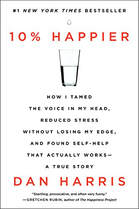
10% Happier: How I Tamed the Voices in my Head, Reduced Stress, without Losing my Edge, and found Self-Help that actually Works
Author: Dan Harris
ISBN: 978-0-06-291760-7
 
 
APA Citation: Harris, D. (2014) 10% Happier: How I tamed the voices in my head, reduced stress, without losing my edge, and found self-help that actually works. Harper Collins, New York, N.Y.
 
 
Buy This Book 
https://www.amazon.com/10-Happier-Revised-Self-Help-Works/dp/0062917609/ref=sr_1_1?crid=1B5K18DUIKJP9&keywords=10%25+happier&qid=1646527637&sprefix=10%25+happier%2Caps%2C91&sr=8-1
​
Picture
activity-_10__happier.pdf
File Size: 109 kb
File Type: pdf
Download File

​Book Description
Dan Harris is perhaps best known from his time as an anchor and correspondent for World News Tonight and Nightline. Dan found himself in an incredibly competitive industry where everyone was vying to get more air time and to have their stories picked up and covered. As a young correspondent Harris learned many beneficial and some difficult lessons from more senior news correspondents like Peter Jennings and Diane Sawyer. He became a better anchor correspondent as a result and found himself moving up to bigger and more public jobs. Despite the outward appearance of thriving in his professional career, Harris was besieged by feelings that he did not belong, he experienced nearly constant stress and anxiety as a result of his high pressure career coupled with memories of the traumas he had witnessed as a war correspondent. Harris starting using drugs was finding ways in which to temporarily alleviate his stress and anxiety while becoming increasingly more dependent on illegal substances. Eventually, this caught up to Harris and he experienced a panic attack on air. While the network was supportive, Harris knew he needed to make a change and went to see a therapist who made the connection between the drug use and the on-air panic attack.
 
Fear for losing his career that he had fought so hard for made Harris explore alternatives to slowing the constant chatter in his brain. Harris began reading much about mindfulness and meditation but when he initially tried to clear his mind and live in the present moment he could not focus even for a few minutes. Instead, he found himself  thinking of the next project or the next newscast. Consistent with his journalistic nature, Harris sought out experts in the field, some of whom were selling their followers of false hope and other like the Dali Lama and Dr. Park Epstein that Harris found more authentic and honest about the challenges of meditation. Harris tried to make time each day for meditation and eventually found that his practice was slowly improving. In order to make a more significant difference, Harris attended a 10 day silent retreat to focus his energies on improving his practice further and perhaps experience a breakthrough. While the first few days were excruciating, on day 4, Harris did have his breakthrough becoming completely lost in the practice and more finely attuned to the happenings in his environment. Harris felt great happiness in the moment much like what he had been reading about for years. 
 
This breakthrough was enough for Harris to continue his practice with a new renewed vigor. He even convinced the network to do  series of stories in mindfulness and meditation. Many co-workers and his family reported that he was easier to get along with and more patient since he began regularly practicing meditation. Some people gave Harris grief for his newfound passion and he often felt embarrassed when defending his practice. He found that he was better able to manage the stress in his job and was able to enjoy the moment without chasing the next job opportunity. He eventually began telling other who asked that meditation was not a cure all, but on the whole he would describe himself as about 10% Happier. He found that this piqued the interest of his colleagues and friend many of whom began the practice for themselves. 
 
More recently Harris has resigned from ABC new to work on his 10% happier podcast and app in an effort to help as many people as possible find a more peaceful and Happier existence. He encourages those new to the discipline to give themselves credit for clearing their mind even for a few moments and to keep practicing even if it sometimes feels like they are not making any progress as with time they will improve.


Psychological Figures and Concepts
Sigmund Freud
 
Addiction
Anxiety
Depression
Mindfulness
Medication
 
 
Other Related Resources:
 
10% Happier App
https://www.tenpercent.com
 
10% Happier podcast
https://www.tenpercent.com/podcast
 
10% Happier Instagram
https://www.instagram.com/tenpercenthappier/?hl=en
 
Dan Harris talk at Google
https://www.youtube.com/watch?v=Dt5Qv9tUObI
 
Everyday Mindfulness with Jon Kabat Zinn
https://www.mindful.org/everyday-mindfulness-with-jon-kabat-zinn/
 
The Guardian: The Master of Mindfulness
https://www.mindful.org/everyday-mindfulness-with-jon-kabat-zinn/
 
TED talk Jon Kabat Zinn
https://www.youtube.com/watch?v=Vr2ATJkxzGA
 
0 Comments

Atomic Habits:  An Easy & Proven Way to Build Good Habits & Break Bad Ones

2/18/2022

0 Comments

 
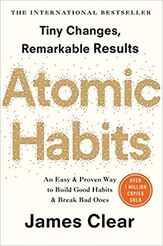
Atomic Habits:  An Easy & Proven Way to Build Good Habits & Break Bad Ones
Author:  James Clear
ISBN 9780735211292
 
APA Style Citation
Clear, J. (2018). Atomic habits: An Easy & Proven Way to Build Good Habits & Break Bad Ones. Avery, an imprint of Penguin Random House.
 
Buy This Book
https://www.amazon.com/Atomic-Habits-James-Clear-audiobook/dp/B07RFSSYBH
​
Picture
activity_atomic_habits.pdf
File Size: 63 kb
File Type: pdf
Download File

Book Description
 
James Clear's book Atomic Habits provides an engaging guide to help students use behavioral psychology, biology, and neuroscience principles to create new positive habits or reduce or eliminate problematic habits. In addition to practical guidance to increase the likelihood of positive habits while deterring bad habits, the book is filled with inspiring stories of how small changes can lead to dramatic results. The idea behind atomic habits is that a small but consistent change in behavior can have dramatic results, just like how an atomic describes something very small that can be the source of immense power. 
 
Atomic Habits breaks habits into a four-stage process: cue, craving, response, and reward. In the first stage, a cue, similar to the stimulus in operant conditioning, serves as a trigger for a voluntary behavior. Over time, individuals learn that particular cues predict the arrival of reinforcements or punishments if specific actions are taken. As a result, our minds regularly scan the environment for cues about potential rewards. The cue, in turn, creates a craving.
 
Stage two of the habit loop, craving, represents the motivational drive that supports habits. The drive or craving is not for the specific action it triggers but the change in the person's physiological state that it generates. For James Clear, the craving is not to look at our phones or YouTube videos but the desire to be entertained. Cues and cravings, of course, are personalized, and what creates a motivational drive for some people would not be noticed by others.
 
The third step is the response which will ultimately become the habit because it is followed by the final step of reward. The reward increases the chances of the behavior occurring in the future in response to the same cue creating the final piece of the habit loop. According to James Clear, the response occurs to gain a reward. We are programmed to seek out rewards because they are satisfying (fulfill the craving) and teach us what actions are important to remember in the future.
 
The four stages form a repeating neurological feedback loop that leads to automatic habits. The mind is always searching for cues in the environment, making predictions, trying various responses, and monitoring and learning from the outcomes. If the cue, craving, response, or reward are insufficient, a habit will not form. For example, if you avoid or eliminate the cue, a craving will not develop. If you reduce a craving, you will lack motivation for a response. If you make the response difficult, you will be unable to complete the behavior, eliminating the reward. If the reward does not satisfy the craving, you will be less likely to engage in the response.
 
James Clear divides the four stages into two distinct phases for habit change. Phase one, the problem phase, includes the cue and craving and provides you with the information that something should change. Phase two, the solution phase, includes the response and reward and voluntary action to execute change.
 
Atomic Habits offers ways to use the four stages and how our brain learns to develop positive habits and eliminate negative ones in the form of James Clear's Four Laws of Behavior Change: make it obvious, make it attractive, make it easy, and make it satisfying. The author describes each law as a lever that makes creating positive habits easy and engaging in bad habits extremely difficult when tilted in the correct direction. For each stage of the habit process, there is a corresponding law for creating a positive habit. For eliminating a negative habit, the goal is to reverse the law.   

Picture
For the first law, make it obvious, James Clear points out, that automatic habits go unnoticed, so changing our unwanted behavior involves increasing our awareness. He uses the example of the Japanese railway system's method of Pointing-and-Calling. For example, when a train arrives at a signal, the operator will point at the signal and say out loud, "signal is green." This process is a safety system and reduces accidents by 30 percent. When New York City adopted a modified version of this system, incorrectly berthed subways dropped by 57 percent. The process of pointing-and-calling can be used to increase awareness of non-conscious habits drawing our attention. This increased awareness can prevent bad habits from sneaking up on us. A recommendation for bringing awareness to our behaviors is the creation of a habit scorecard. To create a Habit Scorecard, simply make a list of your daily habits and then label each habit as effective (+), ineffective (-), or neutral (=).
 
Two ways to make a new habit obvious are to use the habit scorecard to create an implementation strategy or to use habit stacking. Because two of the most common cues are time and location, these can be paired with intention. For example, "I will [Behavior} at [Time] and in [Location] is the implementation intention formula. With habit stacking, you simply pair a new habit you wish to establish with an existing habit (see Habit Scorecard). The habit stacking formula is, "After [Current Habit], I will [New Habit.]  For example, "when I get out of bed, I will stretch for five minutes." Because location is a powerful cue, it helps to organize your environment to make cues for habits you wish to make more obvious and make cues for habits you want to stop. For example, if you want to practice a new hobby more, place the supplies you need in an area where you often spend your free time. Conversely, if you want to reduce a habit, place cues for that behavior in areas where you spend less time. If you find you are not finishing your work, put your phone in another room for a couple of hours.
 
In the case of the second law, make it attractive, utilize temptation bundling to make your new habits more attractive by pairing the habit you want to create with a habit you need to do. This is the next step after habit stacking.
  1. After I [Current Habit], I will [Habit I need].
  2. After [Habit I Need]. I will [Habit I Want].
 
If you want to look at social media, but you need to exercise more, set up habit stacking.
  1. After taking out my phone when I get home, I will complete two one-minute planks (need).
  2. After I complete two one-minute planks, I will check my Instagram (want).
 
Ultimately, the goal is to look forward to doing the planks because it will mean you can scroll through your Instagram. Because dopamine rewards drive habits when dopamine increases, so does the motivation or craving. The anticipation of a reward (not its fulfillment) creates the drive for action, and temptation building helps make new habits more attractive. With habits you want to eliminate, the key is to make them unattractive by highlighting the benefits of avoiding a bad habit. Because habits become more attractive if paired with positive emotions and less attractive when paired with negative emotions.
 
The third law of habit creation is to make it easy. Practice is the most effective learning method, not planning, so creating new habits requires acting. What matters most is not the amount of time engaged in a habit but the number of times you have performed it. Additionally, to make a new habit easy, it is important to consider the law of least effort, or the idea that we often are pulled by the options that require the least about of work. Making a habit easy works by decreasing the friction associated with it, making it easy to act and engage in the desired activity quickly. As always, the opposite is true for decreasing a negative or ineffective habit. If you want to work out at the gym after work more, pack your workout gear and place it by the door. If you want to eat healthier at work, prep your meals over the weekend and pack them individually, so you have easy access during the week. Finally, to make habit creation easy, embrace the two-minute rule. Start a new habit small – by engaging in the desired activity for only two minutes. Atomic Habits suggests scaling your new habit from very small to very hard. 
 
According to James Clear, the fourth law, make it satisfying, is the cardinal rule of behavioral change because reinforced behaviors are likely to be repeated, which is the basis of habit creation. Immediacy is also important because behaviors that are reinforced immediately are more likely to be repeated, and behaviors immediately followed by punishment will decrease. Habit creation works best if we can find a way to feel immediately successful. The first three laws of atomic habits (make it obvious, attractive, and easy) create an initial behavior. However, the fourth law (make it satisfying) leads to replication and habit development. James Clear recommends using a habit tracker to create visual evidence of your progress to encourage habit formation. Another way to strengthen habit creation is to utilize an accountability partner or a habit contract.
 
The book also includes a final section titled Advanced Tactics to help you maximize your odds of success by playing to your strengths and utilizing the psychology of motivation. The author also includes short sections to apply the theory of atomic habits to specific focus areas, including business and parenting. Atomic Habits provides students with a step-by-step practical way to apply cognitive-behavioral, social, health, neuroscience, and motivational psychology theories to transform their habits, reduce stress, and achieve their goals. Consider using this book to revitalize a unit on learning and provide students with a practical application for the learning theories they are studying.
 
Other Related Resources
 
Author James Clear's website
https://jamesclear.com/
 
James Clear: Atomic Habits: How to Get 1% Better Every Day - James Clear
https://www.youtube.com/watch?v=U_nzqnXWvSo
 
Atomic Habits Summary – 20 Lessons
https://www.youtube.com/watch?v=a2YEiDTLjvg
 
Psychological Figures and Concepts
Solomon Asch
Charles Darwin
Viktor Frankl
Carl Jung
Robert Plomin
David Premack
B.F. Skinner
Edward Thorndike
 
Conditioning
Dopamine
Flow
Habit
Happiness
Long-term potentiation
Mindset
Operant conditioning
Premack's principle
Proximity
Reinforcement
Social norms
Yerkes-Dodson law
0 Comments

Chatter: The Voice in Our Head, Why It Matters, and How to Harness It

1/22/2022

7 Comments

 
Chatter: The Voice in Our Head, Why It Matters, and How to Harness It
Author: Ethan Kross
ISBN-10: ‎0525575235
ISBN-13: 978-0525575238
 
APA Style Citation
Kross, E. (2021). Chatter: The voice in our head, why it matters, and how to harness it. New York, NY: Crown.
 
Buy This Book
https://www.amazon.com/Chatter-Voice-Head-Matters-Harness/dp/0525575235
​
Picture
chatter_activity.pdf
File Size: 89 kb
File Type: pdf
Download File

Book Description
Do you ever want that inner voice that plays in your head to stop? While introspective thoughts can be beneficial, the inner critic can quickly rear its ugly head when the thoughts turn to chatter, which consists of cyclical negative thoughts and emotions. Ethan Kross, author of Chatter: The Voice in Our Head, Why It Matters, and How to Harness It, studies how those internal conversations can be used to improve your life. He compares his job to being a mind mechanic. When internal thoughts turn negative, individuals need to recognize when they become problematic and have the proper tools to quiet the chatter.
 
Talking to oneself is a normal part of life, but it also has its downfalls. Language lets us identify our emotions and discover how to handle a situation. As humans, it allows us the powerful ability to mentally travel in time. It also allows us to control ourselves and our emotions. So how does talking to oneself go wrong? Anyone who has become skilled at a learned task can fall victim to chatter. Kross shares stories of athletes that have fallen victim to that inner critic. The internal conversation influences attention and causes what was once an involuntary action to become the focus of our attention, which can then lead to overanalysis. When we ruminate, we end up focusing our attention on that negative inner voice AND what we are doing. The author points out how challenging it is to read after getting into a fight. It doesn’t seem to work well for anyone! We also want to talk to others about our negative experiences. The more intense the emotion, the more we want to talk about it. Unless in involves shame, then we want to keep in confidential. But it is sharing those negative experiences that pushes sympathetic listeners away because we tend to miss the warning signs of how annoying we are. The chatter can lead to talking too much, which can then alienate those we confide in the most.  Social media provides a positive experience, but can also become problematic for several reasons. In real life we can manage emotions with the passage of time. However, when we are at the peak of frustration, our connectivity allows us to share those negative experiences in the moment before we have a moment to calm down. It is also human nature to compare ourselves to others. As we passively scroll through others’ filtered versions of themselves posted online, we can start to become envious and negative emotions take over. This emotional pain registers the same way in our brain as physical pain.
 
Perspective taking is key to quieting our inner voice. Kross uses the analogy of your mind being a lens and the inner voice being a button that can zoom either in or out. He explains how when we get stressed or the inner voice starts to ruminate, we lose the ability to zoom out. By adding some distance to our thoughts, we can then change those thoughts. The author shared Walter Mischel’s famous marshmallow research, where waiting for two marshmallows led to positive results rather than having a lack of impulse control and immediately eating the marshmallow. This research led to the understanding that people have tools to control themselves. Kross also mentioned Aaron Beck’s therapy technique known as “distancing” where individuals are taught to scrutinize their thoughts. While some people have negatively associated this with avoidance, the key is to actively explore the thought from a distance. The recommendation is to imaginatively visualize oneself from afar. Research has explored the impact of immersion versus distancing. Immersers who viewed an event from the first-person perspective got stuck in their emotions. While, distancers who viewed an event from a broad perspective, had more positive feelings and were better able to control their stress response. By teaching people to see the big picture, it reduced their chatter. Mental distancing also led to increased wisdom regardless of age. Even journaling for a 15-minute time period about a negative experience was helpful. While narrating the story, the author created distance. The point of view is also key to quieting chatter. Using the first-person singular pronouns signaled negative emotions. Instead using third person or saying your name can force you to step back and refocus more objectively. Examples of LeBron James or Malala talking in third person during interviews helped provide distance from the event. Even shifting to the generic or universal second-person “you” can help provide the necessary psychological distance.
 
Those around you can influence chatter as well. Sharing emotions can often hurt more than it helps. Research has found that talking to others about negative experiences doesn’t help us recover in any meaningful way. Co-rumination can quickly change from support to inciting the inner voice. Advice at the wrong time from others can propel inner talk and undermine self-efficacy. Instead, Kross recommends invisible support. Rather than making someone feel like they can’t cope on their own, providing invisible support could be doing housework to ease their stress or offering broadening advice that is not explicitly directed at the person experiencing the negative thoughts. This invisible support is especially helpful when the person with negative thoughts is under evaluation or preparing to be.  Affectionate touch or comforting objects can be beneficial as well.
 
It is not just the people that surround you, but also the physical environment that influences chatter. Kross references trees and grass as mental vitamins that help manage our stressors. Research has found attention improved after taking a walk with nature as opposed to an urban landscape. And it doesn’t matter the time of year! If access to nature is problematic, photos and videos work too. One study even found that nature sounds helped enhance attention. Uplifting emotional awe occurs when we come across something powerful that we can’t really explain. It has been linked to physical and psychological benefits. Another interesting finding involves how order in our physical environment can quiet the chatter even though there is no direct connection between creating an organized world and the cause of the inner chaotic thoughts. Just reading about the world described as an orderly place has been found to reduce anxiety.
 
The mind is a powerful thing. Placebos help with chatter. Even nondeceptive placebos have worked for allergy symptoms, lower back pain, ADHD, and depression. Superstitions and rituals also help quiet the chatter. Rituals can come from culture, but can also be personalized. To become a ritual there needs to be a rigid sequence of behaviors that are performed in the same order. They appear to work because they divert attention, provide a sense of order and control. Rituals also make us feel connected, provide us with awe, and activate the placebo effect. Many engage in rituals without even knowing.
 
Kross makes it clear that he is not advocating for an avoidance of negative states. They just can’t consume you. Not all introspection is bad, but individuals need to recognize when they become problematic and have the proper tools to quiet the chatter. He points out that chatter is a part of our culture. Parents provide children with chatter support and create the culture they are immersed in at home. He also recognizes the need to teach these tools to children, after a college student pointed out learning them in college seems a little too late. Kross has created a toolbox for middle school and high school curriculum, but leaves the reader with their own toolbox that can be used right away to quiet the chatter.
 
Other Related Resources
Author's Website

https://www.ethankross.com/chatter/

Center for Positive Organizations- Michigan Ross. Chatter: The Voice in Our Head, Why it Matters, and How to Harness It
https://www.youtube.com/watch?v=3V33_f3yVn8

​ISR Insights Speaker Series: The Voice in Our Head, Why It Matters, and How to Harness It
https://www.youtube.com/watch?v=jleW_eTWVHA

​Next Big Idea Club

https://nextbigideaclub.com/magazine/chatter-voice-head-matters-harness-bookbite/26713/

Psychological Concepts and Figures

Aristotle
Aaron Beck
Joseph Breuer
Sigmund Freud
William James
Daniel Kahneman
Franz Anton Mesmer
Walter Mischel
Lev Vygotsky
 
Active listening
Adrenaline
Animal magnetism
Anxiety
Associative connections
Attention
Attention restoration therapy
Catharsis
Contact
Cortisol
Dreams
EEG
Empathy
Evolution
Free association
Frequency illusion
Gene expression
Hippocampus
Hypothalamus
Hysteria
Identity
Inner speech
Introspection
Loss aversion
Magic number
MRI
Neurons
Neuroscience
OCD
Oxytocin
Parkinson’s disease
Placebo
Polygraph
Prefrontal brain
Reciprocity
Rumination
Self-control
Self-efficacy
Stress
Temporal distancing
Tend and befriend
Wisdom
Working memory
7 Comments

Pursuing the Good Life

4/8/2021

2 Comments

 
Pursuing the Good Life
Author: Christopher Peterson
ISBN:  978-0-19-991645
 
APA Style Citation
Peterson, C. (2013). Pursuing the good life.  New York, NY: Oxford University Press.
 
Buy This Book 
https://www.amazon.com/Pursuing-Good-Life-Reflections-Psychology-ebook/dp/B00AF6MZY8/ref=sr_1_1?dchild=1&keywords=pursuing+the+good+life&qid=1610937893&sr=8-1
Picture
pursuing_the_good_life_.pdf
File Size: 36 kb
File Type: pdf
Download File

​Book Description
Positive psychology is the study of what makes life most worth living.  Christopher Peterson, along with Martin Seligman, are two of the founders of positive psychology. Peterson wrote a blog for Psychology Today, and many of those entries make up the bulk of the “chapters” in the book. Each chapter is only a few pages and contains amusing anecdotes, information about positive psychology, and recommendations regarding how to implement positive psychology in everyday life.  The book is broken up into four different themes:  work/school, relationships, play, and service.  
 
Peterson is clear from the start that positive psychology is a psychological science that uses research-based evidence to determine what components help someone live a better life. His first chapters identify what positive psychology is and, perhaps more importantly, what it is not (self-help books). Also, he addresses the criticisms of positive psychology and creates a sound rationale for why this is a discipline worthy of study.  
 
Peterson addresses how we can either enhance or diminish the positive emotions we feel, and he explains how we can savor or squelch the experiences that we have. He examines the connection of heritability and happiness and how to tell if someone is genuinely happy. Peterson discusses finding ways to utilize our strengths and discusses how to build resistance in the face of setbacks. He addresses the impact of friends and family on our level of happiness and makes recommendations regarding how we can implement more positive psychology in the workplace. 
 
Peterson addresses the many institutions that can introduce more positive psychology to improve the overall organization, he places particular emphasis on schools.  Finally, he looks at the cross-cultural aspects of positive psychology and proposes measuring gross national happiness.
 
Because the chapters are so short, they can easily be incorporated into a psychology course, and students can read a single chapter, or similarly themed chapters can be assigned together. The chapters can also be read in any order.  These short and accessible former blog posts are a great way to introduce positive psychology ideas by incorporating a short chapter into different parts of the curriculum.
 
Other Related Resources
Tribute to Christopher Peterson
https://www.psychologytoday.com/us/blog/in-one-lifespan/201312/pursuing-the-good-life-reflections-positive-psychology
 
Eleven Reasons to Own, Love, and Give Pursuing the Good Life
https://positivepsychologynews.com/news/bridget-grenville-cleave/2013052726221
 
Psychological Figures and Concepts
Mihaly Csikszentmihalyi
Ed Diener
Albert Ellis
Jonathan Haidt
Howard Gardner
Daniel Kahneman
Kurt Lewin
Abraham Maslow
Martin Seligman
 
Applied research
Basic research 
Cross-sectional studies
Collectivist culture
Correlation coefficient
Correlation does not prove causation
Duchenne smiles
fMRI
Gratitude
Individualistic culture
Habituation
Heritability
Little Albert
Lobotomies
Locus of Control
Multiple Intelligence
Myelinated nerves
Neuroscience
Optimistic explanatory style
Oxytocin
Pessimistic explanatory style
Sociocultural perspective
Subjective well-being
 
2 Comments

Me, Myself, and Us

3/17/2021

0 Comments

 
Author:  Brian R. Little, PhD
ISBN-10: 9781610396387
ISBN-13: 978-1610396387
 
APA Style Citation
Little, B. R. (2016). Me, myself, and us: The science of personality and the art of well-being. Public Affairs. 
Buy This Book
​www.amazon.com/Me-Myself-Us-Personality-Well-Being/dp/1610396383

Picture
activity_me_myself_us.pdf
File Size: 75 kb
File Type: pdf
Download File

Book Description
 
Brian R. Little explores the fields of personality research and positive psychology in a fast-paced style that provides new examples from current studies, numerous built-in activities to use in class, and engaging anecdotes as well as examples from himself, his clients, and his teaching experiences. Many chapters open with several quotes from psychologists, poets, philosophers, scientists, and singers that can be used as discussion starters.
It is well for the world that in most of us, by the age of thirty, the character has set like plaster and will never soften again.
  • William James, Principles of Psychology, 1890
 Probably a crab would be filled with a sense of personal outrage if it could hear us class it without ado or apology as a crustacean and thus dispose of it. "I am no such thing, it would say; I am MYSELF, MYSELF alone."
  • William James, The Varieties of Religious Experience, 1902
 When I say Professor Lindzey's left shoe is an "introvert," everyone looks at his shoe as if it were something the shoe was responsible for… Don't look at that shoe!  Look at me; I'm the one who is responsible for the statement.
  • George Kelly, Man's Construction of his Alternatives, 1958
 The author, Professor Little traces how modern personality psychology builds on the trait approach but has grown in four areas. Me, Myself, and Us highlights new trends in personality research that focuses on advances in understanding of the biological influences on personality, the intricacies of environmental influences, the influence of personality on motivation, and a renewed focus on constructive personality traits and positive psychology. The book can be used to highlight the biopsychosocial approach to the scientific study of personality. The book addresses the nature v. nurture dichotomy uniquely by adding on the idea of third natures to examine how personality and motivation interact.  Free traits, a term coined by the author, that refers to characteristics resulting from the personal commitments individuals make to the key projects we invest ourselves in regularly. In this way, individuals actively nurture their natures.  In other words, our actions and choices impact our inherited tendencies. Students see the author, who describes himself as an introvert in the personality courses he teaches, as an extrovert based on the energy he demonstrates when he presents lectures. When lecturing, he is acting outside of his character to advance projects he is personally passionate about.  Psychologists also refer to this behavior of acting in ways that go against our nature, as counter-dispositional behavior.  The author argues that adopting free traits can increase goals that have personal importance and a sense of meaningfulness.  However, the author acknowledges that free traits can also be stressful and provides many examples of the benefits and costs of acting against our natures.
 
The book expands on the idea of free traits and the person-situation debate in personality theory with a detailed look at the idea of self-monitoring.  The book offers a short 18 item measurement to indicate where individuals fall across the range of self-monitoring (low to high).  An interesting section shows how participants ranked a series of forty situations in terms of the degree of self-monitoring pressure they create.  The highest included job interviews, public speaking, court appearances, and meeting with a university dean.  The situations ranked as the lowest degree of self-monitoring press included being sick at home, watching TV with friends, rock concerts, camping alone, talking with a good friend, and grocery shopping. Ask students to consider how low v. high self-monitors might interpret these diverse situations.
 
The text explores many popular personality tests covered in psychology textbooks and how they are used in the real world.  For example, the author discusses the history, design, and popular uses of the Myers-Briggs Type Indicator (MBTI) and its reliability and validity issues.  The MBTI has poor reliability and only adequate validity levels because it does not have the basis in research found in other personality tests. Despite its issues with reliability and validity, the MBTI remains popular.  There are several reasons for this phenomena, according to the author:
  1. The MBTI is easy to take and score, and participants find it enjoyable and engaging as a topic for corporate workshops or other trainings.
  2. Effective marketing and readily available spin-off products make the test appealing to companies and corporate trainers.
  3. Sharing MBTI profile information creates the opportunity to have discussions about personality and offer insight and understanding in ways that similar discussions related to horoscopes do not.
  4. Individuals often readily identify with their personality profiles and embrace the results with pride.
  5. The impact of what Little calls magical transformation in which the frustration individuals experience while responding to prompts in the assessment, "It depends on the situation," to the excitement and agreement they feel when they see their results and read their profile. Magical transformation, however, is not only present in the MBTI personality test other personality inventories can create results like this or the Barnum effect.
 
The book includes a short but reliable and valid assessment for the Big Five traits called the Ten-Item Personality Inventory (TIPI).  This inventory developed by Sam Gosling, Jason Rentfrow, and William Swan is printed in the book with scoring guidelines.  The TIPI can give students a sense of what the gold standard assessment for the Big Five traits created by Paul Costa and Robert R. McCrae, the NEO PI-R looks like. The NEO PI-R, however, is longer and more comprehensive and is not publicly available.  The book's discussion of the Big-Five trait theory is detailed and includes detailed sections on each of the five traits: 
Conscientiousness:  Structure, Chaos, and All That Jazz
Agreeableness:  The Promise and Problems of Being Pleasant
Neuroticism: Sensitivity and Sensibility
Openness to Experience:  Receptivity and Resistance
Extraversion:  Arousal and Affect
 
In Me, Myself, and Us, Little explores in detail many other topics central to personality  psychology with research studies, personal examples, and more mini inventories.  These additional topics include internal v. external locus of control, creative personalities, personality type and health, and personality and the environment. The book is a fantastic resource for short and more in-depth activities for use in units on personality, testing and individual differences, motivation and emotion, stress and health, and social psychology.
 
 
Other Related Resources
Author Brian R. Little, Ph.D. website
https://www.brianrlittle.com/?doing_wp_cron=1614037541.8273169994354248046875
 
Author Brian R. Little, Ph.D. TED Talk "Who Are You, Really?  The Puzzle of Personality"
https://www.ted.com/talks/brian_little_who_are_you_really_the_puzzle_of_personality?language=en
 
Author Brian R. Little, Ph.D. TED Talk "Confessions of a Passionate Introvert"
https://www.youtube.com/watch?v=NZ5o9PcHeL0
 
The Q Test for high v. low self-monitors
http://www.richardwiseman.com/quirkology/new/USA/Experiment_AnalyseYourself.shtml
 
Psychological Figures and Concepts
Paul Costa and Robert McCrae
Charles Darwin
Sigmund Freud
Dan Gilbert
William James
Carl Jung
George Kelly
Abraham Maslow
Walter Mischel
Stanley Milgram
Henry Murray
Carl Rogers
B.F. Skinner
 
Attribution theory
Big-Five traits
California Personality Inventory
Creativity
Gerontology
Holmes-Rahe scale
Humanistic psychology
Intelligence and IQ
Locus of control
Minnesota Multiphasic Personality Inventory (MMPI)
Myers-Briggs Type Indicator
Narcissism
NEO PI-R
Obsessive-compulsive
Personal construct
Psychopathology
Self-monitoring
Stress
Thematic Apperception Test
Traits
Type-A personality
Well-being
0 Comments

The Little Book of Hygge: Danish Secrets to Happy Living

12/27/2020

1 Comment

 
The Little Book of Hygge: Danish Secrets to Happy Living
Author: Meik Wiking
ISBN-10: 0062658808
ISBN-13: 978-0062658807
 
APA Style Citation
Wiking, M. (2017). The little book of hygge: Danish secrets to happy living. New York, NY: William Morrow.
 
Buy This Book
https://www.amazon.com/dp/B01GONJFZ2/ref=dp-kindle-redirect?_encoding=UTF8&btkr=1
​
Picture
hygge_activity.pdf
File Size: 34 kb
File Type: pdf
Download File

​ 
Book Description
What is the secret behind the happiest people on earth? The Danes have consistently ranked at the top of global surveys on happiness. But where does happiness come from? Is it genetics, relationships, health, money, employment, or a sense of purpose? Author Meik Wiking, who works at the Happiness Research Institute based in Denmark, believes one important but perhaps overlooked cultural component is hygge (pronounced hoo-ga). He offers tips to increase hygge. While many are stuck at home, this book might offer just the right inspiration to create a little happiness in your life.
 
Denmark consistently ranks as one of the happiest countries in the world. To be fair, Danes do not have the best weather and they pay some of the highest taxes in the world. However, there is wide support for paying such high taxes because it is seen as an investment in society and quality of life. There is a strong sense of trust between Danes. Perhaps a part of the recipe for happiness that sets Denmark apart from other countries is hygge- a Norwegian word for well-being. Hygge is that coziness and security that brings contentment. While many cultures have a similar term to describe this feeling of coziness, warmth, and togetherness, Danes are obsessed with it and believe it to be uniquely Danish. It is truly a part of their cultural identity. So how does one increase hygge? Candles, fireplaces, blankets, good food, and hanging with friends are just a few ways to build hygge. It doesn’t have to be expensive and it can happen anywhere.
 
Hygge can be achieved in many ways and take on many forms. It can be those slow weekends, the comfy pair of pants you slip into when you get home, the nook where you sit and relax, or a cozy conversation. One area of focus is a healthy work-life balance.  Danes have figured out this balance. Individuals with children usually leave work at 4 p.m. and those without at 5 p.m.  About 78% of Danes socialize with others a minimum of once per week.  Equality is also an important element in hygge. For example, it is important that everyone helps prepare the food, instead of the host working alone in the kitchen. Time spent with others creates an atmosphere filled with warmth and fullness and a release of oxytocin. Basic living standards are essential for happiness. However, once the baseline has been met, happiness is more about the quality of social relationships. The best predictor of whether we are happy or not is our social relationships. In 2008, one study found that an increase in social involvement may produce an increase of life satisfaction equivalent to an extra $110,000 a year. There is a strong correlation that the more satisfied people are with their social relationships, the happier they are in general. We are social creatures. Danes prefer smaller groups of friends. Many believe the best number of people for hygge is 3 to 4. However, one drawback is Danes tend not to readily admit new friends to their friendship circles. On the flip side, hygge is the best thing for introverts. Those that seek smaller groups gain much from the qualities of hygge.
 
Light- Approximately 85% of Danes associate hygge with candles to create that cozy feeling. Each Dane burns an average of 13 pounds of candle wax per year. They also prefer natural and organic products over scented candles. In addition, lamps are carefully placed to create a soothing mood. The lower the temperature of the light, the more hygge. Usually, it is better to have several smaller lamps around the room rather than one big lamp from the ceiling.
 
Food and drink- Nordic cuisine has gained some popularity. Noma, a popular restaurant in Copenhagen, has attracted global attention. At a pop-up location in Japan, one dish consisting of live shrimp covered in ants made headlines. Danes love their meat, confectionery, and coffee; and all of these are directly linked to hygge. Denmark is at the top of the list of sweet-crazed nations, obsessed with cakes and pastries. Hot drinks are also popular. Approximately 86% of Danes associate hygge with their favorite drink of coffee. A common belief is “Live life today like there is no coffee tomorrow.” It is about giving yourself a treat, not indulging in the fancy and expensive. These treats are viewed as the same thing as happiness by the brain’s reward system. We associate a certain food with a feeling of pleasure that leaves us wanting more. When it comes to food, the rule of thumb is the longer a dish takes to cook, the more hygge it is. It is about the process, not the end product. 
 
Clothing- The key to Danish dress code is casual. Scarves are a must and the golden rule is the bigger, the better. In Denmark, everyone wears black, layers, and woolen socks. To experience hygge, it is suggested to link purchases with positive experiences. For example, buy a sweater or nice pair of socks that will now be associated with a special event.
 
Home and Outside the Home- Danes are obsessed with interior design because the home is the heart of hygge.  A wish list for hygge at home may include a nook, fireplace, candles, wood elements, nature, books, ceramics, tactile experiences, vintage pieces, blankets, and cushions.  Having a comfortable home is about relaxation and finding that well-deserved break. Hygge is built on casualness.  Connecting with nature enables you to relax and be present to savor the moment.  Cabins include all the ingredients of hygge, such as the smells, sounds, and simplicity. If you need hygge at work, try organizing a potluck, setting up an office garden, bringing your dog to work, or making the office homier.
 
Year-Round and on the Cheap- The typical season for hygge is fall or winter. However, it can be experienced year-round. It can include orchards, barbecues, community gardens, picnics, or bike rides. Danes love their bikes and cycling. In Copenhagen, 45% cycle to their place of education or employment. It is an easy way to get a bit of exercise, but it also makes people happier. Riding a bike in your daily commute adds 3 to 14 months to your life expectancy.  It’s also an indicator of community and trust.  If a lot of people cycle, you probably live in a healthy neighborhood. Hygge is about being simple and modest. It does not have to be expensive. It is about appreciating the simple pleasures of life. The author offers a list of activities each month to inspire a feeling of coziness and a list of inexpensive activities that surround you.
 
Christmas- The Danish Christmas is first about family and friends. The quality of social relationships has been shown to predict our happiness. Second, are the traditions.  The Christmas menu is usually pork or duck. There is also risalamande, a dish made of whipped cream, boiled rice, and finely chopped almonds topped with hot cherry sauce. Hidden in the bowl is one whole almond.  Whoever finds the almond gets a present and good luck. There are also special decorations, such as woven paper hearts and a Christmas or Advent candle. The candle is painted like a tape measure with dates from December 1st to 24th.  Each day the candle is lit with company and brings the family together. Most TV stations have Advent calendars that count down the days until Christmas. While the preparation for this holiday may sound overwhelming, some stress makes the hygge that follows all that more comforting.
 
Hygge encompasses all of the senses. The taste is familiar and sweet. The sound is silent or soft. The smell is individualized and relates to your past experiences. The sights are of slow movements, such as falling snow. The touch is of old, homemade belongings that take a long time to make. Finally, there is a sixth sense of feeling safe. The author takes the reader back to a Winnie the Pooh quote, “How do you spell love? You don’t spell it...you feel it.” Hygge is about all of the feelings of coziness and warmth wrapped around you.
 
Hygge is everyday happiness. It is about making the most of what we have each and every day. Savoring is about enjoying the moment now and hygge is all about the current moment. Evidence-based studies show that practicing gratitude also has many benefits. Those who are grateful are often happier, more helpful and forgiving, sleep better, recover faster, and are less likely to get stressed. Danes plan for hygge times and reminisce about them afterward. The author leaves us with a quote from Benjamin Franklin “Happiness consists more in the small conveniences or pleasures that occur every day, than in great pieces of good fortune that happened but seldom to a man in the course of his life.”
 
Other Related Resources
Author’s Websitehttps://www.meikwiking.com/
Author’s Instagramhttps://www.instagram.com/meikwiking/?hl=en
What Is Hygge? Everything You Need To Know About The Danish Lifestyle Trend
https://www.countryliving.com/life/a41187/what-is-hygge-things-to-know-about-the-danish-lifestyle-trend/
 
The Year of Hygge, the Danish Obsession with Getting Cozy
https://www.newyorker.com/culture/culture-desk/the-year-of-hygge-the-danish-obsession-with-getting-cozy
 
6 Ways to Practice Hygge, the Danish Secret to Happiness
https://www.health.com/mind-body/hygge
 
Psychological Concepts and Figures
Sigmund Freud
Abraham Maslow
 
Belongingness hypothesis
Cerebral cortex
Correlation
Cultural identity
Dopamine
Evolutionary psychology
Gratitude
Happiness
Health
Introverts
Life satisfaction
Nature
Nucleus accumbens
Oxytocin
Positive emotions 
Senses
Social relationships
Tactile
Well-being
1 Comment

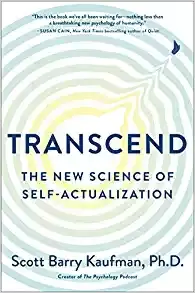
Transcend: The New Science of Self-Actualization

8/20/2020

0 Comments

 
Transcend: The New Science of Self-Actualization
Author: Scott Barry Kaufman
ISBN-10: 0143131206
ISBN-13: 978-0143131205
 
APA Style Citation
Kaufman, S.B. (2020). Transcend: The new science of self-actualization. New York, NY: Tarcher Perigee.
 
Buy This Book
https://www.amazon.com/Transcend-Self-Actualization-Scott-Barry-Kaufman/dp/014313120
Picture
transcend_activity.pdf
File Size: 237 kb
File Type: pdf
Download File

Book Description
Many individuals studying psychology are familiar with Maslow’s Hierarchy of Needs. But who was this man and how many levels truly exist in his hierarchy? Transcend: The New Science of Self-actualization, written by Scott Kaufman, offers a short biography seamlessly blended with an exploration of Maslow’s theories that laid the foundation of humanistic psychology and modern research.
 
Maslow was the eldest son of Russian Jewish immigrants. He was bullied as a kid and went on to dedicate his life to social change. At age 19, Maslow had a life-changing experience. While attending a college class (that he eventually dropped claiming it was too hard) he learned of folkways and was bitten by the anthropology bug. Shortly after, he transferred to the University of Wisconsin Madison. In 1930, Maslow was just three years younger than his 24- year-old professor Harry Harlow, and they would go on to become dear friends. After reading Freud’s Interpretation of Dreams, Maslow was drawn to psychoanalysis. He approached Harlow to empirically test the ideas of Freud and Adler. It was then that Maslow began researching sex and dominance in monkeys. His work impressed Thorndike, a behaviorial psychologist who’s work on learning theory led to operant conditioning, who invited him to come to Columbia University to work as his postdoctoral fellow. That same year Adler also moved to New York City and hosted weekly get togethers. After asking about his connection to Freud, Adler became visibly angry and Maslow was embarrassed. At a later meeting, Adler questioned Maslow’s loyalty and Maslow never attended another meeting. Later that year Adler had a heart attack and died. Maslow had a great deal of regret about his final interaction with Adler. In 1938, Maslow spent the summer among the Northern Blackfoot Indians in Alberta, Canada. This experience influenced his perception of human nature. He believed all humans were basically good, but society changes this natural personality. From 1935-1945, Maslow learned from some of the most influential psychologists and anthropologists of his generation and many become his friends: Alfred Adler, Erich Fromm, Karen Horney, Bela Mittlemann, Emil Oberholzer, Abran Kdariner, David Levy, Max Wertheimer, Kurt Koffka, Kurt Goldstein, Ruth Benedict, and Margaret Mead to name a few.
 
Another life-changing experience came shortly after the United States entered WWII. Maslow felt we didn’t understand the Fascists or Communists and devoted his life to discovering a psychology for the peace table. He used his varied experiences to create his theory of human motivation. In 1943, he used the phrase “self-actualization” referring to the desire for self-fulfillment. He believed everyone should be self-actualizing, and it was the society that impacted them. For him, the self-actualizing man was not an ordinary man with something added, but the ordinary man with nothing taken away. He studied personal acquaintances and friends, college students, and public and historical figures. He acknowledged the limitations of this methodology but hoped to inspire further study. It has been almost 70 years since he published his list of self-actualization characteristics, but ten can still be reliably and validly measured. From 1945-49, he kept a Good Human Being (GHB) Notebook to organize his findings. Along the journey, he wanted to inspire students not just provide mastery of content. He was also blunt and honest to a fault. In 1954, he turned his attention to “peak experiences”. He read widely from Eastern religious thought and Carl Jung. After collecting mystical experiences from college students, he created the concept of a “peak experience”. He shared this with his colleagues and was rejected by a top journal. Later he explored industrial psychology and was influenced by McGregor’s concepts of Theory X and Theory Y. He went on to create Theory Z and soon realized self-actualization is not the top of the hierarchy.
 
In December, 1967 he had his first heart attack and recognized that he did not have much time left. He decided to commit to his writing and faced his inner conflicts and insecurities. He saved his thoughts in his journal and believed the right person would come along and know what must be done. His last private journal entries showed he was working on a humanistic revolution and a series of exercises to transcend the ego. He was also planning to write a book on humanistic education. He wanted a fifth force in psychology, known as transhumanism that would transcend human interests. On June 8, 1970, Maslow died from a second heart attack at the young age of 62. He had much more to explore for his humanistic theory.
 
Maslow called for a “Being-Psychology,” a field of psychology that incorporates a full understanding that includes both sick and healthy. It explores the ends rather than the means and was sometimes known as “positive psychology.” He created a “third force” in response to the limitations of behaviorism and Freudian psychoanalysis. It became known as humanistic psychology and started with the launch of the Journal of Humanistic Psychology in 1961. It focuses on a healthy personality and gained popularity. The 13 sources of well-being have been studied extensively and supported over the years. However, several misconceptions of his theory have also been firmly implanted in public perception.
  1. The theory is NOT similar to a video game with a lockstep progression. Maslow was a developmental psychologist and recognized maturation as ongoing. Individuals are often only partially satisfied at any level and can return to a lower level.
  2. The needs are NOT isolated from one another. Maslow discussed how the needs are arranged and rest on one another, but returning to lower needs is always a possibility. John Rowan, an English humanistic psychotherapist, used the analogy of Russian nesting dolls: each larger doll includes all of the smaller dolls but also transcends them. While working on higher needs, the lower needs don’t disappear but rather work together for growth.
  3. The theory is NOT a pyramid. Maslow never created a pyramid to represent his hierarchy of needs; it was created by a management consultant in the 1960s. The graphic gained popularity and was reproduced in textbooks, but the theory is much more powerful than the simplistic, 5-step, one-way pyramid offered with the graphic.
  4. The theory DOES allow for cross-cultural variation and individual differences. Maslow recognized that basic needs can change across a lifetime, but there are also significant differences in the order to which people satisfy their needs. For example, if a group is lacking security (i.e., war-torn society) they will be focused on their survival needs. However, they can simultaneously work on community, respect, and talent development. Individuals do not need to wait for their security needs to be met before working on self-fulfillment. Even within a society, individuals are influenced by their personality and environmental experiences. Needs can change as we mature and develop.
 
Rather than focusing on a pyramid, Maslow proposed all needs can be grouped into two main classes, which must be integrated for wholeness. Deficiency needs (D-needs) are motivated by lack of satisfaction- lack of food, safety, affection, belonging, and self-esteem. The D-realm colors our perceptions and distorts reality. The Being-realm (B-needs) is about accepting and loving of oneself and others.
 
The author, Kaufman, proposes perhaps a more appropriate analogy for understanding the true essence of Maslow’s theory. Rather than a hierarchy, he suggests a sailboat. It is a sailboat that protects one from dangerous seas. Each plank offers security, but it is not enough for movement. A sail is necessary to move the boat through the water. Each level of the sail helps an individual capture more wind and explore their environment. Rather than climbing a pyramid, one opens their sail and drops their defenses. As you catch the wind you can enter peak experiences. And as one makes their way through the ocean, they help other sailboats near them.
  • The boat consists of the basic needs of safety, connection, and self-esteem. These security needs work together, but under bad conditions can lead to instability. 
  • The sail represents growth, which is the heart of self-actualization.
Security and growth are the two foundations necessary for becoming a whole person. Kaufman broke down growth into three specific needs: exploration, love, and purpose. He believes this captures the essence of Maslow’s concept of self-actualization.
 
Boat: Security Needs
 
1. Safety
Maslow emphasized the need for the most fundamental needs to be met to realize one’s full potential. Modern science supports having a safe base. The research is clear that psychological processes are entangled with our physiology. Kaufman feels fine combining the physiological and safety needs that Maslow proposed. He further explores research on hunger and the need for attachment security. Bowlby and Ainsworth’s research are addressed along with adult categories of attachment styles. The future implications of trauma on the brain and learned helplessness are also explored along with their physiological connections. Maslow believed healthy growth involved not only fulfillment of the basic needs, but also the ability to endure deprivation and grow as a result. One of the most important paths to growth is through education.  Sternberg emphasizes viewing intelligence in context. Skills for success in school may differ from skills necessary for survival. An emerging field in education, known as possibility development, focuses on helping adolescents imagine future possible selves and strategies to overcome obstacles, which can have a persistent positive impact.
 
2. Connection
Maslow quickly acquired great affection for monkeys under Harlow. Harlow’s research identified connection is essential to normal development. Maslow said belonging and affection were fundamental and not reducible to safety or sex. The need for connection consists of two sub needs: need to belong and the need for intimacy. The Robbers Cave Study explores how external threats and a lack of resources can motivate belonging. Additional research shows the strength of groups, even when membership is meaningless. However, people differ greatly in their need for belonging as a result of individual genes interacting with personal experiences. The need for intimacy is more about connecting, caring, and protecting loved ones. At the heart of intimacy is a high-quality connection. Further topics explored include the brain’s opioid system increasing connection, the deadly consequences of social isolation, the impact of money and satisfaction, social media’s link to loneliness, and finally the Blue Zones of connections.
 
3. Self-Esteem
The same year Adler died, Maslow published the first of his studies on “dominance-feeling” among humans, a term he soon changed to “self-esteem.” Adler’s influence is visible in Maslow’s paper, clearly distinguishing between feelings of dominance and dominance behavior. Maslow also matched Adler’s thoughts about overcompensation and turning challenges into growth and strength. Healthy self-esteem is one of the strongest correlates to life satisfaction. Modern research identifies two aspects of healthy self-esteem: self-worth and mastery. Self-worth is the evaluation of your overall sense of self. Maslow distinguished the need for self-esteem and the need for esteem from others. Modern research says they are linked. Mastery is the evaluation of your overall sense of agency. We need to know “who we are” as well as “what we can do.”  Further topics explored include self-esteem vs. narcissism, the two faces of narcissism (grandiose and vulnerable), and healthy pride.
 
Sail- Growth Needs
 
1. Exploration
To move forward and grow, exploration helps stop the anxieties and fears. Research has linked the dopamine pathway to the reward value of information. Topics explored include social exploration and adventure-seeking. Research regarding post-traumatic growth is also explored in more detail. For both Maslow and Rogers, the height of self-actualization was creativity. One key to creativity is openness and modern research has looked at openness and the “default mode network” also known as the “imagination network.” Connections to intellectual curiosity and academic achievement are also being explored.  A map of the creative brain has been developed to predict the quality of creative thought.
 
2. Love
Maslow recognized beyond a certain point of love fulfillment, we become more capable of turning our love to others. He distinguished needing love or “D-love (deficiency love)” from unneeding love or “B-love (love for the being of another person).” The difference between the dark triad and light triad are also explored. Research has confirmed Maslow’s idea that those with a strong loving orientation are less likely to need love. B-loving people have self-transcendent values. They are high in universal concern, universal tolerance, trustworthiness, dependability for close loved ones, benevolence, and caring for friends and family. They also have healthy compassion and genuine motives. B-loving individuals score high in affective empathy. Other topics explored that are associated with B-loving are healthy coping mechanisms, healthy self-love, a quiet ego, healthy authenticity, and whole love.
 
3. Purpose
Maslow was exposed to industrial psychology and realized the potential of the workplace for testing self-actualization. He felt self-actualized people pursued their calling, not happiness. Having purpose is a crucial human need. Modern research supports that seeing work as a calling is related to greater life satisfaction and fewer missed days of work. However, having a purpose is not enough for growth. It is important to pick the right personal goals. The most growth fostering purpose is built on a strong foundation of a secure environment, belonging, connection, healthy self-esteem, and driven by exploration and love.
 
Healthy Transcendence
Maslow found that peak experiences (any experience that comes close to perfection) had many triggers and were common in a variety of people. However, those with greater psychological health had a greater frequency of peak experiences. Maslow thought peak experiences were profound and transformative for the person experiencing them. What distinguishes self-actualizing people, are more frequent and intense peak experiences.
 
In 1967, Maslow began wondering if there were different types of self-actualizing people and if there was a different motivation besides temporary peak experiences. There appeared to be a higher motivation for continual striving for transcendent experiences and values. Maslow put his ideas together in a 1969 paper called Theory Z. He proposed that “merely healthy” people fulfilled Theory Y, but transcenders went beyond basic needs and fulfillment of one’s unique self. He identified the characteristics of transcenders. A Theory Z worldview is full of awe, beauty, wonder, savoring, exploration, discovery, and openness. It is similar to modern research on wisdom. Theory Z was an inspiring vision of what humans could be. Maslow was also working on humanistic education and psychopolitics. As his health declined he did not fear death. Instead, he had found new depths of meaning, which he related to a plateau experience. A plateau experience was more enduring and cognitive, in contrast to a peak experience that was ecstatic and momentary. A key trigger of the plateau experience was a confrontation with mortality. In 1970, Maslow mentioned the intention to develop exercises to help bring to the B-realm.
 
The man that built humanistic psychology had so much more to offer. Thanks to his journals we have a little bit more of an understanding about where he was wanted to take psychology with his beliefs of a “Being Psychology.”
 
Other Related Resources
Author Webpage
https://scottbarrykaufman.com/
 
Self-Actualization Tests
https://scottbarrykaufman.com/selfactualizationtests/
 
Scientific American- Summary of Research on Characteristics of Self-Actualization Scale
https://blogs.scientificamerican.com/beautiful-minds/what-does-it-mean-to-be-self-actualized-in-the-21st-century/
 
Research on Characteristics of Self-Actualization Scale
https://scottbarrykaufman.com/wp-content/uploads/2018/11/Kaufman-self-actualization-2018.pdf
 
The Psychology Podcast
https://www.youtube.com/watch?v=1hjyLvI7ywc
 
SLOWW website (Detailed Book Summary)
https://www.sloww.co/transcend-book-scott-barry-kaufman/
 
Scientific American Stories by Scott Barry Kaufman
https://www.scientificamerican.com/author/scott-barry-kaufman/
 
Psychological Concepts and Figures
Alfred Adler
Mary Ainsworth
John Bowlby
Brené Brown
David Buss
Mihaly Csikszentmihalyi
Angela Duckworth
Erik Erikson
Sigmund Freud
Howard Gardner
Harry Harlow
Karen Horney
William James
Henry Murray
Carl Rogers
Martin Seligman
Robert Sternberg
Edward Thorndike
John Watson
 
Altruism
Attachment
Being psychology
B-needs vs. D-needs
Brain parts
Cortisol
emotion-focused coping strategies
Eros
Evolutionary psychology
Flow
fMRI
Grit
Hormones
Humanistic psychology
In-group biases
Instincits
Instrumental social alue
Intelligence
Intrinsic
Learned helplessness
Narcissism
Natural selection
Neuroticism
Openness to experience
Overconfidence
Oxytocin
Peak experience
Personality
Plateau experience
Pleasure system- opioid system
Post-traumatic growth
Post-traumatic stress disorder (PTSD)
problem-focused coping strategies
Projection
Proximity
Relational social value
Robbers Cave study
Self-actualization
Self-efficacy
Signature strengths
Stress
Sublimation
Terror management theory (TMT)
Theory of mind
Theory X vs. Y vs. Z
Third force
Transcendence
Transcranial magnetic stimulation (TMS)
Transformational leadership
Unconditional positive regard
0 Comments

Upside:  The New Science of Post-Traumatic Growth

7/9/2020

0 Comments

 
Upside:  The New Science of Post-Traumatic Growth
Author: Jim Rendon
ISBN-10: 1476761639
ISBN-13: 978-1476761633
 
APA Style Citation
Rendon. (2015). Upside: The new science of Post-Traumatic Growth. New York, NY: Touchstone.
 
Buy This Book
www.amazon.com/Upside-New-Science-Post-Traumatic-Growth/dp/1476761639

Picture
upside_activity.pdf
File Size: 146 kb
File Type: pdf
Download File

upside_activity_key.pdf
File Size: 170 kb
File Type: pdf
Download File

ptg_video_analysis_activity.pdf
File Size: 150 kb
File Type: pdf
Download File

​Book Description
 As teachers of psychology, we often devote considerable time and attention to mental illness and treatment while spending significantly less time on positive psychology or the scientific study of strengths and the potential to grow from negative experiences. 
According to the DSM-5, individuals may receive a diagnosis of Post-traumatic stress disorder (PTSD) from exposure to three types of traumatic events: 
  1. The event happened to them personally
  2. They learn that a traumatic event happened to a family member or a close friend
  3. They experienced repeated exposure to traumatic events (e.g., first responders, caregivers).
The most common PTSD symptoms are:
  • Intrusion (e.g., involuntary distressing memories, flashbacks, nightmares)
  • Avoidance (e.g., hiding from distressing memories, dodging reminders of the event)
  • Negative changes in thoughts and mood (e.g., negative beliefs about oneself, numbness, detachment from others)
  • Increased arousal and reactivity (e.g., exaggerated startle response, irritability, problems concentrating, sleep difficulties)
 
After an extremely dangerous or life-threatening event, most individuals have initial symptoms, and in most cases, those symptoms go away on their own.  For some, the symptoms continue, and PTSD may be diagnosed. There is, however, research related to how these same events ultimately lead to post-traumatic growth (PTG), which is the subject of the book, Upside.  While it is critical to teach and build an understanding of PTSD, it is equally important to illustrate that the types of experiences that lead to PTSD do not always result in the condition. In reality, most individuals who experience a traumatic event do not develop PTSD.
 
The book Upside traces the development of research into the potential positive benefits of trauma that began in the 1980s.  Two psychology professors from the University of North Carolina at Charlotte, Richard Tedeschi and Lawrence Calhoun, built the initial research on individuals who had been devastated by losses, including accidents and illness.  Another early study conducted by a psychiatrist and professor at the Yale School of Medicine named William Sledge covered what would become post-traumatic growth in aviators who were POWs during the Vietnam War, which was published in 1980.  Interest in the field grew slowly as more research funding was devoted to PTSD.  While examples of post-traumatic growth have been documented for thousands of years, it was not a focus of scientific inquiry until the 1980s. Tedeschi and Calhoun continued their research and found that individuals who experienced positive outcomes post-trauma experienced changes in one or more of the following areas:
  • Greater inner strength
  • An openness to new life possibilities
  • Closer and deeper relationships with friends and family
  • An enhanced appreciation for life
  • A stronger sense of spirituality
Tedeschi and Calhoun named the phenomenon "post-traumatic growth" and published research based on the questionnaire they created, called the Perceived Benefits Scale. They published their work on the Post-traumatic Growth Inventory in 1996. The inventory consisted of questions directly linked to the five growth areas. According to their study, half or more of trauma survivors reported some positive effects post-trauma.  This contrasts with the negative outcomes related to PTSD that researchers believe will impact about eight percent of Americans during their lives and potentially as much as thirty percent of specific cohorts, such as Vietnam or other veterans. According to research by psychologist George A. Bonanno of Columbia University, only 5-10% of individuals experience PTSD after traumatic events.  That rate does increase if stressors are extreme or occur over a long period, but they rarely rise above 30%. PTSD is not inevitable.  Post-traumatic growth is more likely than PTSD.
 
Research indicates that PTSD is not inevitable after trauma, but that it is less likely than PTG.  More individuals develop growth as opposed to PTSD post-trauma.  Since the first book on PTG was published by Tedeschi and Calhoun, researchers around the world have been further documenting the incidence of posttraumatic growth. On their website, Tedeschi and Calhoun make some key clarifications about post-traumatic growth research (Calhoun & Tedeschi, 2014):
  • Most of us, when we face tough losses or great suffering, will have a variety of highly distressing psychological reactions. Just because individuals experience growth does not mean they will not suffer. Distress is typical when we face traumatic events.
  • We most definitely are not implying that traumatic events are good – they are not. But for many of us, life crises are inevitable, and we are not given the choice between suffering and growth on the one hand, and no suffering and no change on the other.
  • Post-traumatic growth is not universal. It is not uncommon, but neither does everybody who faces a traumatic event experience growth.
  • Our hope is that you never face a significant loss or crisis, but most of us eventually do, and perhaps you may also experience an encounter with post-traumatic growth.
The book is packed with case studies that illustrate one or more of the five areas of post-traumatic growth, including individuals who have lost loved ones, wealth, physical mobility, limbs, and careers.  The book also details the scientific research exploring the post-traumatic growth experiences. Chapter Two, "The Psychiatrist in the Death Camp," explores the story of Viktor Frankl and his influential book Man's Search for Meaning from the lens of post-traumatic growth research. Frankl's book, with more than twelve million copies in print, is a must-read for psychology teachers and students.  What follows are detailed accounts of many case studies in post-traumatic growth and how this research can improve therapy methods for individuals with PTSD or who are dealing with trauma and loss.  Psychologists working in the field of PTG began by studying individuals who experienced positive change after trauma independently, but are working to develop therapy methods based on the growth experiences of the individuals they studied to help others. Upside is packed with research and inspiring examples that help students understand the complexities of trauma and growth. 


Other Related Resources

Author website:  https://www.jimrendon.com/
 
Posttraumatic Growth Research Group
https://ptgi.uncc.edu/ptg-research-group/


American Psychological Association Article
Growth After Trauma - Why are some people more resilient than others - and can it be taught? 
 
Researchers Richard Tedeschi, PhD, and Lawrence Calhoun, PhD – UNC Charlotte
The PTG Resource Center
 
Speaking of Psychology, American Psychological Association
PTG – Interview with Richard Tedeschi, PhD

National Institute of Mental Health information on Post-Traumatic Stress Disorder

https://www.nimh.nih.gov/health/topics/post-traumatic-stress-disorder-ptsd/index.shtml#part_145371
 
Man's Search for Meaning

Viktor Frankl's influential book, which tells his Holocaust survival story and how it inspired the treatment method he developed, logotherapy.
 
1972 video of Viktor Frankl speaking

https://www.ted.com/talks/viktor_frankl_why_believe_in_others

Psychologist Sonja Lyubomirsky's discussion of posttraumatic growth

https://www.youtube.com/watch?v=9PG71LHinQc
 
 
Psychological Figures and Concepts
 
Viktor Frankl
Joseph  LeDoux
Jean Piaget
Martin Seligman
 
Accommodation
Amygdala
Assimilation
Cerebellum
Cognitive-behavioral therapy
Creativity
Deliberate rumination
Diagnostic and Statistical Model, 5th Edition
Dual-pathway of fear
Expressive writing therapy
Fight-or-flight response
Flow
Gratitude
Just-world phenomenon
Individualistic culture
Logotherapy
Openness to experience
Optimism
Positive psychology
Prefrontal cortex
Post-traumatic growth (PTG)
Post-traumatic growth inventory
Post-traumatic stress disorder (PTSD)
Thalamus
Traumatic brain injury (TBI)
0 Comments

Talk Like Ted:  The 9 Public-Speaking Secrets of the World's Top Minds

2/2/2020

2 Comments

 
​Author:  Carmine Gallo
ISBN: 978-1-250-04112-8
APA Style Citation
Gallo, Carmine (2014). Talk Like TED:  The 9 Public-Speaking Secrets of the World’s Top Minds.  New York: St. Martin’s Press.
Buy This Book
​​www.amazon.com/Talk-Like-TED-Public-Speaking-Secrets/dp/1250041120
Picture
ted_open_your_class.pdf
File Size: 3733 kb
File Type: pdf
Download File

Book Description
The TED Conference, which stands for Technology, Entertainment, and Design, has been around since 1984 but did not become well known until they began posting videos of their trademark 19-minute presentations online for free.  Author Carmine Gallo is a communications expert and the author of the bestselling book, The Presentation Secrets of Steve Jobs.  Gallo examined over 500 TED presentations and added insights from research on persuasion and communication to generate a list of the critical aspects of highly engaging presentations. Talk Like TED offers nine key public-speaking tips utilized in some of the most well-known presentations.  The tips for giving great talks are organized into three broad categories:  Emotional (they touch the heart), Novel (they teach something new), and Memorable (they present ideas in a unique manner).  As teachers, we frequently deliver content to students in a presentation form, and this book can provide a variety of tools to use to increase student engagement and learning.  Each chapter describes a method used in the most successful TED talks including specific examples and insight from the speakers. One of the best aspects of this book was stopping periodically to watch the amazing TED talks discussed in the book!
 
EMOTIONAL
The first third of the book is devoted to the three tips in the category related to emotional factors that “touch the heart.”  In chapter one, “Unleash the Master Within,” the author discusses the importance of choosing topics to discuss in which you have personal passion and interest.  According to the author, “the first step to inspiring others is to make sure you are inspired yourself.”  An excellent example of a TED talk that exemplifies passion was given by University of Waterloo Economics professor Larry Smith titled, “Why You Will Fail to Have a Great Career.”  Smith discusses that although college students are told to pursue their passion most will not because “You’re afraid to pursue your passion.  You’re afraid to look ridiculous.  You’re afraid to try.  You’re afraid you may fail.”
https://www.ted.com/talks/larry_smith_why_you_will_fail_to_have_a_great_career
 
Neuroanatomist Jill Bolte Taylor gave one of the most watched TED talks of all time (about 20 million views).  The talk illustrates how having a strong emotional connection with the material leads to increased audience engagement.  Bolte Taylor’s talk is compelling because it involves a personal connection and exceptional storytelling.  TEDster Dr. Jill Bolte Taylor offers advice for teachers and other presenters, and that is to tell a story and demonstrate your passion for the topic. According to Bolte Taylor, “When I was at Harvard, I was the one winning the awards.  I wasn't winning the awards because my science was better than anyone else’s.  I was winning because I could tell a story that was interesting and fascinating and it was mine, down to the detail.”
http://www.ted.com/talks/jill_bolte_taylor_s_powerful_stroke_of_insight 
 
 
Chapter two discusses how to “Master the Art of Storytelling” by illustrating how effective speakers utilize narratives to make an emotional connection with the audience.  For example, TED speaker Brene Brown famously begins her topic by defending qualitative research she conducts with the statement that “Stories are data with a soul.”  Effective storytelling engages each listener individually and allows them to become emotionally attached and to the ideas being presented.  Some of the most effective TED storytellers are discussed in this chapter including Brian Stevenson’s talk, “We Need to Talk About an Injustice” which led to the longest standing ovation in TED history (see earlier Books for Psychology Class post on his book Just Mercy).  The 1,000 attendees at Stevenson’s talk collectively donated $1 million dollars to his nonprofit, the Equal Justice Institute.  Stevenson raised $55,000 for every minute he spoke that day.  This TED talk was given without the aid of a PowerPoint, visuals, or props of any kind – a testament to the power of story. 
https://www.ted.com/talks/bryan_stevenson_we_need_to_talk_about_an_injustice
 
Another tip for an effective persuasive presentation according to the author, is to utilize Aristotle’s three components of effective persuasion ethos, logos, and pathos in the most effective ratio. Ethos refers to the credibility and credentials of the speaker, logos is the use of logic and data to make effective arguments, and pathos is the ability to appeal to the emotions of the audience.  When the author of the book analyzed the content of Brian Stevenson’s TED talk, he found it was 10 percent ethos, 25 percent logos, and 65 percent pathos or emotional appeal. Despite being 65 percent of pathos Stevenson’s talk has been rated as one of the most persuasive of all time. One of the ways the book recommends inserting pathos or emotional appeal is by including extreme moments. Dan Ariely, a psychologist and behavioral economist at Duke, introduces his talk on how research shows that people are predictably irrational with a dramatic personal story of his recovery from an injury that left him burned over 70 percent of his body.  Ariely’s talk is an excellent addition to the research unit for illustrating the need to test beliefs that are held intuitively through careful research methods. 
https://www.ted.com/talks/dan_ariely_on_our_buggy_moral_code/transcript?language=en#t-102037
 
In chapter three, the author describes how effective TED presenters can use body language and verbal delivery to engage with the audience in a manner that feels authentic and conversational instead of an impersonal lecture to a large group.  The four elements of verbal delivery addressed in this section are rate, volume, pitch, and the effective use of pauses for emphasis.  One of the examples of effective nonverbal communications is a 2012 TED talk by a former Army general and U.S. secretary of state Colin Powell on the importance of providing children with structure early in life.  His speech is broken down to illustrate how particular gestures corresponded with the words he used during his speech. 
 
Another amazing TED talk that powerfully uses gestures to strengthen an argument was given by Ernesto Sirolli titled, “Want to help someone?  Shut up and listen!” is also broken down to highlight the expert use of gestures.  Sirolli’s talk discusses how his failure to listen led to failure for his NGO project designed to help increase food production in rural Zambia.  The project involved teaching people living in southern Zambia to grow Italian tomatoes and other vegetables.  Because the local population was uninterested, the NGO paid them to grow the vegetables.  Sirolli and his team were surprised that agriculture was not being used in this fertile region with excellent weather and soil.  According to Sirolli, instead of asking the people living there why they did not grow crops, they said, "Thank God we're here." Just in the nick of time to save the Zambian people from starvation." The result was that everything grew extremely well and we were telling the Zambians, "Look how easy agriculture is." When the tomatoes were nice and ripe and red, overnight, some 200 hippos came out from the river, and they ate everything. It was then that Sirolli asked the Zambians, “My God, the hippos!" and the Zambians said, "Yes, that's why we have no agriculture here." When Sirolli asked, “Why didn't you tell us?" the Zambians replied, "You never asked."
https://www.ted.com/talks/ernesto_sirolli_want_to_help_someone_shut_up_and_listen
 
NOVEL
The second section of the book explains three aspects that contribute to an effective presentation because it is new and unique.  Kevin Allocca, who studies YouTube trends, stated this perfectly when he pointed out that in an era when two days’ worth of video is uploaded every two minutes, it is only the truly unique and original ideas that capture the attention of the online audience. 
 
The topic of chapter four, “Teach Me Something New,” describes how the best TED talks find a way to introduce new ideas or perspectives.  The author suggests that the titles of some of the most frequently viewed TED talks promise to teach something new such as “Schools Kill Creativity” (Sir Ken Robinson), “How Great Leaders Inspire Action” (Simon Sinek), “The Surprising Science of Happiness” (Dan Gilbert), “The Power of Introverts” (Susan Cain), “8 Secrets of Success” (Richard St. John), and “How to Live Before You Die” (Steve Jobs).  Martha Burns, a professor at Northwestern, teaches how to use neuroscience to be a better educator and highlights the biology behind the “buzz” we experience when learning something in her powerful TEDx talk.  One of the best examples of teaching something novel is Hans Rosling's talk that makes statistics and correlations exciting and meaningful.  Rosling, an expert on global health, animates correlational data regarding health and wealth in a powerful demonstration.  You can view his entire talk at ted.com or view the abbreviated version titled:  200 countries, 200 years, 4minutes.  https://www.youtube.com/watch?v=jbkSRLYSojo
 
Novel presentations, according to chapter five, “Deliver Jaw-Dropping Moments,” in which presenters capture the attention and imagination of their audiences by using dramatic demonstrations or surprises.  Some of the most dramatic moments or “hooks” at TED talks have included Bill Gates releasing mosquitos and Dr. Jill Bolte Taylor who opens her talk by holding a human brain that is still attached to the spinal cord.  “Wow” moments can also come from a single shocking statistic.
  • “This country is very different today than it was 40 years ago. In 1972 there were 300,000 people in jails and prisons. Today there are 2.3 million.  The United States now has the highest rate of incarceration in the world.”
Bryan Stevenson
 
  • “Why are we ignoring the oceans?  If you compare NASA’s annual budget to explore the heavens, that one-year budget would fund NOAA’s budget to explore the world's oceans for 1,600 years.” 
Robert Ballard
 
  • “One in a hundred regular people is a psychopath.  So there are 1,500 people in this room. Fifteen of you are psychopaths.”
Jon Ronson
 
Successful TED talks also hook new viewers by creating memorable headlines, which turn into sound bites that are often spread across social media.  TED even has a Twitter handle devoted to the catchy, memorable quotes that are likely to generate public attention (@TEDQuote). 
 
  • “There’s zero correlation between being the best talker and having the best ideas.”
Susan Cain
 
  • “Don’t fake it till you make it.  Fake it till you become it.”
Amy Cuddy
 
  • “Numbers are the musical notes with which the symphony of the universe is written.”
Adam Spencer
 
Chapter six highlights how the ability to “Lighten Up” by using appropriate and genuine humor can increase audience engagement.  The book provides numerous tips for adding humor to presentations, including quotes, short video clips, and anecdotes.
 
MEMORABLE
The final third of the book is dedicated to various ways to make your ideas and your presentation memorable.  Chapter seven, “Stick to the 18-Minute Rule,” explains why all TED talks are limited to 18 minutes.  This key rule was established because it allows enough time for thoughtful analysis, yet short it is enough to maintain audience engagement.  Research shows that information is remembered better if it is organized into related chunks, this has led TED to recommend that presentations be centered around three main areas or points that support one large overarching idea.  This concept can be applied to classroom presentations as well by limiting direct instruction to shorter chunks broken up with time for reflection and formative practice.  The 18-minute rule forces researchers to create a focused message that maintains attention levels, and that does not create what researchers call “cognitive backlog” or the problem in which too much information prevents the successful transfer of ideas.  There are also numerous other TED rules of three such as the Three A’s of Awesome:  Attitude, Awareness, and Authenticity which were shared by award-winning blogger and author of the Book of Awesome, Neil Pasricha in a TEDx talk.  https://www.ted.com/talks/neil_pasricha_the_3_a_s_of_awesome 
Kevin Allocca, a YouTube trends manager studies why some videos go viral, and others do not.  According to Allocca, 48 hours of video are uploaded to YouTube every minute, yet only a few will have millions of views.  In Allocca’s TED talk, he explains the three factors that contribute to the success of a video:  tastemakers, communities of participation, and unexpectedness.  Of course, there is also the three-minute TED talk titled “TED in 3 Minutes,” which has been given by individuals such as Arianna Huffington and New York Times tech columnist David Pogue.  The original three-minute talk was given by Terry Moore who showed the audience a better way to tie their shoes, which has been viewed more than 1.5 million times.  The rule of three suggests
  1. Creating a Twitter-friendly headline
  2. Support the headline with three key messages
  3. Reinforce the three messages with stories, statistics, and examples
 
Chapter eight describes how effective speakers can “Paint a Mental Picture with Multisensory Experiences” and engage as many of the senses of audience members as possible.   For example, the best TED talks use memorable images, not excessive text on slides.  One of the major tips is for creating better more effective PowerPoint presentations by avoiding too much text and instead relying more on memorable images and other visuals.  One of the worst ways to present is PowerPoint karaoke in which the speaker reads text aloud off of the screen. The chapter includes several examples of successful TED talks that show the words being used by the presenter alongside a description of the images being displayed to audience members.  A powerful example of how words are delivered alongside dramatic images is Lisa Kristine’s TED talk about the hardships of indigenous peoples and the reality of the 27 million individuals living in modern-day slavery. https://www.ted.com/talks/lisa_kristine_glimpses_of_modern_day_slavery
 
The final tip for making your presentation memorable, “Stay in Your Lane,” is outlined in chapter nine. Staying in your lane means that your presentations need to be authentic and honest and speak from the heart.  One of the tips offered for “staying in your lane” is to practice by giving your presentation to a friend or family member first because when you have a close relationship with someone, you are more likely to show who you are. 
 
Talk Like TED is an excellent guide full of practical ideas for making your presentations, activities, and demos more engaging and effective.  The book is also an opportunity to learn about some amazing TED talks you may not have heard of before.  TED talks can be shown in class, assigned as homework to facilitate class discussions or offered as opportunities for students who want to expand their understanding of a particular area of psychology.  Another interesting way to use TED talks is to execute the demos or activities presented by a particular TED talk in class, and then after hooking students on the content, let your students know how to access the entire TED talk. Because many TED presenters are also authors, TED talks can be used to stimulate interest for students to read books related to their favorite TED talks or pursue research projects in areas related to what they watched. 
 
Other Related Resources
 
Author’s Website
Carmine Gallo’s website offers articles, videos, and links to other books.
http://gallocommunications.com/books/talk-like-ted-2/
 
The Top 20 TED Talks of All Time
http://www.ted.com/playlists/171/the_most_popular_talks_of_all?gclid=CjwKEAjwtNbABRCsqO7J0_uJxWYSJAAiVo5LuME8Z7o2-Ki6OahJAA2Liq3mJcpOAdNcrtYR4zRz0RoCKgPw_wcB
 
How to Sound Smart in Your TED Talk
Comedian Will Stephen’s take on how to give a TED talk and impress your audience.
https://www.youtube.com/watch?v=8S0FDjFBj8o
 
 
Psychological Figures and Concepts
Dan Ariely
Aristotle
Paul Bloom
Jill Bolte-Taylor
Lera Boroditsky
Susan Cain
James Flynn
Daniel Gilbert
Malcolm Gladwell
Sydney Jensen
George Miller
Daniel Pink
Hans Rosling
 
10,000 Hour Rule
Altruism
Amygdala
Analogies
Dopamine
Dual-Coding Theory
Flashbulb Memory
Flynn Effect
Genius
Hippocampus
Imagery
Introversion
Linguistic Determinism
Linguistic Relativity
Magic Number 7 Plus or Minus 2
Multitasking
Neuroplasticity
Nonverbal Communication
Persuasion
Positive Emotion
Self-Esteem
Statistics 
2 Comments

The Hope Circuit: A Psychologist’s Journey from Helplessness to Optimism

12/19/2019

0 Comments

 
The Hope Circuit: A Psychologist’s Journey from Helplessness to Optimism
Author:  Martin E.P. Seligman
ISBN-10: 1610398734
ISBN-13: 978-1610398732

APA Style Citation
Seligman, M. (2018). The hope circuit: A psychologist’s journey from helplessness to optimism. New York, NY: Public Affairs.
 
Buy This Book
https://www.amazon.com/Hope-Circuit-Psychologists-Helplessness-Optimism/dp/1610398734
​
Picture
hope_circuit_activity.pdf
File Size: 64 kb
File Type: pdf
Download File

Book Description
The Hope Circuit is the personal story of Martin Seligman.  Seligman used his position at the APA to transform American psychology from focusing on weakness to looking at strengths. Rather than being driven by the past he created a new psychology of hope based on the future.  The field is now known as Positive Psychology.
 
Beginning
Seligman was born to Jewish parents and strongly identified as Jewish.  As a young boy he was intelligent and well-liked by teachers.  Even though Marty had top grades, he was denied a promotion due to anti-Semitic sentiments.  Eventually, this also led to his rejection to Harvard. Seligman ultimately attended Princeton. He started taking philosophy classes, but got caught up in the rigor (internal validity) versus reality (external validity) debate. The summer before his senior year, he completed his first lab work in psychology studying the effects of electric shock as punishment. The rat study led to his first publication in a top journal. Soon after he was granted a fellowship to study experimental psychology and a fellowship to study analytic philosophy. He was at a crossroads and needed to decide whether he wanted to be a psychologist or a philosopher.

He was a natural psychologist and decided to start down the road of psychology.  It was during a meeting at University of Pennsylvania that Dick Soloman said, “I think the dogs in my lab are helpless, and I don’t know why.”  This statement stuck with Marty for years and presented one of the first of many paths in his career.  From 1964-67, Seligman did research on learned helplessness. He published helplessness (outlining his cognitive theory) with limited criticisms. However, learning theorists, fearing the cognitive storm, quickly went on the defense especially with animals. His research involved shocking dogs, which was called into question due to ethical concerns. After the experiment the dogs were taken to a park and set free. Marty does not know their fate, but thinks of them often. After finishing the PhD program, Marty took a job as assistant professor of psychology at Cornell University. His assertive personality kept him distant from others and he was not always well-liked. Despite his negativity, he was ambitious and surrounded by devoted students and followers. In 1967, he was introduced to psychiatry by Joe Wolpe who took him under his wing and gave him first look at mental illness. It was then that Seligman drifted from a learning psychologist to a clinical psychologist.
 
Becoming 
Seligman continued teaching at Cornell and his passion for psychology came across in his teaching. After reading an article by John Garcia he opened a new career path once again. Marty shared his “sauce béarnaise” taste aversion story with his students and it became one of the “most publicized meals since the Last Supper.” Seligman became known for his work on learned helplessness and biological constraints.  He extended his work to evolutionary preparedness for phobias and OCD.   At this point in his life, he paid little attention to his personal life, was seen as self-obsessed, and classified himself as anxious and depressed.  Meanwhile, learned helplessness was being replicated in rats, mice, goldfish, cats, and cockroaches based in part on the work Seligman had done with dogs.

Marty’s life took a turn when he received the Guggenheim Fellowship and became visiting professor at the Institute of Psychiatry of the Maudsley and Bethlem Hospitals, run by Hans Eysenck. He met Suzanne, a PhD student, and fell in love. Soon after he left his wife and two children for Suzanne. It was also at this time that his first trade book, Helplessness, was published. When questioned publicly about his research he invited the critic to collaborate. Together, with his research group, they worked to define the “depressive attributional style” for internal, stable, global bad events. This new style was called “pessimism” and hypothesized as a risk factor for depression. In 1980, his relationship with Suzanne ended and Marty was a 38-year-old bachelor with major depression. Seligman reinvested himself into college life. He and a friend formed “Chicken Dinner Club” where twelve of the liveliest faculty from all disciplines were invited to dinner once a month. He wanted to create an environment similar to the one he experienced in college; an intellectual environment filled with faculty and students. Then, he became director of his department and could no longer straddle the natural and social sciences or basic and applied science. He believed scientific psychology was meaningful only if it applied to human problems and he became the advocate of applied psychology. His research took new turns into the world of business and predicting sports.  He also explored the connection between cancer and helplessness.
 
Being
Seligman bought a large house and hoped to one day make it a home. Mandy, a new graduate student, caught Marty’s attention. Despite being 17 years older, once divorced, and not ideal marriage material, he asked her to marry him. They were married one year later. She was the love of his life and mother to five of his children. She made the house a home. At the age of 46, he changed his life and spent more time with his wife and thought about the good in life.

In 1990, Seligman’s publishing career took hold. He wrote Learned Optimism and presented evidence-based exercises to raise optimism and decrease depression. Next, he wrote Optimistic Child to help teach optimism in middle school and lower the risk for depression and anxiety. Then he wrote a book that changed his life. He wrote the book What You Can Change and What You Can’t. It was a guide to major disorders and major treatments. At the time, evaluation of psychotherapy was unclear. It was concluded that the effectiveness studies were a decent guide and efficacy studies were not. Marty was seen as a traitor by his academic colleagues, but a hero with therapists.

Building on his support from therapists, Marty ran for president of the American Psychological Association (APA) and won. He used this new position to lead the charge for positive psychology. Together with Mihaly Csikszentmihalyi, Marty spent his 1998 New Year’s vacation inventing positive psychology. They created a name, secured funding, and worked to find leaders in the field. Positive psychology launched at the end of 1999. From there, the research led into writing a DSM of good character and virtue.  At this point, Seligman was 60 years old and flourishing. His life was filled with love, work, and play.  By 2001, there was a Positive Psychology Center and a master’s degree of applied positive psychology (MAPP) by 2005. The Authentic Happiness website was created and five elements (PERMA) of positive psychology were identified.

Seligman started positive education; prevention being better than therapy. The first Penn Prevention Program for children began.  He began to train teachers and measure how well it worked. His work had a giant boost from Angela Duckworth (who joined Penn as a grad student in 2002). She wanted to explore how self-discipline compared with IQ in predicting success. Seligman would go on to create a positive education program in Australia. The program was taught to teachers first and had a huge effect of providing rejuvenation for teachers. The prevention program was then extended to the UK, Bhutan, Mexico, and Peru.
Seligman’s story took a turn with his work for the government. In 2002, he was asked by the CIA how the research on learned helplessness could help captured Americans resist and evade torture and interrogation. He was never asked about using his research with detainees.  He was also invited to the Pentagon to address mental illness that plagued the army. He decided to teach and measure resiliency and positive psychology for the army. Seligman helped create a 120-item Global Assessment Tool (GAT) and pilot a program to teach signature strengths, build strong relationships, and use effective praise. Penn received a $31 million contract to train U.S. Army personnel in resilience and positive psychology. While this caught a lot of criticism, it was a sole-sourced no-bid contract because no other entities besides Penn could compete for the contract. More recently Marty’s work has turned to protective factors against physical illness. Studies have shown optimism mattered above all factors in preventing heart disease.  Prospection, the mental activity of envisioning future scenarios about our lives, is an important factor.  Thanks to the U.S. Army consolidating personnel and medical records he has the data for longitudinal studies. That coupled with data from Twitter has found that changing what you think and what you say, might be the royal road to physical health.  Marty is looking to the future rather than the past. Philosophy may once again join with psychology. He is exploring prospection, creativity, and consciousness.

Seligman’s original learned helplessness research has been turned upside down. His collaborator, Steve Maier, was retrained as a neuroscientist and studied brain circuits in rats. Steve showed that being helpless was a natural, unlearned, default response to prolonged shock. He found that it was not helplessness, but control and mastery that were learned.  The hope is that we can learn- and teach- that future bad events can be controlled, and this will help buffer against helplessness and anxiety. The story of the hope circuit comes amidst a foggy, painful state. Seligman’s friend Jack Templeton died and the night before the funeral Marty had significant pain from a cyst on his spine. He woke from a deep sleep, and knew that the circuit Steve found was the hope circuit. He was able to attend Jack’s funeral that day. When he was asked to give the eulogy, he added “I want to tell Jack what happened to me this morning. Jack and I talked often about a science of hope and its relation to faith. Between science and religion one can grasp everything. Jack wanted there to be a hope circuit in the brain and I can tell him now that there is.” He delivered the eulogy and went home to bed for days.

​In Seligman’s lifetime, psychology has shifted away from behaviorism and turned more seriously toward cognition, evolution, and the brain. In addition, attention has shifted from weaknesses and focusing on one’s past to strengths and the possibilities of the future.   As president of the APA he led the charge to change psychology.  Marty has transformed from a learning psychologist to a clinical psychologist and now a positive psychologist. His personal life has gained fulfillment. He is no longer a pessimist and skeptic. His personal and professional story is one of change and for the better.
 
Other Related Resources
Learned Helplessness Article
https://ppc.sas.upenn.edu/sites/default/files/learnedhelplessness.pdf
 
APA- Old Problem, New Tools
https://www.apa.org/monitor/2009/10/helplessness
 
What is Learned Helplessness?
https://www.medicalnewstoday.com/articles/325355.php#in-children
 
Learned Helplessness Video
https://www.youtube.com/watch?v=gFmFOmprTt0
 
TED Talk: Martin Seligman- The New Era of Positive Psychology
https://www.ted.com/talks/martin_seligman_the_new_era_of_positive_psychology/transcript?language=en    
 
Psychological Concepts and Figures
Gordon Allport
Albert Bandura
Aaron (Tim) Beck
Mary Whiton Calkins
Noam Chomsky
Mihaly (Mike) Csikszentmihalyi
Charles Darwin
Angela Duckworth
Little Hans
Erik Erikson
Hans Eysenck
Sigmund Freud
John Garcia
William James
Carl Jung
Richard Lazarus
Elizabeth (Beth) Loftus
Abraham (Abe) Maslow
Walter Mischel
Ivan Pavlov
Jean Piaget
Robert (Bob) Rescorla
Dave Rosenhan
Julian Rotter
BF (Fred) Skinner
Edward L. Thorndike
Edwin Twitmyer
Margaret Washburn
John B. Watson
Joe Wolpe
Wilhelm Wundt
 
Amygdala
Anxiety
APA
Appraisal theory
Archetypes
Attachment
Availability error
Avoidance learning
Basic vs. applied psychology
Biological constraints and preparedness
Brain circuitry
Catastrophic thought
Clinical psychology
Cognitive therapy
Cohort effect
Confounding characteristics
Consciousness
Coping
Creativity
Cross-sectional vs. longitudinal
Demand characteristics
Depression
Depressive attributional style (pessimism)
Determinism
DSM and UnDSM
Duchenne smiles
Eating disorders
Eclectic therapy
Efficacy vs. effectiveness research
Ethics
Evidence-based therapy
External vs. internal validity
Fight or flight
Flow
Free will
Generativity
Heritability
Heuristics
Hope circuit
Introspection
Law of effect
Learned helplessness
Learned optimism
Locus of control
Memory
Natural selection
OCD
PERMA
Phobias
Placebo
Positive psychology
Posttraumatic growth
Psychiatry
Psychotherapy
Puzzle box
Random assignment
Reflexes
Resilience
Self-discipline
Self-efficacy
Serotonin
Skepticism
Taste aversions
Thorazine
VIA Signature Strengths Test
Well-being
0 Comments

The Upside of your Darkside

11/25/2017

0 Comments

 
The Upside of Your Dark Side:  Why Being Your Whole Self – Not Just Your “Good” Self – Drives Success and Fulfillment
Authors:  Todd Kashdan and Robert Biswas-Diener
ISBN: 9781594631733
 
APA Style Citation
Kashdan, Todd and Biswas-Diener, Robert (2014). The Upside of Your Dark Side:  Why Being Your Whole Self – Not Just Your “Good” Self – Drives Success and Fulfillment.  New York: Penguin Random House LLC.
 
Buy This Book
https://www.amazon.com/Upside-Your-Dark-Side-Self_Drives/dp/1491528222
​
Picture
upside_of_darkside_activity.pdf
File Size: 66 kb
File Type: pdf
Download File

Book Description
Positive psychology began in 1998 with Martin Seligman’s American Psychological Association Presidential address in which he proposed a refocusing of psychology away from illness and dysfunction and onto positive human traits and strengths such as optimism, social responsibility, compassion, courage, and gratitude.  Positive psychology proponents Kashdan and Diener propose in The Upside of Your Darkside that psychology and mental health depend on balance and that negative emotions have an important and useful purpose.  The authors argue that although mindfulness, compassion, happiness and other positive emotions are keys to a productive and purposeful life, negative emotions despite how uncomfortable they may be are important tools for success and fulfillment.  Kashdan and Diener are unique among positive psychologists because they have outlined the evidence that negative emotions such as guilt, fear, selfishness, anger, self-doubt, sadness, and boredom offer specific advantages over positive emotions in various situations.  The Upside of Your Darkside argues that the negative emotions of anger, fear, anxiety, and guilt are adaptive and thus necessary for overall well-being. Individuals attempt to avoid negative emotions because they represent the idea of being stuck, are assumed to involve a loss of self-control, are unpleasant, and have a social cost. Kashdan and Diener however see numerous advantages to experiencing these emotions at least periodically.  Below are some of the ways in which they note that negative emotions may be useful.
  • Guilt is a powerful motivator for personal growth and improvement and helps individuals regulate their behavior and behave in ways that are consistent with their moral compass.
  • Fear provides needed restraint and protection when you are in a situation where physical or emotional harm are possible and helps you to avoid harm.
  • Selfishness and narcissism promote bravery.
  • Anger drives creativity and gets things done as well as giving you the courage to stick up for yourself and others.
  • Self-doubt motivates increases in performance with improved practice.
  • Boredom allows individuals to discover their interests and determine where to focus one’s efforts.
  • Frustration lets you know when you are making inadequate progress toward an important goal.
  • Anxiety can be helpful because without it small issues can develop into serious threats.
 
Throughout the book, the authors cite research and examples of how negative emotions are useful and how balance between positive and negative emotions is a key to well-being. Guilt, for example, is seen as an uncomfortable and undesirable state that is best avoided yet there is an upside to this experience.  Individuals who experience guilt are more motivated than others to make changes in their behavior, which can lead to self-improvement. Clinical psychologist June Tangney found that former felons who experienced higher levels of guilt about their crimes were much less likely than their less guilty peers to experience recidivism. Research has also demonstrated that individuals who experience higher levels of guilt are less likely to drive drunk, steal, use illegal drugs, or commit assaults. Guilt allows individuals to experiment, fail, feel bad, and then become motivated to adjust their actions in the future.
 
Psychologist Roy Baumeister investigated the upside of narcissism and found that highly entitled individuals have the willingness to pursue goals that others view as impossible.  The authors suggest that a certain amount of narcissistic entitlement led to the iPhone, the Human Genome, and Microsoft Windows.  The grandiosity of narcissism has led to great leaders who were willing to take risks and be disliked all in the pursuit of ambition even when others believe a certain task cannot be accomplished.  Small amounts of this trait can help convince and motivate others.  Anxiety in high levels is, of course, a problem, but small amounts of anxiety are helpful. Anxious individuals are quick to warn others and often have a strong desire to care for others.  If anxious individuals do not receive support, they typically seek more data and examine the situation more thoroughly.  In one study, participants were led to believe that they had accidentally activated a computer virus that was rapidly destroying files on the computer they were using. On the way to inform the owner of the computer about what happened researchers set up a series of four obstacles:  a person asking them to take a short survey, another person gave them the name of the building manager but also asked for help with copying in return, the building manager’s door had a sign asking them to wait, and after being finally directed to a specific technician they were confronted by a student who dropped a large stack of important papers.  To make it through the obstacles the person had to be abrupt and assertive, but under these conditions, the most anxious individuals were easily able to cut through the roadblocks with laser like precision.  Requests were declined and they were far more effective than the less anxious participants when it came to alerting others of a danger and getting immediate results.
 
Other positive outcomes, which can come from experiencing negative emotions involve:
  • Students who struggle with material but who persist score higher than students who “get it” right away on later exams.
  • Interviews with individuals who live to be over 100 report that negative feelings are more closely associated with better health and physical activity than positive ones.
  • Police officers who have personally been the victim of a crime have higher levels of grit and engagement when working with crime victims.
  • Employees who start the day in a bad mood but shift to a more positive one in the afternoon were more engrossed in their work than those who were happy all day long.
  • Individuals who experience both negative and positive emotions produce ideas that are rated as more creative than those who are continually happy potentially because the stress involved with dealing with negative states serves as a motivator.
 
The authors suggest that the most productive individuals experience an 80:20 ratio of positive to negative affect although this figure is not an exact cutoff.  Experts in the field of happiness have long stressed the need for eliminating negative emotions and focusing wholeheartedly on positivity and optimism. According to the authors, the secret to success lies in utilizing the full range of emotions and behaviors not only the positive ones to react most effectively to the various situations and dilemmas presented by life. The book is packed with references to scientific research on both the value of negative and positive emotions as well as fascinating real-world examples related to love, work, education, parenting and the military.  The authors outline how comfort addiction leads to a reduced ability to cope with negative experiences, how negative emotion can be very useful in specific situations, and how small doses of very negative traits such narcissism, and psychopathy can give individuals a competitive edge in complex interpersonal interactions. 
 
Other Related Resources
 
Author’s Website:  Author Todd Kashdan, Ph.D.’s website includes links to his TED talk, his Psychology Today blog, and several scientific articles.  Kashdan is a professor of psychology at George Mason University.
http://toddkashdan.com/
 
Author’s Website: Author Robert Biswas-Diener’s website includes links to articles regarding the upside of negative emotions
http://robertdiener.com/
 
Todd Kashdan’s TED Talk “Becoming a Mad Scientist with Your Life”:
https://www.youtube.com/watch?v=UunaTEpWrME
 
Robert Biswas-Diener’s TED Talk “Your Happiest Days Are Behind You”:
https://www.youtube.com/watch?v=-QTVv9tAlIE
 
Psychological Figures and Concepts
Albert Ellis
Hans Eysenck
Sigmund Freud
Daniel Gilbert
Hermann von Helmholtz
Carl G. Jung
Sonya Lyubomirsky
Abraham Maslow
Martin Seligman
Philip Zimbardo
Aggression
Altruism
Anterior cingulate cortex
Autopilot thinking
Cognitive behavioral therapy
Collectivist v. individualistic cultures
Creativity
Defense mechanism
Depression
Diagnostic and Statistical Manual of Mental Disorders Fifth Edition (DSM-5)
Disgust sensitivity
Exposure therapy
Flourishing scale
Guilt
Happiness
Heuristic
Hierarchy of fears
Hierarchy of needs
Humanist
Identity formation
Leadership style
Learned optimism
Mindfulness
Narcissism
Nucleus accumbens
Optimism v pessimism
Persuasion
Psychopathy
Reciprocity
Rumination
Self-esteem
Social anxiety
Stanford prison experiment
Test anxiety
0 Comments

Flourish:  Martin Seligman

8/21/2016

0 Comments

 
​Flourish: A Visionary New Understanding of Happiness and Well-being
Author:  Martin E.P. Seligman
ISBN:  978-1-4391-9076-0
 
APA Style Citation
Seligman, M. (2011).  Flourish: A visionary new understanding of Happiness and Well-being.  New York, Atria Paperback.
Picture
lesson_plan_signature_strengths.pdf
File Size: 50 kb
File Type: pdf
Download File

signature_strengths_descriptions.pdf
File Size: 70 kb
File Type: pdf
Download File

strength_training_assignment.pdf
File Size: 28 kb
File Type: pdf
Download File

strength_training_log.pdf
File Size: 17 kb
File Type: pdf
Download File

strength_training_plan.pdf
File Size: 96 kb
File Type: pdf
Download File

​Book Description
Flourish is a narrative reflection regarding Seligman’s chronicle of work (and the work of many others) towards improving the well-being of others.  Seligman opens Flourish by discussing his training as a therapist.  During his education and early practice as a therapist Seligman learned that in order to help those who were mentally ill or suffering from some other emotional ailment, the goal was to remove one’s suffering.  Seligman contends that there is far more to life than the lack of suffering.  He advocates for acting in a more proactive manner, which he argues could potentially prevent many ailments altogether.  Seligman also argues that treatment should work towards helping clients to thrive rather than just removing their pain.  Seligman is frustrated that much of current research and practice in psychotherapy focuses on drug therapies, which mask rather than treat the problem from which a client suffers.  Many drugs blunt the feeling of emotion, however feeling emotions is part of the human experiences and should be felt even if they are sometimes painful.  Seligman in large part has been able to do work in the field of Positive Psychology because of generous grants, which were provided from an initially anonymous source to fund the research.  It is this funding which has allowed Seligman to make efforts toward revolutionizing the field of psychology from a focus on illness to a focus on well-being.
 
Seligman makes a distinction between happiness, which he considers a mood and well-being which he considers a state of being.  We describe happiness when we are feeling cheerful or merry.  Seligman argues that this term is so overused as to become almost meaningless.  Well-being, however, is a way of thinking and behaving in order to live one’s best possible life. A focus on well-being may not lead everyone to “happiness” as there are many individual differences concerning happiness and one’s subjective experience of when they are feeling “happy.”  For example, introverts generally report lower levels of happiness than extroverts, but both can pursue and achieve well-being in relatively similar levels.  According to Seligman, authentic happiness also involves engagement (flow), a complete loss of time when engaged in an activity in which one is completely absorbed in a meaningful activity. 
 
The elements of well-being are slightly different than happiness and include positive emotion, engagement, relationships, meaning, and achievement.  Seligman uses the anagram of PERMA to describe the characteristics of well-being.  Flourish’s main emphasis is to provide the reader with recent and ongoing research regarding how to improve PERMA in specific populations. 
 
What follows is a description of the components of PERMA.  Positive Emotion is the cornerstone of well-being as well as life satisfaction. Engagement addresses the issue of flow, losing one’s self in a task for which one is completely engaged.  One finds their flow when an individual’s strengths are used when challenged to the limits of their ability.  These first two elements are pursued for their own sake rather than to gain some other benefit or external “prize”.  Resiliency is the ability to bounce back from failures and regroup in the face of setbacks.  Meaning refers to working for something that is larger than one’s self and may be completely different from positive emotion.  For example, Abraham Lincoln, who famously experienced periods of depression also experienced great meaning in his work feeling that he was doing something that would impact the nation in a positive fashion for years to come.  Finally, Accomplishment is pursuing a goal for its own sake. 
 
Seligman makes many recommendations regarding how one can improve well-being.  He is forthcoming about the fact that he does not always use these in his own life but that he strives to do better.  He is a self-described “curmudgeon” and states if he can do this so can anyone else.  His family, who are now well versed in the elements of well-being call him out if he violates his own advice.  In one example, Seligman advises a gratitude visit in which one writes a letter and personally delivers it to someone to whom they are thankful.  He also recommends keeping a daily gratitude journal and after completing a task assessing the result in a ‘what went well exercise.'  Seligman describes the work of Angela Duckworth (a graduate of MAPP Masters of Applied Positive Psychology from the University of Pennsylvania) who has done much research of the resiliency portion of PERMA, her research into Grit indicates that those who can pick themselves up after failures and continue to be motivated even in the face of setbacks will experience more ‘success’ than those who give up more easily. 
 
The remainder of the book describes how Seligman and others have created a Master’s of Applied Positive Psychology (MAPP) program at the University of Pennsylvania and other activities in which Seligman and others have made efforts to share positive psychology with as many people as possible. Seligman describes the many varied people from salespeople to CEO’s, teachers and “coaches” who have benefitted from this program by capitalizing on their strengths and employing PERMA in their lives.   
Perhaps two of the most exciting endeavors that positive psychology has taken on thus far are pushing the characteristics of positive psychology into classrooms in Australia and implementing a positive psychology program in the military to build up the resilience and emotional well-being of soldiers and their families. The military has long been one of the most underserved populations regarding mental health and some military traditions have made it difficult to discuss emotional issue or struggles with others who serve in the military.  Seligman worked with members of the armed forces to create a program that seeks to change the awareness of illnesses such as PTSD and to make those serving more aware of the resources they have to assist them with both their physical and mental health, the reports which Seligman mentions suggest that the program has been quite successful and because of the large number of trainees will eventually produce the largest body of data thus far collected regarding the outcomes of well-being training.  Seligman refers to the training as creating a psychologically fit army.  The program identifies one’s personal social, spiritual and family fitness to determine one’s strengths and also to identify those who may be more vulnerable to emotional illness and to provide more proactive targeted in those areas.  The program has also looked at the potential ways in which trauma can be channeled into growth.
 
Seligman address those who have dismissed his work with Positive Psychology such as Barbara Ehrenreich who published, Bright-Sided:  How the Relentless Promotion of Positive Thinking has Undermined America, she claims that she was told if she thought more positively, her breast cancer would go away, and she blames relentless optimism on the 2007 housing market because people believed that things would simply continue to get better in perpetuity.  Seligman believes this criticism is misguided and cites his research with PERMA as evidence-based while still admitting that much work is ongoing.  Seligman is careful to say that the research on positive psychology is not perfect and not plentiful but building. 
 
Seligman explores how well being can improve not only emotional health but also physical health.  Optimists have better cardiovascular health, less body fat and less death by cancer than their pessimistic counterparts.  Seligman created the signature strengths inventory to determine areas in which one excels.  Please see the activity to find your own signature strengths and use this to determine the activities for which you will likely excel and then try to find activities in which these strengths can be employed.  Seligman believes that everyone can increase their levels of well being they just have to opt in, and one method of beginning is to take the signature strengths inventory.
 
Resources
TED talk:  the new era of Positive Psychology
https://www.ted.com/talks/martin_seligman_on_the_state_of_psychology?language=en
 
Positive Psychology Center:  University of Pennsylvania
http://www.positivepsychology.org/people/martin-ep-seligman
 
University of Pennsylvania:  Authentic Happiness website
https://www.authentichappiness.sas.upenn.edu
 
Huffington Post:  The Father of Positive Psychology and his two Theories of Happiness
http://www.huffingtonpost.com/david-sze/the-father-of-positive-ps_b_7600226.html
 
Harvard Business Review:  Building Resilience
https://hbr.org/2011/04/building-resilience
 
The New Yorker:  Trying to cure depressions but inspiring torture
http://www.newyorker.com/science/maria-konnikova/theory-psychology-justified-torture
 
PERMA model
http://positivepsychologymelbourne.com.au/perma-model/
 
The Irish Times:  Can You Teach Well-being?
http://www.irishtimes.com/life-and-style/health-family/can-you-teach-wellbeing-martin-seligman-thinks-so-1.2544072
 
Edge:  The Third Culture (a talk with Martin Seligman)
https://www.edge.org/3rd_culture/seligman04/seligman_index.html
 
VIA Institute on Character:  Strengths Test
http://www.viacharacter.org/www/Character-Strengths-Survey
 
 
Psychological Terms and Concepts
 
Charles Darwin
Angela Duckworth
Charles Murray
Tom Rath
Anxiety Disorder
Control/Experimental Group
Depression
Duchenne Smile
Extrovert/Introvert
Flow
GRIT
Immune System
Independent Variable
Learned Helplessness
Lymphocyte
Minnesota Multiphasic Personality Inventory (MMPI)
National Institute of Mental Health (NIMH)
Optimist/ Pessimist
Parasympathetic Nervous System
Positive Emotion
Post-Traumatic Stress Disorder (PTSD)
Psychotherapy
Self-consciousness
Signature Strength
Well-Being


0 Comments

The Happiness Advantage:  The Seven Principles of Positive Psychology That Fuel Success and Performance at Work

1/9/2016

0 Comments

 
The Happiness Advantage: The Seven Principles of Positive Psychology That Fuel Success and Performance at Work
Author:  Shawn Achor
ISBN:  9780307591548
 
APA Style Citation
Achor, S. (2010). The Happiness Advantage: The seven principles of positive psychology that fuel success and performance at work. New York: Broadway Books.

Picture
happiness_activity_5.pdf
File Size: 102 kb
File Type: pdf
Download File

Book Description
According to Shawn Achor, the traditional idea that if you work hard, you will be more successful, and have higher levels of happiness is contrary to the reality of how our brains work. Research on happiness has demonstrated that if you achieve success, your brain will simply move the goal post for “success” farther away.  As a result, true and lasting happiness can never be found at the end of achievement because the reverse is true.  If an individual is happy he or she will be more likely to achieve. Happiness actually increases levels of success by making our brains more innovative, resilient, effective, and productive.  Happiness is the cause of success rather than the result.  Happiness and optimism generate a competitive edge that the author calls the Happiness Advantage and the book outlines countless studies from neuroscience, economics, and business that demonstrate how happiness leads to success. Happy people experience a 23% reduction in stress, 39% better overall health, 31% greater productivity, and a 34% increase in positive social interactions.  The book outlines not only the enormous advantages associated with a positive mood but also how it can be achieved. 
 
Achor effectively makes the case for how we can program our brains to increase positivity in the present and consequently improve performance across in many areas including work, health, relationships, creativity, and energy levels.  The book focuses on seven specific principles that individuals can use to generate a happiness advantage and maximize their potential. 
 
Principle #1: The Happiness Advantage
Positive mood makes individuals more productive, engaged, creative, and efficient.  Research indicates that a variety of intentional activities can increase personal happiness such as meditation, thinking about a positive future event, doing conscious acts of kindness for others, exercise, and utilizing a signature strength.  Signature strengths are the positive and productive personality traits that are strong in a particular individual (see accompanying activity).  Happiness levels are increased dramatically when individuals engage in activities that are directly related to signature strengths.
 
Principle #2: The Fulcrum and the Lever
The title of the principle comes from a quote by Archimedes, the ancient Greek mathematician who said, “Give me a lever long enough and a fulcrum on which to place it, and I shall move the world.”  For the author, brains work in a similar fashion.  The power to maximize individual potential is based on the length of the lever (the amount of potential and control an individual believes they have) and the location of the fulcrum (the mindset of an individual). Psychologist Ellen Langer showed the power of mindset (fulcrum) in her 1979 experiment that involved a group of 75-year-old men on a week-long retreat.  During the retreat, the men were asked to pretend that the year was 1959 and were aided in the illusion by period clothing and materials. After spending a week in 1959 (when they were 20 years younger), the participants were significantly more flexible, had improved hand strength and posture, and showed an improvement in vision of almost 10 percent.  They also showed improved memory capacity and intelligence scores.
Achor recommends that managers ask themselves three questions every Monday to help them refocus on a growth mindset (fulcrum) to allow their beliefs about the potential of their employees take effect.  These same three questions can be used by teachers to motivate students. 
 
    1.  Do I believe that the intelligence and skills of my students are not fixed, but can be     improved with effort?
    2.  Do I believe that my students want to make that effort, just as they want to find     meaning and fulfillment in their assignments?
    3. How am I conveying these beliefs in my daily words and actions?
 
According to the author, when we recognize that our reality is contingent upon our viewpoint then the idea that external events comprise only about 10 percent of our personal happiness becomes less surprising. 
 
Principle #3: The Tetris Effect
The Tetris Effect is a phenomenon that results when an individual spends so much time on a particular activity, such as the video game Tetris, that the result is that the pattern impacts the person’s cognitions, dreams, and imagery.  The phenomenon was discovered when individuals who devoted a large amount of time to playing Tetris found that they would often think about how objects in the real world would fit together as spatial objects in the game.  According to the author, the Tetris Effect can either reduce or increase subjective well-being.  For example, an individual may find that through practice they begin to scan the world for the negative become less and less happy.  The Tetris effect can also be used to maximize happiness by training the brain to seek out, notice, and take advantage of opportunities and possibilities that arise instead of automatically seeing limitations.  The difference between a negative and positive Tetris Effect was demonstrated effectively by Richard Wiseman in a study in which participants were instructed to look through a newspaper and count how many photos appeared.  The participants who identified themselves as ‘lucky’ were able to finish the task in seconds while those who felt that they were ‘unlucky’ took two minutes on average.  On the second page, there was a large headline stating “Stop counting, there are 43 photos”, those who considered themselves to be ‘unlucky’ were far less likely to notice this clue.  Additionally, about halfway through the paper was another message stating “Stop counting, tell the experimenter that you have seen this and win $250”, but again the individuals who considered themselves ‘unlucky’ missed this opportunity.   This study illustrates how training the brain to scan for the positive can improve both happiness levels and success while a negative Tetris Effect (believing one is unlucky) can cause an individual to miss opportunities.
 
Principle #4: Falling Up
In this principle, the idea is to find ways to turn setbacks into opportunities for growth which Achor calls capitalizing on downs to build upward momentum.  This principle relates to developing resiliency and the psychological idea of post-traumatic growth.  Frequently, traumatic events such as loss, chronic illness, displacement, and assault have also led to positive growth. After horrible events, some individuals experience increases in kindness, compassion, overall life satisfaction, self-confidence, and personal strength.  Research into post-traumatic growth is filled with individuals who describe themselves as “bouncing forward” not merely “bouncing back”.  Falling up provides examples from research on posttraumatic growth and cognitive psychology to help individuals facing a challenging situation at home, work, or school emerge from the situation stronger than ever. 
 
Principle #5: The Zorro Circle
In the Zorro Circle, the emphasis is on learning to focus on small manageable steps in order to build the momentum needed for larger goals. The belief that one is in control of one’s own life at work, school, and home is one of the strongest predictors of well-being and performance.  In one example, researchers found that allowing nursing home residents to have more control over some of the aspects of their daily lives—like caring for plants—not only did their levels of happiness improve, but their mortality rate actually dropped in half. Psychological research in goal-setting theory recommends setting goals of moderate difficulty allow individuals to have success and develop a sense of control.  A practical application of the Zorro Circle can be seen in a study discussed in Malcolm Gladwell’s book, The Tipping Point regarding New York City officials focusing on small manageable goals to combat the rising crime rate of the 1980’s and 1990’s on subways.  The problem was approached by using the Broken Windows Theory devised by sociologists James Q. Wilson and George Kelling which states that minor acts of vandalism would, if left unaddressed, spiral out of control into more serious crimes.   New York City officials decided to work on eliminating graffiti and cleaning up trains.  Ultimately, by cleaning up the trains, one by one, officials saw positive results in the form of reduced subway crimes as the Zorro Circle spread outwards. 
 
Principle #6: The 20-Second Rule
The 20-second rule uses psychological research to help eliminate bad habits and establish positive ones by reducing the barriers to making changes. The 20-second rule involves lowering the amount of energy required for habits you wish to foster and raising the amount of energy required for habits you wish to break.  For example, this means putting barriers in the way of bad habits and making activities that you want to increase easier to start.   If you want to eat healthier keep the junk food out of your house or in the most inconvenient location in your kitchen so that it would require more energy, even as little as 20 seconds, to reach. If you find that you waste too much time checking email, looking at Facebook, or checking specific websites Achor advises that you create barriers that make these activities more difficult for you to reach.  For example, eliminate the automatic password and login, take the shortcuts off the desktop, remove Facebook and email from your phone, and removing distracting websites from your homepage or favorites.  This according to Achor essentially buries your online distractions in the electronic equivalent of Russian stacking dolls. Cutting the activation energy required to start a new positive habit, even by as little as 20 seconds can also have a big impact. For example, the author discusses how he used the 20-second rule to build the habit of working out in the morning before work.  To reduce the effort required and distractions that could prevent him from running he decided to sleep in his gym clothes with his running shoes right by the bed.  This allowed him to decrease the amount of activation energy required in the morning to go run; he just needed to roll out of bed and put on his shoes.  This simple first step was how he was able to build a habit of morning exercise.  According to the athletes and non-athletes, he has talked to worldwide say that just the act of putting on running shows triggers your brain to believe that it is easier to work out right away than to go through the hassle of taking off your shoes.  Despite the fact that taking off one’s shoes is clearly easier Achor states that, “the brain, once it has tripped toward a habit, will naturally keep rolling in that direction, following the path of perceived least resistance.”  This idea can work with other types of changes individuals want to make – it is simply a matter of determining how to “just get your shoes on” for tasks related to work, school, or other interests.  The less energy needed to get started (even 20 seconds) the easier it will be to make a good habit lasting. 
 
Principle #7: Social Investment
One of the strongest influences on happiness is the strength of one’s social network.  The happiest 10 percent of individuals are most clearly distinguished by the strength of their interpersonal relationships.  Individuals who have strong social support networks are more productive, engaged, energized, and able to handle setbacks.  Achor compares an individual’s support network to the way an offensive line protects the quarterback. One of the most important areas for social support is the relationship between an employee and a supervisor or in the case of education, teacher and student.  A bad relationship between an employee and a supervisor can be destructive to both happiness and overall physical health.  According to Achor, “A bad relationship with your boss can be as bad for you as a steady diet of fried foods—and not nearly as much fun.”
 
The Happiness Advantage ends with the Ripple Effect or how one individual’s mindset can have an impact on coworkers, friends, family members, and communities.  Emotions, both positive and negative, can be contagious.  Daniel Goleman describes how negative emotions from one individual can almost immediately infect a group, “Like secondhand smoke, the leakage of emotions can make a bystander an innocent casualty of someone else’s toxic state.”  But the happiness advantage also means that positive emotions are contagious as well, making them a powerful tool for improving performance in the classroom or workplace. According to Shawn Achor, “Each tiny move towards a more positive mindset can send ripples of positivity through our organizations, our families, and our communities.”
 
Other Related Resources
 
Shawn Achor – The Happy Secret to Better Work
Shawn Achor’s TED talk, which has had over 11 million viewings to date, is an incredible introduction to positive psychology which students will find engaging and inspiring.
http://www.ted.com/talks/shawn_achor_the_happy_secret_to_better_work?language=en
 
Goodthinkinc.com
GoodThink is Shawn Anchor’s company website that has the seeks to find ways to apply academic research in cognitive and positive psychology to real world situations.  Goodthink Inc. is a team of world-renowned researchers, speakers, and trainers who deliver information to organizations around the globe.
http://goodthinkinc.com/
 
Martin Seligman and New Era of Positive Psychology
Martin Seligman, the founder of positive psychology discusses the overall field of psychology.
https://www.ted.com/talks/martin_seligman_on_the_state_of_psychology?language=en
 
Center for Healthy Minds – University of Wisconsin, Madison
Founded by Dr. Richard Davidson, the Center for Healthy Minds conducts research on the neural bases of emotion and methods that promote well-being and human flourishing.
http://centerhealthyminds.org/
 
Website for Dr. Richard Davidson
The website of Richard Davidson, PhD of the University of Wisconsin, Madison.
http://richardjdavidson.com/
 
 Psychological Figures and Concepts
Carol Dweck   
Viktor Frankl
Daniel Gilbert
Malcolm Gladwell
William James
Abraham Maslow
Robert Rosenthal
Martin Seligman
Active Listening
Altruism
Anchoring
Dopamine
Emotional Intelligence
Endorphins
Explanatory Style
Facial Feedback Hypothesis
Fight-or-flight Response
Inattentional Blindness
Learned helplessness
Locus ofCcontrol
Mindset
Mirror Neuron
Neuroplasticity
Oxytocin
Posttraumatic Growth
Principles of Psychology
Priming
Pygmalion Effect
Reverse Placebo Effect
Self-Fulfilling Prophecy
Serotonin
Signature Strength
Stereotype Threat
Subjective Well-Being
Theory X and Theory Y
0 Comments

Instant INfluence

4/1/2014

0 Comments

 
Contributed and Reviewed by:
Todd Keenan
Gahanna-Lincoln High School
[email protected]

Instant Influence
Author(s):  Michael Pantalon
ISBN: 978-0-316-08334-8

APA Style Citation:
Pantalon, M. (2011).   Instant Influence:  How to Get Anyone to do Anything—Fast.  New York:  Little, Brown and Co.

Picture
openyourclassinstantinfluence.pdf
File Size: 55 kb
File Type: pdf
Download File

Book Description:

Influencing someone to change can come in many forms – fear, extrinsic motivation, intrinsic motivation.  The key to successful change/influence comes from getting people to understanding their own reasons for wanting to change.  People are unlikely to perform a behavior because someone of another person’s orders.  An individual will only change for his/her own reasons.  The secret is to get people to discover their own reasons for doing something - even something they thought they didn’t want to do.  As the influencer, you help not by telling them why they should change, but by asking them questions about why they might want to change.

Below are some of the questions that might lead a person to change:

1.     Why might you change?
a.     For example, why might you get a twitter account as a teacher?

2.     How ready are you to change – on a scale of 1 to 10 with 1 meaning “not at all” and 10 meaning “all in”?
a.     This is more so for the person to gauge how motivated they are – likely people don’t say one; therefore the influence will hopefully see they are, in fact, at least a little bit motivated.

3.     Why didn’t you pick a lower number?
a.     Point here is to try to get the person to think about the reasons they are motivated; to show them that it is not all that bad.
b.     If they say one, ask what would it take to move that number to a two?

4.     Imagine you’ve changed. What would the positive outcomes be?
a.     Trying to get the person to see how it would benefit them.

5.     Why are those outcomes important to you?
a.     Trying to make it even more personalized – how they can get something out of it.

6.     What’s the next step?
a.     Trying to put action to words.  At this point your objective is to get the person to exhibit some sort of meaningful action toward change.

Other Related Resources:
GMC weekend clip interview with Michael Pantalon
http://www.youtube.com/watch?v=jwJGVBA0Ais

Book Website
http://www.michaelpantalon.com/the-book/

Psychological Concepts and Figures:
·       Motivation
·       Positive Psychology
·       Introspection

0 Comments

    Categories

    All
    Biological Psychology
    Cognition/Learning
    Consciousness
    Development
    Disorders/Treatment
    Educational Psychology
    Health Psychology
    Motivation/Emotion
    Positive Psychology
    Research And Statistics
    Sensation/Perception
    Social Psychology/Personality
    Testing And Individual Differences

    Authors

    Laura Brandt, Nancy Fenton, and Jessica Flitter are AP Psychology instructors. Nancy Fenton teaches at  Adlai E. Stevenson High School in Lincolnshire, Illinois, Laura Brandt teaches at Libertyville High School in Libertyville Illinois and Jessica Flitter teachers at West Bend East High School in West Bend, Wisconsin.
    If you are interested in reviewing a book for the blog or have comments or questions, please e-mail us at either [email protected] or [email protected] or [email protected].

    RSS Feed

    Archives

    September 2025
    August 2025
    July 2025
    June 2025
    April 2025
    March 2025
    February 2025
    January 2025
    December 2024
    July 2024
    April 2024
    March 2024
    December 2023
    November 2023
    October 2023
    August 2023
    July 2023
    June 2023
    May 2023
    April 2023
    March 2023
    February 2023
    January 2023
    December 2022
    November 2022
    October 2022
    September 2022
    August 2022
    July 2022
    June 2022
    May 2022
    April 2022
    March 2022
    February 2022
    January 2022
    December 2021
    November 2021
    October 2021
    September 2021
    August 2021
    July 2021
    May 2021
    April 2021
    March 2021
    February 2021
    January 2021
    December 2020
    November 2020
    October 2020
    September 2020
    August 2020
    July 2020
    June 2020
    May 2020
    April 2020
    March 2020
    February 2020
    January 2020
    December 2019
    November 2019
    October 2019
    September 2019
    August 2019
    July 2019
    June 2019
    May 2019
    April 2019
    March 2019
    February 2019
    January 2019
    December 2018
    November 2018
    October 2018
    September 2018
    August 2018
    July 2018
    June 2018
    May 2018
    April 2018
    March 2018
    February 2018
    January 2018
    December 2017
    November 2017
    October 2017
    September 2017
    August 2017
    July 2017
    June 2017
    May 2017
    April 2017
    March 2017
    February 2017
    December 2016
    November 2016
    October 2016
    September 2016
    August 2016
    July 2016
    June 2016
    May 2016
    April 2016
    March 2016
    February 2016
    January 2016
    December 2015
    November 2015
    October 2015
    September 2015
    August 2015
    July 2015
    June 2015
    May 2015
    April 2015
    March 2015
    February 2015
    January 2015
    December 2014
    November 2014
    October 2014
    September 2014
    August 2014
    July 2014
    May 2014
    April 2014
    February 2014
    January 2014

Proudly powered by Weebly