Jessica Flitter
West Bend East High School
West Bend Wisconsin
[email protected]
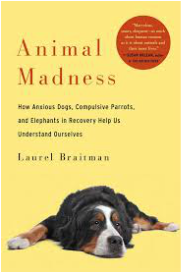
Animal Madness: How Anxious Dogs, Compulsive Parrots, and Elephants in Recovery Help Us Understand Ourselves
Author: Laurel Braitman, PhD
ISBN: 13: 978-1451627008
APA Style Citation
Braitman, L. (2014). Animal madness: How anxious dogs, compulsive parrots, and elephants in recovery help us understand ourselves. New York: Simon and Schuster.
West Bend East High School
West Bend Wisconsin
[email protected]
Animal Madness: How Anxious Dogs, Compulsive Parrots, and Elephants in Recovery Help Us Understand Ourselves
Author: Laurel Braitman, PhD
ISBN: 13: 978-1451627008
APA Style Citation
Braitman, L. (2014). Animal madness: How anxious dogs, compulsive parrots, and elephants in recovery help us understand ourselves. New York: Simon and Schuster.

| open_your_class_with_this_tomorrowanimalmadness1.pdf |
| openyourclassanimalmadness2.pdf |
Book Description
Current debate surrounding animal cognition, emotion, and intelligence is flourishing. The debate has progressed from “Are animals conscious and can they possess emotions?” to “To what degree are animals conscious?” and “What type of emotions do animals have and why?” Author Laurel Braitman takes the reader through multiple cases that examine the emotional side of animal’s lives. The book follows Braitman’s personal struggle to help her own Bernese Mountain Dog (Oliver) overcome severe anxiety. The book involves the exploration of mental illness in other animals as well and investigates how mental illness in animals can help lead to a better understanding of mental illness in humans. Dr. Braitman combines research studies and anecdotes from various fields to investigate the similarities between animals and humans when their behaviors become abnormal.
The text moves from case study to case study involving animals that show symptoms of mental illness. Dr. Braitman traveled the world documenting examples that provide support for the abnormal emotional behaviors animals express. To name a few, she found examples of anxious and depressed gorillas; compulsive horses, rats, donkeys, polar bears, and seals; obsessive parrots; self-harming dolphins and whales; hounds and horses suffering from heartbreak; dogs with Alzheimer’s disease; rodents with trichotillomania; aggressive elephants, and chimps; and elephants, and dogs suffering from PTSD. As the various cases unfold, the author also ties in personal experiences, current research, and famous figures and studies from the field of psychology. Animal Madness also investigates the use of psychopharmacology to help treat mental illness in the animal population. The wide-ranging compilation of stories leaves readers wondering if and how humans may contribute to animal mental illness and how mental illness in animals can help us to better understand human disorders. This is a must read for animal lovers and those with a desire to learn more about the similarity between humans and animals!
Other Related Resources
Author Laurel Braitman’s website.
The author has an MIT PhD and has written a variety of publications. She is a TED Fellow and an affiliate artist at the Headlands Center for the Arts.
http://authors.simonandschuster.com/Laurel-Braitman
Book website
http://animalmadness.com/
Book trailer video
This video includes and interview with the author highlights many of the fascinating case studies in the book. This clip would make an interesting class discussion starter.
https://www.youtube.com/watch?v=8G3c2p8WEu4
Author Laurel Braitman’s Facebook page
https://www.facebook.com/nooneiscrazyalone
Author Laurel Braitman’s Twitter feed
https://twitter.com/LaurelBraitman
Article and video of Dr. Panksepp’s research regarding rat laughter. Panksepp's work focuses on “the possibility that our most commonly used animal subjects, laboratory rodents, may have social-joy type experiences during their playful activities and that an important communicative-affective component of that process, which invigorates social engagement, is a primordial form of laughter.”
http://www.huffingtonpost.com/2012/06/26/rats-study-animals-laugh-tickled-video_n_1627632.html
https://www.youtube.com/watch?v=M_oKQ9Dzitc
NPR interview
The link below is to an NPR interview author Laural Braitman gave with Don Gonyea about mental illness and her book Animal Madness. Laurel Braitman's new book was born out of a near-tragedy: her frantic dog almost leaped to its death from a third-story window.
http://www.npr.org/2014/06/29/326669388/author-plumbs-the-human-psyche-through-animal-madness
Psychological Figures and Concepts:
John Bowlby
Charles Darwin
Rene Descartes
Paul Ekman (basic human emotions)
Sigmund Freud (the case study of Anna O.)
Temple Grandin
Harry Harlow
Joseph LeDoux
Konrad Lorenz
Ivan Pavlov
BF Skinner
Martin Seligman
Neuron parts and neurotransmitters
Brain parts (e.g. amygdala, hippocampus, lobes, limbic system, neocortex)
Blood brain barrier
Brain Imaging (MRI)
Developmental issues (e.g. critical periods, self-concept, mirror test, feral children temperament)
Learning/Behaviorism (learned helplessness, rewards and superstitious behaviors, observational learning, behavior therapy, systematic desensitization)
Current debate surrounding animal cognition, emotion, and intelligence is flourishing. The debate has progressed from “Are animals conscious and can they possess emotions?” to “To what degree are animals conscious?” and “What type of emotions do animals have and why?” Author Laurel Braitman takes the reader through multiple cases that examine the emotional side of animal’s lives. The book follows Braitman’s personal struggle to help her own Bernese Mountain Dog (Oliver) overcome severe anxiety. The book involves the exploration of mental illness in other animals as well and investigates how mental illness in animals can help lead to a better understanding of mental illness in humans. Dr. Braitman combines research studies and anecdotes from various fields to investigate the similarities between animals and humans when their behaviors become abnormal.
The text moves from case study to case study involving animals that show symptoms of mental illness. Dr. Braitman traveled the world documenting examples that provide support for the abnormal emotional behaviors animals express. To name a few, she found examples of anxious and depressed gorillas; compulsive horses, rats, donkeys, polar bears, and seals; obsessive parrots; self-harming dolphins and whales; hounds and horses suffering from heartbreak; dogs with Alzheimer’s disease; rodents with trichotillomania; aggressive elephants, and chimps; and elephants, and dogs suffering from PTSD. As the various cases unfold, the author also ties in personal experiences, current research, and famous figures and studies from the field of psychology. Animal Madness also investigates the use of psychopharmacology to help treat mental illness in the animal population. The wide-ranging compilation of stories leaves readers wondering if and how humans may contribute to animal mental illness and how mental illness in animals can help us to better understand human disorders. This is a must read for animal lovers and those with a desire to learn more about the similarity between humans and animals!
Other Related Resources
Author Laurel Braitman’s website.
The author has an MIT PhD and has written a variety of publications. She is a TED Fellow and an affiliate artist at the Headlands Center for the Arts.
http://authors.simonandschuster.com/Laurel-Braitman
Book website
http://animalmadness.com/
Book trailer video
This video includes and interview with the author highlights many of the fascinating case studies in the book. This clip would make an interesting class discussion starter.
https://www.youtube.com/watch?v=8G3c2p8WEu4
Author Laurel Braitman’s Facebook page
https://www.facebook.com/nooneiscrazyalone
Author Laurel Braitman’s Twitter feed
https://twitter.com/LaurelBraitman
Article and video of Dr. Panksepp’s research regarding rat laughter. Panksepp's work focuses on “the possibility that our most commonly used animal subjects, laboratory rodents, may have social-joy type experiences during their playful activities and that an important communicative-affective component of that process, which invigorates social engagement, is a primordial form of laughter.”
http://www.huffingtonpost.com/2012/06/26/rats-study-animals-laugh-tickled-video_n_1627632.html
https://www.youtube.com/watch?v=M_oKQ9Dzitc
NPR interview
The link below is to an NPR interview author Laural Braitman gave with Don Gonyea about mental illness and her book Animal Madness. Laurel Braitman's new book was born out of a near-tragedy: her frantic dog almost leaped to its death from a third-story window.
http://www.npr.org/2014/06/29/326669388/author-plumbs-the-human-psyche-through-animal-madness
Psychological Figures and Concepts:
John Bowlby
Charles Darwin
Rene Descartes
Paul Ekman (basic human emotions)
Sigmund Freud (the case study of Anna O.)
Temple Grandin
Harry Harlow
Joseph LeDoux
Konrad Lorenz
Ivan Pavlov
BF Skinner
Martin Seligman
Neuron parts and neurotransmitters
Brain parts (e.g. amygdala, hippocampus, lobes, limbic system, neocortex)
Blood brain barrier
Brain Imaging (MRI)
Developmental issues (e.g. critical periods, self-concept, mirror test, feral children temperament)
Learning/Behaviorism (learned helplessness, rewards and superstitious behaviors, observational learning, behavior therapy, systematic desensitization)

 RSS Feed