BOOKS FOR PSYCHOLOGY CLASS
  • Books for Psychology Class
  • Blog
  • Contact/Submissions
  • Other Psychology Websites
  • For Students

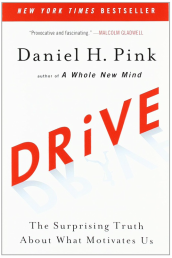
Drive:  The Surprising Truth about what motivates us

10/8/2014

0 Comments

 
Reviewer: Katie Karalis
Institution: Northwestern University Student 

Email: [email protected]

Drive: The Surprising Truth About What Motivates Us

Author:  Daniel Pink
ISBN: 978-1-59448-884-9
Picture
openyourclassdrive4.pdf
File Size: 68 kb
File Type: pdf
Download File

Book Description

Daniel H. Pink, author of Drive: The Surprising Truth About What Motivates Us, opens the book with information regarding the widely held beliefs of the two major "operating systems" of motivation: the first, called Motivation 1.0, is the biological operating system, suggesting that humans eat, drink, and reproduce in order to ensure survival. Hundreds of years later, a new operating system was developed to fit a more complex society, thus creating Motivation 2.0, based on the behaviorism approach to psychology; the idea that humans will repeat a behavior that is rewarded and discontinue a behavior punished. However, as society continues to grow more complex, Pink alerts us to the bugs of operating system 2.0, referencing a third operating system based on intrinsic motivation, accounting for concepts such as anything "open-source" to altruistic deeds. Presenting a great deal of evidence for the third operating system with myriad discussions of psychological experiments and decades of scientific research, he analyzes the three elements of true motivation-- autonomy, mastery, and purpose. Pink then uses these three elements to reveal the errors made by many in the process of attempting to motivate those around them, suggesting new approaches to improve productivity, creativity, and performance at work, school, and home. 

Other Related Resources
Author Daniel Pink’s 2009 Ted Talk, “The Puzzle of Motivation” which has over 11 million viewings to date. 
http://www.ted.com/talks/dan_pink_on_motivation?language=en

Author Daniel Pink's Website which includes a link to his monthly podcast called Office Hours in which he interviews top authors, scientists, and entrepreneurs.  Previous podcasts include interviews with Malcom Gladwell (author of David and Goliath), Tom Rath (author of Eat, Move, Sleep), Dan Ariely (Duke University behavioral economist and author of The Honest Truth About Dishonesty), and Diane Ravitch (education historian, former US Assistant Secretary of Education, and author of Reign of Error) and others. 
http://www.danpink.com/

Daniel Pink's 2014 Northwestern University Weinberg College of Arts and Sciences Convocation Address
 https://www.youtube.com/watch?v=VOU6zoRI3BU

Psychological Figures and Concepts
Abraham Maslow
Behaviorism Approach to Psychology
Functional Fixedness/ Candle Problem 
Intrinsic Motivation
Extrinsic Motivation
Humanism Approach to Psychology
Dopamine/Addiction
Nucleus Accumbens 
0 Comments

October 08th, 2014

10/8/2014

0 Comments

 
0 Comments

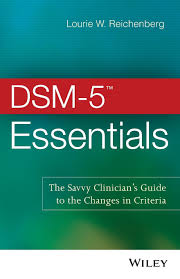
DSM-5 Essentials:  The Savvy Clinician's guide to the changes in Criteria

10/7/2014

0 Comments

 
Author:  Lourie W. Reichenberg
ISBN:   978-1-118-84608-7

APA Style Citation
Reichenberg, L. (2014). DSM-5 Essentials: The Savvy Clinician's Guide to the Changes in Criteria. Hoboken, New Jersey: John Wiley and Sons.


Picture
open_class_dsm_5.pdf
File Size: 65 kb
File Type: pdf
Download File

Book Description

The publication of the DSM-5 manual will change how mental illness and treatment are taught in psychology courses.  This useful manual created a licensed professional counselor can be an invaluable resource for redesigning curriculum.  Considering that the DSM-5 sells for over $100 and contains almost nine hundred pages, this handbook can provide instructors and students with a condensed summary at a fraction of the cost.  This will enable instructors to quickly familiarize themselves and become up to date on the new classification systems.  It also condenses the vast amount of material in the DSM-5 for ease of use.  For example, obsessive compulsive disorder and posttraumatic stress disorder are no longer classified as anxiety disorders.  Obsessive-compulsive disorder (OCD) now is part of a category called obsessive-compulsive and related disorders which also includes body dysmorphic disorder, hoarding disorder, trichotillomania, and excoriation.  Posttraumatic stress disorder (PTSD) is now part of the category called trauma- and stressor-related disorders which also includes acute stress disorder, and adjustment disorders.  These changes and the rationale behind many of them are described simply and succinctly.

The book also explains the new dimensional approach to diagnosis, which replaces the axis system used in prior versions of the DSM, which makes the manual more aligned with how the World Health Organization’s International Classification of Diseases organizes diagnoses.    The new manual acknowledges that years of research indicated that many of the disorders in the DSM-IV were not in fact unique conditions, but simply a reflection of severity along a continuum.  The spectrum approach for many disorders has been specifically added to the DSM-5 for many conditions including substance abuser, autism, and schizophrenia. 

Reichenberg’s book includes the main disorders in each of the twenty classifications present in the DSM-5.  For each disorder there is a short description of diagnostic criteria, symptoms, specifiers, and specific information regarding some of the changes to each disorder that occurred with the update to the manual.  The author explains what the changes mean for diagnosis and how these changes impact how clinicians choose the most appropriate evidence based treatment for each condition.  DSM-5 Essentials lists the categories and disorders in the same order as they appear in the DSM-5.  The author explains that the DSM-5 presents disorders according to how they would likely appear throughout the lifespan.  Thus, the first category listed is neurodevelopmental disorders, which are diagnosed early in life (e.g. intellectual disability, autism) and neurocognitive disorders (e.g. Alzheimer’s delirium), which appear towards the end. 

The final chapter of the book addresses the emerging models, new assessments designed to help clarify diagnoses, methods to address cultural issues in clinical interviews, a potential alternative model of describing personality disorders, and several conditions which are recommended for further study.  The eight conditions which need further study before being added to the manual are attenuated psychosis syndrome, depressive episodes with short-duration hypomania, persistent complex bereavement disorder, caffeine use disorder, internet gaming disorder, neurobehavioral disorder due to prenatal alcohol exposure (ND-PAE), nonsuicidal self-injury (NSSI), and suicidal behavior disorder.  Each of these potential diagnoses is described briefly and could make an interesting classroom discussion. 

Other Related Resources
American Psychiatric Association: highlights changes in the DSM-5.
http://www.dsm5.org/Documents/changes%20from%20dsm-iv-tr%20to%20dsm-5.pdf

One-page descriptions summarizing the criteria for common diagnoses under DSM-5 called fact sheets.
http://www.psychiatry.org/dsm5

Psychological Figures and Concepts
DSM-5
American Psychiatric Association
Neurodevelopmental disorders (e.g., attention deficient hyperactivity disorder, autism spectrum disorder, intellectual disability)
Schizophrenia spectrum and other psychotic disorders (e.g., schizotypal personality disorder, schizophrenia, schizoaffective disorder)
Bipolar and related disorders (e.g., bipolar I, bipolar II, cyclothymic disorder)
Depressive disorders (e.g., disruptive mood dysregulation disorder, major depressive disorder, persistent depressive disorder or dysthymia, premenstrual disorder)
Anxiety disorders (e.g., separation anxiety disorder, selective mutism, specific phobia, social anxiety disorder, panic disorder, agoraphobia)
Obsessive-compulsive related disorders (e.g., obsessive-compulsive disorder, body dysmorphic disorder, hoarding disorder, trichotillomania, excoriation)
Trauma- and stressor-related disorders (e.g., reactive attachment disorder, posttraumatic stress disorder, acute stress disorder, adjustment disorders)
Dissociative disorders (e.g., dissociative identity disorder, dissociative amnesia)
Somatic symptom and related disorders (e.g., somatic symptom disorder, illness anxiety disorder, functional neurological symptom disorder/conversion disorder, factitious disorder)
Feeding and eating disorders (e.g., pica and rumination disorder, avoidant/restrictive intake disorder, anorexia nervosa, bulimia disorder, binge-eating disorder)
Sleep-wake disorders (e.g., insomnia disorder, narcolepsy, sleep apnea, sleep terrors)
Disruptive, impulse control, and conduct disorders (e.g., oppositional defiant disorder, conduct disorder)
Substance-related and addictive disorders (e.g., substance use disorders, substance withdrawal, substance intoxication)
Neurocognitive disorders (e.g., delirium, major neurocognitive disorder, mild neurocognitive disorder)
Personality disorders 

0 Comments

    Categories

    All
    Biological Psychology
    Cognition/Learning
    Consciousness
    Development
    Disorders/Treatment
    Educational Psychology
    Health Psychology
    Motivation/Emotion
    Positive Psychology
    Research And Statistics
    Sensation/Perception
    Social Psychology/Personality
    Testing And Individual Differences

    Authors

    Laura Brandt, Nancy Fenton, and Jessica Flitter are AP Psychology instructors. Nancy Fenton teaches at  Adlai E. Stevenson High School in Lincolnshire, Illinois, Laura Brandt teaches at Libertyville High School in Libertyville Illinois and Jessica Flitter teachers at West Bend East High School in West Bend, Wisconsin.
    If you are interested in reviewing a book for the blog or have comments or questions, please e-mail us at either [email protected] or [email protected] or [email protected].

    RSS Feed

    Archives

    September 2025
    August 2025
    July 2025
    June 2025
    April 2025
    March 2025
    February 2025
    January 2025
    December 2024
    July 2024
    April 2024
    March 2024
    December 2023
    November 2023
    October 2023
    August 2023
    July 2023
    June 2023
    May 2023
    April 2023
    March 2023
    February 2023
    January 2023
    December 2022
    November 2022
    October 2022
    September 2022
    August 2022
    July 2022
    June 2022
    May 2022
    April 2022
    March 2022
    February 2022
    January 2022
    December 2021
    November 2021
    October 2021
    September 2021
    August 2021
    July 2021
    May 2021
    April 2021
    March 2021
    February 2021
    January 2021
    December 2020
    November 2020
    October 2020
    September 2020
    August 2020
    July 2020
    June 2020
    May 2020
    April 2020
    March 2020
    February 2020
    January 2020
    December 2019
    November 2019
    October 2019
    September 2019
    August 2019
    July 2019
    June 2019
    May 2019
    April 2019
    March 2019
    February 2019
    January 2019
    December 2018
    November 2018
    October 2018
    September 2018
    August 2018
    July 2018
    June 2018
    May 2018
    April 2018
    March 2018
    February 2018
    January 2018
    December 2017
    November 2017
    October 2017
    September 2017
    August 2017
    July 2017
    June 2017
    May 2017
    April 2017
    March 2017
    February 2017
    December 2016
    November 2016
    October 2016
    September 2016
    August 2016
    July 2016
    June 2016
    May 2016
    April 2016
    March 2016
    February 2016
    January 2016
    December 2015
    November 2015
    October 2015
    September 2015
    August 2015
    July 2015
    June 2015
    May 2015
    April 2015
    March 2015
    February 2015
    January 2015
    December 2014
    November 2014
    October 2014
    September 2014
    August 2014
    July 2014
    May 2014
    April 2014
    February 2014
    January 2014

Proudly powered by Weebly