BOOKS FOR PSYCHOLOGY CLASS
  • Books for Psychology Class
  • Blog
  • Contact/Submissions
  • Other Psychology Websites
  • For Students

Ambler Warning

7/19/2016

0 Comments

 
Ambler Warning
Author:  Robert Ludlum
ISBN:  978-0312990695
  
APA Style Citation
Ludlum, R. (2006).  Ambler Warning. New York, New York:  St. Martin’s Paperbacks.

​Blog Contributor: Joseph Swope, PhD
Institution: Northwest High School
Germantown, Maryland
Website:  http://swopepsych.com/
Email:  [email protected]

Picture
ambler_warning_activity.pdf
File Size: 193 kb
File Type: pdf
Download File

Book Description
This is a fiction book that explores and uses many of the concepts in a psychology class to hook the reader.  Imagine Paul Ekman and Jason Bourne combined into one super spy.
People are communicating machines.  More than any other trait it is our ability to communicate that defines us.  While language is critical, what about the other messages, signals, and signs that help us read each other?  Paul Ekman has spent his career showing us that our facial muscles are hardwired to our emotional processing modules of our brain.  Most people have some ability to read the expressions and thus the emotions of others.  What if there was a person who was so good at it, so intuitive, he could read others’ intentions before they consciously knew what they themselves were going to do?
 
Hal Ambler wakes up in a psychiatric hospital designed for former clandestine agents who are deemed too unstable to walk free with government secrets.  Worse than the restraints and forced medications is the fact that he has no memory of himself or why he is trapped.
Using his gifts at reading peoples’ expressions, body language, and voice cues, Hal Ambler begins to unlock not only the cause of his confinement but also the reason for his amnesia.  With each question answered more spring up until he doubts his name, his recently uncovered memories, and even his very sense of self.  Did his amnesia come from a past event or was it forced upon him by those who don’t trust him?  For a man who can read others effortlessly, having no knowledge of himself is torture in and of itself.
 
Note: While this was ghost written and probably not the best book with Ludlum’s name on it if you want a great read that might also hook your students, this book is fun.
 
Note: This book does not explicitly teach psychology to the reader. Still, for students who want to see what might be possible by applying concepts in their textbook, this book could be the hook that draws the into the curriculum.

Other Related Resources
http://www.paulekman.com/micro-expression-training/
 https://en.wikipedia.org/wiki/Elizabeth_Loftus
 
Psychological Figures and Concepts
Paul Ekman
Brain Washing
Amnesia
Bottom-Up Processing
Deduction
Display Rules
Duchenne Smile
Emotional Control
Implanted Memory
Intuition
Involuntary Committal
Micro Expression
Mirror Neuron
Neuroleptic
Psychiatric Hospital
Retrograde Amnesia
Somatic Nervous System
Stockholm Syndrome
Top-Down Processing

0 Comments

Flirting With French:  How a language charmed me, seduced me and nearly broke my heart

6/28/2016

0 Comments

 
​Flirting with French:  How a Language Charmed me, Seduced Me and Nearly Broke my Heart
Author:   William Alexander
IBSN:  978-1-61620-020-6
 
APA Style Citation
Alexander, W. (2014).  Flirting with French:  How a Language Charmed me, Seduced Me and Nearly Broke my Heart.  Chapel Hill, North Carolina:  Algonquin Books of Chapel Hill.
Picture
activityflirting_with_french.pdf
File Size: 1599 kb
File Type: pdf
Download File

​Book Description
William Alexander loves everything French: French croissants, the aesthetic of the country, vacations on a bicycle traveling between small villages, and the beautiful sound of the language.  He is determined to master the French language and become a Francophile in earnest.  While Alexander wants to learn French, he still has trepidation from the memories of his high school French teacher Madame D.  He dropped the course after his sophomore year and made it through college choosing majors for which he did not need a foreign language to graduate. After he graduated, he took a trip backpacking across Europe with France as the last country he visited.  While he did not know the language fluently, he thought he could get by with the French he had learned in high school.  He saved money for the entire trip to go to one fancy French restaurant to end the trip in style.  He ordered rogons de veau for two, thinking he had just ordered a nice cut of veal.  He and his companion could afford nothing else, so they waited for the meal only to receive two small kidneys with no garnish or accouterments… so much for his high school French. 
 
In his mid-fifties, Alexander attends a linguistics conference only to be told that he was essentially too old to learn French like a native speaker.  Presenter after presenter emphasized the advantage that younger children had over adults for acquiring a new language.  It seems that Alexander’s critical period for language had long since passed.  Still, he was determined to fight biology and become fluent in the language he so adored.
 
In a study with Russian and French babies, just ninety-six hours after birth both sets of babies showed a preference for their native language over others.  All languages have different cadences to which babies adapt quite early.  Italian has many i and o sounds, French can be distinguished by its nasal vowels, and Scandinavian languages contain hard g sounds.  Babies even cry in phonemes (the smallest unit of sound in a language) consistent with their native language.  If not exposed early to these different sounds contained in language, adults often have a difficult time adjusting to the new sounds present in the language they are trying to acquire.  For example, many Asian speakers who learned English as adults cannot make the “r” and “l” sounds in English or differentiate between those two sounds.  Researchers found that seven-month-old Japanese babies can distinguish between “r” and “l” sounds but by ten months of age they cannot. 
 
Alexander cites Noam Chomsky’s Syntactic Structures book for moving the study of language from vocabulary to syntax.  Chomsky proposed that language could not be explained solely by mimicking others because adults do not say things like “Tommy hitted me”, but nearly all children do.  In this case, children are overgeneralizing the past tense of hit (which is still hit) and applying the rule more broadly than it should be applied.  Nearly all children demonstrate these types of errors as they work their way through language.  Chomsky believes that children are innately wired to learn language through what he described as a language acquisition device.  This common innate ability to understand the basic rules of language is known as universal grammar. In a study conducted by Elissa Newport and Jenny Singleton, deaf children who were not exposed to proper syntax, still intuitively used American Sign Language correctly which seems to support Chomsky’s view.  However, cases such as Genie who was found in Los Angeles, California as a teenager and who had never been exposed to language further complicate the issue.  While Genie initially learned two-word strings quite quickly, she never acquired the ability to produce a negative question or ask a question.  She remained in the stage of speech typical of a toddler.  While we may have an innate ability to learn a language, Eric Lennenberg extended Chomsky’s theory by suggesting that there may be a critical period before the teenage years in which language is most easily acquired.  Genie is a single case study that cannot be generalized to the entire population and she may have been intellectually disabled from birth, but similar case studies seem to point to the same conclusion. 
 
Biological evidence now exists that those exposed to multiple languages early in life have more brain area devoted to language.  Once neural pruning begins in adolescence, removing those neural networks that are not useful may make those that remain more efficient, we may lose the ability to rewire our brain to be more focused on language.  This lends biological support to Chomsky’s belief in the inborn nature of language.
 
Alexander cites many examples of the intermingling of languages during a foreign invasion or language diffusion by more peaceful means, many of which remain today.  In English courts, individuals are told to “cease and desist,” which essentially are synonyms and the phrase is redundant, but this combination harkens back to when the Normans (temporarily) made French the official language of England.  The cease is English but the word desist comes from the French verb desister. The word mortgage in English is derived from the French: death contract”, which many who have experienced foreclosure may relate.  Curfew comes from the French term couvre-feu which was the time that people had to cover their fire.
 
Alexander laments the quirks to the French language, such as their lack of numbers beyond sixty, for which one has to add to even say the number, for example, seventy is “sixty-ten” (soixante-dix), and seventy-nine is “sixty plus ten plus nine” (soixante-dix-neuf).  Temps can refer to either weather or time.   In other difficulties in learning the French language, Alexander cites the gender which must be memorized for each object and impacts the meaning of the sentence when used incorrectly.  Especially for English speakers who are not accustomed to objects having gender’s this can be quite a challenge. French idioms while humorous in English do not always translate well.  For example, the French counterpart to the English idiom “It costs and arm and a leg in English” is “it costs the skin of an ass”. 
 
The French take their language very seriously and have established the Academie Francaise to publish an official dictionary of the French language in an effort to keep the language “pure” and free from too much foreign influence.  Of course, they have had to make some changes to keep up with modern times, “wifi” and “podcasts” have made their way into the French language and appear much as they do in other languages.  Others foreign words such as “le jogging”, “les cheesburgers” and “le weekend” have grown common in the French language much to the dismay of the l’Academie. 
 
Despite the linguists warning that it would be difficult to learn language during middle age, Alexander forges ahead, tackling Rosetta Stone, finding a French pen pal (Sophie) who will write to him in English while he responds in French.  Alexander finds a Meetup.com group and takes an immersion weekend class in New York.  For his final push, he enrolls in a two-week immersion class at the esteemed Millefeuille Provence in southern France.  It is said that once one becomes fluent in a given language, they no longer have to translate the meaning in their original language, so they are essentially “thinking in their new language.”  Sadly, the linguists might be right.  Alexander is never fully able to understand and speak in French although he does improve considerably during the course of the book.  He is generally able to understand his instructors and get the idea of what the speaker is discussing (receptive speech), but finds that outside the controlled environment of the classroom or Rosetta stone; real day-to-day French is difficult to follow and even more difficult to speak (productive speech).
 
Related Resources
The French Blog:  William Alexander’s blog
http://www.thefrenchblog.com/p/my-books.html
           
Genie:  The Secret of the Wild Child
Article:  http://psychology.about.com/od/historyofpsychology/a/genie.htm
Video:  http://documentarystorm.com/secret-of-the-wild-child/
 
Noam Chomsky:  Chomsky speaks about language and cognitive processes
https://www.youtube.com/watch?v=6i_W6Afed2k
 
Are You a Polygot?
http://ilanguages.org/bilingual.php
 
The Development of Language:  A Critical Period in Humans
http://www.ncbi.nlm.nih.gov/books/NBK11007/
 
L’Acedemie Francaise (In French, but worth the look for the pictures alone)
http://www.academie-francaise.fr
 
 
The Secret to Learning a Foreign Language as an adult
http://time.com/3453841/secret-learn-foreign-language-adult/
Human Language Development
https://www.boundless.com/psychology/textbooks/boundless-psychology-textbook/language-10/human-language-408/human-language-development-235-12770/
 
The Future of Language will be one of Decline and Diffusion
http://www.korsgaardscommentary.com/2013/06/the-future-of-language-will-be-one-of-decline-and-diffusion.html
 
 
Psychological Figures and Concepts
Noam Chomsky
Charles Darwin
Eric Lennenberg
B.F. Skinner           
American Sign Language
Broca’s Area
Critical Period Hypothesis
Genie
Grammar
Linguistic Acquisition Device
Morphemes
Neural pruning
One-word Speech
Phonemes
Productive Speech
Receptive Speech
Syntax
Telegraphic Speech
Universal Grammar
Wernicke’s Area
 
 
0 Comments

The Invisible Gorilla:  And other ways our intuitions deceive us

5/24/2016

2 Comments

 
​The Invisible Gorilla:  And Others Ways Our Intuitions Deceive Us
Author(s):  Christopher Chabis and Daniel Simons
ISBN:  978-0307-459-664
 
APA Style Citation
Chabis and Simons (2010).  The Invisible Gorilla:  And Others Ways Our Intuitions Deceive Us.  New York:  Crown. 
Picture
Picture
multitasking_activity.pdf
File Size: 23 kb
File Type: pdf
Download File

multitasking_activity_questions_lincoln_.pdf
File Size: 15 kb
File Type: pdf
Download File

key_multitasking_activity_questions_lincoln.pdf
File Size: 23 kb
File Type: pdf
Download File

​Book Description
The authors of The Invisible Gorilla created the now infamous selective attention task in which observers are asked to keep track of how many times a basketball team passes a ball between the members.  While observers are focused on watching and counting, a gorilla walks into scene, bangs on his chest and walks out.  Due to the phenomenon of inattentional blindness, many people miss the gorilla because they selectively attending to the basketball passes and they cannot effectively focus on both at the same time.  When the tasks are over, most people are confident about the number of passes that occurred, without realizing they have entirely missed the gorilla.  The Invisible Gorilla investigates everyday illusions that lead to incorrect conclusions or decisions.
 
Attention:  People generally cannot split attention effectively.  The more tasks in which a person is engaged, the worse they perform on each task.  Dichotic listening studies in which an individual is asked to monitor two different conversations simultaneously, and recall details about each one illustrates the difficulties of divided attention.  The participant can focus on one conversation or the other but performs poorly at recalling details from both conversations.  More recent research has found no benefit to driving with a hands-free device because even though one is not holding the phone attention is still divided between talking and driving, and one of the tasks will inevitably experience a reduction in performance.  TSA agents often miss illegal items because their attention is excessively divided as they attempt to search simultaneously for a wide array of objects because they cannot attend to all of the possibilities perhaps they would be better served to focus on a few very dangerous items rather than 3 ounces of shampoo.
 
Memory:  Think of a memory you have about a significant event in your life.  You may be recalling when you first saw your spouse on your wedding day or when you received your diploma on your graduation day.  These flashbulb memories are vivid and clear but are likely not as accurate as we may believe.  Hilary Clinton claimed to recall landing in Bosnia under direct fire, but video footage of that trip showed a small child greeting her with flowers upon her arrival which was anything but dangerous.  More recently, news anchor Brain Williams had a similar false recollection of being in a helicopter which took on enemy fire once again the memory was proved incorrect by others accounts.  While these memories likely seemed to be quite real to Clinton and Williams and they were not purposely (likely) lying, what they believed had occurred was quite different from what had occurred.   In a now well-known case of mistaken identity, Ronald Cotton was found guilty and sent to prison based solely on the testimony of his accuser who was certain that she was identifying the person who raped her.  DNA evidence would later exonerate Cotton, much to the initial confusion of his accuser who was certain that she had identified the proper individual the first time.  Gary Wells a professor at Iowa State University, who warns people about those who confidently report out their experiences, works with police departments to let them know the dangers and fallibility of eyewitness testimony to reduce the likelihood that the wrong person is accused of a crime.
 
Confidence:  Regardless of how confident one is about a decision or recollection, confidence does not make one’s memories or decisions any more accurate that those that are made with some hesitation.  Doctors often make recommendations to patients about medication or surgery based on their experience in the field which at first makes good sense as the patient often has little knowledge themselves of medical case studies.  Doctors, however, will see maladies which they have not seen previously or have seen only in a few instances.  Regardless of their relatively low level of knowledge with these cases, doctors will likely still make a recommendation to the patient with a high degree of confidence when they should qualify a recommendation by telling the patient that this is the first or one of the only cases of this sort they have seen.  Clearly, this can be dangerous because patients are making decisions that may involve life or death based on their physician’s recommendation. 
When chess players who competed on a national circuit were asked about their current rankings, most believed that they had been ranked too low.  Chess rankings are based on the results of all of the games an individual has played, so, in reality, the competitors are ranked accurately.  A follow-up study one year later was conducted to determine if the ranking of these individuals had increased as the players believed they should. In almost every case the rankings remained virtually the same and the confidence that the chess players had in their improved ranking was not warranted.  We tend to do this to protect our self-esteem; the self-serving bias occurs when we take credit for our success and blame others for our failures.  When something goes well, it is likely that we will attribute this to our outstanding skill, but when something goes wrong, we are likely to attribute it to a mistake.  When asked a question about their competency, 75% of American men claimed they were more competent than the average person while 57% of American women claimed the same.  This tendency toward self-serving bias is not uniquely American, 70% of Canadians claimed to be more competent than average. 
 
Knowledge:  We tend to overestimate what we know. Those who speak first often become leaders not because they are correct more often than others but simply because they have spoken up first.  A dominant personality is more likely to come off to others as confident, and others will follow.  This leads the individual to believe that people are following them because they are right.
It is possible to become more accurate in estimations of our abilities. As people become more competent in a particular area, they become more accurate estimators of their abilities. If someone was a highly ranked tennis player, they should be aware of what they do well and what they are still working on when playing a match.  They should be able to fairly accurately estimate their level of play, but this ability would not transfer to how they would perform in a game of badminton even though the individual often believes this to be true.
Cause:  Correlation does not prove causation; random acts often do not seem random.  If one flips a coin and receives heads ten times running, they might be inclined to believe that the next toss will be tails.  Each event is completely separate from the next, so each coin toss essentially has a 50% chance of winding up heads.  In the gambler’s fallacy, if red comes up on a roulette wheel seven times in a row, gamblers are more likely to place their next wagers on black thinking that it must be “due”, but like a coin toss, each spin of the roulette wheel is completely separate from the prior spin and the past results have no bearing on the current spin of the wheel.
 
Knowing about these illusions may be the first step to overcoming the dangers in decision-making they present.  Be wary of your intuitions, mental systems work well, but the complexity of modern society exceeds the capacity of one’s intuition.  Watch for gorillas in your midst and be more cautious about your memories, confidence that you know more about a topic than you do, or jumping to causal explanations for correlational events.  Mindful reflection and decision-making may lead to a more accurate view of the world around you and result in better outcomes.
 
Other Related Resources
 
Book website: Outstanding website including videos on change blindness and selective attention as well as Ted talks and less well known tests of selective attention
http://www.theinvisiblegorilla.com/videos.html
 
The Invisible Gorilla Video
https://www.youtube.com/watch?v=UtKt8YF7dgQ
 
Continuity problems in movies which most people miss
http://www.moviemistakes.com/best/continuity
 
The Moonwalking Bear
https://www.youtube.com/watch?v=Ahg6qcgoay4
 
But Did You See the Gorilla?  The Problem with Inattentional Blindness:  Smithsonian Magazine
http://www.smithsonianmag.com/ist/?next=/science-nature/but-did-you-see-the-gorilla-the-problem-with-inattentional-blindness-17339778/
 
Bet You Didn’t Notice (NPR podcast)
http://www.npr.org/templates/story/story.php?storyId=126977945
 
Ted Talk:  Seeing the world as it Isn’t (Daniel Simons)
https://www.youtube.com/watch?v=9Il_D3Xt9W0
 
Disillusionment:  American Scientist
http://www.americanscientist.org/bookshelf/pub/disillusionment
 
Picking Cotton
https://www.youtube.com/watch?v=-2oDRfj0vME
Brain Games:  National Geographic:  Are you a good multitasker?
https://www.youtube.com/watch?v=PkBa5oHXgsE
 
Hilary Clinton error in recalling landing in Bosnia
https://www.youtube.com/watch?v=8BfNqhV5hg4
 
Brian Williams error recalling being “under fire”
http://www.slate.com/articles/news_and_politics/television/2015/02/brian_william_s_false_memories_of_rpg_fire_in_iraq_will_nbc_hold_its_anchor.html
 
Article on the Invisible Gorilla
http://www.wsj.com/articles/SB10001424127887323514404578651980718947350
 
Video on the Invisible Gorilla
Video clip of gorilla CT scan
https://www.youtube.com/watch?v=kBbRNy60RAM
 
Psychological Figures and Concepts
Elizabeth Loftus
Herbert Simon
Gary Wells
Causation
Confirmation Bias
Correlation
Eyewitness Memory
Flashbulb Memory
Gambler’s Fallacy
Hindsight Bias
Human Genome Project
Inattentional Blindness
Multitasking
Overconfidence
Selective Attention
Self-Serving Bias
Sensory Memory
Signal Detection Theory
 
 
2 Comments

How We Decide

2/27/2016

0 Comments

 
​How We Decide
Author:  Jonah Lehrer
ISBN:  978-0-618-62011-1
 
APA Style Citation
Lehrer, J. (2009).  How We Decide. New York, New York:  Houghton Mifflin.
Picture
activity_handout_1.pdf
File Size: 21 kb
File Type: pdf
Download File

activity_handout_2.pdf
File Size: 19 kb
File Type: pdf
Download File

directions_how_we_decide_5.pdf
File Size: 22 kb
File Type: pdf
Download File

Book Description
Philosophers, psychologists, and others who attempt to determine the cause of human and animal behavior have long debated the influence of both rationality and emotion.  Plato believed that with enough conscious evaluation the rational self would prevail, while others have argued that consciousness was not enough. How We Decide attempts to determine the difference between making a good and a bad decision which sometimes is the difference between winning and losing:  money, gambling, and even in some cases, life and are significantly impacted by the decision we make.  While there is not an either/or answer to the rational/emotional debate, author Jonah Lehrer argues that for too long people have discounted the importance of the emotional components of the brain when investigating decision-making.  This, he argues explains why the attempts to create robots or computers with artificial intelligence have been relatively unsuccessful.  Although the robots may have cognitively abilities, they do not have the emotional capacity required for effective decision-making.
 
Lehrer provides insight into how neuroscience can better help us understand how our brain makes decisions and how we can use this information to make better ones.  The orbitofrontal cortex (OBF) for example which connects the emotional limbic system to the rational frontal lobe has in important role in decision making.  Individuals who have had tumors in this region of the brain removed become paralyzed by their inability to make decisions, even small ones, such as what type of cereal to buy or what day would work best for an appointment. 
 
Dopamine pathways, which are the pleasure centers in the midbrain and run through the nucleus accumbens and hypothalamus, drive behavior that leads to rewards which may impact the decisions one makes, even if those decisions are not in the best interests of the individuals making them.  Dopamine reward pathways are activated when rats eat a treat or when a person wins at a slot machine.  Dopamine reward pathways also change with experience, Lehrer notes, “Fool me once, shame on you, fool me twice, shame on my dopamine neurons.” Schizophrenics sometimes have an abundance of dopamine neurons which interferes with the accurate prediction of events, they instead hallucinate false patterns and sensory information.  These dopamine pathways need to be continually retrained or their predictive accuracy declines.  Those who suffer from Parkinson’s disease often lack dopamine and are treated with dopamine agonists.  In 13% of cases Parkinson’s patients treated with dopamine agonist drugs become gambling addicts because of the excess of dopamine running through their system.  A win in gambling activates the same dopamine reward pathways and triggers the desire to win again and again.
 
Another area of the brain, the anterior cingulate cortex, influences decisions because it allows us to detect errors in our decisions.  Neuroscientists refer to the circuitry emanating from this area of the brain as the “oh shit” circuit.  This brain mechanism allows people to control what they know with what they feel.  When this area is removed from primates, their behavior becomes erratic.  The anterior cingulate cortex also contains spindle neurons which are found only in humans and great apes and are named for their long slender structure.  This structure allows the neuron to convey emotions across the entire brain and these cells as a result are related to higher order cognitive functions. 
 
Lehrer recounts many examples of how the seemingly intuitive decisions we make each day are actually based on past experiences and the more experience we have, the better we are able to make accurate split second decisions. Lehrer features Tom Brady’s performance in the 2002 Super Bowl in which the Patriots were predicted to lose to the highly favored St. Louis Rams.  Tom Brady and the Patriots decided in the last minute of the game to work their way down the field in a series of passes that might have resulted in a Ram’s interception.  Most considered this highly risky, but the young Brady seemed confident that he could lead his team to success.  Ultimately, Brady brought the team within field goal range and the Patriots won in the last seconds of the game.  Brady did not have time to evaluate each of the possible passes he could make, after the snap and before the opposing team attempted to sack him yet, he was able to make the correct decision on where to throw a pass over and over again. Explicit knowledge that initially takes much cognitive ability eventually becomes intuitive.  However, we can often be wrong when relying on our intuition.  The idea of a “hot hand” specifically in basketball has been refuted and evidence shows that when one has made previous shots, they actually declined in their likelihood of scoring despite what observers believed.  Whether it is slot machines or a random shuffle of one’s i-tunes, what is actually random does not always seem to be. This violates our intuitive belief of what random events “look like”.  For example, if a family who has five girls and is having another baby, most people will believe that the next baby will be a boy despite the roughly 50-50 chance of that happening.  The genders of the existing children are completely separate and do not factor into the odds of what the new baby’s gender will be.  
 
We are also averse to losing when making decisions.  When questions are framed that lead to the same outcome, those that are framed as losing are selected far less frequently than those that are framed as winning (see activity).  This can lead to poor decision making in terms of making investments in the stock market.  We may be better off in the long run hanging on to a stock that is losing money at the moment, but we often trade when the stock is at its lowest for fear of losing more money than we already have.  Bond returns grow more slowly than stocks, but are less variable.  Many people would prefer to invest in bonds because they are less likely to lose money (but also less likely to earn very much money) when they would be better off investing in higher risk stocks.  Loss aversion also makes credit cards easier to use.  If we had to pay cash for an item we wanted, we would feel the loss because we would have to sacrifice cash at the moment of purchase, but with credit cards the bill does not come until later and we feel immediate gratification with the purchase without experiencing the loss.  Individuals tend to overvalue immediate gains at the cost of future expenses. When someone thinks about losing something, the amygdala is automatically activated which is part of the physiological reason for why people hate losing.
 
Sometimes more access to information leads to a less favorable result which can be seen in a variety of practical applications.  Those who are involved with tracking the stock market and have access to much information about the history of a given stock actually performed worse because of constant trading than those who made no had no knowledge of the stock market and made no trades in a given period.  Medical technology, specifically MRIs for back pain, has made far more information available to doctors.  One might believe that this wealth of information has dramatically improved results for those experiencing back pain but that is not the case.  Historically, doctors recommended rest and people’s back pain generally subsided.  Information from MRI’s has led to many unnecessary surgeries and actually has led to a lower recovery rate. 
 
Some individuals like convicted killer John Wayne Gacy do not respond emotionally to stimuli that would otherwise activate the emotional limbic system.  Gacy had an antisocial personality disorder which is often associated with an above average IQ but a damaged emotional brain.  Gacy was not disgusted by torturing the young men he killed and was not able to express empathy or sympathy for his victims or their families. For most individuals, the limbic system helps guide decisions and allows us to “feel” when we are doing something wrong.  Gacy might have know cognitively that his actions were wrong, but he did not “feel” it as others would.  Those with antisocial personality disorder also do not get angry, they have no particular response to highly emotional words such as ‘rape’ or ‘kill’ and do not responded differently to emotional words than they do to neutral words such as ‘sit’ or ‘walk’.  Others such as violent domestic batters also have erratic emotional systems.  They actually calm down and display lower blood pressure and pulse rates after a violent attack.  Likewise, individuals with Autism Spectrum Disorder have an impaired ability to interact emotionally with others.  Individuals with autism also demonstrate ineffective decision-making as a result of their irregular emotional responses.  Autistic individuals often have challenges with mirror neurons which allow us to mirror the movements and emotions of others.  In a study conducted at UCLA, the brains of autistic individuals were examined while they viewed emotional photographs and the scans indicated that there was little activity in the mirror-neuron area.  Additionally, autistic individuals look at faces with the part of the brain that normally identifies objects.
 
How We Decide brings together the cognitive and neurobiological components of an introductory psychology course.  While cognitive psychology has longed examined decision-making, the biological underpinnings to these decisions (whether correct or not) help to support psychology’s effort to better understand human behavior. It should be noted that this book may no longer be available in some areas as there has been some questions to the authenticity of the interviews Jonah Lehrer cites in this and other books.  You can find below more information about this controversy by examining the related resources section.
 
Other Related Resources
 
Jonah Lehrer’s Blog
The author has an interesting and informative blog related to current topics in cognitive psychology.  The post from January 25th, 2016 examines cognitive errors by looking at the hit Netflix series, Making a Murderer.
http://www.jonahlehrer.com/?offset=1428246858878
 
LA times:  Making a Case for Letting Emotions in Life’s Decision making processes.
http://articles.latimes.com/2009/feb/24/entertainment/et-book24
 
Video on How We Decide
An speech given by author Jonah Lehrer describes his work in series of five YouTube videos.
https://www.youtube.com/watch?v=Xllxee8ZnkE
 
When Instinct Trumps Reason
An interview with author Jonah Lehrer captured in a series of five YouTube videos.
https://www.youtube.com/watch?v=yTeAaKlnz1g
 
How We Decide Pulled from the Shelves
Short articles describing the controversy regarding the authors use of quotations. 
http://www.huffingtonpost.com/2013/03/02/how-we-decide-jonah-lehre_n_2796208.html
 
http://www.thedailybeast.com/articles/2013/03/01/publisher-pulls-jonah-lehrer-s-how-we-decide-from-stores.html
 
https://www.psychologytoday.com/blog/pyramids-meaning/201208/jonah-lehrer-charmed-me-then-blatantly-lied-me-about-science
 
Psychological Figures and Concepts
Rene Descartes
Carol Dweck
Walter Freeman
Sigmund Freud
Harry Harlow
William James
Rosemary Kennedy
George Miller
Walter Mischel
James Olds and Peter Milner
Plato
Herbert Simon
Claude Steele
Agonists
Anchoring Effect
Anchoring Heuristics
Anterior Cingulate Cortex (ACC)
Arousal Theory
Artificial Intelligence
Brainstem
Cognitive Dissonance
Confirmation Bias
Contact Comfort
Corpus Callosum
Diencephalon
Dopamine
Ego
Framing Effect
Frontal Lobe
Gambler’s Fallacy
Groupthink
Hypothalamus
Id
Illusory Correlation
Limbic System
Loss Aversion
Loss Frame
Metacognition
Midbrain
Mirror Neurons
MRI
Natural Selection
Neurons
Nucleus Accumbens
Oedipus Complex
Orbitofrontal Cortex (OFC)
Overconfidence
Parkinson’s Disease
Pleasure Principle
Prefrontal Cortex
Prefrontal Lobotomy
Right Hemisphere
Schizophrenia
Spindle Neurons
Split-Brain Patient
Stereotype Threat
Thalamus
Top-Down Processing
Wonderlic Intelligence Test
Working Memory
0 Comments

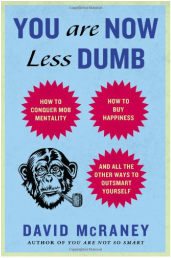
You Are Now Less Dumb: How to Conquer Mob Mentality, How to Buy Happiness, and All the Other Ways to Outsmart Yourself

2/7/2016

0 Comments

 
​You Are Now Less Dumb: How to Conquer Mob Mentality, How to Buy Happiness, and All the Other Ways to Outsmart Yourself
Author:  David McRaney
ISBN:  978-1-59240-805-4
 
APA Style Citation
McRaney, David (2013). You Are Now Less Dumb: How to Conquer Mob Mentality, How to Buy Happiness, and All the Other Ways to Outsmart Yourself.  New York: Penguin Group.
Picture
you_are_now_less_dumb_activity.pdf
File Size: 81 kb
File Type: pdf
Download File

Book Description
You Are Now Less Dumb, is the follow up book by author and blogger David McRaney to the best selling, You Are Not So Smart.  While his first book focused mainly on social psychology topics, the second book contains a mixture of social psychology and cognitive biases.  The research presented in the book is related to numerous other units in the introduction to psychology curriculum such as motivation and emotion, learning, and abnormal psychology.  The book is designed in a similar fashion to the author’s earlier book in which each chapter introduces a distinct concept by contrasting a misconception with the truth as shown by empirical evidence.  For example, Chapter 2 discusses the common belief fallacy that “the larger the consensus, the more likely something is correct” and the truth that “a belief is not more likely to be accurate just because many people share it.”  The misconception / truth structure highlights for students the need to create and test hypotheses even when examining phenomenon that seem like common sense. We do not know a result until we actually test it.
 
You Are Now Less Dumb illustrates how a wide range of cognitive biases and other fallacies can lead us to incorrect conclusions.  Each of the chapters is about ten pages in length and provides an in-depth analysis of the research related to the principle discussed as well as practical applications.  The book includes chapters on topics that are covered in most introductory psychology courses (e.g. halo effect, misattribution of arousal, deindividuation, and the overjustification effect) as well as chapters on ideas that appear less frequently (e.g. common belief fallacy, post hoc fallacy, ego depletion, sunk cost fallacy, and the self-enhancement bias). 
 
The chapter on the halo effect is especially interesting because it traces the origin of the term to the psychologist Edward L. Thorndike who psychology students most likely associate with instrumental learning and the law of effect.  Thorndike was a key contributor to both educational and occupational psychology.  He began his work creating tests for the Army to evaluate the intelligence and ability of soldiers.  It was Thorndike’s interest in turning qualitative evaluations of individuals into quantitative data that led to the discovery of the halo effect. This idea of turning people into numbers in schools and businesses remains popular today because representing people’s abilities by using a numerical score makes it easier to produce charts and graphs that track their performance.  By observing the results of quantified performance evaluations Thorndike observed that over time, individuals who were rated highly on one trait would also be rated highly on other, often unrelated traits.  He published his research initially using data from U.S. Army officer reviews.  He found that evaluators, even if they were instructed to rate each category independently, gave officers consistent ratings across categories.  Individuals who were rated high in one category were rated highly in other categories and the reverse was true as well.  Thorndike noted that in particular, pilots who had superior ratings in terms of their ability to maneuver a plane also received high marks for leadership.  Thorndike found this to be unlikely considering how young most of the pilots were at the time of the ratings.  Thorndike originally called this phenomenon a “halo of general merit”.  The halo effect persists because the brain often looks for the fastest and simplest way to make categorizations.  The book goes on to provide research evidence and numerous examples of the impact of the halo effect in particular with relation to one’s assumptions about attractiveness.
 
The chapter on deindividuation addresses the common misconception that individuals who engage in rioting and looting are bad individuals taking advantage of an easy opportunity to engage in violence.  Psychological research shows that under the right circumstances, most individuals are capable of engaging in antisocial activities driven by a mob mentality.  The chapter opens with several disturbing accounts of how this phenomenon has led suicidal individuals to jump to their deaths from bridges and building at the urging of a crowd who might in other situations have lived.  The individuals making up the crowd in these situations are in a state of decreased personal awareness that causes them to lose their sense of self-restraint and anonymity in a group.  The author describes a variety of studies that examine deindividuation under controlled settings often involving the use of costumes or masks. 
 
In a 1969 study, psychologist Philip Zimbardo asked female participants to deliver electric shocks to strangers allegedly to study the effect of stress on creativity.  Half of the participants were randomly assigned to wear oversized lab coats, large hoods, and numbered tags designed to create feelings of deindividuation.  The control condition did not wear hoods or lab coats and wore badges that identified them by their name.  The participants watched the individuals receiving the “shocks” through a one-way mirror.  In reality no shocks were delivered and the individuals receiving “shocks” were actors hired as confederates. The participants were placed in groups of four and told to begin the experiment.  Zimbardo did not tell them how often to give shocks or how long the shocks should last in an effort to eliminate the variables of conformity and obedience to authority (Zimbardo was aware of Milgram’s landmark work on the topic from 1963).  This meant that the variables of anonymity and deindividuation in the experimental group could be more effectively isolated. The result confirmed in every trial, was that the women wearing hoods shocked the test takers twice as often.  As the test continued, the shocks were more given more frequently and for longer time periods by hooded participants. In this experiment the hoods created deindividuation, which allowed negative behavior that, is usually prevented by social norms to occur without any reference to justice and fairness. Deindividuation is the force behind the comments posted in connection with YouTube videos or online articles that are often extremely offensive.  The author of You are Now Less Dumb also discusses the potentially positive results of deindividuation.  For example, the same deindividuation phenomenon that causes individuals to loot and riot when they have a loss of identity in a crowd can also lead individuals to pitch in to help with rescue efforts after a disaster.  
 
David McRaney’s engaging and easy to read style makes You Are Now Less Dumb, an excellent source for classroom materials and supplemental student reading.  The design of the book makes it easy to read the chapters in any order giving the reader an ability to jump around from topic to topic.  Distinct and unique chapters also make it possible for the book to be used as a larger project where students working alone or in groups each read, research, and report out on a different chapter.  Despite highlighting the various blind spots humans have that distort reality McRaney’s book is positive and informative. According to the author, “self delusion makes you human, but you can do something about it. Delusion, that is. You’re stuck with the human thing”.
 
Other Related Resources
 
You Are Not So Smart Blog
Author David McRaney’s blog which inspired the books You Are Not So Smart and You are Now Less Dumb that includes podcasts and videos on the topics discussed in the books. 
http://youarenotsosmart.com/
 
Deindividuation Post - You Are Not So Smart Blog
This blog post mirrors the chapter on deindividuation in the book.
http://youarenotsosmart.com/2011/02/10/deindividuation/
 
Geese That Grow on Trees - trailer for You Are Now Less Dumb
Short YouTube trailer that introduces the book by explaining the importance of the scientific method and questioning hypotheses that could be used as a discussion starter in the research unit.
https://www.youtube.com/watch?v=zWSe2qezhm4
 
The Halo Effect
This video, created by Philip Zimbardo’s Heroic Imagination Project, effectively illustrates how the halo effect can be observed and measured.
https://www.youtube.com/watch?v=UEho_4ejkNw
 
This blog post from PsyBlog summarizes the halo effect.
http://www.spring.org.uk/2007/10/halo-effect-when-your-own-mind-is.php
 
Psychological Figures and Concepts
Dan Ariely
Leon Festinger
Sigmund Freud
William James
Muzafer Sherif
Carol Tavris
Edward Thorndike
Philip Zimbardo
Actor-Observer Bias
Affect
Affect Heuristic
Anterograde Amnesia
Cognitive Dissonance
Common Belief Fallacy
Confirmation Bias
Deindividuation
False Consensus
Halo Effect
Id, Ego, Superego
The Lucifer Effect
Misattribution of Arousal
Mistakes Were Made, But Not by Me
Narcissism
Norms
Overjustification Effect
Predictably Irrational
Robbers Cave Experiment (Sherif)
Scientific Method
Self-Serving Bias
Semantic Memory
Shaky Bridge Experiment (Aron and Dutton)
0 Comments

Rosemary:  the hidden Kennedy Daughter

1/24/2016

0 Comments

 
​Rosemary:  The Hidden Kennedy Daughter
Author:  Kate Clifford Larson
IBSN:  978-0-547-25025-0
 
APA Style Citation
Larson, K.C. (2015).  Rosemary:  The Hidden Kennedy Daughter.  New York, New York; Houghton Mifflin Harcourt Publishing Co.
Picture
​

5activity_rosemarykennedy.pptx
File Size: 1096 kb
File Type: pptx
Download File

Book Description
Kate Larson recounts the life of Rosemary Kennedy, the least known member of one of America’s most well-known families.  The Kennedy family attempted to find help for their daughter Rosemary in an era when individuals with intellectual disabilities had few options for educational placement and treatment.  During this time, individuals with intellectual disabilities were often treated as social pariahs rather than being placed in facilities that offered educational and therapeutic programming.  This was true for even for the wealthiest of Americans like the Kennedys. Few options were available for Rosemary’s education even with access to the best educational outlets and tutors in the world.
                                           
Rosemary Kennedy was the third child of Joseph and Rose Kennedy Kennedy and the first girl born after Joseph Jr. and future president John F. Kennedy.  Her mother, Rose Kennedy had planned a home birth for Rosemary as she had done with her two sons.  When the time came, Dr. Good who was scheduled to deliver the baby was busy taking care of those afflicted by the Spanish flu which had devastated the Boston area at the time.  The nurse attending to Rose was not allowed to deliver the baby despite her training in the most up-to-date medial techniques.  Rose attempted to wait for the doctor to arrive, but the baby continued to come and the nurse held the baby in the birth canal for two hours until the doctor arrived which may in part be responsible for the challenges Rosemary would later face.
 
Initially, Rosemary seemed to be a healthy baby, she cried less than her two older brothers but otherwise seemed to develop normally.  In addition to her mother, young Rosemary was attended to by nurses and other household staff who served the Kennedy family.  Joseph Kennedy Sr. was often away building fortune and fame for the family, first in the stock market and later in Hollywood and the political arena.  Rosemary’s father had become one of the wealthiest men in America, he had overcome the challenges of discrimination posed by his Irish and Catholic heritage.  Rose Kennedy also came from a well-known family, her father “Honey Fitz” had served as the mayor of Boston and she was used to socializing in political circles.  These two fast paced, hard driving individuals expected much from their children and did not accept failure.
 
Eventually, the Kennedy’s had six more children (nine in all).   By the age of three, it was evident that Rosemary was not progressing as quickly as her siblings.  As her younger siblings surpassed her intellectual and physical abilities, it became obvious that something was wrong with Rosemary, although the extent of her disability was not yet known.  Rose noticed that Rosemary had trouble holding her spoon and feeding herself.  Additionally, she crawled, stood, and took her first steps later than her older brothers and her younger siblings began to overtake her in their abilities.
 
Rose and Joseph Kennedy expected excellence from their children, in education, sports, manners, and appearance.  Rose kept precise medical records for each child and constantly chided her children about their weight.  Even in kindergarten, Rosemary was labeled as “deficient” and had to repeat both kindergarten and first grade.  Rose attempted to supplement Rosemary’s education herself.  When Rosemary was six or seven, she took the Otis Intelligence test which indicated that her mental age was lower than other children her age.  Rosemary often wrote in mirror writing (backward and upside down) and even when she grew older her writing never progressed beyond that of a third or fourth-grade level.  She often misspelled words, left words out. and wrote on a severe angle. 
 
At the time, there was rarely a distinction made between those who were mentally ill and those were cognitively disabled.  The words, “idiot”, “imbecile” or “moron” were frequently used to describe individuals with a low IQ.  Christian beliefs to which the Kennedy family strongly adhered often blamed parents for their children’s deficits.  Rosemary frequently moved between schools when she did not make progress or when the school decided that she was not the right “fit” for their services.  Rose and Joseph Kennedy often did not describe Rosemary’s true ability level prior to her arrival and the instructors and head masters found that they had more to deal with than they initially anticipated.  Rosemary did receive the benefit of one-on-one tutoring and the patience of some of the instructors allowed Rosemary to make some progress.  She especially loved her time in London at the Assumption House in the English countryside with nuns who employed the new Montessori techniques. Rosemary seemed to do better when academic work was broken up with arts and crafts and other hands-on activities.  At the time, her father was the ambassador to Great Britain and appearances such as Rosemary’s introduction to the King were highly regulated affairs so not to embarrass the Kennedy family.  Rosemary stayed on at the Assumption House after the departure of her family from London, but eventually had to come back to the United States because of the bombings of England during the WWII.
 
Medications and supplements were used, as were special diets and exercise but little seemed to help.  By her late teens, it was apparent that Rosemary’s condition was not improving and perhaps even regressing, she became more and more belligerent and often angry.  It is unclear if this was the result of so much change in her life, her siblings passing her up and living independent lives, or of a change in her condition. Regardless, this made dealing with Rosemary a considerable challenge.  By 1941, Rosemary’s behavior was cause for concern.  Despite her sister’s Kathleen’s (Kick) recommendation against the lobotomy procedure which she had investigated for her parents, (conducted by Doctors Freeman and Watts), Joseph Kennedy ordered a lobotomy for his daughter hoping that it would cure her of her “illness” or, at least, calm her increasingly frequent outbursts.
 
During the surgery, Watts drilled “burr holes” into Rosemary’s skull as she was strapped to a gurney.  She would have felt the leucotome, which was a specially designed tool for the use of lobotomies.  Rosemary was asked to sing, count, and tell stories during the surgery to distract her but also to guide Watt’s work to make sure that her senses were intact.  During the last of four cuts, she became incoherent which prompted Freeman and Watts to end the surgery.  It was immediately evident that the surgery had gone badly.  Rosemary would need years of physical and occupational therapy to regain speech and movement. Rosemary was twenty-three at the time of the surgery.
 
Nearly all of those who received lobotomies were women (82%). The lobotomy was used as a treatment for illnesses such as schizophrenia, obsessive-compulsive disorder, bipolar disorder, and depression, but was also prescribed for other individuals who exhibited heightened sexual interest, habitual criminal behavior, or violence. Rose Kennedy did not initially know the surgery had taken place on her daughter (although there are conflicting reports regarding just what she knew) and she did not see her daughter for another twenty years. Many attributed this lack of contact to the embarrassment that Rosemary was not living up to the expectations of a Kennedy, others have said that seeing Rosemary in this state would have simply been too painful for her mother.  Throughout the remainder of her life, Rosemary would have daily support and therapy from the nuns who looked out for her.  She would eventually regain the partial use of her arm, but had to be dressed and fed each day. She was able to swim and slowly regained her ability to walk and speak a few basic words.  Freeman went on to report good results from the lobotomies despite many cases like Rosemary’s in which people basically lived in a vegetative state after the surgery, he went on to perform over 3,000 even after Watts refused to continue as his partner because of the many complication the surgery caused.
 
Rosemary was eventually moved to Jefferson, Wisconsin to live at Saint Coletta School where she had her own cottage and was cared for by the nuns who ran the school. While her story is tragic, the Kennedy’s faced many other family tragedies.  The death of her eldest brother Joe Jr. during WWII, the death of Kick (Rosemary’s older sister) in a place crash in Europe, the assassinations of her brothers Jack and Bobby (both of which Rosemary found out about by watching television) shook the family.  Eunice Shriver (Rosemary’s younger sister) seemed to be the most touched by Rosemary’s situation and began the Special Olympics with her husband Sargent Shriver in Chicago. This event is now an annual event in 200 countries around the world (with 4 million athletes participating).  As president, John F. Kennedy founded the Committee on Mental Retardation and the National Institute of Child Health and Human Development.  He delivered a special message on mental illness and mental retardation in the months before his assassination.  Camp Shriver was created as a summer camp for the intellectually disabled.  Anthony Shriver (Eunice’s son) began Best Buddies which provides employment and leadership opportunities for the intellectually disabled and his brother took over the running of the Special Olympics in 2003.  Rosemary’s younger brother Senator Teddy Kennedy sponsored the American with Disabilities Act and the Handicapped Children Act in Congress
 
Later in Rosemary’s life, her sister Eunice became responsible for overseeing her care and visited her often.  When her mother came to visit, Rosemary became agitated although it is unclear if she blamed Rose for the years of neglect or the surgery itself.  Joseph Kennedy never saw his daughter again and became incapacitated by a stroke later in life.  He provided financially for his daughter and wrote frequent letters to inquire about her well-being, but he was otherwise absent from her life. 
 
Despite Rosemary’s long absence from the Kennedy family record, she may well have done more to influence the work of the Kennedy family and help them understand and promote research and opportunities for the cognitively and physically disabled than any other member of the family.  Rosemary was a “big personality” as those around her at all points of her life indicate.  Her legacy will live on the help others who face similar challenges.  Rosemary Kennedy died in 2005 at the age of 86 in Wisconsin.
 
Other Related Resources
The Tragic Life of JFK’s Sister
http://www.todayifoundout.com/index.php/2015/01/little-known-tragic-life-jfks-sister-rosemary-kennedy/
 
L.A. Times:  Rosemary’s diaries:  Her life before the lobotomy
Brief 1995 article discussing the teenage diaries of Rosemary Kennedy
http://articles.latimes.com/1995-08-06/news/mn-31942_1_rose-kennedy
 
The Daily Mail:  Before and After Pictures of Rosemary Kennedy
http://www.dailymail.co.uk/news/article-3246802/How-Rosemary-Kennedy-went-vibrant-young-beauty-smiling-brother-John-F-Kennedy-feeble-spinster-misdiagnosed-forced-undergo-lobotomy-seen-touching-photos-Ted-nephew-JFK-Jr-niece-Maria-Shriver.html
 
Rosemary Kennedy’s inconvenient illness
http://www.newsmax.com/RonaldKessler/Rosemary-Kennedy/2008/06/17/id/324146/
 
Information on Cognitive Deficits
http://www.disabled-world.com/disability/types/cognitive/
 
Eunice Kennedy Shriver:  The Special Olympics
http://www.eunicekennedyshriver.org/
 
History of the Special Olympics
http://www.sode.org/about/history-of-special-olympics/
 
Psychological Figures and Concepts
Walter Freeman
Egaz Moniz
Intellectual Disability
Intelligence Testing
Labeling
Prefrontal Lobotomy
Schizophrenia
Stigma

0 Comments

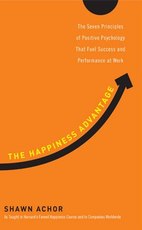
The Happiness Advantage:  The Seven Principles of Positive Psychology That Fuel Success and Performance at Work

1/9/2016

0 Comments

 
The Happiness Advantage: The Seven Principles of Positive Psychology That Fuel Success and Performance at Work
Author:  Shawn Achor
ISBN:  9780307591548
 
APA Style Citation
Achor, S. (2010). The Happiness Advantage: The seven principles of positive psychology that fuel success and performance at work. New York: Broadway Books.

Picture
happiness_activity_5.pdf
File Size: 102 kb
File Type: pdf
Download File

Book Description
According to Shawn Achor, the traditional idea that if you work hard, you will be more successful, and have higher levels of happiness is contrary to the reality of how our brains work. Research on happiness has demonstrated that if you achieve success, your brain will simply move the goal post for “success” farther away.  As a result, true and lasting happiness can never be found at the end of achievement because the reverse is true.  If an individual is happy he or she will be more likely to achieve. Happiness actually increases levels of success by making our brains more innovative, resilient, effective, and productive.  Happiness is the cause of success rather than the result.  Happiness and optimism generate a competitive edge that the author calls the Happiness Advantage and the book outlines countless studies from neuroscience, economics, and business that demonstrate how happiness leads to success. Happy people experience a 23% reduction in stress, 39% better overall health, 31% greater productivity, and a 34% increase in positive social interactions.  The book outlines not only the enormous advantages associated with a positive mood but also how it can be achieved. 
 
Achor effectively makes the case for how we can program our brains to increase positivity in the present and consequently improve performance across in many areas including work, health, relationships, creativity, and energy levels.  The book focuses on seven specific principles that individuals can use to generate a happiness advantage and maximize their potential. 
 
Principle #1: The Happiness Advantage
Positive mood makes individuals more productive, engaged, creative, and efficient.  Research indicates that a variety of intentional activities can increase personal happiness such as meditation, thinking about a positive future event, doing conscious acts of kindness for others, exercise, and utilizing a signature strength.  Signature strengths are the positive and productive personality traits that are strong in a particular individual (see accompanying activity).  Happiness levels are increased dramatically when individuals engage in activities that are directly related to signature strengths.
 
Principle #2: The Fulcrum and the Lever
The title of the principle comes from a quote by Archimedes, the ancient Greek mathematician who said, “Give me a lever long enough and a fulcrum on which to place it, and I shall move the world.”  For the author, brains work in a similar fashion.  The power to maximize individual potential is based on the length of the lever (the amount of potential and control an individual believes they have) and the location of the fulcrum (the mindset of an individual). Psychologist Ellen Langer showed the power of mindset (fulcrum) in her 1979 experiment that involved a group of 75-year-old men on a week-long retreat.  During the retreat, the men were asked to pretend that the year was 1959 and were aided in the illusion by period clothing and materials. After spending a week in 1959 (when they were 20 years younger), the participants were significantly more flexible, had improved hand strength and posture, and showed an improvement in vision of almost 10 percent.  They also showed improved memory capacity and intelligence scores.
Achor recommends that managers ask themselves three questions every Monday to help them refocus on a growth mindset (fulcrum) to allow their beliefs about the potential of their employees take effect.  These same three questions can be used by teachers to motivate students. 
 
    1.  Do I believe that the intelligence and skills of my students are not fixed, but can be     improved with effort?
    2.  Do I believe that my students want to make that effort, just as they want to find     meaning and fulfillment in their assignments?
    3. How am I conveying these beliefs in my daily words and actions?
 
According to the author, when we recognize that our reality is contingent upon our viewpoint then the idea that external events comprise only about 10 percent of our personal happiness becomes less surprising. 
 
Principle #3: The Tetris Effect
The Tetris Effect is a phenomenon that results when an individual spends so much time on a particular activity, such as the video game Tetris, that the result is that the pattern impacts the person’s cognitions, dreams, and imagery.  The phenomenon was discovered when individuals who devoted a large amount of time to playing Tetris found that they would often think about how objects in the real world would fit together as spatial objects in the game.  According to the author, the Tetris Effect can either reduce or increase subjective well-being.  For example, an individual may find that through practice they begin to scan the world for the negative become less and less happy.  The Tetris effect can also be used to maximize happiness by training the brain to seek out, notice, and take advantage of opportunities and possibilities that arise instead of automatically seeing limitations.  The difference between a negative and positive Tetris Effect was demonstrated effectively by Richard Wiseman in a study in which participants were instructed to look through a newspaper and count how many photos appeared.  The participants who identified themselves as ‘lucky’ were able to finish the task in seconds while those who felt that they were ‘unlucky’ took two minutes on average.  On the second page, there was a large headline stating “Stop counting, there are 43 photos”, those who considered themselves to be ‘unlucky’ were far less likely to notice this clue.  Additionally, about halfway through the paper was another message stating “Stop counting, tell the experimenter that you have seen this and win $250”, but again the individuals who considered themselves ‘unlucky’ missed this opportunity.   This study illustrates how training the brain to scan for the positive can improve both happiness levels and success while a negative Tetris Effect (believing one is unlucky) can cause an individual to miss opportunities.
 
Principle #4: Falling Up
In this principle, the idea is to find ways to turn setbacks into opportunities for growth which Achor calls capitalizing on downs to build upward momentum.  This principle relates to developing resiliency and the psychological idea of post-traumatic growth.  Frequently, traumatic events such as loss, chronic illness, displacement, and assault have also led to positive growth. After horrible events, some individuals experience increases in kindness, compassion, overall life satisfaction, self-confidence, and personal strength.  Research into post-traumatic growth is filled with individuals who describe themselves as “bouncing forward” not merely “bouncing back”.  Falling up provides examples from research on posttraumatic growth and cognitive psychology to help individuals facing a challenging situation at home, work, or school emerge from the situation stronger than ever. 
 
Principle #5: The Zorro Circle
In the Zorro Circle, the emphasis is on learning to focus on small manageable steps in order to build the momentum needed for larger goals. The belief that one is in control of one’s own life at work, school, and home is one of the strongest predictors of well-being and performance.  In one example, researchers found that allowing nursing home residents to have more control over some of the aspects of their daily lives—like caring for plants—not only did their levels of happiness improve, but their mortality rate actually dropped in half. Psychological research in goal-setting theory recommends setting goals of moderate difficulty allow individuals to have success and develop a sense of control.  A practical application of the Zorro Circle can be seen in a study discussed in Malcolm Gladwell’s book, The Tipping Point regarding New York City officials focusing on small manageable goals to combat the rising crime rate of the 1980’s and 1990’s on subways.  The problem was approached by using the Broken Windows Theory devised by sociologists James Q. Wilson and George Kelling which states that minor acts of vandalism would, if left unaddressed, spiral out of control into more serious crimes.   New York City officials decided to work on eliminating graffiti and cleaning up trains.  Ultimately, by cleaning up the trains, one by one, officials saw positive results in the form of reduced subway crimes as the Zorro Circle spread outwards. 
 
Principle #6: The 20-Second Rule
The 20-second rule uses psychological research to help eliminate bad habits and establish positive ones by reducing the barriers to making changes. The 20-second rule involves lowering the amount of energy required for habits you wish to foster and raising the amount of energy required for habits you wish to break.  For example, this means putting barriers in the way of bad habits and making activities that you want to increase easier to start.   If you want to eat healthier keep the junk food out of your house or in the most inconvenient location in your kitchen so that it would require more energy, even as little as 20 seconds, to reach. If you find that you waste too much time checking email, looking at Facebook, or checking specific websites Achor advises that you create barriers that make these activities more difficult for you to reach.  For example, eliminate the automatic password and login, take the shortcuts off the desktop, remove Facebook and email from your phone, and removing distracting websites from your homepage or favorites.  This according to Achor essentially buries your online distractions in the electronic equivalent of Russian stacking dolls. Cutting the activation energy required to start a new positive habit, even by as little as 20 seconds can also have a big impact. For example, the author discusses how he used the 20-second rule to build the habit of working out in the morning before work.  To reduce the effort required and distractions that could prevent him from running he decided to sleep in his gym clothes with his running shoes right by the bed.  This allowed him to decrease the amount of activation energy required in the morning to go run; he just needed to roll out of bed and put on his shoes.  This simple first step was how he was able to build a habit of morning exercise.  According to the athletes and non-athletes, he has talked to worldwide say that just the act of putting on running shows triggers your brain to believe that it is easier to work out right away than to go through the hassle of taking off your shoes.  Despite the fact that taking off one’s shoes is clearly easier Achor states that, “the brain, once it has tripped toward a habit, will naturally keep rolling in that direction, following the path of perceived least resistance.”  This idea can work with other types of changes individuals want to make – it is simply a matter of determining how to “just get your shoes on” for tasks related to work, school, or other interests.  The less energy needed to get started (even 20 seconds) the easier it will be to make a good habit lasting. 
 
Principle #7: Social Investment
One of the strongest influences on happiness is the strength of one’s social network.  The happiest 10 percent of individuals are most clearly distinguished by the strength of their interpersonal relationships.  Individuals who have strong social support networks are more productive, engaged, energized, and able to handle setbacks.  Achor compares an individual’s support network to the way an offensive line protects the quarterback. One of the most important areas for social support is the relationship between an employee and a supervisor or in the case of education, teacher and student.  A bad relationship between an employee and a supervisor can be destructive to both happiness and overall physical health.  According to Achor, “A bad relationship with your boss can be as bad for you as a steady diet of fried foods—and not nearly as much fun.”
 
The Happiness Advantage ends with the Ripple Effect or how one individual’s mindset can have an impact on coworkers, friends, family members, and communities.  Emotions, both positive and negative, can be contagious.  Daniel Goleman describes how negative emotions from one individual can almost immediately infect a group, “Like secondhand smoke, the leakage of emotions can make a bystander an innocent casualty of someone else’s toxic state.”  But the happiness advantage also means that positive emotions are contagious as well, making them a powerful tool for improving performance in the classroom or workplace. According to Shawn Achor, “Each tiny move towards a more positive mindset can send ripples of positivity through our organizations, our families, and our communities.”
 
Other Related Resources
 
Shawn Achor – The Happy Secret to Better Work
Shawn Achor’s TED talk, which has had over 11 million viewings to date, is an incredible introduction to positive psychology which students will find engaging and inspiring.
http://www.ted.com/talks/shawn_achor_the_happy_secret_to_better_work?language=en
 
Goodthinkinc.com
GoodThink is Shawn Anchor’s company website that has the seeks to find ways to apply academic research in cognitive and positive psychology to real world situations.  Goodthink Inc. is a team of world-renowned researchers, speakers, and trainers who deliver information to organizations around the globe.
http://goodthinkinc.com/
 
Martin Seligman and New Era of Positive Psychology
Martin Seligman, the founder of positive psychology discusses the overall field of psychology.
https://www.ted.com/talks/martin_seligman_on_the_state_of_psychology?language=en
 
Center for Healthy Minds – University of Wisconsin, Madison
Founded by Dr. Richard Davidson, the Center for Healthy Minds conducts research on the neural bases of emotion and methods that promote well-being and human flourishing.
http://centerhealthyminds.org/
 
Website for Dr. Richard Davidson
The website of Richard Davidson, PhD of the University of Wisconsin, Madison.
http://richardjdavidson.com/
 
 Psychological Figures and Concepts
Carol Dweck   
Viktor Frankl
Daniel Gilbert
Malcolm Gladwell
William James
Abraham Maslow
Robert Rosenthal
Martin Seligman
Active Listening
Altruism
Anchoring
Dopamine
Emotional Intelligence
Endorphins
Explanatory Style
Facial Feedback Hypothesis
Fight-or-flight Response
Inattentional Blindness
Learned helplessness
Locus ofCcontrol
Mindset
Mirror Neuron
Neuroplasticity
Oxytocin
Posttraumatic Growth
Principles of Psychology
Priming
Pygmalion Effect
Reverse Placebo Effect
Self-Fulfilling Prophecy
Serotonin
Signature Strength
Stereotype Threat
Subjective Well-Being
Theory X and Theory Y
0 Comments

Witness for the defense

12/13/2015

0 Comments

 
​Witness for the Defense: the Accused, the Eyewitness, and the Expert who put Memory on Trial
Author (s):  Elizabeth Loftus and Katherine Ketcham
ISBN:  987-0312084554
 
APA Style Citation
Ketcham, K. & Loftus E. (1991).  Witness for the Defense: the Accused, the Eyewitness, and the Expert who put Memory on Trial; New York, New York: St. Martin’s Press.
Picture
activity_witness_for_defense.docx
File Size: 17 kb
File Type: docx
Download File

misinformationeffecthandout.docx
File Size: 15 kb
File Type: docx
Download File

​Book Description
Elizabeth Loftus is well known for her research with the misinformation effect and the fallibility of eyewitness memory.  She details her initial interest in memory as a graduate student and her many avenues into memory research over the past 40 years.  In Witness for the Defense, Loftus focuses primarily on her work as an expert on memory in court cases.  Her controversial work has led to hate mail, feuds with friends, and public ridicule for her decision to serve on the defense team for some notorious criminals.  Loftus is clear to point out that although she often works for the defense, she believes in some cases that the accused are innocent and in others she is simply speaking to the errors which can be made in eyewitness’s memory, not to the innocence or guilt of the accused.  The adventure of this book is in the details of the cases which Loftus has been a part of over the years.  She reads all of the evidence and then consults with the attorneys to identify which parts of a given case may lead to errors in memory by witnesses and other who are involved. 
 
Memory in trials can be a high stakes mistake.  Prior to a trial, prosecutors or police interrogators can suggest that certain events took place in a crime.  Witnesses may have holes in their memory for an event and these holes can be filled in with details provided by the interrogators.  In addition, police sometimes believe that they have found the culprit and spend time in interrogations trying to prove they are correct rather than attempting to examine all potential possibilities (confirmation bias).  Witnesses who are trying to be helpful in solving the case often take on subtle suggestions from interrogators without even knowing they are doing so (demand characteristics).  Loftus cites cases such as Isadore Zimmerman who was accused of murdering a New York City patrolman.  After serving 24 years in prison, new technologies were able to prove that Isadore was innocent as he had always claimed.  Loftus’ goal is to prevent wrongful convictions such as this one by questioning the interrogation methods used and the reliability of the witnesses in a case.  She also wants to inform the jury about the many failings of memory.  Memory can be erroneous even under circumstances in which individuals have the best of intentions.  The famous child psychologist Jean Piaget recounted a memory of an attempted kidnapping when he was a child with his nurse strolling down the Champs Elysees in Paris.  His nurse later wrote Piaget’s parents confessing that the entire episode was made up, but Piaget swore he remembered everything about the event even the face of the purported kidnapper.  When an eyewitness identifies the culprit in a courtroom, this can be incredibly convincing testimony.  Jurors are easily swayed by what the individual claims to have seen, even when DNA evidence refutes the recalled memories. 
 
Poor lineups can also lead to erroneous identification.  For example, sometimes not all of the members of a lineup fit the description of the culprit, which can lead the witness to a particular individual that does fit the description but may not be the guilty party.  Other times the culprit is not in the lineup, but the witness feels compelled to choose someone from the lineup.  Mistaken identity can send innocent people to prison and allow the guilty to go free with no worries about being found out.  Showing witnesses, the same photographs over and over again (mere-exposure effect) can also lead the witness to identify a person they have seen often in pictures as the culprit because they start to seem familiar.  Arye Rattner conducted a study on false convictions based on erroneous eyewitness testimony and he found that in 200 cases 52 were based on eyewitness testimony.  With over half of convictions based on what we know to be faulty evidence, it can be assumed that a number of these were false convictions.  Defense attorney’s can ask judges to read a list of instructions to the jury about the dangers of eyewitness testimony but often this is not enough to override the power of eyewitness testimony in the courtroom.  New evidence has demonstrated that of 7,000 people executed in the twentieth century at least 25 were innocent, this violates the basic ethos of the American judicial system. 
 
The Cases
Loftus has worked on many high profile cases and she details instances of innocent individuals accused and convicted of crimes they did not commit.  In some cases, her testimony made a difference for an innocent person being exonerated, and other cases in which she at least suspected that the individual was guilty as charged.    In one case, Steve Titus drove a light blue compact car that matched that of an accused rapist, he was identified after the victim looked at many pictures of potential culprits and said, “This one is the closest”.  Despite having an alibi and no record, Titus was convicted of rape while the real rapist committed other similar acts.  Even though he was eventually exonerated, his life had been ruined, his fiancé left him, he lost his job, and he became incredibly angry at the turn of events his life had taken.  Six years after he was exonerated he was dead of a heart attack. 
 
Ted Bundy the infamous serial killer with frat boy good looks and an academic pedigree that initially did not seem to fit that of a serial killer was on trial for a series of rapes and murders.  While Loftus knew about the killings in the Washington area where Bundy had operated, she initially did not know if he was innocent or guilty.  She was asked to testify about memory and the potential errors in memory that may have been made by the attempted kidnapping victim who claimed that Bundy was the one who tried to abduct her from a shopping mall parking lot.  Even though Loftus had her doubts about his innocence as the trial continued, in the legal system, the burden of proof is on the prosecution.  Ted Bundy was found guilty in Washington and sent to stand trial for disappearances in Colorado.  Despite a brief escape, he was convicted and confessed to “two or three” dozen murders” while some believe he had killed as many a 50 young women. 
 
Timothy Hennis was accused of the murder of Kathryn Eastburn and two of her three daughters in their Fayetteville, North Caroline home.  Eastburn’s husband was away with the military and Hennis has just adopted a dog from the family.  Since there was no sign of forced entry into the home, the police determined the victim must have known her attacker.  Police, concerned about the welfare to the family, peeked into the window three days after her husband last spoke to her to and saw the baby crying in her crib, the only survivor of this brutal killing.  Despite a lack of any physical evidence, Hennis was identified by a woman in a drive through bank lane months after the crime that Hennis looked like the person in line before her (the murderer had used Eastburn’s debit card at that bank).  Eastburn was sentenced to death during his first trial but was eventually issued a retrial in which Loftus testified.  He was found innocent on all counts based in large part on Loftus’ testimony. The crime remains unsolved but another case that has occurred under similar circumstances suggests that the real killer is still at bay. 
 
Whether innocent or guilty, Loftus attempts to educate people on the dangers of believing our memories in their entirety.  Even the most vivid memories can be influenced by post event suggestions.  As a witness seeks to fill in the gaps of their missing memories to give a full description of the crime, they may actually be adding more false memories than improving the quality of the memory. 
 
Police and law enforcement officers must also be cognizant of the dangers of eyewitness memory.   Judges and juries should support the skepticism of courtroom identification in order to give the accused a fair trial.
 
 
Resources:
TED Talk:  How Reliable is your Memory?
June, 2013 TED Talk in which Psychologist Elizabeth Loftus describes her work researching  false memories, when people either remember things that did not happen or remember them differently from the way they really were.  Loftus shares some startling stories and statistics and raises some important ethical questions.
https://www.ted.com/speakers/elizabeth_loftus
 
 
CNN:  Trust your Memory?  Maybe you Shouldn’t
Excellent 2013 CNN article about memory research and Elizabeth Loftus.
http://www.cnn.com/2013/05/18/health/lifeswork-loftus-memory-malleability/
 
The Eyewitness Test:  How do you Stack Up?
This video is a test of the ability to identify a suspect in a staged crime that can be used in class to demonstrate the problems with eyewitness testimony and lineups.
https://www.youtube.com/watch?v=x6fRH5MLBIU
 
The Guardian:  Falsifying Memories
http://www.theguardian.com/science/neurophilosophy/2013/aug/16/elizabeth-loftus-falsifying-memories
 
Catalyst:  Potential for False Memories
Short video on the problem of false memories
http://www.abc.net.au/catalyst/stories/2848614.htm
 
Nature:  International weekly journal of Science:  Evidence Based Justice
http://www.nature.com/news/evidence-based-justice-corrupted-memory-1.13543
 
Slate:  I could have Sworn, and Interview with Elizabeth Loftus
http://www.nature.com/news/evidence-based-justice-corrupted-memory-1.13543
 
Frontline:  What Jennifer Saw (interview transcript)
http://www.pbs.org/wgbh/pages/frontline/shows/dna/interviews/loftus.html
 
Elizabeth Loftus Website
The author’s website which includes links to various articles and information about her other books.
http://faculty.washington.edu/eloftus/
 
Psychological Figures and Concepts
Elizabeth Loftus
Wilder Penfield
Jean Piaget
Confirmation bias
Demand characteristics
Eyewitness testimony
Flashbulb memories
Framing effect
Hindsight bias
Mere Exposure effect
Misinformation Effect
Recall
Recognition
Schema
Source Amnesia
 
0 Comments

Nudge:  Improving Decisions about health, Wealth and happiness

11/20/2015

0 Comments

 
​Nudge: Improving Decisions About Health, Wealth, and Happiness
Richard H. Thaler and Cass S. Sunstein
ISBN:  978-0-300-12223-7
                                              
APA Style Citation
Thaler, R. and Sunstein, C (2008).  Nudge: Improving Decisions About Health, Wealth, and Happiness.  New York:  Penguin Group.
Picture
activity_key_nudge.docx
File Size: 16 kb
File Type: docx
Download File

nudgehandout1.docx
File Size: 16 kb
File Type: docx
Download File

nudgehandout2.docx
File Size: 15 kb
File Type: docx
Download File

​Book Description
Richard H. Thaler and Cass S. Sunstein were both professors of Economics at the University of Chicago at the time of the publication of Nudge.  Sunstein went on the work at the White House as the Administer of Information and Regulatory Affairs while Thaler remains at University of Chicago.  The authors use Nudge to pose the idea of Libertarian Paternalism, which they describe as a type of choice architecture.  They combine the fields of Economics and Psychology to describe how anyone from cafeteria workers to governmental agencies can present choices in such a way to help guide (nudge) people towards better choices while still giving them complete control over those same choices.
 
Thaler and Sunstein begin with a cafeteria manager who realized students purchase more of items presented close to the beginning of the cafeteria line.  If desserts were presented first, students ate more desserts, if fruit was presented first, students ate more fruit. The manager could use this knowledge to make more profit for herself, but Thaler and Sunstein suggest that the paternalism component of libertarian paternalism should provoke her to arrange the healthiest food items first to encourage students to eat as healthy as possible.  Students are not forced to choose the first items presented and the manager has not limited the student’s choices, but she found that the arrangement of food items changed the sales of items by up to 25%.  Hopefully this finding will be used by others to encourage students to make healthy decisions regarding their food selections.
 
Thaler and Sunstein recognize that many people will oppose this type of paternalism because it does exert some control over people’s choices and may not always be used in ways that are in the best interests of the average American.  They counter by indicating that libertarian paternalism is only intended to look out for the best interests of as many people as possible.  They explain the difference between “econs” who would always look at the world objectively without emotion to make the best decisions for themselves and their families and “humans” who are impacted by emotions and busy lives and as a result do not always make the best choices for themselves or their families. Because most of us are “humans”, they argue, libertarian paternalism becomes a helpful necessity.
 
In many cases libertarian paternalism attempts to encourage humans to make good financial choices.  Thaler and Sunstein describe how their University retirement system had individuals opt in each year even if they had been in the system the prior year.  Many employees did not think about retirement during the year and forgot to opt in for the upcoming year during the open period.  They then had to wait until the following year to opt in again.  By speaking with school administrators (none of whom had remembered to opt in) they were able to change the default to remain in the system and only to opt out if they wanted to make a change to their retirement contributions.  With this type of choice architecture, far more people participated in the retirement plan at the University.  They recommend the same type of programs for new hires who will be automatically entered into a savings system unless they decide to take action and opt out.  The idea is that people know they should be saving for retirement but often do not get around to actually taking the action necessary to get started.  The State of Illinois has created a default program to become an organ donor and saw a dramatic increase in those donating, presumably saving thousands of lives each year.
 
Thaler and Sunstein credit Daniel Kahneman for his work with biases and heuristics in which people use a rule of thumb based on prior experiencing or knowledge to make decisions, which often turn out to be erroneous.  They use an example of an anchoring heuristic in which people attempt to guess the population of the city of Milwaukee.  It is unlikely that people know this answer outright so they will use their own frames or reference to determine the best response.  If someone from Chicago were asked the question, they might know that Milwaukee is the largest city in Wisconsin but not as big as Chicago, so they may say about a million since Chicago has about 3 million and it is perhaps about 1/3rd the size.  People from Green Bay Wisconsin might estimate that Milwaukee is about three times as large as Green Bay causing them to guess around 300,000.  The actual population is about 580,000 but the anchoring bias of each person’s hometown caused them to guess either too high or too low.  Thaler and Sunstein explain how these and other heuristics such as the availability and representiveness heuristics can lead to overconfidence in any types of choices and decisions.
 
Some of the most important decisions we make in our lives are often the result of little thought or effort.  Most people never change the accounts in their retirement savings or their prescription drug plan even as their lives or health change.  Thaler and Sunstein examined individuals on Medicare and found that most people would have been better served by a different plan, but the people either found the change too complicated or had not given much thought to making a change because they “had health insurance” even if it was not doing them much good.  The libertarian paternalism model would create a system in which those running the system would examine each person’s health and prescription needs for the past few months to determine the best plan.  This would become their default plan and at least would be correct until their health needs changed.
 
Conformity also plays a role in the decisions we make.  By following what everyone else does, we assume what everyone else does must indicate the best restaurant or the best concert often without giving much thought to what we believe.  We can see this evidenced by watching people who eat together match how much they eat to the others they are with.  In another study, college roommates often study as much as one another.   People recycle more if they are informed that most others do the same and pay their taxes if their tax bill indicates that a high percentage of people also pay their taxes.  Energy bills have taken this lead and now often compare each bill payer to their neighbors along with a smiley or frowny face to indicate their level of efficiency.  Thaler and Sunstein cite the work of Solomon Asch who tested whether individuals would conform to the perception of line length falsely reported by confederates.  Asch found that participants would often go along with a clearly incorrect response if they majority of others in the group did.  Asch also found that once a person committed to a response in writing, they were more likely to stand by that response.  Campaign officials have replicated this by demonstrating that if people sign a pledge card regarding their intention to vote, they are far more likely to follow through.  This method has also worked with blood drives and commitments to healthy eating. 
 
Even human factors psychology plays a role in the design of products that can keep people safe and help them interact with products in a healthier fashion such as stove tops that clearly indicate which on/off knob goes with which burner.
 
Thaler and Sunstein believe that we need nudges most when the choices we are faced with are complex or ambiguous.  Credit card statements do not use nudge tactics and often wind up a poor option for people because the anchoring heuristic is the minimum balance on the payment slip without any indication of how much one will pay in the long run if they only pay the minimum payment.  By including this information, Thaler and Sunstein suggest that credit card debt could be substantially decreased.  They are convinced that by implementing paternalistic libertarianism, people can do good and do well.
 
Other Related Resources
Nudge Blog:  For sharing ideas about Libertarian Paternalism
http://nudges.org
 
Forbes:  What it Really Means to Nudge
http://www.forbes.com/sites/peterubel/2015/02/20/q-a-with-richard-thaler-on-what-it-really-means-to-be-a-nudge/
 
The Observer:  Has Push Come to Shove for a Fashionable Theory?
http://www.theguardian.com/science/2014/jun/01/nudge-economics-freakonomics-daniel-kahneman-debunked
 
The Economist:  The Limits of Nudging
http://www.economist.com/blogs/freeexchange/2015/07/behavioural-economics
 
Nudge Theory Explanation: Business Balls
http://www.businessballs.com/nudge-theory.htm
 
Psychological Figures and Concepts
Solomon Asch
Muzafer Sherif
Availability Heuristic
Anchoring Heuristic
Commoner’s Dilemma
Conformity
Elimination by aspects
Framing
Human Factors Psychology
Incentives
Loss Aversion
Mere-Exposure Effect
Overconfidence
Peripheral Route to Persuasion
Positive
Priming
Representativeness Heuristic
Self-Serving Bias
0 Comments

Thinking Fast and Slow

9/2/2015

0 Comments

 
Maria Vita
Penn Manor High School
[email protected]

Thinking, Fast and Slow
Author:  Daniel Kahneman
ISBN-13: 978-0374533557

APA Style Citation  
Kahneman, D.  (2011). Thinking, Fast and Slow.  New York; New York:  Farrer, Strauss and Giroux.
Picture
thinking_activity.pdf
File Size: 156 kb
File Type: pdf
Download File


Book Description
Daniel Kahneman’s (2011) book exposes the human mind’s frailties and cognitive biases. It includes various errors in judgment in reference to sampling, heuristics, and anchoring – to name just a few. Kahneman’s book also provides insight into the ways in which empirical research is prone to these errors.  Kahneman categorizes the quick, effortless, snap judgments of our mind as “System 1” thinking.  This type of thinking includes habits, first impressions, associations, instincts, and impulses.  In Chapter 4, Kahneman describes a study in which people were primed to be more cooperative.  Normally, people in an office used an honesty policy to pay for the amount of coffee/tea taken.  However, when researchers placed a poster with photographed eyes near the collection box, individuals felt as though they were being watched and were more likely to pay for the number of drinks served.  

Kahneman provides many examples of reciprocal priming- that is: our body language can unconsciously influence our thoughts.  The facial feedback experiment is a familiar example.  In their personal connections to the book, one of my students noted that there is an “alarm app” for smart phones in which the person must genuinely smile in the camera frame of the phone in order to shut off the alarm clock.  The facial feedback experiment suggests that if one smiles, they can automatically influence their emotions to be more positive.  In another experiment, Kahneman noted that simple gestures could impact someone’s willingness to accept or reject a message.  By nodding in agreement, subjects were more likely to concur with researchers, while subjects who were asked to shake their head from side-to-side were more likely to disagree with the same researchers.

While “System 1” thinking often dominates our actions, Kahneman also addresses our lazier, slower, more effortful “System 2.”  This is exemplified by the Stroop test.  Our automatic “System 1” thinking is difficult to turn off: In the traditional Stroop test, we are likely to say the words as they are spelled rather than the color in which they are presented (which do not match to the color spelled out.  We do not routinely say colors when reading, so the self-control and effortful energy of “System 2” must be activated, and this takes more time than defaulting to “System 1”.  Here is a variation of the stroop test that Kahneman uses: Say whether the following words are lowercase or uppercase.  Complete this task as fast as you can.

CAT
dog
FISH
uppercase
teapot
illusion
LOWERCASE
CAR
uppercase
fork
LOWERCASE

Did you sense the conflict between “System 1” automatic ability to read the word rather than using “System 2” to follow the directions – especially with the words uppercase and LOWERCASE.
 
According to one experiment conducted by Kahneman himself, the pupils were shown to dilate when “System 2” is activated.  Subjects were asked to perform complex mental arithmetic by calculating six to seven digit numbers.  When the pupil is dilated, the body is responding to a task that is mentally and physically demanding.  Because “System 2” thinking requires energy and blood-glucose to thrive, we are more likely to resort to effortless “System 1” which relies on impressions. 

Using the halo effect, Kahneman said that “System 1” often makes a “coherent” view of a person as either good or bad.  Additionally, “System 1” attempts to consistently maintain this impression, whether true or false.  Kahneman was quick to point out his own predispositions toward “System 1” thinking by using an example that most teachers and students can relate to: grading.  When Kahneman graded his own students’ work, he often found that his first impression of a student influenced the grades they received on an essay.  For example, if Kahneman graded two different essays for the same student, one after another, the second grade often matched the first.  When “System 1” biases permeated, a student who received a good grade on the first essay often earned a good grade on the second.  However, if Kahneman graded the first essays of the whole class, he was much more likely to be independent in his evaluation of each student.  Therefore, a student who earned a bad grade on the first essay would not be impacted by the professor’s impartiality and may very well earn a good grade on the second essay.  If teachers recognize the power of “System 1” impressions, they would be mindful of the order in which student work is evaluated in order to provide students with more objective and “fair” grading.

When it comes to a complicated self-evaluation like lifetime happiness, Kahneman argued that researchers failed to capture accurate results due to the interference of heuristics. To show how happiness can be arbitrarily reported, one German study asked subjects "How happy are you these days?" and then "How many dates did you have in the last month?" In this scenario, subjects reported on life satisfaction without considering the progress of their love life. The same study also reversed the questions. When participants first considered their dating life, the resulting affect heuristic or mood influenced their reported life satisfaction. Those who had fewer dates felt rejected and lonely, hence their life satisfaction ratings were lower.  It is difficult for participants to objectively report on lifetime satisfaction without letting an event or mood impact results. Participants’ apparent lifetime satisfaction varies with unconscious influences or with the first circumstances that come to mind.

Kahneman and his colleague Amos Tversky gained fame from their experiments in the early 1970s on the availability heuristic.  When making conclusions about the likelihood of an event, we often rely on “System 1” conclusions that come to mind quickly or easily.  For example, in California after an earthquake, people are more likely to buy home insurance.  After an incident such as an earthquake, the ease with which images of the tragedy come to mind causes us to overestimate the likelihood of the event occurring again in the future.  Yet, after the images and memory of a salient event fade, humans underestimate the tragedy’s frequency and are not as worried.  Acts of terrorism also speak to our “System 1” emotions and judgments.  For example, Kahneman, an Israeli-American psychologist, noted that there are more traffic deaths in Israel than cases of terrorism.  This goes against the images that easily come to our mind when we think of the Arab-Israeli conflict. 

The book has 38 chapters even examining a couple of excerpts with your psychology students is a worthwhile endeavor!

Other Related Resources

Asap Science Brain Tricks - This Is How Your Brain Works January 31, 2013 
https://www.youtube.com/watch?v=JiTz2i4VHFw

Thinking Fast and Slow “Minute Video” January 29, 2015
https://www.youtube.com/watch?v=btTZA0XLd2k

Daniel Kahneman “BigThink” and the contributions of his research
http://bigthink.com/experts/danielkahneman

Examples of small sample size in baseball: small samples show EXTREME results
http://slowfastthinking.wikispaces.com/Small+Sample+Size

Psychological Figures and Concepts:  
Chapter 1: Invisible gorilla (selective attention); Stroop effect; Muller-Lyer illusion
Chapter 3: Flow, ego-depletion; Walter Mischel’s delayed gratification
Chapter 4: Priming; reciprocal priming (facial-feedback hypothesis)
Chapter 5: Robert Zajonc’s mere exposure effect
Chapter 7: Confirmation bias; halo effect; overconfidence; framing
Chapter 10: Sampling; randomness
Chapter 11: Anchoring
Chapter 12, 13: Availability heuristic; affect heuristic
Chapter 14: Representativeness heuristic

 
0 Comments

Boost:  Create good habits using psychology and Technology

8/1/2015

0 Comments

 
Boost:  Create Good Habits Using Psychology and Technology
Author:  Max Ogles
ISBN:   13: 978-1505245059

APA Style Citation
Ogles, M.  (2014).  Boost:  Create Good Habits Using Psychology and Technology.  


Picture
boost-open_your_class_with_this_tomorrow.pdf
File Size: 74 kb
File Type: pdf
Download File

Book Description

Part I:  How to Create Good Habits
Boost is a great book for an introductory psychology student.  It may serve as a good summer reading assignment prior to the start of the school year and is appropriate for any student regardless of reading level or prior experience with psychology.  The Kindle version of the book is free through Amazon (paperback $7.99). The book also comes with a free app to follow through on the recommendations made throughout the book (see resources).  Author Max Ogles is a technology entrepreneur who has created a variety of behavioral modification programs, web platforms, and apps.  He is not an academic psychologist, but seeks to combine technology and psychology in a way that will help to improve people’s daily lives in realistic and simple ways.  The book is broken into eight chapters and each ends with a quick summary of the main points and a recommendation for an app that can help to facilitate the life change highlighted in the chapter.  The two largest sections of the book are, How to Start Habits and How to Make Habits Last.

Ogles discusses that when setting a goal, regardless of how lofty, one must begin with a reasonable smaller goal that can eventually evolve into a larger goal.  Ogles recounts a time in which he was determined to run a marathon but had to begin by running 3 or 4 miles at a time before he could even begin to consider 26.2 miles.  Smaller goals are incredibly important in moving towards larger goals because without them, the goal seems too distant and is often insurmountable.  Researchers at the University of Toronto found that those who set reasonable proximal goals were more likely to be successful in reaching larger distal goals.  These principles can easily be applied to any goal, such as reading more often, doing “spring cleaning”, engaging in more healthy activities, or eating better.

Technology is a part of our everyday world, and although we often hear about how it detracts from attention or studying, Ogles focuses on how technology can help us to become more efficient and successful in reaching the goals we identify as important.  Ogles describes a platform called If This Then That (IFTTT). Registering is easy and free, because you simply select channels that are of interest to you such as Recipes for a Healthy Lifestyle or Manage your Social Media, and create an If This Then That alert system that focuses on your particular interests by sending you updates through your phone or social media accounts.   These triggers are intended to provide alerts to help individuals live better and more efficiently by keeping up with news stories that meet their specific interests.  Often triggers such as going out to dinner causes us to eat poorly, or our favorite television show causes us to sit for too long rather than exercise.  Pavlov’s classic studies regarding conditioning demonstrate the value of triggers and expectations in behavior and we can use this knowledge to help create triggers that lead to healthy living while removing triggers that are detrimental.  Triggers can be internal or external and while IFTTT focuses on external triggers with time and experience we can internalize these connections.

University of Rochester psychologists Todd Thrash and Andrew Elliot created a framework to study inspiration.  They examined over 30 personality traits to determine which traits were most closely linked to inspiration.  They found that openness to experience, self-esteem, and creativity were the top traits associated with inspiration.  While some individuals believe that these characteristics are predetermined, Ogles provides recommendations for slowly developing or increasing these traits.  To become more open, try a new food, listen to a new radio station, or go to a new restaurant.  To improve self-esteem, stop comparing yourself to others who have more than you, instead, focus on the things you have and appreciate them.  A gratitude log is a good way to change one’s focus from what they do not have to what they do.  There is an app that allows you to keep a gratitude journal on your phone, Gratitude Journal for iPhone (see resources).  In order to increase creativity, Ogles recommends limiting iPhone use with an app called Mobile Flow (see resources), which eliminates distractions by limiting your smart phone functionality, allowing you more time to be creative (creativity often strikes when we are not otherwise engaged).  He also encourages readers to try something they have never tried before such as a new activity, traveling to a new place, or reading a book that is about a topic you might otherwise not have picked up.

Ogles recommends delivering rewards on a variable-ratio schedule to encourage the continuation of a desired behavior and explains how his psychologist father used to reward he and his sisters periodically for playing the piano as children to encourage their musical behavior.  He also recommends providing rewards early and removing them if the desired behavior is not performed.  Because of people’s inherent distaste for loss, it is more likely that the behavior will continue.  Stickk.com (see resources) allows you to set a goal and identify a charity you would like to send money to if you do not reach your goal.  This app acts on loss aversion and allows the charity of your choice to benefit from your loss if you do not live up to your goals.  Ogles does warn about the overjustification effect and encourages people to check in frequently to make sure that the goal they have set is truly what they want to accomplish.

Part II:  Why Good Habits Don't Last
Ogles cites the numbers of individuals who have heart bypass surgery each year, many of whom can prevent future heart attacks by improving their exercise and diet.  Very few of these people succeed at changing these habits, in part because they are so well engrained and as such difficult to change.  Ogles cites his own failed attempt at running.  Often we fail at these types of goals because we do not truly enjoy eating healthy or going for a run, but we know we should do it, even as we dread each moment.  We often overestimate our own self-control and fail as a result. Two recommendations for making activities more enjoyable are to simplify the activity (if you want to eat healthier begin with eating a single piece of kale) and changing your attitude (smile while your doing the activity even if you are not enjoying it). Ogles also recommends trying to find others who are involved in the same activities that you want to improve on.  The Internet is a great source for social networking with those that you have a common interest.  If you have a fit bit, connect with other friends and make your fitness goals public.  The community of support and contact with others trying to reach a similar goal can make the goal more attainable.  The Coach.me app (see resources) allows you to find someone, often at no cost that can help you achieve your goal.

Because helping others actually makes us feel better, altruism is a great way to help others and ourselves at the same time.  Research suggests that those who donate time and/or money to charity actually make more money themselves.  This holds true even when accounting for socioeconomic and familial differences.  An app that can serve this dual goal is www.charitymiles.org.  This app uses the GPS on your phone to track the distance of your run and donates money from corporate sponsors to charities who pay for each mile that you run. 

Ogles indicates that in order to reach one’s goals, frequently checking in is also extremely important.  While often individuals focus only on whether or not the behavior was completed, he indicates that the quality of the behavior is equally important.  If a student has a goal of completing their homework each night before they watch television, but the quality of their homework is poor, they have not really accomplished their goal.  Ogles recommends a quality check, which might be as simple as a three point system (1-completed task, 2-completed task well, 3-completed the task to the best of my ability).  In addition, he encourages people to not think of goals as binary.  He uses the example of an individual who wants to stop drinking Coke; they have a bad day at work and have a coke when they get home.  This might be considered a failure but there must be leniency in goal setting.  This person might say, “I will allow myself a one cheat day” and then they can maintain the desired behavior even after the perceived “failure”.  Keep checking in and asking, “how often am I exhibiting the desired behavior and how well am I doing it”?  These simple questions will help to stay on track.  Ogles has created an accessible book that can help individuals change their life for the better in simple and well-described steps.  The technology resources available should help create habits and may appeal to the psychology student of today who is connected to their technology to guide and inform their life decisions more than ever before.

Other Related Resources
Book Website:  117 apps to help you create good habits
http://maxogles.com/exclusive

Max Ogles Blog:
http://www.maxogles.com

Max Ogles Facebook:
http://www/facebook.com/max.ogles

Twitter
http://www/twitter.com/maxogles

Apps
If This Then That:  An app that sends alerts to create triggers that promote desired behaviors.
https://ifttt.com/recipes

Gratitude Journal for iPhone:  An app that can be used to reduce the impact of relative deprivation and improve self-esteem.
http://getgratitude.co

Mobile Flow:  An app that limits the functionality of an iPhone to increase focus and creativity.
http://www.themobileflow.com

Stickk.com:  An app that works on loss aversion by allowing having you donate money to a charity of your choosing if you do not reach your goal.
http://www.stickk.com

Coach.me:  An app that can find someone who is an expert in the area in which you wish to improve who can provide support and expertise to you while you pursue a goal.
http://www.coach.me

Charity Miles:  An app that donates money to a charity of your choice for each mile you run by accessing the GPS on your phone.
www.charitymiles.org

Psychological Figures and Concepts
Solomon Asch
Ivan Pavlov
B.F. Skinner
Altruism
Conformity
Creativity
Facial-Feedback Hypothesis
Goals (Proximal and Distal)
Goal-Setting
Intrinsic Motivation
Loss Aversion
Motivation
Openness to Experience
Overjustification Effect
Relative Deprivation
Self-Control
Self-Esteem
Variable-Ratio Schedules of Reinforcement


0 Comments

Look me in the Eyes

7/2/2015

0 Comments

 
look me in the eye:  my life with asperger’s
Author:  John Elder Robison
ISBN:  978-0-307-39618-1

APA Style Citation
Robison, J. E.  (2008).  look me in the eye:  my life with asperger’s.  New York, New York:  Random House.

open_your_class_with_this_tomorrowlookmeinthe_eye5.pdf
File Size: 50 kb
File Type: pdf
Download File

Picture
Book Description:

John Elder Robinson expands on his experience with Asperger’s told in part by his brother (Augusten Burroughs) in the book Running With Scissors.  John Elder struggled for a good part of his life without the knowledge that he had Autism (referred to in the book as Asperger’s but classified today as Autism).  Autism was not well understood when John Elder was young and was often confused with schizophrenia or depression.  It is important that we understand the behaviors and thoughts of those with Autism because the Centers for Disease Control and Prevention indicate that 1 in 150 people are on the autistic spectrum.  John Elder describes Autism as a way of being rather than a disease for which there is no cure or need for a cure.  Rather, he advocates for a better understanding of the disorder. 

The title of the book comes from the fact that John Elder was often reprimanded for not looking people in the eye.  When he was young, he had a very specific way of playing and could not understand that others might want to play differently.  He never mixed his foods or the colors of the blocks.  People would ask John Elder a question and he would respond with whatever was on his mind rather than addressing the question that was asked.  He had a difficult time making friends because other children did not understand the way he played.  He did not have the kind of empathy others had which made people think he was a bad kid.  Because he heard this often enough that he eventually came to believe that it was true.  John Elder’s father was an alcoholic and his mother was likely schizophrenic, which added more conflict to his already troubled childhood.  He loved but tormented his younger brother to whom he referred to as “Snort” (he gave everyone names of his choosing).  John Elder was brutally honest which also got him into trouble.  Eventually, he used his ability to focus to come up with elaborate pranks, which made him popular for a time with the other children in school, and he enjoyed making them laugh. 

As a boy, John Elder was interested in dinosaurs, tanks, ships, planets, bulldozers, cars and airplanes.  When he was a teenager he was introduced to electronics and this became his passion and primary focus.  He loved to take things apart and build transistors, televisions, and radios and eventually he began building and fixing amplifiers.  Often, those with Autism have a savant like mind for visualization.  John Elder could visualize sounds waves and the devices he wanted to build.  Local musicians found out about his talent and he began fixing their amplifiers and improving their sound.  He was welcomed by the local music scene and began spending much of his time in clubs and concerts.  Eventually he dropped out of high school (despite incredibly high standardized test scores) and moved out of his dysfunctional parents home.  While he was working on amplifiers, he encountered the members of KISS who were interested in creating a smoking guitar.  John Elder made their vision come to life and ultimately began working for the band full-time creating complex pyrotechnics.  The members of the band referred to him as “Ampie” and were thrilled with his work. His job with the band was exciting but John Elder did not enjoying the partying life style that came with life on the road with a rock band.  He had a girlfriend who enjoyed electronics and helped him with his projects with whom he wanted to be with more often.  He left the musical circuit for a life at Milton Bradley’s electronics division as a research engineer, where he found others other engineers he could relate to and felt more at home.  John Elder was never interested in small talk and was so logical that sometimes his “gruff” manner was upsetting to those to whom he had to report.  He eventually learned to ask about people’s families and interests before diving into the conversation he really wanted to have and was pleased to see that people responded positively.  This process was far more methodical for John Elder that it might be for others, but with practice he learned proper social etiquette. He eventually moved on to a corporate job but did not find this satisfying and today he owns an auto body shop and buys, fixes and sells older cars.  He is able to complete repairs that others cannot and has found a strong following.  He generally works on his own (although he employs a staff of 12) and his passion for cars allows him to find this work stimulating.  John Elder has a son he calls “Cubbie” though he is no longer married to Cubbie’s mother.  He loves taking Cubbie to train yards and to see ships and cars.  He also enjoys making up wild stories, which Cubbie loves. 

John Elder explains that although many Autistic individuals are introverted, it is not that they want to be alone but are afraid of the negative feedback they often receive in social situations.  Their focus and intellect in a given domain sometimes are not recognized because of their lack of interpersonal skills.  John Elder’s obsession with cars allows him to succeed in his current business just as his obsession with electronics allowed him to work with KISS.  John Elder finds that his directness actually benefits his current position because he can tell people in a very precise fashion what needs to be fixed on their cars.  An acquaintance gave John Elder a book to read about Autism in which he recognized many of his own behaviors.  Rather then be upset by the diagnosis, John Elder was relieved that there was a name for his “odd” behaviors. He felt comforted that there were other people like him and he was not arrogant or lazy, as he had heard for so many years.  He suddenly realized that many of his difficulties with social interactions and inappropriate facial expressions were because he was autistic not sadistic.  Once he understood the differences between his behavior and those of “normal” individuals, he began to make a concerted effort to look people in the eye and listen to what they were saying.  Many people commented on how much more friendly he seems than before.  He has even taken comfort in a recent article that suggests Asperger’s is an essential part of creative genius. 

John Elder’s unique traits are still there, in bed he likes to pile pillows on top of him, logically computes whether he married the best of the sisters (his current wife is one of three girls), and he asks his wife to scratch his back because this calms him down.  John Elder likes the quote, “When you’ve met one Aspergian, you’ve met one Asbergian.”  He recognizes his unique and different traits and rather than try to pretend he is someone that he is not, he has embraced his uniqueness and learned to find it’s best aspects.

Resources
OASIS Online Asperger’s Syndrome Information
http://www.aspergersyndrome.org

America Asperger’s Association
https://www.autismspeaks.org/resource/american-aspergers-association

John Elder Robison Website
http://www.johnrobison.com

John Elder Robison Blog
http://jerobison.blogspot.com

John Elder Robison on the Today Show
https://www.youtube.com/watch?v=SwzfgNWmR6E

Autism Center for Excellence
http://www.autism-center.ucsd.edu/autism-information/Pages/what-is-autism.aspx

National Institute of Health:  Autism Fact Sheet
http://www.ninds.nih.gov/disorders/autism/detail_autism.htm

10 tips on how to communicate with individuals with Autism
http://autismum.com/2012/05/07/10-tips-on-how-to-communicate-with-autistic-people/

Communication and Interaction:  National Autistic Society
http://www.autism.org.uk/living-with-autism/communicating-and-interacting/communication-and-interaction.aspx

Psychological Figures and Concepts
Hans Asperger
Autism Spectrum
Diagnostic Statistical Manual of Mental Disorders (DSM)
Schizophrenia
Depression
Savant Syndrome
Interpersonal skills
Daniel Tamment:  Born on a Blue Day
Temple Grandin:  Thinking in Pictures
Brain plasticity

0 Comments

Moonwalking with Einstein:  The art and science of Remembering everything

4/30/2015

2 Comments

 
Moonwalking with Einstein:  The Art and Science of Remembering Everything
Author:  Joshua Foer
ISBN:  1-101-46763-0

APA Style Citation
Foer, J.  (2011).  Moonwalking with Einstein:  The Art and Science of Remembering Everything.  Penguin Group, New York, New York.

activity_implicit_declarative_memory.pdf
File Size: 14 kb
File Type: pdf
Download File

implicit_demo_ppt_1.pptx
File Size: 4366 kb
File Type: pptx
Download File

implicit_demo_ppt_2.pptx
File Size: 5332 kb
File Type: pptx
Download File

Picture
Book Description
In Moonwalking with Einstein, author Joshua Foer spends one year training for the American Memory Olympics after observing the competition, and talking to some of the participants.  Those who train insist that they are not savants and that anyone can learn to be a memory champion if they are willing to put in the hard work. Foer accepts the challenge and prepares for the competition.

Foer claims there is no scientific evidence to support what we commonly refer to as photographic (eidetic) memory.  He suggests that individuals with excellent memories simply spend time concentrating on specific items, which leads to the ability to complete feats that display like photographic memory.  He argues however, that these individuals do not take “snapshots” of the world as was previously believed, but instead used specific methods for improving memory. Foer explains that in nearly all disciplines there are people who seem to have unbelievable memories, waiters who do not need to write down orders, those who can determine the sex of a chicken in a few seconds, or musicians who can recall a long musical score with seemingly little effort. In some cases specific brain differences have been found in these individuals.  In one example, the author writes that experienced London cabbies were found to have a larger posterior hippocampus than average, likely resulting from the vast cognitive map for locations and buildings they posses.  Foer contends that in each of these scenarios, individuals who are experts in their fields simply work more quickly because they know what is important and what is not, thereby eliminating time and energy being wasted on unimportant information.

During his training, Foer adopts many memory techniques from the experts; one that is commonly used is chunking.  Chunking works by associating what one is trying to learn with what they already know in long-term memory.  Foer cites a runner named S.F. who has an amazing memory for numbers.  S.F. took meaningless numbers and chunked them into running times, doing this dramatically improved his ability to recall random digits.  Foer argues that S.F. does what memory experts do, which is not attributable to an outstanding memory but rather, the skill of taking new information and making it relevant.  One’s experience aids memory in the future regardless of what that past experience, it is up to individuals to determine how to use their own expertise. Champion chess players use chunking to break up the chessboard into sections, they look at the borders between squares more than other (lower ranked) players and chunk the board into larger sections.  Everyone has an excellent memory for something.  Perhaps the difficulty is finding the proper cue for retrieving any given memory.

During his year of training, Foer finds himself memorizing license plates, information from obituaries, and other seemingly random information to practice his new skills.  He wears blacked out goggles with small openings so that he is not distracted and reads endlessly from encyclopedias.  He also immerses himself in the unique culture of those who participate in the Memory Olympics.  

The memory experts with whom Foer trains argue that a focus on memory used to be the most important part of one’s education.  Before books and other written works were readily available, stories and information was passed through word of mouth and ancient scripts carry many messages referring to the importance of memorization.  This skill has been lost over many generations and now people read for quantity rather than quality, often forgetting most of what they have just read.  Foer hopes to bring a bit of this back as he prepares himself for the competition.  As the year progresses, he reaches a plateau, but then goes on to memorize a deck of cards in under 2 minutes. After he experiences improvements, he moves from wanting to just compete in the Memory Olympics to wanting to be competitive.

Foer also describes detriments related to losing one’s memory. He discusses the cases of E.P., Henry Molaison, and Clive Wearing (for more on Clive Wearing see Books for Psychology Class review for Forever Today) who both suffer from anterograde amnesia (which prevents the creation any new memories).  Foer visits E.P. who is cognitively alert, but unaware of his memory problems.  He believes that the president is FDR and reads the paper each morning even though by the time he has finished reading any given article, he has already forgotten the headline.  He may eat breakfast three or four times in a day because he forgets that he has already had breakfast.  He can however take a walk around the block by himself and trace a five-pointed star.  In part, he can do these later activities because his procedural memory remains intact.  Procedural memories, which are unlikely to me impacted by amnesia, deal with how to do something whereas episodic memories deal with the where and when of a person’s life and help individuals recall significant events.  Finally, Semantic memories are what people know and are more free-floating (not associated with a specific event). Episodic memories are the type most likely to be impacted by amnesia.  Semantic memories may also be damaged depending on the extent of the amnesia. Recent memories are the first to go for those with amnesia as well as those who suffer from Alzheimer’s because more recent memories have weaker neural networks and are more easily damaged.

On the flip side of the memory coin, are those individual who have an uncanny recollection for specific events yet score very low on traditional I.Q. tests.  Daniel Tamment is known as a super savant.  He learned Icelandic in one week and amazed the world by his ability to memorize numbers and calculate dates.  Daniel claimed to use no mnemonic devices or other memory techniques; his Book Born on Blue Day became an international best seller.  Foer met with Tamment to determine if he possesses a different set of skills than the mental athletes Foer met while training for the Memory Olympics.  Tamment had an epileptic seizure at age 4 and attributes his “gift” to this experience. Tamment explains that he has synesthesia, and that for him numbers take on a unique shape, texture, and emotional tone.  Tamment claims to have this experience for every number up to 10,000, which allows him to easily recall numbers.  Foer challenges the idea that Tamment is a savant who does not use memory techniques.  Tamment claims that he sees numbers as colors, which aid in recall, but when pressed by Foer to describe certain numbers, he cannot replicate the same colors he described in previous discussions.  Kim Peek, the savant who inspired the film Rain Man, has Foer more convinced.  Peek has an I.Q. of 87 and is socially deficient but not autistic.  Peek has an odd shaped cerebellum and no corpus callosum, which may be what allows him to read two pages at the same time with two different eyes and retain nearly everything he has read.  Peek cannot explain how or why he remembers information so well and when asked by Foer about his memory simply says, “I don’t know, I just remember”.  Peek’s abilities are amazing and widespread but his feats are consistent with the type of abilities found in many other savants (albeit more extreme).  There is some speculation that savant syndrome may be the result of damage to the left hemisphere because the abilities of savants are most often right brain activities. 

Ultimately, Foer goes on to win the American Memory Championship.  He is best at memorizing decks of cards and does this by placing the cards in his multiple memory palaces, using the method of loci.  He uses his parent’s house as one location and places the cards to be recalled in different rooms of the house.  In one of his strange visual images he pictures himself Moonwalking with Einstein.  He is easily able to recall the cards by their placement in the memory palace and the strange visual connections he has created which catapults him to the championship.  He goes on to compete in the World Memory Championship and places 13th out of 37 competitors, however, only the top 10 finishers are named “Grand Masters”.  After the competition Foer, wonders how the year of memory training will help him in his everyday life.  He indicates that it has helped him remember grocery lists and people’s names, but he has not used the techniques very often and still finds himself to be forgetful.  In one case for example, he drove to dinner with his friends and took the subway home.  He is now in agreement with those he met on the first day of the memory competition who indicated that anyone could learn to do this well; he just questions the everyday necessity of it all.

Other Related Resources
Book website
http://joshuafoer.com/moonwalking-with-einstein/

Daniel Tamment:  TED talk
http://www.ted.com/talks/daniel_tammet_different_ways_of_knowing?language=en

Memory Champs:  They’re just like the rest of us:  NPR Podcast
http://www.npr.org/2011/02/23/134003962/Moonwalking-With-Einstein

Joshua Foer explaining Moonwalking with Einstein
https://www.youtube.com/watch?v=Kor0wFR72xc

TED Talk:  Josh Foer
https://mail.google.com/mail/u/1/#inbox/14c99f35420ed7fd?projector=1

The Art of Memory Blog:  By Joshua Foer
http://blog.artofmemory.com/moonwalking-with-einstein-joshua-foer-1745.html

Kim Peek:  The Real Rainman
https://www.youtube.com/watch?v=DLpCfHH1OVU

Introduction to Memory Techniques
http://www.mindtools.com/memory.html

Project H.M.:  The Brain Observatory
http://thebrainobservatory.ucsd.edu/hm

Clive Wearing
https://www.youtube.com/watch?v=Vwigmktix2Y

Psychological Figures and Concepts
John Dewey
Hermann Ebbinghaus
Anders Erikson
Sigmund Freud
Sir Francis Galton
George Miller
Willder Penfield
Daniel Tamment
Clive Wearing
Eidetic memory
Anterograde amnesia
Retrograde amnesia
Hippocampus
Medial temporal lobe
Declarative memory (Explicit)
Non-Declarative (Implicit)
Episodic memory
Semantic memory
Procedural memory
Implicit memory
“Magic number 7”
Infantile amnesia
Neural pruning
Elaborative rehearsal
Method of loci
Deliberate practice
Savant syndrome
Transcranial magnetic stimulation
Synesthesia


implicit_demo_ppt_1.pptx
File Size: 4366 kb
File Type: pptx
Download File

2 Comments

Situations Matter:  Understanding How Context Transforms Your World

3/2/2015

0 Comments

 
Situations Matter:  Understanding How Context Transforms Your World
Author:  Sam Sommers
ISBN:   978-1-59448-818-4

APA Style Citation
Sommers, S. (2011). Situations Matter:  Understanding How Context Transforms Your World. New York, New York: Penguin Group.

Picture
Book Description
Situations Matter:  Understanding How Context Transforms Your World, by Sam Sommers of Tufts University is an excellent source of supplemental material to make the emotion and social psychology units especially relevant and engaging for students.  The book provides research and personal examples illustrating how behaviors and mental processes are strongly influenced by one’s current environment.  Included in the text are a wide variety of brief, high-interest analyses of significant psychological studies including Asch’s conformity study, Milgram’s obedience study, and the Schachter-Singer research on the two-factor theory of emotion. The book stresses that although we like to think we objectively make decisions based on our individual personalities, we, in fact, are profoundly influenced by the situations in which we find ourselves. The goal of Situations Matter is to help individuals understand and predict the actions of others and evaluate how the power of the situation influences one’s behaviors.  This book provides an interesting way to link social psychology concepts such as attribution theory and the power of the situation to numerous other units including motivation, emotion, and cognition.  
 
The book is divided into seven chapters with distinct themes.  Chapter One, titled WYSIWYG (What You See is What You Get), pronounced “wizzy-wig,” demonstrates the tendency of individuals to emphasize dispositional attributions over situational ones. This section addresses cultural differences in attributional tendencies such as the fundamental attribution error and how attributions influence decision-making.  There are also several excellent examples in this chapter of the halo effect.  For example, Sommers references how the halo effect is used by advertisers to add creditability to their products through celebrity endorsements.  The concept of WYSIWYG leads individuals to ignore the power of the situation in explaining why the celebrities are praising the products (they are being paid).  According to Sommers, WYSIWYG allows for rapid impression formation and decision-making because it effectively eliminates many potential variables.  WYSIWYG can however also lead to inaccurate decisions.  The author argues that a greater understanding of this natural tendency to avoid considering situational variables can help individuals make more reasoned and effective choices. 
 
Chapter Two, Help Wanted, highlights research related to how the presence of others impacts individual behavior by increasing inaction.  Help Wanted details important social psychology concepts such as reciprocity, social loafing, the bystander effect, and diffusion of responsibility.  This section includes both the Kitty Genovese and James Bulger murders as examples of the power of the bystander effect.  There is also a detailed account of the Good Samaritan study conducted by John Darley and Daniel Batson, which illustrates a how the variable of time pressure contributes to the willingness of individuals to help others.
 
Chapter Three, Go with the Flow describes how the presence of others influences the actions of individuals.  This chapter includes research related to deindividuation, social norms, and conformity and begins with the interesting example of Cameron Hughes who is paid to attend sporting events and get the crowd excited.  Situations Matter explains how various theories from social psychology can explain why Cameron Hughes is so successful at his job.  He has been hired to generate crowd excitement for professional teams including the Los Angeles Dodgers, Cleveland Cavaliers, and New Jersey Devils.  In 2010 he was hired to fire up crowds at the men’s and women’s Olympic hockey matches. 
 
Chapter Four, You’re Not the Person You Thought You Were, demonstrates how situations impact self-concept.  The author contends that the idea of a consistent personality is overrated in terms of predicting human behavior.  This section includes an exceptional description of the research done by Stanley Schachter and Jerome Singer that led to the two-factor theory of emotion.  Also, in this chapter are studies related to personal happiness and how self-concept is impacted by social comparisons.  There are several short demonstrations in this chapter that can be used to highlight the better than average effect that which can be easily used in a psychology class as a high-interest demo.
 
The final chapters in the book including Mars and Venus Here on Earth, Love, and Hate emphasize how the power of the situation influences relationships with others and the differences between men and women.  Mars and Venus Here on Earth highlights how gender norms are developed and maintained and argue that the differences between the sexes are more closely related to social situations than biology.  Love includes sections devoted to the science of attraction and the importance of similarity, proximity, and reciprocity.  The author even mentions a great article from the satirical newspaper, the Onion with the headline “18-Year-Old Miraculously Finds Soulmate in Hometown” that highlights how little we are aware of the impact of proximity.  (http://www.theonion.com/articles/18yearold-miraculously-finds-soulmate-in-hometown,375/) The chapter also explains how the Schachter-Singer two-factor theory of emotion can be used to explain how individuals in an exciting situation may misattribute the physiological arousal they are experiencing for the emotion of love.  This is demonstrated with the Capilano Bridge study (Dutton and Aron). This activity is provided in the open your class with this document and can be incorporated in either a unit on emotion or attraction. The chapter titled Hate gives an overview of the influence of actual differences in creating hostility and in-group bias.  The author demonstrates through research how easy it is to create conflict in groups even when they are formed arbitrarily.  The text provides a version of the Harvard Implicit Association Test to assess unconscious prejudice that can be easily used in class.  By doing the test together as a class, there are no individual scores which can reduce student anxiety.  The book also provides effective answers for addressing the concerns students typically express about the IAT. A different version of this activity involving stereotype about men and women in the workforce is provided in the open your class with this document on the blog.
 
Situations Matter provides exhaustive evidence regarding the power of the situation to influence human behavior.  The text is witty, intelligent, and engaging and there are numerous sections that could be assigned for supplemental student reading assignments.  The examples and stories can be used to help students find ways to apply psychology to their lives, decisions, and relationships. 
 
Other Related Resources
The following link is to the website of author Sam Sommers for the book Situations Matter that includes two short videos an eighteen minute TED talk.  
http://www.samsommers.com/Situations_Matter/Home.html

The following link is to a Psychwiki that provides additional background information on the Capilano Suspension Bridge Study research into misattribution of arousal that is one of the open your class today activities.  
http://www.psychwiki.com/wiki/Misattribution_of_Arousal_Paradigm

The following video is a reenactment of the original Capilano Suspension Bridge Study which can be used with the open your class today activity on misattribution of arousal.  
https://www.youtube.com/watch?v=P0aMEkGlcQE

This article explains five key psychological studies related to the science of attraction and includes the Capilano Suspension Bridge Study as number three.
http://www.scienceofrelationships.com/home/2012/5/17/top-5-classic-studies-in-the-psychology-of-attraction.html

The Annenberg Learner series video on the power of the situation which includes footage of several key experiments into conformity(Asch), the fundamental attribution error, and the Zimbardo prison experiment. 
http://www.learner.org/series/discoveringpsychology/19/e19expand.html

Psychological Figures and Concepts
Solomon Asch
Robert Cialdini
John Darley
Kitty Genovese
Dan Gilbert
Irving Janis 
Stanley Milgram
Bystander Effect
Chameleon Effect 
Conformity 
Cost/Benefit Analysis 
Diffusion of Responsibility
Emotion Theories
Implicit Association Test (IAT)
Innocence Project
Misattribution of Arousal
Obedience 
Prejudice
Proximity
Racism 
Reciprocity Norm
Similarity 
Social Norm
Stereotype
Suspension Bridge Study 


open_your_class_situations_matter_iat_gender.pdf
File Size: 105 kb
File Type: pdf
Download File

open_your_class_situations_matter_bridge.pdf
File Size: 141 kb
File Type: pdf
Download File

open_your_class_iatgender.ppt
File Size: 216 kb
File Type: ppt
Download File

0 Comments

Powers of Two:  Finding the Essence of Innovation in Creative Pairs

1/20/2015

0 Comments

 
Powers of Two:  Finding the Essence of Innovation in Creative Pairs
Author:  Joshua Wolf Shenk
ISBN:  978-0-544-03159-3

APA Style Citation
Shenk, J. (2014). Powers of Two: finding the essence of innovation in creative pairs. Boston: Houghton Mifflin Harcourt.

open_your_class_power_of_two_7.pdf
File Size: 74 kb
File Type: pdf
Download File

Picture
Book Description
In Powers of Two:  Finding the Essence of Innovation in Creative Paris, author Joshua Wolf Shenk rejects the idea of the lone genius in favor of evidence for the success of cooperative duos.  The book reads like an autobiography of famous historical and contemporary pairs from business, music, literature, sports, art, politics, science, and technology.  Joshua Wolf Shenk is also the author of the book Lincoln’s Melancholy: How Depression Challenged a President and Fueled His Greatness.  Detailed accounts of famous pairs are woven throughout the book and include John Lennon and Paul McCartney, Susan B. Anthony and Elizabeth Cady Stanton, Mohandas Gandhi and Mahadev Desai, Sigmund Freud and Carl Jung and Steve Wozniak and Steve Jobs.  Thorough research illustrates that many individuals historically perceived as lone geniuses frequently owed their success to close work with one other individual.  

Shenk acknowledges three types of pairs that he describes as star and director, liquid and container, and dreamer and doer.  In the star and director pair, one half of the duo occupies the spotlight, but their success is dependent upon the input of the other half who remains behind the scenes.  Examples of famous star and director creative pairs include Mohandas Gandhi and Mahadev Desai, Martin Luther King Jr. and Ralph Abernathy, Vincent van Gogh and his brother Theo. The dynamic of the liquid and the container refers to pairs in which one individual is drawn to risk and excitement (liquid), while the other individual imposes constraints and introduces necessary order and organization.  The liquid half of a pair typically is often more exciting, energetic, and more likely to take risks.  These individuals work well in pairs when the other half serves as a container offering structure and restraint.  This dynamic in particular according to the author is what gave rise to the romantic tradition of the lone, mad artist.  The mad artist construct however only refers to the liquid half of the duo.  The well-known Apple Computer advertising campaign “Here’s to the crazy ones” dramatically illustrates the lone genius myth “Alfred Hitchcock, John Lennon, Pablo Picasso, etc …the ones who see things differently… while some see them as the crazy ones, we see genius… Because the people who are crazy enough to think they can change the world are the ones who do.”  According to Powers of Two, these wild geniuses were only successful in making dramatic change because they were partnered with another more grounded individual.  One strong example of liquid and container highlighted throughout the book is the partnership of John Lennon (liquid) and Paul McCartney (container). The section on dreamer and doer pairs is creatively titled Inspiration and Perspiration and separates some famous pairs into the half who envisions new ideas and inspires others (dreamer), and the half who effectively sets priorities and finishes projects (doer).  Examples of this type included in the book are Orville Wright (doer) and Wilbur Wright (dreamer), Jerry Seinfeld (doer) and Larry David (dreamer) andSouth Park’s Trey Parker (dreamer) and Matt Stone (doer). 

The book describes how powerful pairs develop through six stages:  meeting, confluence, dialectics, distance, and the infinite game.  In the process the author provides details about the various manners in which these stages occur through references to psychological studies, interviews, and historical records.   Countless well known pairs are explored in each of the six stages to illustrate common trends among productive duos.  The book is a fascinating analysis of modern psychological research on creativity.  Numerous references are made that apply to a wide range of topics covered in a psychology class including social psychology, biopsychology, motivation, emotion, stress, and states of consciousness, cognition, and development making Powers of Two an excellent resource for supplemental materials for class.   

Other Related Resources
Author Joshua Shenk’s website with information about the book Powers of Two, and his previously released book, Lincoln’s Melancholy.
http://www.shenk.net/powersoftwo/

The following link is to an NPR, All Things Considered Story about the book Powers of Two.
When It Comes To Creativity, Are Two Heads Better Than One?
July 24, 2014 4:21 PM ET
http://www.npr.org/2014/07/24/334903925/when-it-comes-to-creativity-are-two-heads-better-than-one

The following link is to an article published in the Atlantic titled, Creative Pairs, in Their Own Words, which contains a series of quotes from members of famous duos about their partners. 
     “I forged the thunderbolts. She fired them.”
     --    Elizabeth Cady Stanton on Susan B. Anthony
     “All things considered, there is only Matisse.”
     — Pablo Picasso
     “Only one person has the right to criticize me. That is Picasso.”
     — Henri Matisse
     “We often hate each other, but it’s the kind of hatred that’s like flint and steel—the sparks that come out make it worth the while.”
     — Penn Jillette on his longtime partner in magic, Teller

http://www.theatlantic.com/magazine/archive/2014/07/in-their-own-words/372290/

Psychological Figures and Concepts
Mihaly Csikszentmihalyi
Charles Darwin
Daniel Goleman
Daniel Khaneman
Abraham Maslow
Walter Mischel
Lev Vygotsky
Archetypes
Birth order
Cooperation, competition, and conflict
Creativity
Flow
Fundamental attribution error
Happiness
Hierarchy of needs (Maslow)
Introverts and extroverts
Language
Leadership styles
Narcissism
Neuroscience (creative thought and sleep, introversion, social memory)
Person v. situation controversy
Problem solving
Reciprocity
Social cognition
Social intelligence
Stanford prison experiment
Theory of mind

0 Comments

Forever Today:  A memoir of Love and Amnesia

11/4/2014

4 Comments

 
Forever Today:  A Memoir of Love and Amnesia
Author:  Deborah Wearing
ISBN:  978-0385607094

APA Style Citation
Wearing, D. (2005).  Forever Today:  A Memoir of Love and Amnesia, London: Doubleday

Picture
openyourclassforevertoday4-2.pdf
File Size: 52 kb
File Type: pdf
Download File

Book Description

In Forever Today, Deborah Wearing recounts the details and symptoms of her husband Clive Wearing’s infamous and tragic case of anterograde amnesia.  The book details their courtship and formerly busy and happy life together as Clive worked as a musical director at the BBC and a conductor for many choirs including one in which Deborah sang. This is how they met and despite a nearly twenty-year age gap, they were drawn to one another because of their shared love of music and cathedrals.  Clive’s illness began as flu like symptoms, which brought on a case of amnesia from which he would never recover.  In addition to clarifying the characteristics of Clive’s illness the book also discusses the lack of health care facilities for individuals with brain damage and Deborah’s dedication to bring awareness to this cause.  The book also highlights the pain and suffering of families who have a loved one suffering from brain damage.

Clive came home from work at the BBC one day flushed, feeling tired, and suffering from a headache.  For the next few days the headache grew increasingly worse and Clive described it as feeling like he was ‘hit on the head with a hammer’.  Doctors were summoned but insisted that this was just a bad case of the flu.  Within three days Clive could no longer recall the name of a conductor with whom he had worked.  Clive was not sleeping and had a temperature of 102.  By day five Clive had gone missing because he went out but could not remember his address.  Eventually, a cab driver took him to the police station and he was returned home.  By this time it was clear that this was not a simple case of the flu.  Ironically, Deborah and Clive had read a story in the Observer Review from a book of case studies including one titled The Lost Mariner, which would be similar to what he would experience.  This story depicted a man (Jimmy G.) who could not form any new memories and even though he saw an old man in the mirror, still believed he was a 19-year old soldier.  At the hospital, Clive was diagnosed with encephalitis caused by herpes and given an anti-viral drug.  He also experienced seizures and doctors were perplexed as to what was happening.  Eventually, the antiviral drug stopped the virus, but much of Clive’s brain had already been destroyed.  The hippocampus, which helps to lay down new memories, was essentially destroyed as well as parts of the temporal lobe, occipio-parital and frontal lobes.  The thalamus, hypothalamus and amygdala were also impacted. 

While the Wearings had hoped for a time that Clive might be able to return to work, it soon became clear that would be impossible.  He did not remember anything he had just experienced and his consciousness consisted of no more than 7-10 second clips.  He did not remember Deborah’s name, but somehow he knew that she was his wife and was thrilled each time she came to see him.  He never, however learned any of the names of the nurses or caretakers some of whom had helped him for decades.  He did not initially know what food was when placed before him and would try to eat the menu or the utensils.  He would put on all of the clothes he owned and would take soap from the bathroom at each visit assuming it belonged to him.  His moods swung dramatically, at first he was quite jovial and made a joke of everything, but later he was reduced to days of tears and crying perhaps because he realized that he had lost “himself”.  Clive got stuck on some words, and for a while referred to everything as “chickens”. 

Curiously, Clive could still amazingly carry a tune and play the piano.  These older memories stayed with him because they were well learned and cemented in his memory whereas the new memories were more fragile and were wiped out by the virus.  Clive had a series of CT scans which showed that he had major damage to the brain, but it was not until they could arrange for an MRI (there were few around in 1985) that they could tell that Clive’s hippocampus was essentially destroyed. 

Over time Clive made some small gains, discussing the beauty of a cathedral in Bath and being able to dress himself, but he asked the same questions over and over again.  “How long have I been like this? He had the feeling of just waking up and in his journal he constantly writes that he is now just awaking for the first time and that all the other times before were not real.  He told nurses, doctors and Deborah his wife that they were the first person he had ever seen and that the words he was speaking were the first words he had ever uttered. 

Deborah struggled with the repetitive questions and with taking Clive on her own for weekend and days out.  He would get lost in a bathroom even in his own living room, and if he wandered off he would not be able to find his way home because he did not know where he lived.  Deborah started working to form and organization that could create a place for brain-damaged individuals to go, because they did not fit the disabled category in most cases because they could walk on their own.  She started an organization after hearing from many other families struggling with taking care of their own brain damaged family members at home because there was nowhere to house them.  Clive eventually went to a small group home that was opened in part because of Deborah’s efforts and she became a speaker on behalf of brain-damaged patients everywhere.  Deborah did divorce Clive but never stopped loving him and despite trying to “escape” to the United States for a short time she could not leave Clive behind.  Clive has never recovered but both of the Wearings are dealing with the dramatic loss to the best of their abilities.


Other Related Resources
Guardian interview with Deborah Wearing
http://www.theguardian.com/books/2005/jan/23/biography.features3

The Mind Series:  Clive Wearing Living without Memory
This video includes documents Clive’s story and includes footage of him struggling to form memories and his wife discussing his struggle. 
https://www.youtube.com/watch?v=ipD_G7U2FcM

BBC documentary:  Clive Wearing:  The man with no memory
https://www.youtube.com/watch?v=Vwigmktix2Y

BBC Magazine:  How can musicians keep playing despite amnesia? 
http://www.bbc.com/news/magazine-15791973

Psychological Figures and Concepts
Anterograde amnesia
Occipital lobe
Temporal lobe
Parietal lobe
Frontal lobe
Hypothalamus
Hippocampus
Amygdala
CT scan
MRI

4 Comments

Animal Madness:  How Anxious Dogs, Compulsive Parrots, and elephants in Recovery help us understand ourselves

9/23/2014

0 Comments

 
Jessica Flitter
West Bend East High School
West Bend Wisconsin
[email protected]


Animal Madness:  How Anxious Dogs, Compulsive Parrots, and Elephants in Recovery Help Us Understand Ourselves
Author: Laurel Braitman, PhD
ISBN:  13: 978-1451627008

APA Style Citation
Braitman, L. (2014). Animal madness: How anxious dogs, compulsive parrots, and elephants in recovery help us understand ourselves. New York: Simon and Schuster.


Picture
open_your_class_with_this_tomorrowanimalmadness1.pdf
File Size: 99 kb
File Type: pdf
Download File

openyourclassanimalmadness2.pdf
File Size: 75 kb
File Type: pdf
Download File

Book Description 

Current debate surrounding animal cognition, emotion, and intelligence is flourishing. The debate has progressed from “Are animals conscious and can they possess emotions?” to “To what degree are animals conscious?” and “What type of emotions do animals have and why?” Author Laurel Braitman takes the reader through multiple cases that examine the emotional side of animal’s lives.  The book follows Braitman’s personal struggle to help her own Bernese Mountain Dog (Oliver) overcome severe anxiety.  The book involves the exploration of mental illness in other animals as well and investigates how mental illness in animals can help lead to a better understanding of mental illness in humans.  Dr. Braitman combines research studies and anecdotes from various fields to investigate the similarities between animals and humans when their behaviors become abnormal.

The text moves from case study to case study involving animals that show symptoms of mental illness.  Dr. Braitman traveled the world documenting examples that provide support for the abnormal emotional behaviors animals express.  To name a few, she found examples of anxious and depressed gorillas; compulsive horses, rats, donkeys, polar bears, and seals; obsessive parrots; self-harming dolphins and whales; hounds and horses suffering from heartbreak; dogs with Alzheimer’s disease; rodents with trichotillomania; aggressive elephants, and chimps; and elephants, and dogs suffering from PTSD. As the various cases unfold, the author also ties in personal experiences, current research, and famous figures and studies from the field of psychology. Animal Madness also investigates the use of psychopharmacology to help treat mental illness in the animal population.  The wide-ranging compilation of stories leaves readers wondering if and how humans may contribute to animal mental illness and how mental illness in animals can help us to better understand human disorders.  This is a must read for animal lovers and those with a desire to learn more about the similarity between humans and animals!

Other Related Resources

Author Laurel Braitman’s website. 
The author has an MIT PhD and has written a variety of publications. She is a TED Fellow and an affiliate artist at the Headlands Center for the Arts.
http://authors.simonandschuster.com/Laurel-Braitman

Book website
http://animalmadness.com/

Book trailer video
This video includes and interview with the author highlights many of the fascinating case studies in the book.  This clip would make an interesting class discussion starter.
https://www.youtube.com/watch?v=8G3c2p8WEu4

Author Laurel Braitman’s Facebook page
https://www.facebook.com/nooneiscrazyalone

Author Laurel Braitman’s Twitter feed
https://twitter.com/LaurelBraitman
Article and video of Dr. Panksepp’s research regarding rat laughter.  Panksepp's work focuses on “the possibility that our most commonly used animal subjects, laboratory rodents, may have social-joy type experiences during their playful activities and that an important communicative-affective component of that process, which invigorates social engagement, is a primordial form of laughter.” 
http://www.huffingtonpost.com/2012/06/26/rats-study-animals-laugh-tickled-video_n_1627632.html
https://www.youtube.com/watch?v=M_oKQ9Dzitc

NPR interview
The link below is to an NPR interview author Laural Braitman gave with Don Gonyea about mental illness and her book Animal Madness.  Laurel Braitman's new book was born out of a near-tragedy: her frantic dog almost leaped to its death from a third-story window.
http://www.npr.org/2014/06/29/326669388/author-plumbs-the-human-psyche-through-animal-madness

Psychological Figures and Concepts:  
John Bowlby
Charles Darwin
Rene Descartes
Paul Ekman (basic human emotions)
Sigmund Freud (the case study of Anna O.)
Temple Grandin
Harry Harlow
Joseph LeDoux
Konrad Lorenz
Ivan Pavlov
BF Skinner
Martin Seligman
Neuron parts and neurotransmitters
Brain parts (e.g. amygdala, hippocampus, lobes, limbic system, neocortex)
Blood brain barrier
Brain Imaging (MRI)
Developmental issues (e.g. critical periods, self-concept, mirror test, feral children temperament)
Learning/Behaviorism (learned helplessness, rewards and superstitious behaviors, observational learning, behavior therapy, systematic desensitization)


0 Comments

Minds on Trial:  Great Cases in Law and Psychology

9/10/2014

0 Comments

 
Minds on Trial:  Great Cases in Law and Psychology
Author(s):  Charles Patrick Ewing & Joseph T. McCann
ISBN:  978-0195181760

APA Citation
Ewing, C.P. & McCann, J.T. (2006).  Minds on Trial:  Great Cases in Law and Psychology.  New York: Oxford University Press.

Picture
openyourclass__minds_on_trial_5.pdf
File Size: 64 kb
File Type: pdf
Download File

Book Description
Forensic psychologists have long combined the fields of Law and Psychology and as such this book features 20 famous cases that merge the two fields.  The book examines the testimony put forth by professionals in the field of psychology, which is then deemed valid (or not) within the legal system.  These cases often create precedents for future cases and have determined the legal parameters for psychological illnesses, false memories, public endangerment, and many others issues.  While the book examines 20 famous cases, this review will concentrate on two in order to provide insight into the general information presented in the book. According the Ewing and McCann, “the relationship between psychology and the law is about the ways in which the workings of the human mind:  like memory, thinking, perception, personal decision making, free will, and other complex psychological phenomena, impact important legal issues.”

Patricia Hearst
On February 4th, 1974 Patty Hearst was kidnapped from her Berkeley, California home.  Patty was the daughter of William Randolph Hearst, one of the wealthiest men in America who owned a chain of media outlets.  The Symbionese Liberation Army (SLA) claimed responsibility and asked Hearst’s parents to donate $70 of food to every poor person in California, and to publish all accounts of this in the media.  The Hearst family did as asked.

On April 3rd, 1974 Patty issued a statement indicating that she wanted to stay with the group of her own volition and that she wanted to become a freedom fighter and that she was changing her name to “Tania”.  Patty Hearst went on to assist in bank robberies and the shooting and robbery of a sporting goods store as well as serving as a getaway driver in another bank robbery.

On September 18th, 1975 Patty Hearst and other SLA members were arrested.  In her defense Hearst claimed that she went along with her captors for fear for her own life.  The prosecutors, using tapes of the robberies, claimed that she was a willing participant in the crimes.  Court appointed psychologists found Hearst to be sane but “emotionally impaired to a significant degree” and that she suffered from the equivalent of PTSD.  The also stated that she was subjected to coercive manipulation by her captors.  The debate between the prosecution and defense was whether she committed these acts under duress or of her own will.  The prosecution claimed that Hearst became impressed with the goals of her captors and their willingness to die for their beliefs and eventually came to agree and participate in their actions.  They also claimed that the psychologists aiding the defense team were serving their own interests in order to gain from the Hearst’s wealth and influence.

The jury convicted Patty Hearst and sentenced her to seven years in prison; President Jimmy Carter famously commuted her sentence after 22 months.  Most individuals who are familiar with the case today agree that if not for the dire circumstances in which Hearst found herself, she would not have committed the crimes.  President Bill Clinton issued her a full pardon in 2001.

Prosenjit Poddar
This case addresses the issue of public safety and when a psychiatrist or psychologist must break confidentiality to insure the public safety of others.  Generally, the guideline requires that if someone poses a potential risk of harm to themselves or others the psychologist should inform others who can potentially eliminate the risk.

Prosenjit Poddar was born in India and came to the United States to study naval architecture at the University of California Berkeley.  He eventually enrolled in folk dancing lessons where he met and fell in love with Tatiana Tarasoff.  Tatiana did not reciprocate his feelings, which threw Poddar into a deep depression.  Poddar’s friends encouraged him to see a therapist and he admitted in therapy that he planned to kill Tarasoff when she returned from her studies in Brazil.  His therapist contacted the clinic’s assistant director and both agreed that Poddar should be involuntarily admitted into the hospital’s psychiatric unit.  They called the campus police to take Poddar into custody and informed them that he was a paranoid schizophrenic who could appear rational, but was a danger to others.  The police found him to be quite rational and did not detain him.  Later, the director of the clinic Dr. Harvey Powelson asked police to return the letter asking to detain Poddar and asked the therapist to destroy his therapy notes containing any contacts with Poddar. 

On October 27th, 1969 Poddar went to Tarasoff’s apartment and asked to talk with her, she refused, and he shot her with a pellet gun.  She began to run, but he caught her and then stabbed multiple times, killing her.  Tarasoff pled not guilty by reason of insanity and the defense found four witnesses who all testified that he was a paranoid schizophrenic and a neurologist who claimed that Poddar had brain abnormalities.  The prosecution believed that Poddar had a schizoid personality, but that he was in control of his actions. 

The jury found Poddar to be sane and he was convicted of second-degree murder.  The judge in the case however, failed to indicate to the jury the specifics of malice which had to be a part of the intent of Poddars’s actions.  Because these details were not clearly defined, Poddar’s conviction was overturned.  Rather than have a new trial, he was released on the condition that he return to India immediately. 

Tarasoff’s parents filed a wrongful death case indicating that their daughter should have been directly warned of the danger that she was facing.  The therapists have “a duty to exercise reasonable care to protect a potential victim of another’s conduct”.  The court decided that the therapist must provide for the safety of the patient, but also the third person who they know to be threatened by the patient.  Some argued that this would actually decrease public safety because if clients knew that therapists had to disclose this information, they may be less likely to seek treatment.  This decision is often referred to as the “duty to warn” or “duty to protect”.  This decision weighs the interests of patient confidentiality against the public interest of safety.

The cases featured in Minds on Trial address many interesting intersections between the fields of Law and Psychology, the cases themselves are interesting and bring to light many complications with laws that are intended to be straight forward and clear, that become muddled and murky when applied to actual cases.  This would be an interesting read for those interested in careers in the field of Law or Forensic Psychology as future cases are sure to use past cases as a precedent for decisions.

Other Related Resources
C-Span Interview with Charles Ewing coauthor of Minds on Trial:  Great Cases in Law and Psychology
http://www.c-span.org/video/?194244-2/book-discussion-minds-trial

The homepage of Professor Gary Wells who is a psychology professor at Iowa State University and an expert on eyewitness memory issues which has numerous links to articles and cases in forensic psychology.
http://public.psych.iastate.edu/glwells/

FBI website article about the Patty Hearst case
http://www.fbi.gov/about-us/history/famous-cases/patty-hearst-kidnapping

Crime Library article regarding the Prosenjit Poddar case and the duty to warn.  Predicting Extreme Fatal Violence
http://www.crimelibrary.com/criminal_mind/psychology/risk_assessment/7.html

Article summarizing the differences in duty to warn laws across the 50 states.
http://www.ncsl.org/research/health/mental-health-professionals-duty-to-warn.aspx

Psychological Figures and Concepts
Criminal profiling
Paranoid schizophrenia
Hindsight bias
Schizoid personality
Posttraumatic stress disorder
Insanity
Narcissism
McNaugten rule
Antisocial personality disorder
Confirmation Bias
Weschler Adult Intelligence Scale (WAIS)

0 Comments

The One World School House:  Education Reimagined

4/1/2014

0 Comments

 
The One World School House: Education Reimagined
 Author(s):  Salman Khan
 ISBN:  13: 978-1455508389

APA Style Citation
Khan, S. (2012). The One World School House: education reimagined. New York: Twelve Hachette Book Group.
Picture
open_your_class_oneworldschoolhouse5-2.pdf
File Size: 98 kb
File Type: pdf
Download File

Book Description
The One World School House:  Education Reimagined 

 “I believed, and still believe, that teaching is a separate skill – in fact, an art that is creative, intuitive, and highly personal.  But it isn’t only an art.  It has, or should have, some of the rigor of science as well.” 
-       Salman Khan

Salman Khan, the author of The One World School House is also the founder of the website KhanAcademy.org which provides free instructional videos used by millions of people worldwide, making the website the most used storehouse of instructional videos on the Internet.  The book describes how the author began his career in education, creating videos to help an out of town family member with 6th grade math.  At the time, Salman Khan was an engineer and hedge fund manager with no training in education. The Khan Academy eventually grew to become a source of free education for students worldwide.  The ultimate goal of the Khan Academy today is to provide “A free, world-class education for anyone, anywhere.”  His method is based on providing students with differentiated materials that allow for self-paced learning to help students gain mastery of concepts presented.  The Khan Academy includes self-paced software and video tutorials to track student progress and can be used by teachers in a classroom or independently by students.  Math tutorials ranging from basic addition to advanced calculus are available as well as lessons in health, economics, history, chemistry, biology, physics, computer programming, psychology, and more.  

The book presents a series of innovative solutions for well-established problems in education in what Khan envisions as an updated version of the one room schoolhouse.  He stresses the important role that technology can play in education, but also addresses that it must be enlightened use.  According to Kahn, if technology is not used meaningfully it will end up being simply a very expensive gimmick.  According to Cathy N. Davidson at Duke University, “ if you change the technology, but not the method of learning, the you are throwing good money after bad practice… (The iPad) is not a classroom-learning tool unless you restructure the classroom… The metrics, the methods, the goals and the assessments all need to change.”  The method Khan proposes changing most is the lecture, thus freeing teachers up for more face-to-face time with students.  This represents the foundation of his philosophy - freeing teachers from lecturing and using class time in a manner that advances learning and creativity involving truly meaningful one-on-one interactions between instructor and student. His ideas range from changes in how teacher time is utilized (teaching as a team sport), classroom design, feedback methods, student engagement, mastery learning, and differentiating instruction.  He stresses the importance of first deeply instilling basic concepts in order for students to have success with more complicated ideas.  Khan also presents some very interesting ideas about the school calendar and higher education.  The book offers intriguing new answers to a number of important questions that have the potential to transform education such as:

·      Why technology will make classrooms more human and teachers more important.
·      How and why we can afford to pay educators the same as other professionals.
·      How we can bring creativity and true human interaction back to learning.
·      Why we should be very optimistic about the future of learning.

The book addresses many of the questions facing the teaching profession and provides practical ideas that can be used to improve classroom instruction.  “How does education happen?  I see it as an extremely active, even athletic process.  Teachers can convey information.  They can assist and they can inspire – and these are important and beautiful things.  At the end of the day, however, the fact is that we educate ourselves.  We learn, first of all, by deciding to learn, by committing to learning.  Education doesn’t happen out in the ether, and it doesn’t happen in the empty space between the teacher’s lips and the students’ ears; it happens in the individual brains of each of us.”
-       Salman Khan

Other Related Resources
Salman Khan, author of The One World School House gave this TED talk which to date has been viewed over three million times.
http://www.ted.com/talks/salman_khan_let_s_use_video_to_reinvent_education.html

Psychological Figures and Concepts
Benjamin Bloom
Creativity
Flipping the classroom
Learning styles (lack of evidence)
Long-term memory consolidation
Mastery learning
Neuroplasticity 
Tracking

0 Comments

You are Not so Smart

1/5/2014

2 Comments

 
You are Not so Smart
Author(s):  David McRaney
ISBN:  978-1592406593

APA Style Citation
McRaney, D. (2011).  You are not so smart.  New York:  Gotham Books/Penguin Group.


Picture
open_your_class_youarenotsosmart.pdf
File Size: 98 kb
File Type: pdf
Download File

Book Description 
This book can replace the social psychology chapter.  This would serve as a wonderful introduction to the field of social psychology for high school students or others who are relatively new to the field.  The book reviews many concepts in social and cognitive psychology and provides the rational for how we often use the information around us to make erroneous decisions.  The book is broken into chapters of a few pages and provides some easy demonstrations that would appeal to students and be manageable to use in class.  For instance, in the priming chapter the list RKFBIIRSCBSUSSR is presented and the reader is asked to look at the list and remember all of the letters.  This is followed by the recommendation to recall the list in ‘chunks’ such as RK FBI IRS CBS USSR which is more effective.  The section on confirmation bias discusses the presidential election of 2008.  Those who were already inclined to vote for Obama were more likely to purchase books that portrayed him in a positive light, whereas those who did not like Obama purchased books that portrayed him in a negative light.  Instead of expanding their views and looking for information that might challenge their beliefs, people instead are far more likely to seek out information that reinforces what they already believe or think they know.   McRaney provides some recommendations for alleviating procrastination, which may be helpful to high school or college students.  The Availability chapter addresses the work of Amos Tversky and Daniel Kahneman.  When provided with a list of names containing both famous and non-famous people, participants generally recalled more famous than non-famous names from the nineteen person list.  They went on to assume that the list contained more famous names (it did not) because this was the information they had most readily available.  The Obedience to Authority chapter addresses how the icepick lobotomy went on for so long uncontested because people believed that Walter Freeman was a legitimate authority.  The unruly psychotic patients that were often subjected to this procedure were considerably “calmer” afterword, providing the results that many were looking for.  The chapter entitled, The Just-World Fallacy describes that when we hear about a negative events happening to someone else we often blame the victim.  We use this as a protective mechanism because we would like to believe that this same fate would not befall us.  This is when McRaney invokes the title of the book, You are Not so Smart.  This same rational is discussed in the Self-Serving Bias chapter, in which McRaney describes how we associate positive outcomes with our own affirmative behavior yet make external attributions when something goes wrong.  Despite learning time and again that  ‘You are Not so Smart’ at least one can rest well after reading the Spotlight Effect chapter knowing that when you wear an awful outfit or sing a terrible rendition of “Living on a Prayer” during karaoke few people will actually notice.


Other Related Resources
Website for You are Not so Smart:  A Celebration of Self-Delusion (some items are not appropriate for students)
http://youarenotsosmart.com

You are Not so Smart Quotes
http://www.goodreads.com/work/quotes/16656588-you-are-not-so-smart-why-you-have-too-many-friends-on-facebook-why-you

Your are Not so Smart on Facebook
https://www.facebook.com/youarenotsosmart

Psychological Figures and Concepts
Walter Freeman
Irving Janis
Stanley Milgram
George Miller
Anchoring effect
Attention
Availability heuristic
Bystander effect
Catharsis
Confirmation bias
Conformity
Fundamental attribution error
Groupthink
Hindsight bias
Just-world phenomenon
Learned helplessness
Lobotomy
Misinformation effect
Priming
Representative heuristic
Self-serving bias
Self-fulfilling prophecy
Self-handicapping 
Social loafing
Spotlight effect
Split-brain research
2 Comments
Forward>>

    Categories

    All
    Biological Psychology
    Cognition/Learning
    Consciousness
    Development
    Disorders/Treatment
    Educational Psychology
    Health Psychology
    Motivation/Emotion
    Positive Psychology
    Research And Statistics
    Sensation/Perception
    Social Psychology/Personality
    Testing And Individual Differences

    Authors

    Laura Brandt, Nancy Fenton, and Jessica Flitter are AP Psychology instructors. Nancy Fenton teaches at  Adlai E. Stevenson High School in Lincolnshire, Illinois, Laura Brandt teaches at Libertyville High School in Libertyville Illinois and Jessica Flitter teachers at West Bend East High School in West Bend, Wisconsin.
    If you are interested in reviewing a book for the blog or have comments or questions, please e-mail us at either [email protected] or [email protected] or [email protected].

    RSS Feed

    Archives

    February 2026
    January 2026
    September 2025
    August 2025
    July 2025
    June 2025
    April 2025
    March 2025
    February 2025
    January 2025
    December 2024
    July 2024
    April 2024
    March 2024
    December 2023
    November 2023
    October 2023
    August 2023
    July 2023
    June 2023
    May 2023
    April 2023
    March 2023
    February 2023
    January 2023
    December 2022
    November 2022
    October 2022
    September 2022
    August 2022
    July 2022
    June 2022
    May 2022
    April 2022
    March 2022
    February 2022
    January 2022
    December 2021
    November 2021
    October 2021
    September 2021
    August 2021
    July 2021
    May 2021
    April 2021
    March 2021
    February 2021
    January 2021
    December 2020
    November 2020
    October 2020
    September 2020
    August 2020
    July 2020
    June 2020
    May 2020
    April 2020
    March 2020
    February 2020
    January 2020
    December 2019
    November 2019
    October 2019
    September 2019
    August 2019
    July 2019
    June 2019
    May 2019
    April 2019
    March 2019
    February 2019
    January 2019
    December 2018
    November 2018
    October 2018
    September 2018
    August 2018
    July 2018
    June 2018
    May 2018
    April 2018
    March 2018
    February 2018
    January 2018
    December 2017
    November 2017
    October 2017
    September 2017
    August 2017
    July 2017
    June 2017
    May 2017
    April 2017
    March 2017
    February 2017
    December 2016
    November 2016
    October 2016
    September 2016
    August 2016
    July 2016
    June 2016
    May 2016
    April 2016
    March 2016
    February 2016
    January 2016
    December 2015
    November 2015
    October 2015
    September 2015
    August 2015
    July 2015
    June 2015
    May 2015
    April 2015
    March 2015
    February 2015
    January 2015
    December 2014
    November 2014
    October 2014
    September 2014
    August 2014
    July 2014
    May 2014
    April 2014
    February 2014
    January 2014

Proudly powered by Weebly