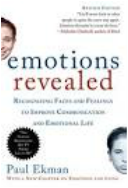
Emotions Revealed: Recognizing Faces and Feelings to Improve Communication and Emotional Life
Author: Paul Ekman
ISBN: 978-0-8050-8339-2
APA Style Citation
Ekman, P. (2003). Emotions Revealed: Recognizing Faces and Feelings to Improve Communication and Emotional Life; Owl Books, New York, New York.
Author: Paul Ekman
ISBN: 978-0-8050-8339-2
APA Style Citation
Ekman, P. (2003). Emotions Revealed: Recognizing Faces and Feelings to Improve Communication and Emotional Life; Owl Books, New York, New York.
|  | ||
Book Description
Paul Ekman has long been known for his contributions to the universal facial expressions of anger, sadness, contempt, disgust, surprise, happiness and fear. In Emotions Revealed, Ekman explains each of these, how they are displayed, how to identify them in others and finally, how to better deal with someone who is experiencing these emotions. Ekman’s cross-cultural work grew out of his research in Papua New Guinea. Ekman believes that by identifying emotions in ourselves and others, we may be able to control and deal with negative emotions which if left unaddressed can cause difficulties in both personal and professional relationships. Ekman also addresses deceit in emotions and provides clues on how to identify micro expressions and “hot spots” which can give away clues to whether a person is being honest.
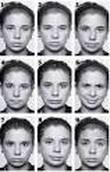
Ekman has expanded on the early work on emotions conducted by Charles Darwin who believed that the ability to recognize emotions in others may lead to an increased chance for survival and reproduction. Ekman also believes that emotions are a combination of one’s individuals experiences as well as our shared ancestral past. Ekman conducted his cross-cultural studies by showing individuals from different cultures photographs of people making different facial expressions. He then asked the participants to identify the facial expression that was displayed. While Ekman found universal emotions, he also found that how and when the emotions displayed differed based upon the respective countries display rules. The earlier an emotional response is displayed, the more likely that emotion is innate.
Ekman and his colleague Walter Friesen spent years attempting to make each of the potential 10,000 identifiable facial expressions. When they could not make a given expression, they used a needle to activate the muscle(s) needed and ultimately created the Facial Action Coding System (FACS) which is used today to measure facial expressions by many scientist and researchers. Ekman believes that if we can learn what each of the different facial expressions feels like when we are displaying the emotion, we can have better control over our emotions and start to learn which ‘triggers’ precede that emotion. If these emotions are ones we do not want to display (anger) it may be possible to avoid those triggers in the future. Ekman refers to this process as reflective appraising and one must consciously consider the emotions they are experiencing at any given time in order to understand and modify how we respond to these triggers in the future. Recalling highly emotional events may be one way in which different emotions can be more purposely created. Ekman spends the remainder of the book providing information on each of the universal emotions as well as pictures that provide weak to strong images of each emotion. He explains how to manipulate the face for each respective emotion and if this is not possible for some people asks them to recall a time in which they felt the emotion. He also encourages readers to stand before a mirror to become more familiar with what each facial expressions looks like to more easily recognize these expressions in themselves and others.
Sadness
Ekman describes sadness as a passive emotion with elements of both resignation and hopelessness. Sadness often occurs when we feel that there is nothing that we can do to change the outcome of a situation. The death of a loved one or sudden bad news can initiate sadness. Sadness is created by dropping the mouth open, pulling the corners of the lips down, and looking downward while the eyelids droop.
Anger
The origins of anger may come from frustration, control issues, contempt, retaliation or efforts to punish someone. Anger can arise quickly and the behavior can be unpredictable, making this an emotion that may lead to regret. Resentment is a type of anger that festers over time and may linger for long periods. Those who express high levels of anger are generally less well liked than others and this emotion is displayed more often in men than women. While some seek to avoid anger at all costs, others seem to enjoy hostile attacks and some even enjoy physical altercations. To make the facial expression for anger, pull the eyebrows down and together, with the inner corners going down towards the nose. Open the eyes wide so the eyelids are against the brows and press the lips together without puckering.
Surprise and Fear
Surprise is a difficult emotion to catch in photographs without being posed on purpose because it occurs infrequently and is very brief in duration, it lasts a few seconds at most. Ekman differentiates between a startle surprise, a startle being a respond and surprise being an emotion. Other emotional researchers do not believe that surprise is a universal emotion, and Ekman did not capture photographs of surprise during his research in Papua New Guinea, but he continues to believe it is a universal facial expression.
Fear is caused by the possibility of pain, physical or psychological but pain is not considered to be an emotion because it is too specific. Fear can vary from mild concern or worry to terror. To show the facial expression of fear, raise the upper lids of your eyelids as high as possible, follow this by raising the eyebrows as high as possible and let the jaw drop open. Emotions may intermingle with one another which makes them more difficult to identify, for example, it is common to feel fear and anger together when threatened.
Disgust and Contempt
Feeling an aversion to something, perhaps something you have tasted and want to spit out will provide a good sense of disgust. Violations of social norms or behavior we find offensive may also cause the emotion of disgust (see book review on That’s Disgusting). We can also feel disgusted when we believe others are stonewalling. In sexual situations or parenting situations which may involve exchanges of fluids that would normally cause disgust, this emotion is temporarily suspended. While those who feel extraordinarily high levels of disgust may suffer from obsessive-compulsive disorder, we all feel levels of disgust in situations that are novel or offensive. The emotion of disgust looks much like anger but with a nose that is retracted and pulled up and way from the mouth. Contempt occurs when we believe that we are better than others, and they are not worth our time, and this may often occur along with anger.
Enjoyable Emotions
Happiness, joy, contentment, excitement and relief are all emotions in which cause positive feelings. Ekman explains why some of these feelings are emotional responses (happiness) and others sensory experiences. While most people experience pleasurable emotions frequently, those with anhedonia have a disorder which prevents them from feelings of pleasure. Ekman sites that positive states such as optimism correlate to living longer. Those extroverts and those with high emotional stability also report greater feelings of happiness than others who are lower in these characteristics. Ekman sites the research of French neurologist Duchenne de Boulogne who discovered how the true enjoyment smile differs from the miserable or the polite smile. He indicated that the key difference is in the eyes which are activated in the true smile but not in the others. For this reason, Ekman has named the genuine smile the Duchene smile.
Micro Expressions
Ekman’s final chapter relates to lying and micro expressions for which his research is well known. He has trained governmental agents, police officers, lawyers and many others to identify microexpressions which he believes make it possible to identify if someone is lying. He believes that micro expressions are incongruent with the rest of the emotion displayed by the face and the leakage of these micro expressions make it possible to identify a liar from someone telling the truth. He calls these potential signs of lying “hot spots”, which are not sure signs of lying but indicate that one may be trying to hide or cover up an emotion. The duration of the emotion is also important and abrupt changes in facial expressions may also be another sign of deceit.
Emotions Revealed is intended to help individuals become more aware of their own emotions and the emotions in others. This awareness allows one to cognitively appraise an emotional situation before doing or saying something they may later regret. Ekman even recommends keeping an emotional diary of the emotional episodes one regrets in an effort to avoid the same instances in the future. The appendix contains much practice in identifying subtle facial expressions and is an introduction to the Facial Action Coding System (FACS). The corresponding activity is an effort to recreate the ability to recognize different facial expressions.
Resources
Paul Ekman’s website: Discusses his work including his research and collaborations with Lie to Me and a parent’s guide to Inside Out.
http://www.paulekman.com
Face it: Paul Ekman’s Blog
http://www.paulekman.com/blog/
The Role of Emotion and Deception: Paul Ekman
https://www.youtube.com/watch?v=J9i-9_QuetA
Emotions revealed Photo set (15 free posed pictures)
http://www.paulekman.com/product/emotions-revealed-photo-set/
Human Lie Detector: Fast Company
http://www.fastcompany.com/1800709/human-lie-detector-paul-ekman-decodes-faces-depression-terrorism-and-joy
All about body language
http://www.all-about-body-language.com/paul-ekman.html
The Science of Inside Out
http://www.nytimes.com/2015/07/05/opinion/sunday/the-science-of-inside-out.html?_r=0
Brain Science: Inside out
https://www.gse.harvard.edu/news/uk/15/09/brain-science-inside-out
You Can’t Lie to Me
http://www.lyintamer.com/author-new-york-times-best-selling-author-unlocks-the-truth-to-your-success/you-can-t-lie-to-me
Psychological Figures and Concepts
Gordon Allport
Duchenne de Boulogne
Charles Darwin
Paul Ekman
Walter Friesen
John Gottman
Carol Izard
Jerome Kagan
Richard Lazarus
Paul Rozin
Silvan Tompkins
Robert Zajonc
Anhedonia
Antisocial Personality Disorder
Autonomic Nervous System
Catharsis
Display Rule
Emotions: Anger, Contempt, Disgust, Fear, Happiness, Surprise
Facial Action Coding System (FACS)
Facial-Feedback Hypothesis
Microexpression
Mood v. Emotion
Natural Selection
Post-Traumatic Stress Disorder (PTSD)
Prepared Phobia
Reflective Appraising
Unconditioned Stimulus
Paul Ekman has long been known for his contributions to the universal facial expressions of anger, sadness, contempt, disgust, surprise, happiness and fear. In Emotions Revealed, Ekman explains each of these, how they are displayed, how to identify them in others and finally, how to better deal with someone who is experiencing these emotions. Ekman’s cross-cultural work grew out of his research in Papua New Guinea. Ekman believes that by identifying emotions in ourselves and others, we may be able to control and deal with negative emotions which if left unaddressed can cause difficulties in both personal and professional relationships. Ekman also addresses deceit in emotions and provides clues on how to identify micro expressions and “hot spots” which can give away clues to whether a person is being honest.
Ekman has expanded on the early work on emotions conducted by Charles Darwin who believed that the ability to recognize emotions in others may lead to an increased chance for survival and reproduction. Ekman also believes that emotions are a combination of one’s individuals experiences as well as our shared ancestral past. Ekman conducted his cross-cultural studies by showing individuals from different cultures photographs of people making different facial expressions. He then asked the participants to identify the facial expression that was displayed. While Ekman found universal emotions, he also found that how and when the emotions displayed differed based upon the respective countries display rules. The earlier an emotional response is displayed, the more likely that emotion is innate.
Ekman and his colleague Walter Friesen spent years attempting to make each of the potential 10,000 identifiable facial expressions. When they could not make a given expression, they used a needle to activate the muscle(s) needed and ultimately created the Facial Action Coding System (FACS) which is used today to measure facial expressions by many scientist and researchers. Ekman believes that if we can learn what each of the different facial expressions feels like when we are displaying the emotion, we can have better control over our emotions and start to learn which ‘triggers’ precede that emotion. If these emotions are ones we do not want to display (anger) it may be possible to avoid those triggers in the future. Ekman refers to this process as reflective appraising and one must consciously consider the emotions they are experiencing at any given time in order to understand and modify how we respond to these triggers in the future. Recalling highly emotional events may be one way in which different emotions can be more purposely created. Ekman spends the remainder of the book providing information on each of the universal emotions as well as pictures that provide weak to strong images of each emotion. He explains how to manipulate the face for each respective emotion and if this is not possible for some people asks them to recall a time in which they felt the emotion. He also encourages readers to stand before a mirror to become more familiar with what each facial expressions looks like to more easily recognize these expressions in themselves and others.
Sadness
Ekman describes sadness as a passive emotion with elements of both resignation and hopelessness. Sadness often occurs when we feel that there is nothing that we can do to change the outcome of a situation. The death of a loved one or sudden bad news can initiate sadness. Sadness is created by dropping the mouth open, pulling the corners of the lips down, and looking downward while the eyelids droop.
Anger
The origins of anger may come from frustration, control issues, contempt, retaliation or efforts to punish someone. Anger can arise quickly and the behavior can be unpredictable, making this an emotion that may lead to regret. Resentment is a type of anger that festers over time and may linger for long periods. Those who express high levels of anger are generally less well liked than others and this emotion is displayed more often in men than women. While some seek to avoid anger at all costs, others seem to enjoy hostile attacks and some even enjoy physical altercations. To make the facial expression for anger, pull the eyebrows down and together, with the inner corners going down towards the nose. Open the eyes wide so the eyelids are against the brows and press the lips together without puckering.
Surprise and Fear
Surprise is a difficult emotion to catch in photographs without being posed on purpose because it occurs infrequently and is very brief in duration, it lasts a few seconds at most. Ekman differentiates between a startle surprise, a startle being a respond and surprise being an emotion. Other emotional researchers do not believe that surprise is a universal emotion, and Ekman did not capture photographs of surprise during his research in Papua New Guinea, but he continues to believe it is a universal facial expression.
Fear is caused by the possibility of pain, physical or psychological but pain is not considered to be an emotion because it is too specific. Fear can vary from mild concern or worry to terror. To show the facial expression of fear, raise the upper lids of your eyelids as high as possible, follow this by raising the eyebrows as high as possible and let the jaw drop open. Emotions may intermingle with one another which makes them more difficult to identify, for example, it is common to feel fear and anger together when threatened.
Disgust and Contempt
Feeling an aversion to something, perhaps something you have tasted and want to spit out will provide a good sense of disgust. Violations of social norms or behavior we find offensive may also cause the emotion of disgust (see book review on That’s Disgusting). We can also feel disgusted when we believe others are stonewalling. In sexual situations or parenting situations which may involve exchanges of fluids that would normally cause disgust, this emotion is temporarily suspended. While those who feel extraordinarily high levels of disgust may suffer from obsessive-compulsive disorder, we all feel levels of disgust in situations that are novel or offensive. The emotion of disgust looks much like anger but with a nose that is retracted and pulled up and way from the mouth. Contempt occurs when we believe that we are better than others, and they are not worth our time, and this may often occur along with anger.
Enjoyable Emotions
Happiness, joy, contentment, excitement and relief are all emotions in which cause positive feelings. Ekman explains why some of these feelings are emotional responses (happiness) and others sensory experiences. While most people experience pleasurable emotions frequently, those with anhedonia have a disorder which prevents them from feelings of pleasure. Ekman sites that positive states such as optimism correlate to living longer. Those extroverts and those with high emotional stability also report greater feelings of happiness than others who are lower in these characteristics. Ekman sites the research of French neurologist Duchenne de Boulogne who discovered how the true enjoyment smile differs from the miserable or the polite smile. He indicated that the key difference is in the eyes which are activated in the true smile but not in the others. For this reason, Ekman has named the genuine smile the Duchene smile.
Micro Expressions
Ekman’s final chapter relates to lying and micro expressions for which his research is well known. He has trained governmental agents, police officers, lawyers and many others to identify microexpressions which he believes make it possible to identify if someone is lying. He believes that micro expressions are incongruent with the rest of the emotion displayed by the face and the leakage of these micro expressions make it possible to identify a liar from someone telling the truth. He calls these potential signs of lying “hot spots”, which are not sure signs of lying but indicate that one may be trying to hide or cover up an emotion. The duration of the emotion is also important and abrupt changes in facial expressions may also be another sign of deceit.
Emotions Revealed is intended to help individuals become more aware of their own emotions and the emotions in others. This awareness allows one to cognitively appraise an emotional situation before doing or saying something they may later regret. Ekman even recommends keeping an emotional diary of the emotional episodes one regrets in an effort to avoid the same instances in the future. The appendix contains much practice in identifying subtle facial expressions and is an introduction to the Facial Action Coding System (FACS). The corresponding activity is an effort to recreate the ability to recognize different facial expressions.
Resources
Paul Ekman’s website: Discusses his work including his research and collaborations with Lie to Me and a parent’s guide to Inside Out.
http://www.paulekman.com
Face it: Paul Ekman’s Blog
http://www.paulekman.com/blog/
The Role of Emotion and Deception: Paul Ekman
https://www.youtube.com/watch?v=J9i-9_QuetA
Emotions revealed Photo set (15 free posed pictures)
http://www.paulekman.com/product/emotions-revealed-photo-set/
Human Lie Detector: Fast Company
http://www.fastcompany.com/1800709/human-lie-detector-paul-ekman-decodes-faces-depression-terrorism-and-joy
All about body language
http://www.all-about-body-language.com/paul-ekman.html
The Science of Inside Out
http://www.nytimes.com/2015/07/05/opinion/sunday/the-science-of-inside-out.html?_r=0
Brain Science: Inside out
https://www.gse.harvard.edu/news/uk/15/09/brain-science-inside-out
You Can’t Lie to Me
http://www.lyintamer.com/author-new-york-times-best-selling-author-unlocks-the-truth-to-your-success/you-can-t-lie-to-me
Psychological Figures and Concepts
Gordon Allport
Duchenne de Boulogne
Charles Darwin
Paul Ekman
Walter Friesen
John Gottman
Carol Izard
Jerome Kagan
Richard Lazarus
Paul Rozin
Silvan Tompkins
Robert Zajonc
Anhedonia
Antisocial Personality Disorder
Autonomic Nervous System
Catharsis
Display Rule
Emotions: Anger, Contempt, Disgust, Fear, Happiness, Surprise
Facial Action Coding System (FACS)
Facial-Feedback Hypothesis
Microexpression
Mood v. Emotion
Natural Selection
Post-Traumatic Stress Disorder (PTSD)
Prepared Phobia
Reflective Appraising
Unconditioned Stimulus
 RSS Feed