
| bittersweet_activity_4.pdf |
Book Description
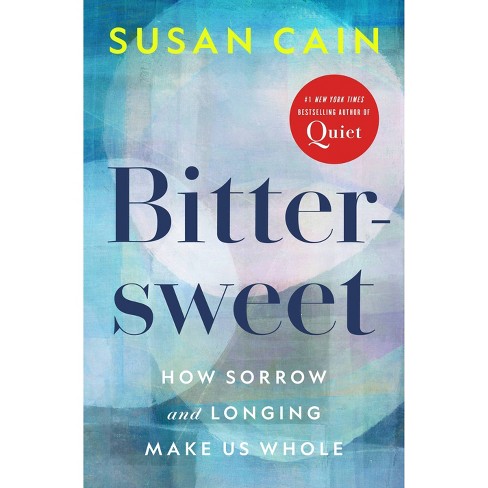
In her follow-up to Quiet: The Power of Introverts in a World That Can’t Stop Talking, Susan Cain begins Bittersweet with a quote from her favorite musician Leonard Cohen. “There is a crack, a crack in everything, that’s how the light gets in.” Cain describes her love for Cohen’s music and the melancholic yearning it creates when she listens. While some might be inclined to move away from these feelings. Cain feels quite the opposite. She believes that feelings of pain can be transformed into art, passion, and creativity just as with Cohen’s music.
Cain describes an instance in which her family had to put down their beloved pet as a child. As a family, they cried together and felt deep sorrow, but as Cain recalls the event many years later, she is overcome by the love in the room that was felt through her family’s common suffering. Cain proposes that those drawn to serious movies and thought-provoking books are honest with the pain that exists in the world and can appreciate these vulnerable moments when people allow themselves to emote in a truly authentic way. Cain uses the example of walking a child down the aisle at a wedding ceremony where a parent acknowledges the happiness their child is stepping into and the bittersweet sadness of sending the child into the next phase of their life. Many individuals who experience this bittersweet world are more sympathetic in response to the suffering of others. Humility is one of the most important components in empathizing with others, as we will not experience empathy if we believe we are better than others.
Because those who live in the bittersweet arena do not believe that the world is perfect, they do not expect a world of perfection. For example, they do not expect to find their “one true soulmate”; they know that relationships will be work and will involve both beautiful highs and miserable lows. They may have more reasonable expectations about their interactions in work, love, and socialization. Cain contends that this longing has always existed with the Greek myth describing two brothers, Pathos (longing) and Himeros (desire). They also describe Eros (love). The Germans have a word “Sehnsucht” that combines words meaning yearning and an obsession or addiction. Cain also describes many religious ceremonies as a transition between happiness and sorrow. The songwriter-poet Nick Cave describes longing as his “ultimate muse” driving his creative works. Much of the Sufi religion is based on ideas of longing, for union, for God.
Cain cites a study by psychologist Marvin Eisentadt that found an incredible number of highly creative people were orphans. Of the 573 creatives studied, 25% had lost one parent by age 10, 345 by age 15, and 45% by age 45. Could it be that this grief and sadness drove their creativity?
Sometimes these bittersweet moments are not ones that should last in time but can still create a sense of longing. For example, a short-lived romantic rendezvous or the end of a long friendship. Cain suggests it might be best to remember fondly what was, but it would not likely be the same again. Cain suggests taking solace in the love you once experienced rather than the love that was lost. It is our job to recognize love in its new form. She also warns about the danger of living in a world of false smiles and social media posts in which it seems that everyone’s life is better and happier than it actually is. One of the many challenges to this false front is to make those experiences grief, sadness or challenging emotions feel alone. Often individuals experiencing anxiety or depression feel that nobody could possibly understand what they are experiencing. Cain speaks with students at Princeton who describe the need to feel “effortless perfection, “to look great, perform great, and be happy all of the time without seemingly trying to achieve any of this. This causes the students to feel inferior or to experience a sense that they do not belong because they must work at their happiness and success.
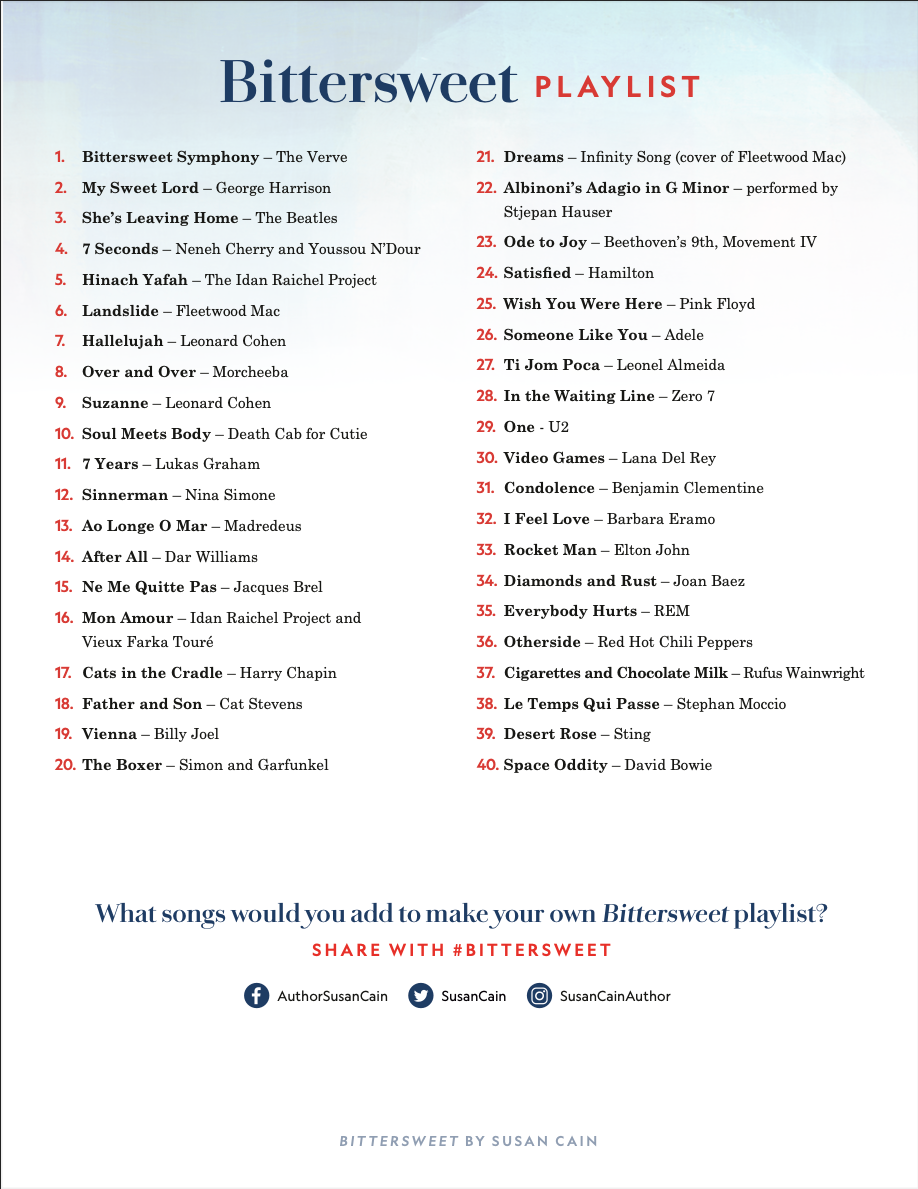
This ability to accept difficult emotions is linked to long-term thriving. Recognizing and acknowledging these negative feelings can help people feel less alone in their suffering. The suffering of others may also spur us into action. After the national tragedy of 9/11, people moved into careers as firefighters, healthcare workers, and teachers. Cain suggests one way to deal with pain or sorrow and loss may be loving-kindness meditation, derived from ancient Buddhist practices. This practice attempts to develop empathy by emphasizing the similarities between the individual and another person. The benefits of this practice include a decrease in migraines, PTSD symptoms, chronic pain, and increased feelings of awe, joy, and gratitude. Other people find comfort in journaling to express anger, frustration or sadness and find it cathartic to release these emotions rather than to keep them bottled up. Cain also suggests that bittersweet music may also fulfill this need and even offers a song list on her website. Cain suggests we embrace the pain and sorrow of the world as a way of living a more content and real life.
Other Related Resources
Author’s Website for Bittersweet
https://susancain.net/book/bittersweet/
TED Talk: The Power of Sad Songs and Rainy Days
https://www.youtube.com/watch?v=0G2U0R0hOCU
The Psychology Podcast: Interview with Susan Cain, The Beauty of Bittersweet
https://www.youtube.com/watch?v=abwczDuDCNs
Bittersweet Quiz
https://susancain.net/bittersweet-quiz-intro/
Bittersweet Playlist
https://susancain.net/wp-content/uploads/Screen-Shot-2022-02-24-at-1.35.13-PM.png
The Next Big Idea Podcast
https://podcasts.apple.com/us/podcast/bittersweet-an-audio-e-course-by-susan-cain/id1482067226?i=1000584069778
Greater Good Science Center
https://ggsc.berkeley.edu/who_we_are/our_people
Quizzes from the Greater Good Science Center
https://greatergood.berkeley.edu/quizzes
Big Head Todd and the Monsters: Bittersweet
https://www.youtube.com/watch?v=Wyd9OcI37AY
Psychological Figures and Concepts
Charles Darwin
Paul Ekman
Catharsis
Empathy
Introversion
Meditation
Mind-body interaction
Mindfulness
Neuroscience
Prosocial behavior
Psychopharmacology
In her follow-up to Quiet: The Power of Introverts in a World That Can’t Stop Talking, Susan Cain begins Bittersweet with a quote from her favorite musician Leonard Cohen. “There is a crack, a crack in everything, that’s how the light gets in.” Cain describes her love for Cohen’s music and the melancholic yearning it creates when she listens. While some might be inclined to move away from these feelings. Cain feels quite the opposite. She believes that feelings of pain can be transformed into art, passion, and creativity just as with Cohen’s music.
Cain describes an instance in which her family had to put down their beloved pet as a child. As a family, they cried together and felt deep sorrow, but as Cain recalls the event many years later, she is overcome by the love in the room that was felt through her family’s common suffering. Cain proposes that those drawn to serious movies and thought-provoking books are honest with the pain that exists in the world and can appreciate these vulnerable moments when people allow themselves to emote in a truly authentic way. Cain uses the example of walking a child down the aisle at a wedding ceremony where a parent acknowledges the happiness their child is stepping into and the bittersweet sadness of sending the child into the next phase of their life. Many individuals who experience this bittersweet world are more sympathetic in response to the suffering of others. Humility is one of the most important components in empathizing with others, as we will not experience empathy if we believe we are better than others.
Because those who live in the bittersweet arena do not believe that the world is perfect, they do not expect a world of perfection. For example, they do not expect to find their “one true soulmate”; they know that relationships will be work and will involve both beautiful highs and miserable lows. They may have more reasonable expectations about their interactions in work, love, and socialization. Cain contends that this longing has always existed with the Greek myth describing two brothers, Pathos (longing) and Himeros (desire). They also describe Eros (love). The Germans have a word “Sehnsucht” that combines words meaning yearning and an obsession or addiction. Cain also describes many religious ceremonies as a transition between happiness and sorrow. The songwriter-poet Nick Cave describes longing as his “ultimate muse” driving his creative works. Much of the Sufi religion is based on ideas of longing, for union, for God.
Cain cites a study by psychologist Marvin Eisentadt that found an incredible number of highly creative people were orphans. Of the 573 creatives studied, 25% had lost one parent by age 10, 345 by age 15, and 45% by age 45. Could it be that this grief and sadness drove their creativity?
Sometimes these bittersweet moments are not ones that should last in time but can still create a sense of longing. For example, a short-lived romantic rendezvous or the end of a long friendship. Cain suggests it might be best to remember fondly what was, but it would not likely be the same again. Cain suggests taking solace in the love you once experienced rather than the love that was lost. It is our job to recognize love in its new form. She also warns about the danger of living in a world of false smiles and social media posts in which it seems that everyone’s life is better and happier than it actually is. One of the many challenges to this false front is to make those experiences grief, sadness or challenging emotions feel alone. Often individuals experiencing anxiety or depression feel that nobody could possibly understand what they are experiencing. Cain speaks with students at Princeton who describe the need to feel “effortless perfection, “to look great, perform great, and be happy all of the time without seemingly trying to achieve any of this. This causes the students to feel inferior or to experience a sense that they do not belong because they must work at their happiness and success.
This ability to accept difficult emotions is linked to long-term thriving. Recognizing and acknowledging these negative feelings can help people feel less alone in their suffering. The suffering of others may also spur us into action. After the national tragedy of 9/11, people moved into careers as firefighters, healthcare workers, and teachers. Cain suggests one way to deal with pain or sorrow and loss may be loving-kindness meditation, derived from ancient Buddhist practices. This practice attempts to develop empathy by emphasizing the similarities between the individual and another person. The benefits of this practice include a decrease in migraines, PTSD symptoms, chronic pain, and increased feelings of awe, joy, and gratitude. Other people find comfort in journaling to express anger, frustration or sadness and find it cathartic to release these emotions rather than to keep them bottled up. Cain also suggests that bittersweet music may also fulfill this need and even offers a song list on her website. Cain suggests we embrace the pain and sorrow of the world as a way of living a more content and real life.
Other Related Resources
Author’s Website for Bittersweet
https://susancain.net/book/bittersweet/
TED Talk: The Power of Sad Songs and Rainy Days
https://www.youtube.com/watch?v=0G2U0R0hOCU
The Psychology Podcast: Interview with Susan Cain, The Beauty of Bittersweet
https://www.youtube.com/watch?v=abwczDuDCNs
Bittersweet Quiz
https://susancain.net/bittersweet-quiz-intro/
Bittersweet Playlist
https://susancain.net/wp-content/uploads/Screen-Shot-2022-02-24-at-1.35.13-PM.png
The Next Big Idea Podcast
https://podcasts.apple.com/us/podcast/bittersweet-an-audio-e-course-by-susan-cain/id1482067226?i=1000584069778
Greater Good Science Center
https://ggsc.berkeley.edu/who_we_are/our_people
Quizzes from the Greater Good Science Center
https://greatergood.berkeley.edu/quizzes
Big Head Todd and the Monsters: Bittersweet
https://www.youtube.com/watch?v=Wyd9OcI37AY
Psychological Figures and Concepts
Charles Darwin
Paul Ekman
Catharsis
Empathy
Introversion
Meditation
Mind-body interaction
Mindfulness
Neuroscience
Prosocial behavior
Psychopharmacology
 RSS Feed